69° and Cloudy
Image
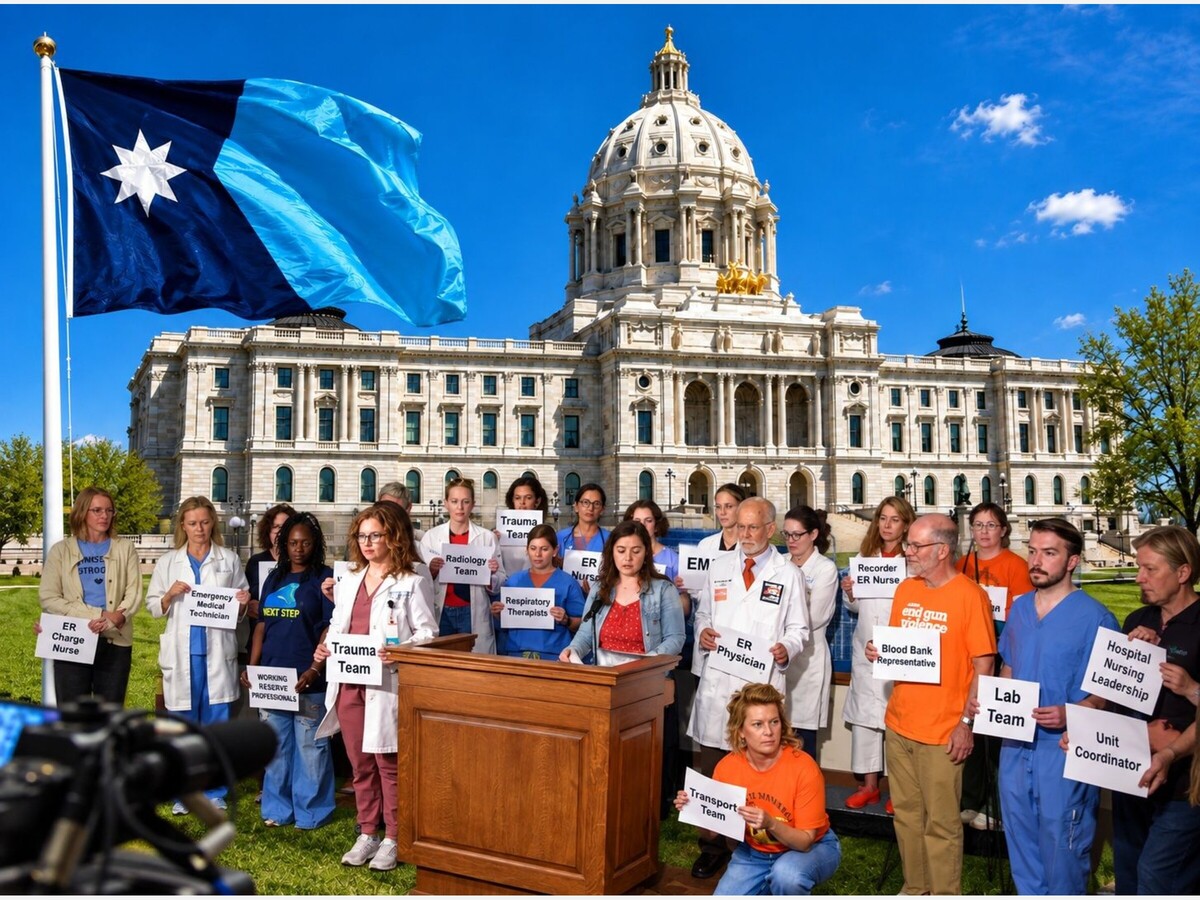



MINNEAPOLIS, MN (September 5, 2026). Doctors who treated victims of Wednesday's mass shooting near Loring Park joined gun-violence prevention advocates and Minnesota lawmakers Friday in calling for additional firearm restrictions, opening a new legislative debate only days after the attack.
The group gathered at Minneapolis City Hall following the shooting at Shoreline Plaza, where authorities say Carlton Neal Johnson II killed two residents and wounded several others before being killed during an exchange of gunfire with Minneapolis police.
Health-care workers described not only Wednesday's emergency response but the cumulative burden repeated gun violence places on hospital personnel.
Hennepin Healthcare physician Mitch Radin, who leads the hospital's critical incident support team, said medical workers are increasingly being asked to respond to mass-casualty and firearm-related trauma.
The policy discussion is developing along two tracks.
One involves Minnesota's existing Extreme Risk Protection Order law.
The other concerns broader firearm restrictions that legislators considered but did not enact earlier this year.
State Sen. Scott Dibble said the Shoreline Plaza shooting raises questions about whether Minnesota's red-flag law should be strengthened, including how quickly firearm-removal orders can be pursued and executed when authorities believe someone presents a danger.
The law permits courts to temporarily restrict firearm possession when statutory requirements establishing an extreme risk are met.
Those questions have acquired urgency because Johnson had previously been accused of threatening residents at Shoreline Plaza while possessing or displaying a firearm.
Prosecutors reviewed allegations involving Johnson before the shooting but said the available evidence was insufficient to support criminal charges or an extreme-risk firearm order at that time.
Advocates contend the case demonstrates that Minnesota needs stronger intervention mechanisms.
But any proposal to lower evidentiary thresholds or broaden firearm-removal authority would also reopen questions involving due process, evidentiary standards and the rights of gun owners.
The second legislative front concerns proposals that failed during the 2026 legislative session.
The Minnesota Senate approved a package in May that included additional restrictions involving assault-style firearms and unserialized weapons commonly described as ghost guns.
The package also contained school-safety and mental-health funding.
It did not ultimately clear the Minnesota House.
Dibble said lawmakers are likely to revisit firearm legislation, although the precise proposals and their prospects for passage remain uncertain.
That political reality matters.
Mass shootings frequently produce renewed demands for legislation, but Minnesota's closely divided political environment means outrage does not necessarily translate into sufficient votes.
Any new proposal will need to navigate competing positions over public safety, constitutional rights, law-enforcement authority and whether existing statutes are being used effectively.
Protect Minnesota Executive Director Maggiy Emery argued Friday that stronger laws are necessary to prevent more shootings rather than continually asking first responders and medical workers to absorb their consequences.
Emergency physician Tim Kummer, who responded to Wednesday's shooting, also urged lawmakers to act.
The debate is likely to intensify as investigators reconstruct the months preceding the Shoreline Plaza attack.
If evidence establishes that authorities encountered multiple warning signs but lacked either sufficient legal authority or evidence to remove Johnson's firearm, lawmakers may focus narrowly on the red-flag statute.
If legislators conclude existing authority was adequate but fragmented institutions failed to use it effectively, the problem may instead involve implementation and communication.
Those are materially different diagnoses.
Minnesota will now have to determine which one the evidence supports.
For medical professionals who treated Wednesday's victims, however, the debate has already moved beyond legislative theory.
They saw the consequences arrive through the hospital doors.

Local stories matter. Subscribe free to MinneapoliMedia and receive independent news, community reporting and important updates from Minneapolis, the North Metro and communities across Minnesota.
SUBSCRIBE FREE: https://minneapolimedia.town.news/subscribe
MinneapoliMedia | Community. Culture. Civic Life



Overcast, with a high of 72 and low of 57 degrees. Partly Cloudy for the morning, patchy rain nearby for the afternoon, overcast in the evening,