72° and Sunny
Image
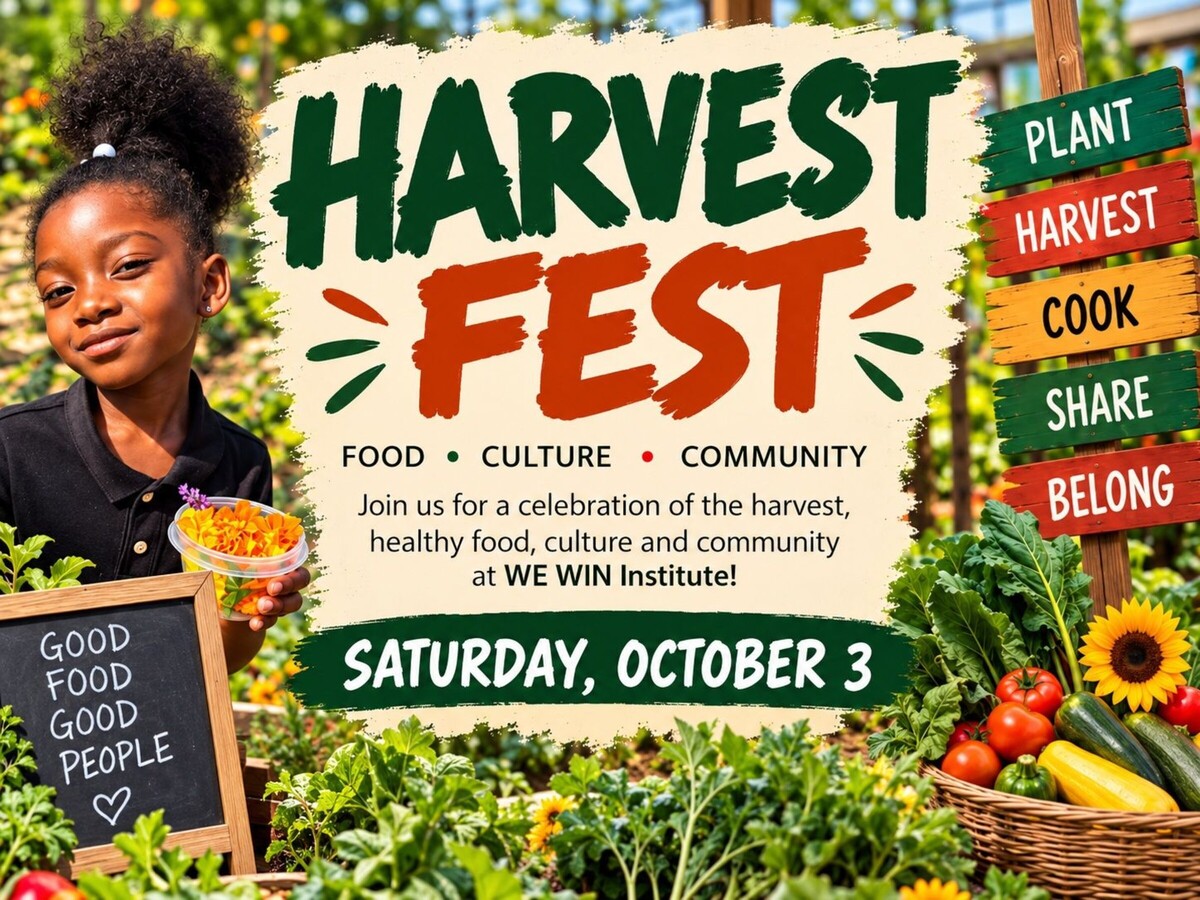



MINNEAPOLIS, MN (October 3, 2026). On Saturday morning, visitors arriving at 2801 S. Wayzata Boulevard in Minneapolis will step into a fall community celebration complete with music, food, and books. Spoken word artists Brotha Ase' and Miriama Imani are scheduled as special guests for the gathering, which runs from 11 a.m. to 2 p.m. with an open invitation to the neighborhood.

Yet viewing Saturday's Harvest Fest purely as a seasonal festival misses the three-decade foundation beneath it.
The organization's origins trace back to 1996, when Titilayo Bediako left her position as a Minneapolis Public Schools teacher. According to Minnesota Department of Health documentation, Bediako acted out of a conviction that traditional educational structures were failing Black children by framing them around deficits rather than strengths. Nearly thirty years later, WE WIN has served more than 6,000 children and teenagers ages 5 through 18, centering its mission on academic support, parental involvement, and leadership development.
The operational model integrates rigorous academics with cultural identity. Reading, writing, and critical thinking sit alongside visual and performing arts, African and African American history, mentoring, and community service.
Nowhere is that holistic approach more tangible than in the organization's agricultural programming.
For participants in WE WIN's Rites of Passage initiative, growing food is intertwined with learning. The curriculum pairs community gardening and planting with cooking classes led by local BIPOC chefs, literacy circles, drumming, and Afro-centric instruction. Over successive growing seasons—particularly at Zion Baptist Church in North Minneapolis, a vital partner during the organization's nomadic years—youth stewardship yielded approximately 1,300 pounds of free food distributed directly to the community.
State agriculture funding and municipal support from the City of Minneapolis have since backed the expansion of teaching gardens, pollinator beds, and culinary spaces. A tomato grown by a student or collard greens harvested from the earth transform agriculture from an abstract textbook exercise into tangible community sustenance.
There is a larger idea embedded in that model. At WE WIN, Black history, literature, food, artistic traditions and community relationships are not treated as additions to a child's education after the essential subjects have been covered. They are part of the educational environment itself. The approach places Black children inside a learning structure in which their culture is not something they occasionally encounter, but one of the resources through which they read, create, develop confidence and understand their responsibilities to others.
That distinction also changes the role assigned to the young people themselves. They are not simply recipients of programs created for them. In the garden, they plant, tend and harvest food that can nourish someone else. Through reading, performance, leadership and community service, they are asked to participate and contribute. The underlying lesson is larger than any single activity: Black children are not being prepared merely to succeed within a community. They are being shown that they already possess knowledge, labor, creativity and leadership capable of strengthening one.
That sense of permanence defines WE WIN's current chapter. For nearly thirty years, the organization operated without a permanent facility, moving through temporary program spaces across Minneapolis. GiveMN records characterize the tenure as nomadic, marked by resilience and continuous community outreach.
That changed in 2025 when WE WIN opened its 12,000-square-foot education center in the Bryn Mawr neighborhood. Designed specifically around the organization's programming, the building houses a cultural reading room, technology spaces, a teaching kitchen, and outdoor raised beds. An architectural detail connects the teaching kitchen directly to the garden, allowing harvested produce to move straight from soil to prep table without administrative division.
Exterior murals by award-winning children's book illustrator E.B. Lewis depict themes of family and legacy, reinforcing an environment where Black children encounter reflections of their own history and potential in the architecture itself.
Literacy remains a cornerstone of that environment through initiatives like We Win When We Read, which distributes culturally relevant books featuring Black stories at no cost. Bediako envisioned the facility's Cultural Reading Room as a dynamic hub where local and national authors engage youth, cementing the idea that a child's education encompasses intellectual, cultural, emotional, and physical dimensions.
Saturday's programming reflects that philosophy through the inclusion of Brotha Ase', also known as Joshua Gillespie, a griot and educator who has taught African drumming to WE WIN youth. Within the curriculum, drumming and dance function as active vehicles for historical memory and tradition rather than supplementary entertainment.
By anchoring these elements in a permanent facility, WE WIN offers its participants a definitive answer to a fundamental question: whether they belong.
The celebration on Saturday will last three hours, but it marks the culmination of thirty years of institutional persistence. As the doors open at 2801 S. Wayzata Boulevard, the community will gather not just for a seasonal festival, but for a harvest rooted in decades of intentional work.
IF YOU GO
#MinneapoliMedia #ThisWeekendInTheTwinCities™

Local stories matter. Subscribe free to MinneapoliMedia and receive independent news, community reporting and important updates from Minneapolis, the North Metro and communities across Minnesota.
SUBSCRIBE FREE: https://minneapolimedia.town.news/subscribe
MinneapoliMedia | Community. Culture. Civic Life

Overcast, with a high of 71 and low of 57 degrees. Partly Cloudy during the morning, patchy rain nearby during the afternoon, overcast in the evening, clear overnight.