Image



MINNEAPOLIS, MN (October 5, 2026).
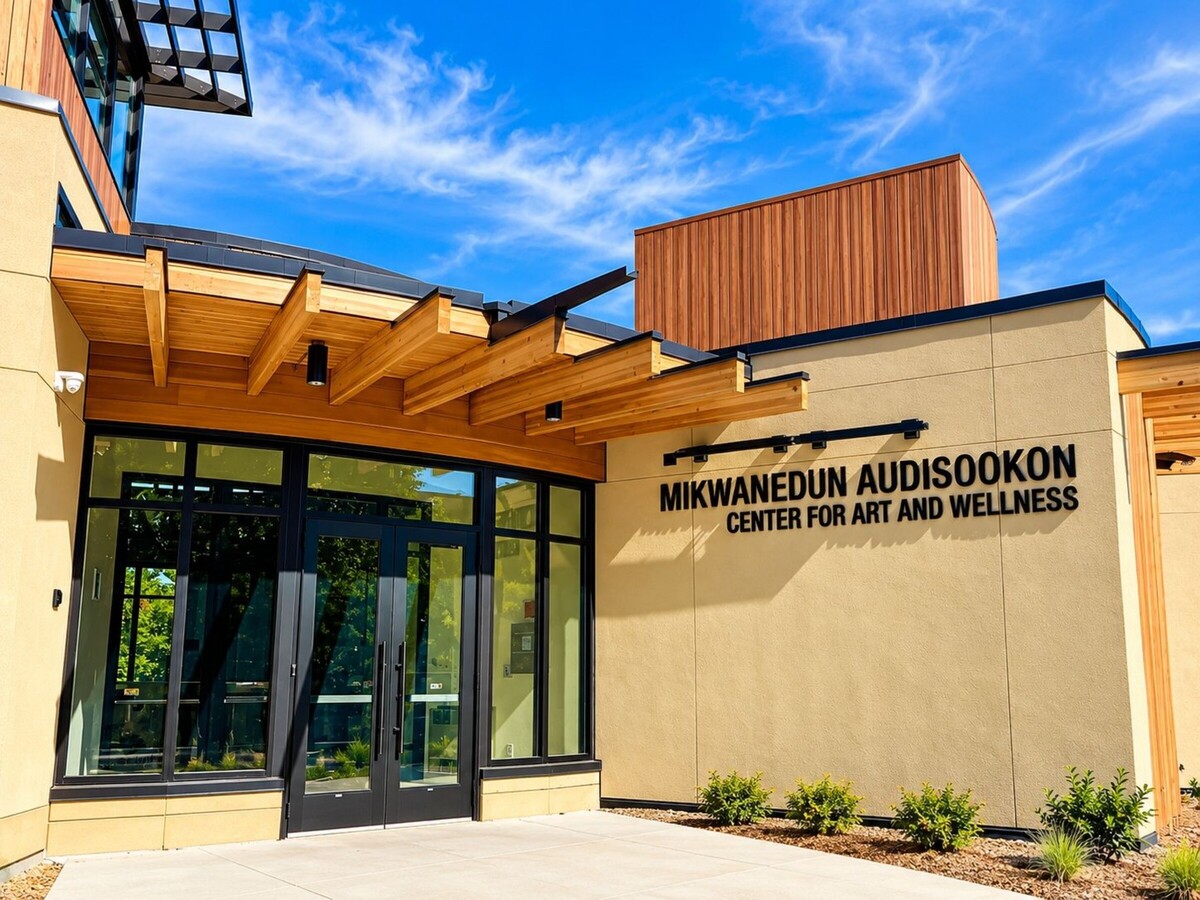
A project more than a decade in the making has opened in south Minneapolis, giving Indigenous Peoples Task Force a permanent $12 million center designed to bring health, culture, environmental education, youth theater and community gathering into a single space.
The organization celebrated the opening Friday of the Mikwanedun Audisookon Center for Art and Wellness in Minneapolis' Phillips neighborhood.
The center's name means “remember our teachings” in Ojibwe.
The approximately 12,000-square-foot, two-story building sits on a lot adjacent to Indigenous Peoples Task Force's existing operations and represents a substantial expansion of an organization whose programs had outgrown their available space.
Executive Director Sharon Day said planning for the project began more than a decade ago as the organization's work expanded.
The new building includes a black box theater, commercial kitchen, meditation room, community workspaces and green space. It will support community meals and healing initiatives while housing arts, theater, health and environmental programming.
The opening is particularly significant for the organization's youth theater program.
Ikidowin, the Indigenous Peoples Task Force youth theater initiative, previously performed and rehearsed in classrooms, churches, hallways and other temporary locations. The permanent theater gives young performers a place where productions can run longer and where traditional cultural practices can be incorporated into their work without the limitations that accompanied borrowed facilities.
The building itself was also designed to reflect the organization's environmental mission.
Compressed-earth blocks made from soil, clay and sand were incorporated into the front portion of the building and theater. The material can absorb heat during colder conditions and cool air during warmer periods, releasing that stored temperature gradually.
Construction became part of the organization's programming as well.
Indigenous Peoples Task Force used the project to provide green-technology training opportunities for Indigenous young adults, including participation in production of the compressed-earth blocks. The organization expects those workforce-development opportunities to continue.
Financing the $12 million project required a combination of public and private support.
Fundraising began in 2014. Approximately one-quarter of the financing came from individual donors and foundations. Hennepin County invested $750,000 through its Community Investment Initiative in 2022, while additional funding came from the Minnesota state government and the City of Minneapolis.
That combination of funding reflects the center's multiple purposes.
It is an arts facility, but not solely an arts facility. It is intended to provide health and wellness programming, environmental education, cultural preservation, workforce opportunities and a place where people can gather for meals and community activities.
The Phillips neighborhood has long been one of the most culturally diverse areas of Minneapolis and is home to significant Native institutions and residents.
The center therefore enters an existing community infrastructure rather than attempting to create one from scratch.
Its importance lies partly in permanence.
Programs that previously depended on whatever classroom, church, hallway or other temporary space could be secured now have a facility built specifically around their needs.
For youth theater, that means an actual performance home.
For community programming, it means a commercial kitchen and dining space.
For wellness initiatives, it means dedicated areas for meditation and healing.
For environmental education, even the building materials become part of the organization's teaching mission.
The opening also demonstrates what can happen when a capital project is allowed to develop around the needs of the organization that will actually use it.
Indigenous Peoples Task Force did not simply build additional office space. The organization spent more than a decade developing a facility intended to accommodate cultural practices, environmental priorities, health programs and artistic work that conventional buildings had not always supported.
With construction finished, the central question shifts from building the center to what the organization can do with it.
After years of fundraising, planning and working around inadequate space, Mikwanedun Audisookon is now open.

Local stories matter. Subscribe free to MinneapoliMedia and receive independent news, community reporting and important updates from Minneapolis, the North Metro and communities across Minnesota.
SUBSCRIBE FREE: https://minneapolimedia.town.news/subscribe
MinneapoliMedia | Community. Culture. Civic Life



Overcast, with a high of 57 and low of 49 degrees. Overcast in the morning, patchy rain nearby overnight.