51° and Overcast
Image



MINNEAPOLIS, MN (October 26, 2026).
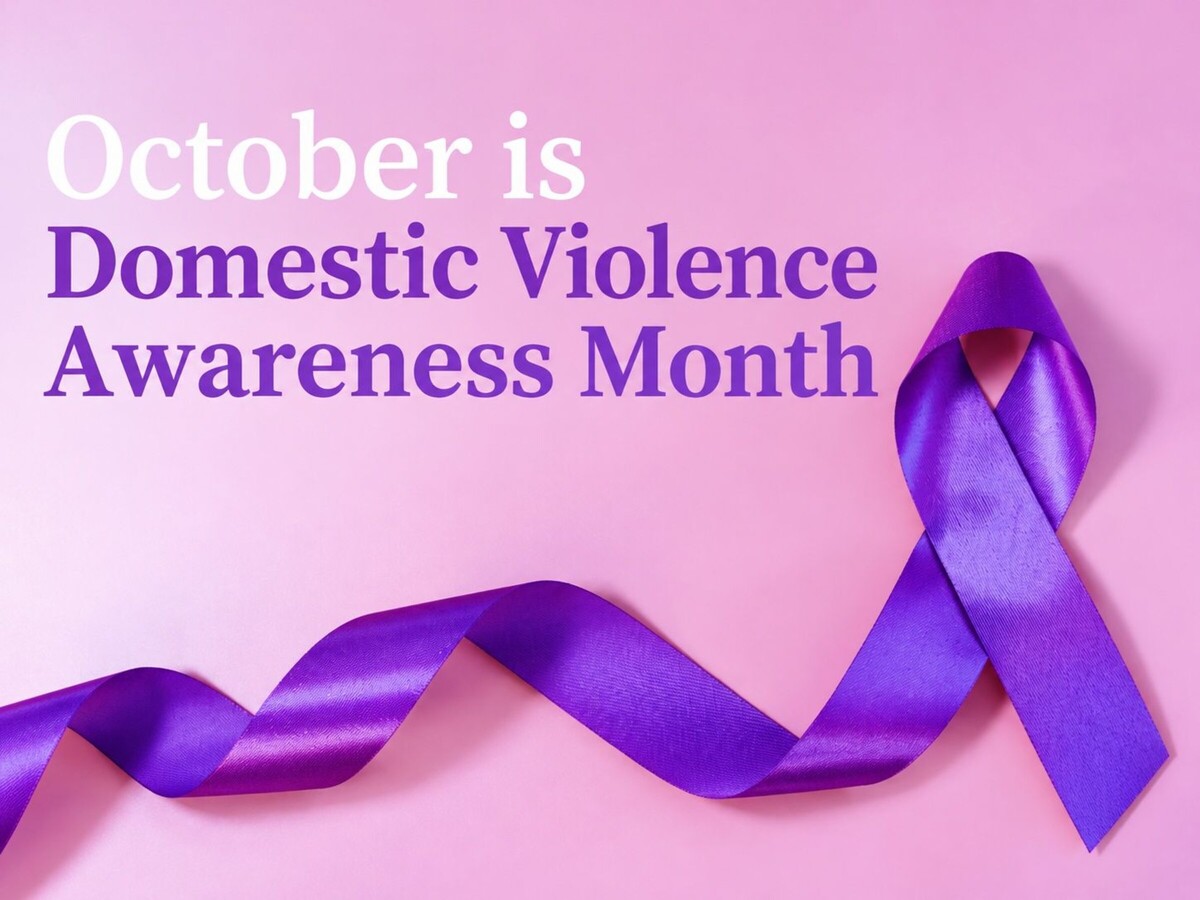
As Minnesota enters the final week of Domestic Violence Awareness Month, the public observance appears to be fading before the month has officially ended.
Purple ribbons remain visible in some places. Advocacy organizations continue sharing information. A limited number of public events, social media messages and official proclamations are still appearing. Yet the broader civic conversation has grown noticeably subdued.
This silence must not be confused with progress.
There is no credible evidence that domestic violence has entered a period of remission. The absence of sustained public attention does not mean that fewer people are being threatened, controlled, assaulted, stalked or killed. It means that the calendar has moved forward and public attention has moved with it, while survivors, advocates, shelters, healthcare workers and law enforcement agencies continue confronting the same crisis.
Minnesota recorded 21,931 victims in domestic violence incidents reported to law enforcement during 2025, according to the state Bureau of Criminal Apprehension. The total included 30 murder and nonnegligent manslaughter victims, 2,993 victims of aggravated assault, 12,521 victims of simple assault and thousands of people subjected to intimidation or sexual violence. Those numbers reflect reported incidents. They cannot account for every victim who remained silent, feared retaliation, lacked confidence in the system or did not recognize coercive conduct as abuse.
Violence Free Minnesota reported that at least 31 people died as a result of intimate partner violence in the state during 2025. The organization had identified at least 16 additional domestic violence or intimate partner violence deaths during 2026 when it released its most recent findings.
These figures do not describe a crisis that can be addressed through one month of ceremonies. They describe an enduring threat to public safety, family stability, physical health, economic security and the lives of children.
Domestic Violence Awareness Month remains important. It creates an opening for survivors to be heard, for advocates to explain their work and for communities to examine failures that are easier to ignore during the rest of the year. The observance loses its purpose, however, when awareness becomes a seasonal performance rather than a continuing public responsibility.
Minnesota must use this final week of October to reject that pattern.
Domestic Violence Awareness Month was never intended to become a yearly cycle of proclamations, purple clothing and sympathetic messages followed by 11 months of diminished attention.
The public no longer needs to be persuaded that domestic violence exists. Most people understand that partners are assaulted, stalked and controlled inside their homes. They know that survivors may suffer physical injuries, emotional trauma and financial devastation.
The more difficult question is what institutions do with that knowledge.
A survivor may understand that abuse is occurring and still have nowhere safe to go. A family member may recognize the danger and still lack the training to intervene responsibly. A police officer may respond to an incident without receiving enough information about the history of coercion, strangulation, stalking or firearm access. A prosecutor may receive a case that depends on the continuing participation of a terrified victim. A shelter may know exactly what a family needs and lack the beds or money to provide it.
That is the distance between awareness and justice.
A society cannot claim meaningful progress merely because it has learned the language of domestic violence. Progress must be measured by whether survivors can obtain safe housing, confidential advocacy, legal representation, medical care and reliable protection without losing their jobs, children or financial stability.
It must also be measured by whether abusive conduct is interrupted before it escalates into severe injury or death.
The question should no longer be limited to why a victim stayed. Minnesota must ask why leaving remains so dangerous, why safe housing remains difficult to secure, why victims are expected to navigate multiple agencies during a crisis and why support programs continue operating under unstable funding.
Public discussions of domestic abuse often include a deceptively simple instruction: leave.
Leaving may be necessary for survival, but it is not a complete safety plan. The period following separation can be among the most dangerous stages of an abusive relationship. The U.S. Department of Justice has recognized that violence may escalate immediately after a survivor separates from an abuser. Seeking a protection order can also increase danger if an abusive partner views the filing as a loss of control.
This reality explains why survivors cannot be judged by people who do not understand the conditions surrounding their decisions.
An abusive partner may control bank accounts, transportation, housing, immigration documents, medication, childcare and access to relatives. The abuser may monitor the victim’s telephone, threaten children or pets, sabotage employment or accumulate debt in the victim’s name.
A survivor may have every desire to leave and no safe method of doing so.
The proper response is not to demand greater courage from someone already living under threat. It is to build the protections that make escape possible.
That includes emergency shelter, transitional housing, confidential transportation, legal assistance, economic support and careful safety planning. It requires courts, law enforcement agencies, schools, healthcare providers and employers to recognize that separation can intensify danger rather than immediately end it.
Every agency responding to domestic abuse should be prepared to connect survivors with trained advocates. Minnesota’s Domestic Fatality Review Team has specifically urged agencies to refer people experiencing abuse to domestic violence organizations for safety planning, risk assessment and comprehensive support whenever warning signs are present.
A telephone number handed to a survivor without privacy, transportation or follow-up may not be enough. Referrals must be accompanied by an understanding of the survivor’s immediate risks and practical circumstances.
The annual International Domestic Violence Awareness Month Roundtable recently convened by MyVote MyVoice carried a timely theme: “Before Violence Begins: Teaching Respect, Building Healthy Relationships and Choosing Non-Violence.”
That framework deserves attention beyond a single event.
Domestic violence prevention cannot begin only after someone has been assaulted. By that point, the victim may already be living under an established system of intimidation and control.
Prevention must begin with what young people learn about relationships, boundaries, rejection, conflict and personal responsibility. Boys and young men need direct education about respect, consent, emotional regulation and nonviolent responses to anger. Girls and young women must be taught that possessiveness, surveillance and isolation are not evidence of love.
Every young person should understand that a partner does not acquire ownership over another person’s friendships, clothing, movements, telephone, income or body.
The Centers for Disease Control and Prevention reports that approximately one in 12 high school students experienced physical dating violence during the previous year and about one in 10 experienced sexual dating violence. LGBTQ students and students uncertain about their gender identity experienced higher rates than heterosexual students.
These are not adult problems that suddenly appear after marriage. The attitudes that sustain abuse can develop much earlier.
Schools should provide age-appropriate instruction on healthy relationships and dating violence. Parents and guardians should be given resources to recognize warning signs. Coaches, faith leaders, youth workers and community mentors must know how to respond when a young person discloses controlling or violent behavior.
Prevention education must also reach people who may cause harm.
Programs aimed at men and boys should not proceed from the assumption that every male is violent. They should recognize that men have an essential role in changing the beliefs, peer behavior and social permission that allow abuse to continue.
Men must be prepared to challenge friends who demean their partners, threaten women, excuse coercion or treat jealousy as a sign of devotion. Silence in those moments protects the behavior, not the relationship.
The roundtable’s prevention message offered a practical standard: teach respect early, prepare communities to identify danger, choose nonviolence and continue the work even when public attention has shifted elsewhere.
Domestic abuse has adapted to the tools of modern life.
A survivor can change the locks and still be tracked through a telephone account, connected vehicle, hidden location device or shared application. An abusive partner may know where the victim travels, who the victim contacts and when the victim enters or leaves a building.
Technology can be used to impersonate a survivor, access private messages, distribute intimate images, interfere with employment or create false social media accounts. Smart home systems can allow an abuser to manipulate locks, cameras, lights and thermostats from a distance.
The National Network to End Domestic Violence maintains an entire Safety Net Project addressing the intersection of technology, privacy and intimate partner violence. Its existence reflects how thoroughly digital surveillance has become integrated into abusive control.
Victims should not be told simply to delete applications or discard devices. Sudden technological changes can alert an abuser and increase the danger. Removing a tracker may also destroy evidence that could support a criminal case or protection order.
Law enforcement officers, advocates and attorneys require continuing training on technology-facilitated abuse. Courts must understand digital evidence. Technology companies should provide clear procedures through which survivors can secure compromised accounts without notifying an abusive account holder.
Minnesota should support specialized technology-safety assistance through domestic violence programs. A survivor confronting digital surveillance needs more than general computer advice. The survivor needs confidential guidance grounded in an individualized safety plan.
Domestic violence is often discussed as a private relationship problem, even though economic control is one of the principal methods used to prevent a victim from leaving.
An abuser may withhold money, prevent employment, destroy credit, interfere with transportation or force a partner to account for every purchase. A survivor who leaves may lose housing, childcare, health insurance or access to household income.
Economic insecurity can return a survivor to an unsafe home.
Minnesota’s earned sick and safe time law provides paid leave that workers can use when they or family members need assistance related to domestic abuse, sexual assault or stalking. The law also limits the details employers may demand and requires appropriate confidentiality.
That protection matters only if workers know it exists and feel safe using it.
Employers should clearly explain safe-leave rights, designate trained personnel to handle requests and ensure that supervisors do not retaliate against employees who need time for court, medical care, relocation or advocacy services.
Workplaces should also maintain domestic violence response policies. That does not require employers to investigate private relationships. It requires them to take reasonable precautions when an employee reports a credible threat, protect confidential information and coordinate safety measures when an abusive person appears at the workplace.
Paid leave cannot solve every financial barrier. Minnesota also needs stronger support for emergency housing, transportation, childcare and legal representation. Survivors cannot be offered safety in theory while every practical condition pushes them back toward the abuser.
Minnesota lawmakers provided $12 million in one-time funding during the 2026 session to address reductions affecting crime victim services. The money helped protect domestic violence shelters, sexual assault programs and advocacy services from an immediate funding crisis.
The appropriation was necessary. It was not a long-term solution.
Advocates warned that the state was confronting an approximately 20 percent reduction in available crime-victim funding and that programs could close without replacement money. Greater Minnesota faced particular danger because rural survivors may already travel long distances for shelter, advocacy and legal services.
Minnesota should not operate essential survivor services through repeated fiscal emergencies.
Domestic violence programs require stable base funding that allows them to retain trained advocates, maintain shelter capacity and provide culturally responsive services. Organizations cannot build dependable programs when employees face layoffs and survivors face waiting lists every time federal funding declines.
Stable funding is also a public safety investment. Advocates help survivors create safety plans, understand court procedures, obtain housing and communicate with police and prosecutors. Removing that assistance does not eliminate the need. It transfers the crisis to emergency rooms, law enforcement agencies, schools and relatives who may be unprepared to respond.
The state must establish a durable funding structure that does not depend on whether domestic violence is commanding headlines during a particular legislative session.
A survivor’s willingness to report abuse depends partly on what happens after the report is made.
Police must be trained to document the full pattern of conduct rather than treating each incident as an isolated dispute. That includes previous threats, stalking, strangulation, access to weapons, destruction of property and escalating control.
Prosecutors need sufficient staffing to handle complicated cases and communicate consistently with survivors. Courts must act promptly on protection requests and ensure that orders are entered into the appropriate systems.
The justice system must also understand why a survivor may hesitate, recant or stop cooperating. Fear, financial dependence, trauma and threats against children can all shape a victim’s decisions. The Department of Justice advises prosecutors not to treat reluctance or hesitation as evidence that a victim is unwilling or untruthful.
Accountability does not require taking autonomy away from survivors. It requires developing cases that do not place the entire burden of public safety on a frightened person’s ability to withstand pressure from an abuser.
Minnesota’s new domestic violence task force should examine investigation practices, prosecution outcomes, protection-order enforcement and communication among agencies. Its recommendations must lead to measurable changes rather than another report that receives attention briefly and is then shelved.
Women experience a substantial share of severe intimate partner violence, but public policy must recognize every survivor.
Men can be victims. LGBTQ people can be victims. Older adults and people with disabilities may depend on abusers for care, transportation or communication. Immigrants may be threatened with deportation or loss of legal status. Rural survivors may live far from law enforcement, shelters and courts. Members of culturally isolated communities may fear public exposure or distrust institutions that have not treated them fairly.
Services must remain available without requiring survivors to fit a narrow public image.
Culturally specific organizations play an important role because survivors may need assistance in their own languages and from advocates who understand their communities. Faith leaders can also help when they receive proper training and place safety above reputation, marital preservation or institutional image.
Religious teaching must never be used to instruct a victim to remain in danger. Reconciliation should not be attempted while coercion and violence continue. Forgiveness is not a substitute for accountability, and confidentiality must not become concealment.
The same principle applies to families. Protecting the family’s public standing cannot take priority over protecting the person being harmed.
Domestic Violence Awareness Month will end on Saturday. Domestic violence will not.
Shelters will continue answering calls. Advocates will continue helping survivors prepare for court. Healthcare workers will continue treating injuries. Children will continue living in homes where they can hear threats and witness violence. Survivors will continue calculating whether leaving is safer than staying.
The public must decide whether its attention will disappear with the purple ribbons.
Minnesota should use this final week to make specific commitments. Lawmakers should establish stable funding for victim services. Schools should strengthen healthy-relationship education. Employers should explain and enforce safe-leave protections. Law enforcement agencies should improve risk assessment and technology-abuse training. Courts should examine delays and gaps in protection-order enforcement.
Faith institutions and community organizations should prepare year-round response plans instead of waiting for a crisis involving one of their members. Men should take a larger role in teaching boys, challenging abusive attitudes and modeling nonviolent relationships.
Residents can learn the warning signs, support local shelters, protect a survivor’s confidentiality and connect people with trained advocates. They should avoid confronting an alleged abuser without considering how that intervention might affect the victim’s safety.
The lesson of the MyVote MyVoice roundtable is that prevention requires education before violence, preparation before crisis and persistence after public attention fades. Every available tool matters, including schools, workplaces, faith communities, law enforcement, healthcare, legislation, technology safety and the influence of men who are willing to challenge other men.
Domestic Violence Awareness Month should not be renamed merely for rhetorical effect. It should be transformed in practice into a continuing commitment to survivor safety and justice.
The subdued final days of October should concern us because silence has always provided domestic violence with room to operate.
Minnesota must not wait for another homicide, another emergency call or another grieving family to remember that the work remains unfinished.
The month is ending. The responsibility is not.

Local stories matter. Subscribe free to MinneapoliMedia and receive independent news, community reporting and important updates from Minneapolis, the North Metro and communities across Minnesota.
SUBSCRIBE FREE: https://minneapolimedia.town.news/subscribe
MinneapoliMedia | Community. Culture. Civic Life



Patchy rain nearby, with a high of 46 and low of 40 degrees. Overcast in the morning, patchy rain nearby in the afternoon, light rain in the evening, patchy rain nearby overnight.