44° and Overcast
Image



RICHFIELD, MN (November 9, 2026).
The boy's assignment was to howl like a dog. His sisters had other parts to play, and the neighborhood children could watch the production for five cents. The theater was a garage in Boston, Massachusetts, where a girl of about 13 or 14 had decided that her family needed to put on a show. Joyce Marrie had written the play, recruited the cast and assigned the roles. Her brother's character was supposed to make enough noise to concern the family onstage, prompting questions about why the dog kept howling and what might be troubling him. The audience would follow the story wherever the young director decided to take it.
Marrie remembers that childhood production more than half a century later, although some details have faded. She remembers her siblings participating, neighbors coming to watch and, particularly, a woman who arrived with a young girl in a wheelchair. The experience stayed with her because she was interested in the people who came to watch, the circumstances of their lives and the relationships that could develop around a shared activity. Her mother had a garage, Marrie had an imagination, and the family had been persuaded to cooperate. For the young director, it was an opportunity to bring a story to life using whoever was available and whatever resources she could find.
More than 50 years later, Marrie is still assembling casts, writing scripts and inviting people who have never acted before to consider stepping onto a stage. Her theater now occupies a former Blockbuster Video building in Richfield, Minnesota, where productions involve children, parents, volunteers and longtime collaborators. The scripts draw on history, family relationships, faith and the challenges of growing up. Some participants arrive with experience in the performing arts, while others discover the organization through conversations in stores, churches or community gatherings.
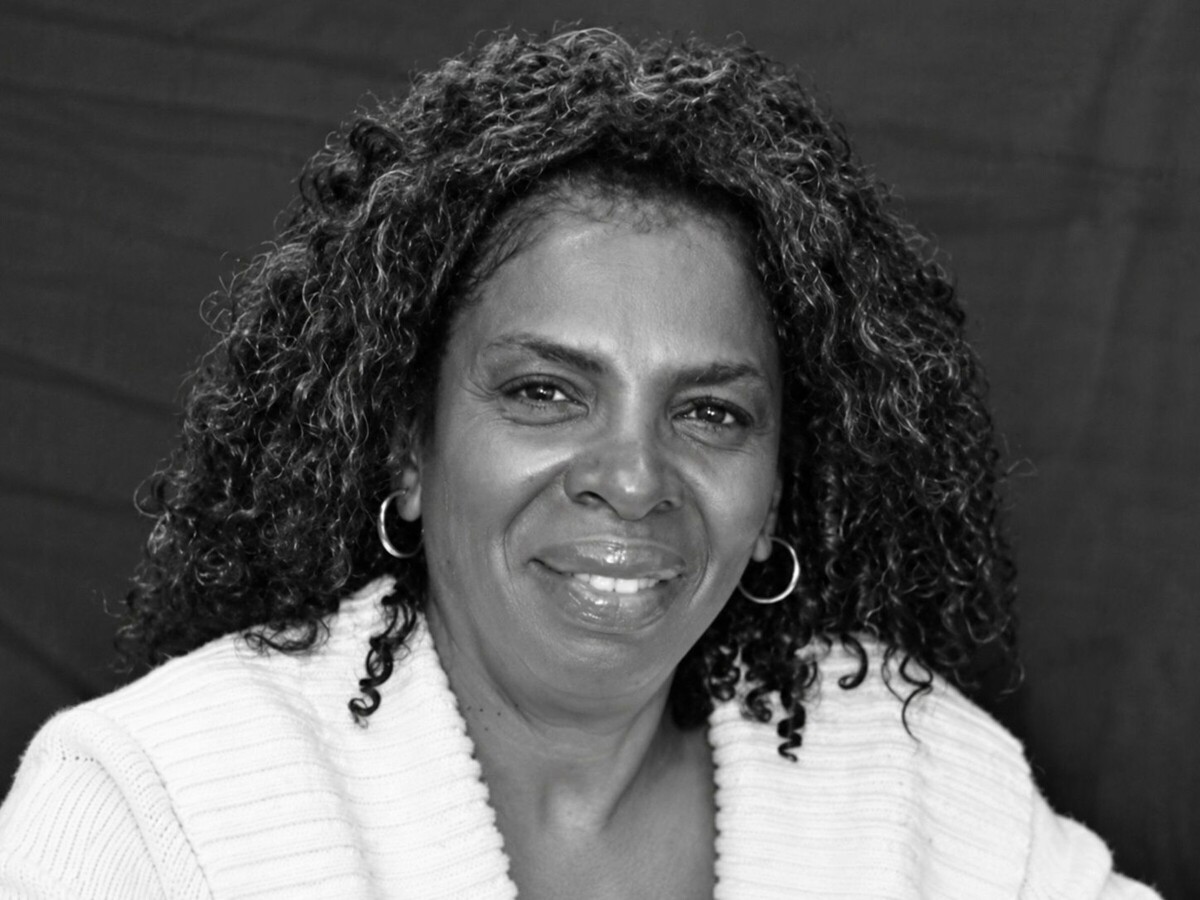
For Dr. Joyce Marrie, founder and executive director of Crossroads Panorama, an invitation to participate in a play has sometimes led to relationships lasting years, even decades. She has worked with children and adults, including young people in correctional settings, and has used writing, performance and role-playing to explore confidence, communication and personal responsibility. Her work has extended into children's literature, historical performance and educational activities intended to help participants recognize their abilities. Along the way, she has pursued advanced studies, raised a family and struggled with the financial responsibilities of maintaining a community arts organization.
When MinneapoliMedia interviewed Marrie on November 4, she was preparing another production. Children had been rehearsing since September for her adaptation of The Nutcracker, scheduled for December 4 through 6. She spoke enthusiastically about their progress, the music, the costumes and the excitement of watching inexperienced performers grow more comfortable with their responsibilities. She also spoke about the future of Crossroads Panorama and her determination to make the organization better known. After decades of working largely behind the scenes, Marrie believes the time has come to develop partnerships that can help sustain the theater and extend its reach beyond Richfield.
Marrie grew up in Boston, where writing became one of her earliest forms of expression. She kept journals, invented stories and imitated people around her, sometimes to the amusement of others and sometimes to her mother's frustration. Her mother would occasionally tell her to stop acting, but Marrie continued observing people and turning what she noticed into characters. She was drawn to the ways people spoke, behaved and responded to circumstances, and she found that writing allowed her to explore those observations more freely.
During the interview, Marrie acknowledged that her childhood included difficult experiences and periods when she struggled with confidence. She was hesitant about how much of that personal history should appear in a published account, but she readily discussed the importance of writing in helping her understand herself. "I used to journal a lot before, even as a child," she recalled. The journals provided a place for thoughts she did not always express in conversation, and over time those reflections developed into stories and plays.
Her interest in theater emerged naturally from her writing. She wanted to see characters brought to life, and she recruited family members and other willing participants to perform the parts she created. The productions were modest, but they gave her experience organizing people, explaining roles and watching how audiences responded to familiar situations. As she grew older, she began noticing that some performers recognized aspects of their own lives in the characters they portrayed.
Marrie recalled occasions when she assigned someone a role without knowing that the character's circumstances closely resembled the person's experiences. A performer might portray someone struggling with a destructive habit, a difficult relationship or a painful decision, only to reveal afterward that the story had touched on something personal. Those encounters influenced the way Marrie understood theater. She began to see how portraying another person could give performers an opportunity to examine difficult experiences through a story rather than through direct personal disclosure.
That understanding gradually became part of her approach to writing and directing. She remained interested in entertaining audiences, but she also wanted participants to learn from the situations presented in her productions. Her scripts increasingly explored personal responsibility, relationships and the possibility of making different choices, subjects that would remain central to her work with young people and adults.
Marrie traces the beginning of her organized adult theater work to a period of religious renewal. Her Christian faith became central to her understanding of purpose, and she began writing plays that explored difficult experiences through stories of personal change. She organized a small group of performers under the name Actors for Christ, gathering people who were willing to rehearse, travel and participate in productions that combined entertainment with lessons drawn from everyday life.
Marrie identifies 1992 as the founding year of the organization that became Crossroads Panorama, although her recollections describe creative activity preceding that date. Over the years, she wrote and directed productions in different venues, including spaces she recalled using at Pillsbury House and Landmark Center in St. Paul. The performers came from varied backgrounds, and many had little formal theatrical training. Marrie was more interested in their willingness to participate and learn than in whether they arrived with established credentials.
The early productions frequently explored Christian themes, but her interests gradually expanded to include family relationships, social challenges, historical figures and the development of confidence. She continued recruiting performers through personal relationships and informal encounters, sometimes approaching people who had never considered acting. Her productions brought together individuals of different ages, including parents and children who became involved in the same project.
As the organization developed, Marrie placed increasing emphasis on the educational possibilities of theater. Rehearsals required participants to remember lines, follow directions, cooperate with others and accept responsibility for their parts. She believed those experiences could be especially valuable for people who lacked confidence or had encountered difficulties in other settings. Crossroads Panorama became the organization through which she pursued those interests, combining theatrical productions with mentorship and activities intended to encourage personal development.
Marrie describes the stage as a place where people can examine themselves through the characters they portray. She believes that stories can help participants recognize patterns in their behavior, consider the consequences of decisions and practice different ways of communicating. Those beliefs have guided her work in schools, community settings and correctional institutions, where she has encountered young people facing circumstances far removed from the relatively sheltered environment of a conventional theater.
Among the experiences Marrie discussed most extensively were her years working with young people involved in the juvenile justice system. She recalled conducting activities with boys and girls in correctional settings, including participants who had experienced difficulties with authority, relationships or behavior. Her approach emphasized establishing personal connections before asking young people to participate in structured activities.
Marrie told MinneapoliMedia that she sometimes chose not to examine participants' case files before getting to know them. She wanted to form an understanding of each young person through direct interaction rather than begin with the circumstances that had brought them into an institution. That decision reflected her belief that a person's past behavior did not necessarily reveal the full extent of their abilities or potential.
Her approach nevertheless required firm boundaries. Marrie established rules, expected cooperation and intervened when behavior threatened the safety or progress of a group. She recalled an incident involving boys in a correctional setting when she noticed a confrontation developing and attempted to have one participant removed before the situation escalated. A physical altercation followed, and Marrie remembered intervening until other staff members arrived. The experience reinforced her understanding that encouragement and discipline were both necessary when working with young people who had difficulty managing conflict.
She also remembered speaking afterward with the young person involved and later watching him participate in a performance. During one program, she recalled, he recited a lengthy speech by Dr. Martin Luther King Jr., demonstrating a level of preparation that impressed adults who had not expected it from him. Marrie remembered the achievement because it showed another side of a young person whose earlier behavior had created problems.
Other programs involved teaching etiquette, organizing performances and bringing family members to watch participants demonstrate what they had learned. Marrie recalled parents becoming emotional when they saw their children performing before an audience. She also described former participants who later pursued education, employment or other interests, although those accounts remain her recollections and do not establish that participation in theater independently caused the outcomes she observed.
The experiences helped shape a principle Marrie continues to emphasize: "If you can't reach them, you can't teach them." She believes meaningful instruction depends on establishing enough trust for a young person to listen, participate and accept guidance. In her view, that relationship requires adults to demonstrate genuine interest while maintaining clear expectations. The same principle informs her work at Crossroads Panorama, where participants are encouraged to develop their abilities while learning to cooperate with others.
Marrie's work portraying Sojourner Truth occupies a particularly important place in her personal and professional development. Truth, born into slavery in New York, became an abolitionist and women's rights advocate whose public speaking challenged slavery, discrimination and the denial of women's rights. Marrie developed historical performances based on Truth's life, studying her experiences and using them to explore courage, faith and perseverance.
Her interest in Truth also became part of her writing and academic work. North Central University, where Marrie earned an undergraduate degree in psychology, profiled her in 2019 and discussed her educational background and historical performances. Marrie subsequently pursued graduate studies related to human development and the use of drama and art in therapeutic settings. She also wrote We're All on a Journey to Find Truth, connecting her study of the abolitionist with reflections on faith and personal struggle.
During the interview, Marrie explained that portraying Truth helped her confront a difficulty she had carried for years. Although she was comfortable writing scripts, directing productions and preparing other people to perform, she had not always felt confident speaking publicly as herself. "I didn't have the confidence to do it," she recalled. Putting on Truth's costume gave her a character through whom she could address an audience without feeling the same hesitation.
Through repeated performances, Marrie became more comfortable explaining historical events, speaking before groups and expressing herself publicly. She began to recognize that the confidence she demonstrated while portraying Truth was something she could develop outside the performance as well. "I think that was a platform for me to really learn about myself," she said, describing how the experience helped her address insecurities and become more willing to speak openly.
"It was a healing for me," Marrie said. She described the process as gradual, involving study, preparation and repeated opportunities to perform. The experience also deepened her appreciation of the difficulties Truth had faced and the determination required to speak publicly against injustice. Marrie developed educational materials related to Truth's life and continued using the historical figure's story in her work with young people.
Her experience with the role remains one of the clearest examples of the personal development she believes theater can encourage. Having spent years helping others prepare for public performances, Marrie found that acting could also help her confront her own uncertainty. The confidence she gained became part of her continuing work as an educator, director and community leader.
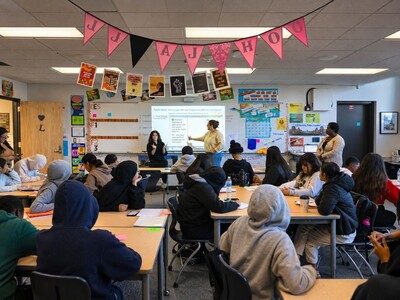
Crossroads Panorama eventually established a home in a former Blockbuster Video building in Richfield. Marrie describes the space as approximately 5,000 square feet, providing room for rehearsals, performances and activities involving children and families. North Central University's 2019 profile documented the organization operating from the former retail location, where young people gathered for theater programs.
Having a dedicated building gave Marrie greater flexibility to organize rehearsals and develop productions, but it also introduced financial responsibilities that have remained difficult to manage. Rent, maintenance, equipment and production expenses required resources beyond those available through the organization's limited income. Marrie acknowledged that she has sometimes struggled to meet those obligations and has experienced periods of uncertainty about remaining in the building.
She described the theater's continued operation as an expression of her Christian faith and her determination to fulfill what she believes is her calling. At different points, she said, assistance arrived when she needed it, allowing her to continue despite financial difficulties. Those experiences strengthened her belief that the work was worth pursuing, although they did not eliminate the practical challenges of maintaining the organization.
Marrie's contributions have received public recognition. The Richfield Human Rights Commission honored her with an Outstanding Citizen recognition in 2018, acknowledging her work with young people and the community through the arts. She has also received attention for her historical performances and educational activities, including the 2019 North Central University profile documenting her work at Crossroads Panorama.
The recognition has not resolved the organization's financial pressures. Marrie continues seeking partnerships and opportunities that could help Crossroads expand its programs and reach more families. She is particularly concerned about reductions in arts and music opportunities for young people, arguing that creative activities provide experiences that may not be available elsewhere in their lives.
Marrie also recognizes the importance of documenting the organization's work more systematically. During the interview, she discussed the possibility of research or pilot projects that could examine the methods she has developed through theater, mentorship and therapeutic role-playing. Such evaluation could help establish which outcomes can be supported by evidence and provide a stronger foundation for partnerships with educational, community and other institutions.
Her ambitions reflect a growing interest in developing Crossroads beyond the resources and relationships she has personally maintained. Marrie wants the organization to become better known and to establish a model that could potentially be used in other communities. Accomplishing that would require additional financial support, institutional partnerships and clearer documentation of the organization's programs.
Marrie's approach to recruiting participants has remained informal and personal. She recalled meeting a father shopping with his family at a Dollar Tree store near Crossroads and beginning a conversation about the theater. She asked whether his children might enjoy participating in a play, and the father decided the experience could be good for them. The family began attending rehearsals, giving Marrie an opportunity to get to know the children and involve them in the production.
She remembered the children as enthusiastic participants and spoke warmly about the relationships that developed. One boy discovered that he shared her birthday, a coincidence Marrie enjoyed recounting. The encounter reflected her willingness to approach people in everyday settings and invite them into activities they might never have considered on their own.
Her invitations extend beyond acting. Marrie has recruited people to help with costumes, stage construction, production management and other responsibilities. Someone who arrives with a child may discover an opportunity to participate, while another person may contribute a practical skill needed for a performance. During the interview, Marrie described a grandmother who accompanied a young participant and was eventually invited to portray a grandmother in the production.
She also recalled a woman who began helping with costumes and gradually became more involved in the theater's activities. Marrie was pleased to see her taking on additional responsibilities and contributing ideas during rehearsals. Such experiences have reinforced her belief that people often discover abilities through participation rather than through formal instruction alone.
Several longtime collaborators have remained involved with Crossroads over the years. Marrie said some people serving on the organization's board had participated in productions when they were younger, while another longtime supporter helped build and expand the stage. Their continued involvement has provided practical assistance and a sense of continuity for an organization that has depended heavily on personal relationships.
The informal recruitment process also shapes the atmosphere Marrie tries to create. Participants arrive with different levels of experience and confidence, but they share responsibility for completing a production. Rehearsals require cooperation, preparation and patience, particularly when children and adults are working together. Marrie considers those experiences an important part of the organization's educational purpose.
Marrie's writing has continued alongside her theatrical work, including a series of children's stories featuring Cherry Wood, a tree character who encounters challenges involving friendship, rejection, bullying and self-confidence. The character appears in Cherry Wood Finds a Home, published in 2005, and receives guidance from an older tree named Mr. Oak.
Marrie said she did not begin with a carefully developed explanation for choosing trees as characters. She wanted to create a storybook, and a cousin who was learning to draw helped produce an early illustration. As the stories developed, Marrie began thinking about the differences among trees and how those differences could help children understand individuality.
She noticed that trees vary in size, shape and appearance, and she used that observation to encourage children to appreciate their own qualities rather than compare themselves constantly with others. The stories became another way of addressing concerns she had encountered through her work with young people, particularly the effects of rejection, criticism and bullying.
Marrie has also developed a Cherry Wood affirmation toy designed to give children positive verbal messages. During the interview, she described a soft tree-shaped toy that children could hold while listening to statements such as "I am kind" and "I am loving." She hopes the messages will encourage children to develop confidence and a more positive understanding of themselves.
Her concern about children's self-image is closely connected to the language adults use around them. Asked what she would change about the way adults speak to children, Marrie answered, "The words we speak." She believes repeated criticism, negative labels and hurtful remarks can influence how children view themselves and their abilities.
Marrie also acknowledged that she has had to improve her own communication over the years. "I have not always been good at saying things right myself," she said, explaining that experience has taught her to be more careful about how she addresses people. She now places considerable emphasis on listening, patience and recognizing how words can affect someone who is already struggling with confidence.
Those lessons appear throughout her books and productions. Marrie uses fictional situations to help children think about relationships, decisions and the importance of treating others respectfully. She hopes the stories will give families and educators opportunities to discuss subjects that children may find difficult to raise directly.
Marrie's commitment to theater and education developed alongside the responsibilities of raising her children. She spoke about pursuing academic opportunities, maintaining her work and managing a household during periods when money was limited. Although she expressed pride in what her children have accomplished, she acknowledged that the years involved difficult decisions and considerable uncertainty.
One family memory has become a source of amusement. Marrie recalled an occasion when one of her sons told his grandmother that there was no food in the house. When Marrie returned home, she opened the cabinets and pointed out the ingredients available. Her son later imitated her response, remembering how she would take a small assortment of food and prepare a meal for the family.
Marrie laughed while describing the incident, particularly the way her son reenacted her movements and words. She remembered finding ways to provide meals and meet other household needs despite limited resources. Her children, she believes, learned from watching her manage those circumstances and continue pursuing her goals.
She is especially proud of their independence and the responsibilities they have assumed as adults. During the interview, she spoke about encouraging her daughter to complete her education and establish her own life. Marrie believes the example she provided as a parent influenced her children's confidence and determination, although she readily acknowledged that they also learned from other people.
Her personal responsibilities have shaped the way she approaches young people and families at Crossroads. She believes adults must demonstrate the behavior they expect from children, particularly when encouraging discipline, responsibility and constructive decision-making. She has tried to apply that principle in her own life, even while acknowledging that she has not always handled every situation perfectly.
Marrie has remained committed to the work she believes she was called to do, despite suggestions that she pursue other forms of public leadership. She recalled people encouraging her to enter politics, but she preferred to concentrate on writing, theater and community education. "I stay in my lane," she said, describing her determination to continue developing the work she knows best.
That commitment has involved personal sacrifice, including financial uncertainty and the difficulty of maintaining an organization while meeting family responsibilities. Marrie understands those experiences through her Christian faith, which she credits with helping her persevere. She also recognizes that Crossroads will need stronger partnerships and more dependable resources if it is to grow beyond what she can accomplish through personal determination.
Near the end of the interview, MinneapoliMedia asked Marrie to imagine sitting beside the younger Joyce and offering advice about life, courage, disappointment and believing in herself. Her response revealed a more personal understanding of the sacrifices that have accompanied her work.
"You had a long journey," she began, reflecting on the difficulties she had experienced and the risks she had taken. She then acknowledged a sense that her contributions had not received the recognition they deserved. "You really deserve more than what you've been getting," she said.
The remark was significant because Marrie had spent much of the conversation discussing the needs and accomplishments of other people. She spoke proudly about children learning to perform, young people developing confidence and adults discovering interests they had not previously pursued. When asked to consider her own life, however, she acknowledged that years of service had also left her wanting greater appreciation for the work she had built.
Marrie said she had spent considerable time working behind the scenes rather than seeking public attention. She now believes Crossroads Panorama needs greater visibility if it is to attract the support necessary for its future. "I just want to take it to another level," she said, describing her interest in expanding partnerships, documenting the organization's methods and reaching additional communities.
She has begun discussing those ambitions with people she hopes may be able to help. Her plans include exploring research that could examine the organization's approach and provide evidence of its effectiveness. Marrie believes the experiences she has observed over the years deserve closer study, particularly the ways theater and role-playing may contribute to confidence, communication and personal development.
Developing that work would require resources beyond those currently available to Crossroads. It would also require the organization to establish systems capable of supporting programs without depending so heavily on Marrie's direct involvement. For an institution shaped by one person's vision and persistence, that transition could become an important part of its next chapter.
Marrie remains enthusiastic about the possibilities. She wants Crossroads to become better known, attract new collaborators and create opportunities for more children and families. She also wants the organization's history and contributions to be understood by people who may never have attended one of its productions.
When MinneapoliMedia spoke with Marrie, preparations were underway for her adaptation of The Nutcracker. The children had been rehearsing since September, and the production was scheduled for December 4 through 6. Marrie expected the performance to last approximately an hour and fifteen minutes, incorporating music, dancing and singing.
The production reflected her longstanding habit of adapting familiar stories to suit the performers and audiences she works with. A friend had introduced her to another version of The Nutcracker, but Marrie decided she wanted to develop her own. "I gotta do my own Nutcracker," she recalled saying, explaining how she began rewriting the material and arranging the performance around the children participating.
Her willingness to reinterpret familiar stories was evident in earlier productions, including Scrooge in the Hood, an adaptation of Charles Dickens's A Christmas Carol that Crossroads performed over several years. Marrie wanted the story to connect with audiences through characters, language and situations they could recognize. Her approach to The Nutcracker followed a similar pattern, combining familiar material with the creative choices she believed would work for her cast.
She spoke enthusiastically about the children's progress and the excitement of seeing a production develop through rehearsals. Marrie enjoys watching participants become more comfortable with their responsibilities, particularly when they begin with little experience. She also values the relationships that develop among children, parents and volunteers as they work toward a performance.
Asked what she would say to a young person who felt forgotten or uncertain about the future, Marrie said she would begin by asking what the child wanted to become. She would listen, identify possible interests and offer encouragement based on what she observed. Sometimes she would invite the child to help with a production, believing that a practical opportunity could provide a starting point for discovering an ability.
Her approach does not assume that every participant will pursue a career in theater. Marrie has seen people become interested in costumes, stage construction, writing, directing and other activities. She considers those discoveries valuable because they give participants opportunities to learn and contribute while working with others.
Former participants sometimes approach her years later and recall something she said or did when they were younger. Marrie admitted that she does not always recognize them immediately, but she is pleased when they remember their experiences with Crossroads. Those encounters have become part of her understanding of the organization's history and the relationships it has developed over time.
Crossroads Panorama continues to face financial pressures, and Marrie knows that its future will require stronger partnerships, greater public recognition and resources that extend beyond her personal determination. She wants the organization to expand its reach, document its methods and establish relationships that could help sustain its programs. Those ambitions remain works in progress, and the broader outcomes she attributes to theater and therapeutic role-playing would benefit from independent evaluation.
Marrie has also become more reflective about the personal qualities required to sustain the work. Asked what the years had taught her, she spoke about patience and listening, acknowledging that she had not always possessed either in the measure she now considers necessary. She has learned to make time for people, to recognize that relationships develop gradually and to pay closer attention to what others are trying to communicate.
The lessons have emerged through decades of rehearsals, performances, educational activities and personal relationships. Marrie has watched children grow into adults, seen former participants return with stories about their lives and continued developing new productions while managing the practical demands of running an organization. She remains proud of what Crossroads has accomplished, but she is equally conscious of the work that remains unfinished.
More than half a century after persuading her siblings to perform in their mother's Boston garage, Marrie is still preparing people for the stage. The setting is larger, the productions are more elaborate, and the responsibilities extend well beyond writing a script. As another group of children rehearses for a December performance, she is working toward a future in which Crossroads Panorama can continue serving families without depending so heavily on her presence.
For now, Marrie remains involved in the details of the next production, from rehearsals and costumes to helping children understand their roles. She is looking forward to the audience arriving in December, when another cast of performers will have an opportunity to show what they have learned. The organization she built faces important questions about its future, but the immediate work continues inside the former video store in Richfield, where Joyce Marrie is preparing another generation to take the stage.
Reporting note: This feature is based on MinneapoliMedia's November 4, 2026, interview with Dr. Joyce Marrie, supplemented by historical reporting and bibliographic information. Personal accounts of program participants and their later outcomes are presented as Marrie's recollections, not independently verified evidence of therapeutic effectiveness.

Local stories matter. Subscribe free to MinneapoliMedia and receive independent news, community reporting and important updates from Minneapolis, the North Metro and communities across Minnesota.
SUBSCRIBE FREE: https://minneapolimedia.town.news/subscribe
MinneapoliMedia | Community. Culture. Civic Life

Sunny, with a high of 54 and low of 41 degrees. Sunny in the morning, clear for the afternoon and evening,