44° and Overcast
Image



MINNEAPOLIS, MN (November 9, 2026).
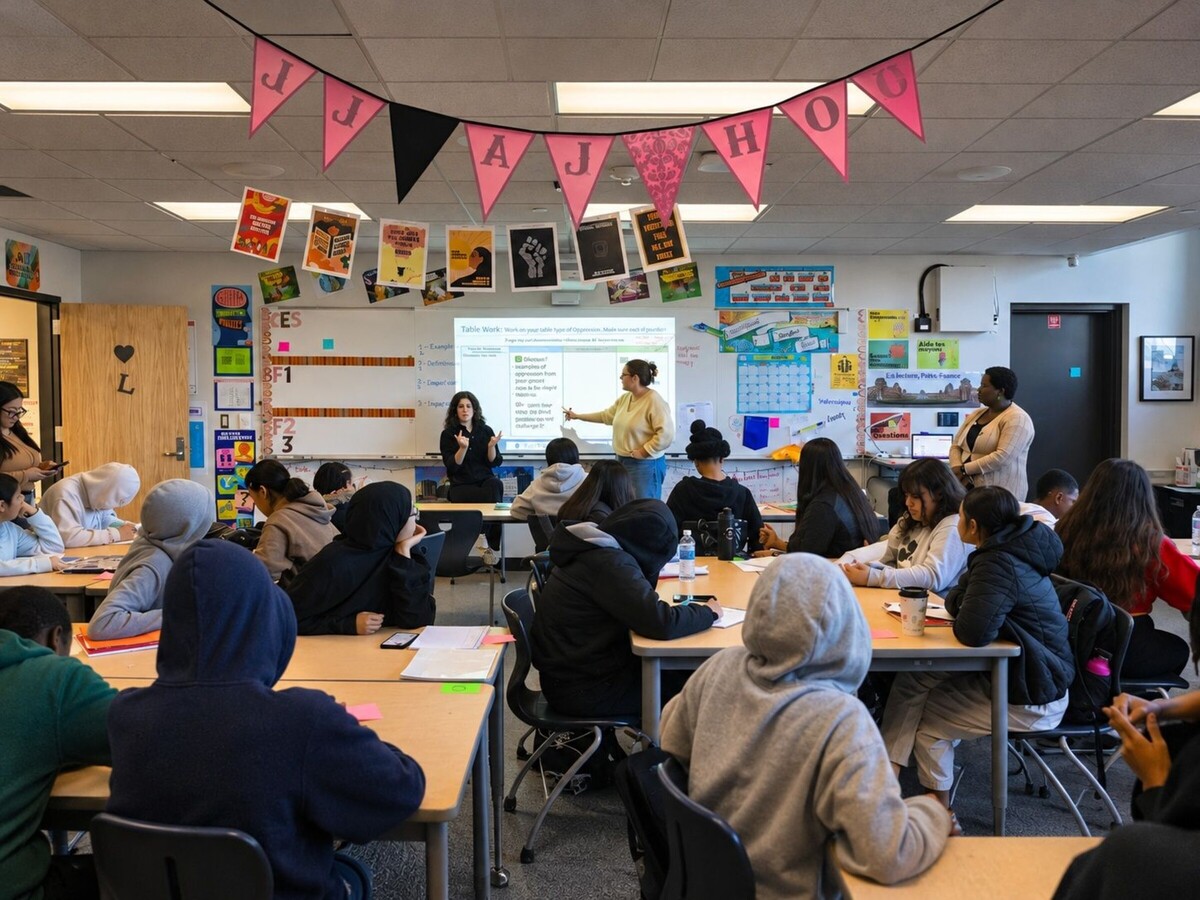
Minnesota has spent decades cultivating a reputation for educational excellence. The state points with justification to its educated workforce, respected public colleges and universities, strong high school graduation rate and history of public investment in schools. Minnesota students continue to record an average ACT score above the national average, and thousands graduate each year prepared for college, technical training and employment.
Those accomplishments are real. They are also incomplete measures of whether the state is educating all of its children successfully.
The Minnesota Department of Education released the results of its redesigned Reading Minnesota Comprehensive Assessment on September 30. Only 48.6 percent of students who took the test met the state’s reading standards. In mathematics, 44.9 percent met proficiency standards. The reading examination was new, more demanding and aligned with revised English language arts standards that emphasize comprehension, analysis, inference and media literacy. Because the test changed, the department correctly warned that its results cannot be compared directly with those from the previous assessment.
That explanation provides necessary technical context. It does not make the results satisfactory.
A new examination may change how student performance is measured, but it does not change the consequences of weak literacy. The state may call 2026 a new performance baseline. Families whose children cannot understand grade-level material experience it as something much more immediate. Students who struggle to read encounter difficulty in science, history, mathematics and every other subject that depends on written information.
Minnesota must therefore resist two equally misleading conclusions. The first is that a single standardized examination provides a complete diagnosis of every student or school. It does not. The second is that a redesigned test makes the low proficiency rate less urgent. It does not.
State assessments offer one measure taken during a limited testing period. Classroom work, local assessments, attendance, graduation, student engagement and teacher observations also matter. Even with those limitations, a statewide result showing fewer than half of tested students meeting reading and mathematics standards demands more than reassurance about future improvement.
It demands a coordinated educational response.
Minnesota has taken an important step through the Reading to Ensure Academic Development Act. The READ Act changes teacher training, curriculum selection, student screening and reading intervention. Its emphasis on evidence-based instruction can improve how schools teach foundational literacy.
The law cannot succeed by itself. Children cannot benefit from improved instruction when they are chronically absent. Teachers cannot provide sustained individual intervention when classes contain too many competing needs. Students experiencing anxiety, trauma or housing instability cannot always concentrate on reading lessons simply because a new curriculum has arrived.
Literacy, attendance and student mental health are not separate policy subjects. They are parts of the same educational system. Minnesota will continue producing disappointing results if it addresses them through disconnected programs, temporary appropriations and gradual administrative adjustments.
A Baseline Must Begin Accountability, Not Postpone It
The 2026 Reading MCA-IV measures different standards from its predecessor. The revised examination places greater emphasis on comprehension, drawing conclusions, evaluating information and interpreting different forms of media. It was administered after schools had spent only one academic year teaching the revised English language arts standards.
The Department of Education is therefore right to caution against presenting the 48.6 percent result as a direct decline from the previous year. Comparisons between different tests can distort more than they reveal.
That technical limitation should not become a political shelter.
The purpose of establishing a baseline is to measure future progress. It is not to suspend judgment until enough years have passed for the first disappointing number to fade from public attention. State officials, school boards and district administrators should identify what the assessment revealed at every grade level, within every district and among every student population.
The statewide percentage alone cannot show where instruction is succeeding or where intervention is most urgently needed. Minnesota must examine how students performed in comprehension, vocabulary, analysis and other measured skills. Districts must compare those findings with local screening data and classroom evidence. They must identify which students require immediate help rather than waiting for another annual examination.
The state must also publish results in a form families can understand. Parents should not need statistical training to determine whether their children’s schools are improving. Reports should distinguish foundational reading skills from the higher-level comprehension measured by the MCA. They should explain how local screening results relate to state assessments and what assistance is available when a student falls behind.
The distinction is especially important under the READ Act. State budget documents explain that the law focuses heavily on foundational skills, including phonemic awareness, phonics, morphology, accuracy and fluency. The Reading MCA-IV begins in third grade and concentrates more heavily on comprehension and analysis. A student must develop accurate word recognition and language comprehension before demonstrating those advanced skills, but the two measures are not interchangeable.
Minnesota should not expect one annual test to evaluate every part of reading development. It should expect its educational system to connect the information produced by each assessment.
The READ Act Is Necessary, but Its Results Will Take Time
The bipartisan READ Act represents one of Minnesota’s most significant literacy reforms in decades. It requires training in evidence-based reading instruction, approved curricular materials, universal screening and targeted intervention for students who need additional support.
The law responds to a legitimate concern that too many educators completed teacher preparation programs without receiving sufficient instruction in the cognitive science of reading. Many districts relied on methods that did not provide struggling readers with enough explicit, systematic instruction in sounds, letters, word structure, fluency and comprehension.
Correcting that problem requires more than purchasing a new set of books.
Teachers need time to complete training, understand new materials, examine student data and modify daily instruction. Literacy coaches and intervention specialists must be prepared to support classroom implementation. District leaders must determine whether the curriculum taught at each grade level builds coherently on what students learned the previous year.
The state’s implementation calendar demonstrates the size of that task. Approximately 35,000 educators covered by the first stages of the law, or about 78 percent of those required, had completed approved training during the first three years, according to the Department of Education. Remaining training requirements continue through July 2027 for groups of educators included in the second implementation phase.
The department expects meaningful assessment trends associated with the reform to begin emerging between 2027 and 2030 as students spend more years in classrooms led by trained educators. That is a reasonable instructional timeline. It is not a reasonable period for withholding help from children who are struggling now.
A student in second grade during the 2026 to 2027 school year will be approaching middle school by 2030. Without immediate intervention, the student’s difficulty will extend into subjects that assume fluent reading. Each year of delay makes remediation harder and increases the risk that frustration will turn into disengagement.
Minnesota must therefore manage two responsibilities at once. It must implement the READ Act faithfully enough to produce durable statewide reform. It must also provide direct assistance to students who cannot wait for the reform to mature.
That means funding intervention during the transition rather than assuming that professional development alone will reach every child in time. It means monitoring whether approved curricula are being used effectively rather than treating a district purchase order as evidence of successful implementation. It also means recognizing that teachers cannot provide intensive individualized instruction without sufficient staffing.
The law establishes the instructional framework. Schools still need the people and time required to make it work.
High-Impact Tutoring Can Provide Immediate Help
Minnesota already has experience with one practical response to students who need more assistance than a classroom teacher can provide.
Minnesota Reading Corps places trained AmeriCorps tutors in early childhood programs and elementary schools. Tutors deliver structured practice, monitor student progress and work under a system of coaching and professional supervision. During the 2025 to 2026 school year, Reading Corps served 21,275 students in 455 elementary schools and 105 prekindergarten sites across 75 Minnesota counties, according to state budget documents.
The program is not a substitute for licensed teachers. Its value comes from giving students more instructional time within a professionally designed system.
A classroom teacher may be responsible for more than two dozen students, including children with disabilities, multilingual learners, students performing above grade level and students who need urgent remediation. Even an excellent teacher cannot provide every struggling reader with uninterrupted individual practice each day while meeting all other classroom responsibilities.
A trained tutor can supply some of that missing capacity. The tutor can work with a student on a specific skill, record the result and adjust the next session under established guidance. That additional time allows the classroom teacher to retain responsibility for instruction while giving individual students more opportunities to practice.
Research on Reading Corps has produced encouraging findings. An independent randomized study found that, after one semester, participating kindergarten students performed twice as well on targeted literacy measures as comparable students who did not receive the tutoring. First-grade participants also recorded stronger results. ServeMinnesota reports that the model has been replicated beyond Minnesota, giving researchers a broader record on which to evaluate it.
The evidence does not justify treating AmeriCorps as an inexpensive replacement for permanent school employees. Tutors need reliable training, on-site supervision and qualified instructional leadership. Their stipends and education awards must be sufficient to recruit and retain dependable participants. Schools must integrate tutoring into the instructional day instead of treating it as an isolated program.
Minnesota should use the model for what it is: a proven way to expand direct learning time for students who need it.
The state should identify schools with the largest literacy gaps, provide stable funding for evidence-based tutoring and ensure that local programs meet clear standards for frequency, duration, training and progress monitoring. Districts should publish how many eligible students receive tutoring, how regularly they participate and whether they demonstrate measurable improvement.
Such intervention cannot be reserved for families able to purchase private tutoring. If individualized academic help is available primarily to children from wealthier households, technology access and school choice will not close Minnesota’s educational disparities.
Educational equity requires that intensive support reach students according to need rather than family income.
No Literacy Strategy Can Overcome Empty Desks
The state’s instructional reforms will have limited effect if a substantial share of students are missing weeks of school.
A student is generally considered chronically absent after missing at least 10 percent of enrolled school days. In a traditional 180-day academic year, that threshold is approximately 18 days. The absences may be excused or unexcused. Either way, the student loses instructional time.
Legislative testimony has placed Minnesota’s chronic absenteeism rate at approximately 25 percent, representing about 199,000 students and an estimated 3 million missed school days in a year. The Department of Education reported that 76.5 percent of students attended at least 90 percent of the time during the latest reporting period, which reflects the same basic concern from another direction.
Attendance problems do not affect only Minneapolis, St. Paul or a few districts with concentrated poverty. Schools across Minnesota have experienced persistent absenteeism since the pandemic. The causes vary by community and family.
Some students lack reliable transportation. Some move repeatedly because their families cannot secure stable housing. Older children may remain home to care for younger siblings. Students with chronic health conditions miss school because services are unavailable or difficult to coordinate. Others avoid school because of bullying, academic embarrassment, depression or anxiety.
The state cannot solve those problems by rewriting the definition of an absence or sending families more automated notices.
Minnesota established a three-year attendance pilot involving participating districts and required progress reports through 2027. The pilot properly emphasizes sustainable strategies and the identification of practices that work. State lawmakers have also considered allowing student-support funding to cover personnel dedicated to reducing chronic absenteeism.
That work must lead to a permanent attendance system built around early intervention.
Schools should know when a pattern is developing, not discover it after a student has missed a month of instruction. Districts need attendance teams that include educators, social workers, counselors, transportation staff and community partners. A family facing eviction requires a different response from a student avoiding class because of harassment. A generic warning letter will not address either situation.
Home visits and family outreach should be conducted by trained personnel who understand the community and can connect families to services. Schools should examine whether transportation routes, start times, disciplinary practices or program instability contribute to absences. County governments and school districts must coordinate when housing, child care, health care or court involvement is preventing attendance.
Accountability still matters. Minnesota’s compulsory education laws exist because regular attendance is essential. Families and students must understand that missing school carries serious academic consequences. Enforcement, however, should not be confused with intervention. Punishing a family without addressing the reason a child is absent may satisfy a procedural requirement while leaving the educational problem untouched.
Minnesota must measure attendance not merely as a compliance statistic, but as an indication of whether students remain connected to school.
Mental Health Support Is Educational Infrastructure
The attendance crisis cannot be separated from student mental health.
The University of Minnesota’s 2025 statewide survey of principals found that 73 percent of school leaders considered chronic absenteeism a moderate, significant or extreme interference with teaching and learning. When principals were asked to identify barriers to attendance, student mental health ranked first, selected by 64 percent. Parent or guardian mental health also appeared among the most commonly reported barriers.
Those findings confirm what educators and families have observed for years. Anxiety, depression, trauma and behavioral health needs affect whether students arrive at school, participate in class and complete their work.
Minnesota has not built enough school-based capacity to meet that need.
The University of Minnesota’s Center for Applied Research and Educational Improvement found that student-to-staff ratios for school mental health professionals remain above recommended professional guidelines throughout the state. Some regions face both high levels of student need and particularly limited staffing. The center also found that students’ sense of support and safety varies, with fewer students reporting that school systems are fair or that adults consistently listen to them.
Minnesota reportedly has approximately 539 students for each school counselor, compared with a national average of 372 students and the American School Counselor Association’s recommended ratio of 250 to one. A counselor serving more than 500 students cannot provide sustained mental health support while also managing academic planning, graduation requirements, career guidance and crisis response.
The same capacity problems affect school psychologists, nurses and social workers. Statewide averages also conceal severe local shortages. A district may technically employ support professionals while dividing their time among several buildings. A student may have access to a counselor on paper but wait days or weeks for meaningful assistance.
This shortage directly affects instruction.
A student experiencing panic, grief or instability cannot always concentrate on phonics, mathematical reasoning or a complex reading passage. When support is unavailable, distress may surface as repeated absences, classroom disruption or refusal to complete work. Schools may then respond primarily through discipline, removing the student from the instruction already being missed.
That cycle harms students with disabilities, students of color and children facing poverty most severely because those populations already encounter unequal access to outside mental health care and other support.
Every Minnesota school needs timely access to licensed mental health professionals, but staffing cannot be reduced to a symbolic requirement of one position per building. Caseloads must be manageable. Services must be culturally responsive and available without requiring families to navigate complicated referral systems. Rural schools need regional partnerships and telehealth capacity without allowing remote care to become an excuse for permanent understaffing.
State universities and colleges belong in this strategy as well. They train teachers, school counselors, psychologists, social workers and nurses. Minnesota should expand supervised clinical placements, tuition assistance and service-based scholarships for students who commit to working in shortage areas.
College campuses also face rising demand for counseling. Students do not leave anxiety, trauma or learning disabilities behind when they graduate from high school. A coherent educational pipeline must carry support into technical colleges, community colleges and universities rather than forcing students to begin again with a new waiting list.
Mental health services are not peripheral to academic achievement. They are part of the conditions that make sustained learning possible.
Minnesota Must Stop Funding Problems in Isolation
The state government often divides education into separate budget categories. Literacy belongs in one program. Attendance belongs to another. Mental health, transportation, special education and housing instability are addressed through different agencies and committees.
Students experience all of those conditions at the same time.
A third-grader may struggle to decode words, miss school because the family moved twice and arrive in class carrying untreated anxiety. Providing the student with a new reading curriculum while ignoring attendance and mental health will not produce the intended result. Adding counseling without addressing literacy will also leave the academic problem unresolved.
Minnesota needs an integrated student-support framework.
The state should direct additional resources toward schools where low proficiency, chronic absenteeism and high mental health needs overlap. Districts receiving that assistance should develop coordinated plans showing how literacy instruction, tutoring, attendance outreach and student support will work together.
The plans should contain measurable objectives. Schools should report whether students receive interventions regularly, whether attendance improves and whether academic skills strengthen. The purpose is not to create another layer of paperwork. It is to ensure that state spending reaches students in a coherent form.
Funding must also be predictable. Schools cannot recruit counselors, tutors, intervention teachers or family liaisons when positions depend on short-term grants that may disappear after one or two years. Temporary funding encourages districts to build programs they cannot sustain and causes families to lose trusted staff just as relationships begin producing results.
Minnesota’s education commitments must be assessed against their actual cost. Lawmakers should not approve ambitious instructional requirements while leaving districts to absorb training, substitute-teacher, curriculum and intervention expenses from existing budgets. An inadequately funded mandate can produce formal compliance without meaningful classroom change.
Local school boards also carry responsibility. They must examine whether district budgets protect direct instruction and student support. Administrative structures, consulting contracts and technology purchases deserve scrutiny when schools lack enough reading interventionists or counselors.
Technology can help teachers analyze progress and organize instructional material. It cannot replace the person who sits with a struggling reader, visits the family of an absent student or assists a teenager in crisis.
The State Must Judge Success by the Students Furthest From Opportunity
Minnesota’s statewide averages have always concealed substantial differences among students. A state can rank well nationally while leaving entire groups far behind. Strong outcomes among affluent students cannot compensate for persistent disparities affecting low-income children, students with disabilities, multilingual learners, American Indian students and students from several racial communities.
Educational equity does not require lowering standards. It requires providing the instructional time, professional expertise and material stability necessary for students to meet them.
That principle should govern implementation of the READ Act. Multilingual learners must receive evidence-based foundational literacy instruction without having their language development treated as a deficiency. Students with dyslexia and other reading disabilities need early identification and specialized intervention. Rural schools must receive sufficient support to train staff and recruit specialists. Tribal nations and Indigenous educators should have a meaningful role in developing instruction for American Indian students.
The same principle applies to state accountability.
Minnesota should not declare success if the statewide reading percentage rises while the largest disparities remain unchanged. Improvement must be visible among students who have historically received the least consistent access to experienced teachers, tutoring, mental health care and stable educational programming.
The state must also listen to teachers without placing the full burden of reform on them. Educators are being asked to complete demanding professional training, introduce new standards, respond to mental health needs, communicate with absent families and raise test performance. Those responsibilities require planning time, manageable class sizes and dependable support staff.
Calling for accountability while denying schools operational capacity will produce frustration rather than improvement.
A Serious Response to the New Baseline
Minnesota should treat the 2026 assessment results as the beginning of a public obligation.
The first obligation is to implement the READ Act with fidelity and transparency. Training must be completed, approved curriculum must be used effectively, and students identified through screening must receive actual intervention.
The second is to expand evidence-based tutoring for students who need immediate assistance. Reading Corps and similar programs demonstrate that trained people delivering structured instruction can accelerate learning when their work is integrated with classroom teaching.
The third is to build a permanent attendance response centered on early identification, family outreach and practical help. Schools cannot teach students who remain disconnected from them.
The fourth is to treat mental health staffing as essential educational infrastructure. Minnesota cannot demand academic performance while leaving counselors, social workers and psychologists responsible for unmanageable numbers of students.
None of these commitments is a quick policy adjustment. Together, they form the operating system required to make literacy reform succeed.
Minnesota’s new reading baseline is neither an excuse for panic nor a reason for complacency. It is a clear measurement of how much work remains. Fewer than half of tested students met the new reading standard, and fewer than half met the mathematics standard. Those figures must be interpreted carefully, but they must also be confronted honestly.
The state already knows important parts of the solution. Evidence-based instruction matters. Frequent tutoring matters. Regular attendance matters. Accessible mental health support matters. Qualified teachers and stable relationships matter.
Minnesota’s failure has been its tendency to address each need separately and expect children to bridge the gaps between programs.
They should not have to.
The success of the READ Act will ultimately be determined not by the number of educators who complete a training course or the number of districts that purchase approved materials. It will be determined by whether individual children become capable, confident readers and remain engaged in school.
Minnesota should not wait until 2030 to begin asking that question. It should ask it in every school, for every student, now.

Local stories matter. Subscribe free to MinneapoliMedia and receive independent news, community reporting and important updates from Minneapolis, the North Metro and communities across Minnesota.
SUBSCRIBE FREE: https://minneapolimedia.town.news/subscribe
MinneapoliMedia | Community. Culture. Civic Life



Sunny, with a high of 54 and low of 41 degrees. Sunny in the morning, clear for the afternoon and evening,