50° and Overcast
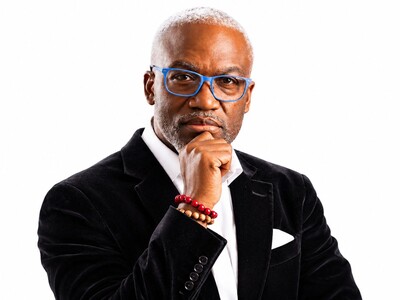
MINNEAPOLIMEDIA PRESENTS | COMMUNITY INTERVIEW SERIES: Samuel “Sam” Simmons and the Courage to Heal



From a childhood shaped by adversity to decades of work helping Minnesota communities confront trauma, Simmons has built a career around a difficult proposition: understanding why people hurt does not excuse the harm they cause, but lasting change requires both compassion and accountability.
COON RAPIDS, MN (November 5, 2026).
Samuel “Sam” Simmons was about five years old when a rocking chair became part of a lesson he would carry for the rest of his life.
His uncle had made the chair for him when his family lived in Springfield, Illinois. Simmons remembers sitting outside, waving at passing trucks and enjoying the attention when drivers sounded their horns. It was an uncomplicated childhood pleasure, one of the small things that made the world feel welcoming.
Then his father found work at International Harvester, and the family moved to Rock Island, Illinois.
Their new home was in a public housing development. Simmons, the oldest child of Margie and Samuel Simmons, had grown up surrounded by relatives who looked after him. Fighting was unfamiliar. So was the possibility that other children might see something he treasured and try to take it.
Soon after the move, several older children confronted him over the rocking chair. He went back inside, frightened and reluctant to return outdoors. His father encouraged him to defend himself.
The experience introduced Simmons to a different understanding of the world, one in which fear, self-protection, and the expectations placed on a young boy could become inseparable.
Decades later, Simmons would spend his professional life examining how experiences like those influence behavior long after the original circumstances have passed.
During an extensive interview with MinneapoliMedia's Community Interview Series, he reflected on that childhood, his unexpected entry into behavioral health, the influence of community advocate James Edward Bransford, and the initiatives he has helped sustain for African American men and families across Minnesota.
At the center of his work is a conviction that people cannot heal what they refuse to examine.
For Simmons, however, understanding the circumstances that shape a person's behavior is only part of the responsibility. People must also recognize the consequences of their actions and become willing to change.
It is an approach he calls compassionate accountability.
The Experiences That Shape a Life
Simmons's childhood unfolded amid the expectations of a strict household, a demanding religious environment, and the social pressures of growing up in a community where he initially struggled to find his place.
He remembers the move to Rock Island as a turning point.
The child who had enjoyed considerable affection and protection from extended family members suddenly found himself navigating unfamiliar relationships and expectations.
He also experienced difficulties in school, including challenges associated with dyslexia, and gradually developed a greater awareness of how fear and frustration could influence his responses to other people.
As the oldest child, he carried responsibilities that sometimes required him to behave with a maturity beyond his years.
Looking back, Simmons recognizes how those experiences contributed to his understanding of survival.
They also informed a question that would eventually become central to his professional work: What happens when people become so accustomed to surviving difficult circumstances that they never have an opportunity to examine how those circumstances have affected them?
Simmons moved to Minnesota as a young adult, seeking a different environment and opportunities to establish himself.
His early adulthood brought personal transitions and professional uncertainty. He worked as a delivery truck driver for the University of Minnesota, a position that offered a practical livelihood but gave little indication of the career that would eventually define his work.
Then an injury changed his direction.
An Injury, a Mentor, and an Unexpected Calling
Simmons injured his back while working as a truck driver and entered treatment through a chronic pain program.
The experience became an unlikely introduction to behavioral health.
At the clinic, he encountered a therapist who encouraged him to consider the relationship between emotional experiences, personal behavior, and the ways people respond to pain.
The therapist recognized abilities in Simmons that he had not necessarily recognized in himself.
Their conversations challenged him to examine longstanding patterns in his own life and introduced him to approaches that connected physical suffering with psychological and emotional experiences.
Simmons eventually returned to school and began volunteering at the clinic.
As he became more involved, he noticed something troubling about the program's relationship with African American patients.
Black men were being evaluated for treatment, he recalled, but some were not proceeding into the program.
Simmons believed the clinic needed a different approach to communicating with prospective participants.
He proposed meeting with them personally, explaining the expectations of treatment, and helping them understand how to navigate a setting that might otherwise feel unfamiliar or unwelcoming.
The proposal was accepted.
His involvement expanded, eventually creating opportunities for paid consulting work and a broader professional role.
Simmons later worked in hospital mental health services and became involved in programs addressing chemical dependency, domestic violence, and other behavioral health concerns.
He had not entered adulthood planning to become a counselor or community educator.
Instead, a workplace injury, an attentive mentor, and a willingness to pursue unexpected opportunities had opened a different path.
The experience left him with an enduring appreciation for the importance of recognizing potential in people whose circumstances may have prevented them from recognizing it themselves.
What Survival Does Not Tell Us
As Simmons's professional responsibilities expanded, he became increasingly interested in the relationship between historical trauma, personal experience, and everyday behavior.
He began questioning the tendency to describe African American communities primarily through the language of resilience.
The description acknowledges an important history of survival. But Simmons believes it can also conceal the emotional consequences of having to endure hardship across generations.
He argues that surviving adversity does not necessarily mean recovering from it.
The distinction matters because people can develop behaviors that help them navigate difficult environments but become less useful, or even harmful, under different circumstances.
Simmons identified perfectionism, excessive caretaking, and workaholism as examples of patterns that may sometimes emerge from unresolved emotional experiences.
Such behaviors can be rewarded by families, employers, and communities. A person who works constantly may be praised for dedication. Someone who assumes responsibility for everyone else's problems may be admired for generosity.
Yet Simmons believes those same behaviors deserve examination when they prevent people from attending to their own needs or establishing healthy relationships.
His concern extends to parenting and family life.
Adults who have never had an opportunity to understand their own emotional experiences may unintentionally pass certain expectations and responses to their children.
For Simmons, the question is not whether earlier generations deserve criticism for the ways they survived. It is whether subsequent generations can learn from those experiences while developing healthier ways of living.
He also believes discussions of historical and structural injustice must coexist with honest examinations of personal behavior.
Discrimination, economic inequality, and institutional barriers can shape people's opportunities and experiences. Acknowledging those conditions, he argues, does not eliminate the responsibility to examine choices and relationships within families and communities.
Nor should personal accountability become an excuse to disregard the circumstances in which people live.
Both realities must be considered.
The Meaning of Compassionate Accountability
Simmons's approach to community healing developed through years of professional experience and conversations with colleagues who sometimes understood the same problems differently.
Some placed greater emphasis on structural conditions and historical injustice. Others focused more directly on personal responsibility.
Simmons came to believe that neither approach, by itself, adequately addressed the complexity of human behavior.
The result was a philosophy grounded in compassionate accountability.
Compassion requires understanding the experiences, pressures, and circumstances that may influence a person's conduct.
Accountability requires recognizing that harmful actions have consequences and that understanding someone's history does not erase responsibility for those actions.
Simmons believes both are necessary for meaningful change.
He has applied that thinking to work involving substance use, domestic violence intervention, mental health, family relationships, and community education.
His approach does not ask people to excuse harmful behavior because someone has experienced trauma. Nor does it assume that punishment alone will help people develop healthier patterns.
Instead, he argues for responses that recognize human complexity while maintaining clear expectations.
He also believes organizations providing behavioral health and community services must examine their own practices.
Professionals who work with trauma are not immune to stress, emotional strain, or the influence of their personal experiences.
Without opportunities for reflection and support, they may struggle to provide the consistency and care their responsibilities require.
For Simmons, compassionate accountability is therefore more than a treatment philosophy.
It is also a standard that individuals, families, organizations, and communities must be willing to apply to themselves.
Making Room for Black Men to Heal
The Community Empowerment Through Black Men Healing Conference emerged from discussions about how African American men could better understand trauma and its influence on their lives.
Simmons and a colleague approached the subject from different perspectives before recognizing that their concerns were connected.
One emphasized the impact of systemic and historical conditions. The other stressed the importance of examining personal behavior and responsibility.
Their conversations helped establish a common direction.
They wanted to create a space where Black men could explore difficult experiences without being reduced to stereotypes, dismissed because of their circumstances, or excused from responsibility for their conduct.
The first conference required a substantial personal commitment from its organizers.
Rather than waiting for an established funding structure, they invested their own resources and brought together people with experience in behavioral health, education, relationships, faith communities, and related fields.
The response encouraged them to continue.
Simmons remembers a participant approaching him after the inaugural event and expressing appreciation for what had taken place. The participant also voiced a concern familiar to many people involved in community initiatives: promising programs often begin with enthusiasm but disappear when sustaining them becomes difficult.
Simmons understood the concern as a challenge to continue the work.
The conference became an ongoing effort to encourage conversations about emotional health, relationships, historical trauma, and personal responsibility.
Over time, the initiative developed relationships with educational institutions, community professionals, and supporters who recognized the importance of the work.
Women have also contributed to its development, a reality Simmons readily acknowledges.
He believes the emotional well-being of Black men cannot be separated from the well-being of their families and communities.
His argument is not that men should receive attention at the expense of women or children. Rather, he believes families benefit when every member has opportunities to address emotional difficulties and develop healthier relationships.
That includes men who may have grown up believing they were expected to endure hardship without expressing vulnerability or seeking help.
The Man Who Helped Him Understand Community Work
Among the people who shaped Simmons's professional journey, James Edward Bransford occupies a particularly important place.
Bransford was a respected Minnesota community advocate whose work included helping people navigate chemical dependency treatment, criminal justice proceedings, and other difficult circumstances.
Simmons met him through professional work involving African American men.
At the time, Simmons had developed experience in structured clinical and institutional settings. Working directly with individuals in the community required a different kind of understanding.
Bransford helped him develop it.
Simmons recalled accompanying Bransford and observing the relationships he had established with people who were often navigating complicated personal and legal circumstances.
Bransford understood institutional systems, but his influence extended beyond professional knowledge.
He was willing to show up.
Simmons remembered him accompanying people to court and offering support that reflected a personal commitment to their well-being.
He also learned from Bransford's ability to combine directness with compassion.
Bransford did not abandon expectations of responsibility. But neither did he assume that a person's difficulties or mistakes defined the entirety of that person's character.
The relationship became a source of professional guidance and personal friendship.
Simmons brought his own knowledge of structured behavioral health practices to their work together, while Bransford helped him better understand the relationships and approaches necessary for effective community engagement.
Their collaboration illustrated something Simmons would continue emphasizing throughout his career: professional knowledge matters, but so does the ability to meet people where they are.
Giving People Their Flowers While They Are Here
When Bransford experienced a serious illness, Simmons and several other men began discussing how to recognize his contributions.
They did not want to wait until his death to acknowledge the difference he had made.
The group organized a tribute that would allow Bransford to experience the appreciation of people whose lives and work he had influenced.
The recognition was arranged as a surprise.
Simmons remembered Bransford's emotional response when he realized what the gathering represented.
What began as an opportunity to honor one man became the foundation of the Sons of Bransford Awards.
The program continued because its organizers recognized that Bransford was not the only person whose service deserved acknowledgment.
Across Minnesota, people were mentoring young people, helping families navigate difficulties, supporting community organizations, and performing essential work without necessarily receiving public recognition.
The awards offered a way to honor those contributions while recipients were still alive to appreciate the recognition.
Over time, the program expanded its acknowledgments, including awards named for other individuals whose service had left a lasting impression.
Simmons spoke warmly about the legacy of Alice Lynch, a social worker whose commitment to advocating for people navigating institutional systems made her a respected figure in the community.
He also discussed John Turnipseed, whose personal journey and subsequent service became an example of transformation and mentorship.
These recognitions reflect a broader philosophy: a community's history is not preserved only through its most prominent leaders.
It also lives in the people who offer guidance, open doors, challenge harmful behavior, and remain present when others need assistance.
Twenty Years of Recognition
On October 27, 2026, the Sons of Bransford Awards celebrated their 20th anniversary at Mitchell Hamline School of Law in Saint Paul.
MinneapoliMedia attended the anniversary gathering, where the program honored individuals whose contributions included mentorship, education, public service, and community advocacy.
The event provided the opportunity for an initial conversation with Simmons and led to the longer interview that forms the basis of this profile.
For Simmons, the anniversary was significant not simply because the awards had survived for two decades, but because the recognition continued to affirm the value of service that might otherwise remain overlooked.
He spoke about the satisfaction of seeing people acknowledged for work that often receives little public attention.
He also emphasized the collective nature of the program.
The Sons of Bransford Awards did not emerge from the efforts of one person. Their history includes organizers, volunteers, honorees, sponsors, and community members whose contributions have helped sustain the initiative.
Simmons's reflections repeatedly returned to that shared responsibility.
Recognition, in his view, should not become another competition for visibility or prestige.
Its purpose is to encourage people, strengthen relationships, and remind communities that meaningful service deserves acknowledgment.
The anniversary also brought into focus a question confronting many longstanding community initiatives: How can the work continue as its original organizers grow older and the demands of sustaining it change?
The Challenge of Sustaining Good Work
Simmons is candid about the financial and organizational challenges involved in maintaining community programs.
Initiatives that depend on grants, sponsorships, and relatively small groups of supporters must regularly confront uncertainty.
The Black Men Healing Conference and Sons of Bransford Awards have not been immune to those pressures.
Simmons described the difficulty of building consistent financial support while maintaining the purpose and independence of the work.
He acknowledged that some longstanding supporters have had to reduce their contributions as their own circumstances changed.
For organizers, those developments require adjustments in planning, fundraising, and expectations.
Yet Simmons has also seen how sustained relationships can help community programs continue through difficult periods.
He recognizes the importance of developing stronger organizational structures and broadening the base of people willing to invest in the work.
The challenge extends beyond money.
Community initiatives require cooperation among people who may disagree about methods, leadership, priorities, or the pace of change.
Simmons believes those disagreements should not prevent people from recognizing shared responsibilities.
His experience has reinforced the importance of maintaining professional standards, establishing clear expectations, and understanding that good intentions alone cannot sustain an organization.
For someone whose work emphasizes accountability, the principle applies as much to community institutions as it does to individuals.
Who Supports the Person Doing the Helping?
After discussing decades of professional and community service, Simmons was asked a question that shifted the conversation away from the people he has helped.
Who supports him?
His response revealed a quieter dimension of a man whose public work has required considerable engagement with other people.
Simmons spoke about the importance of trusted relationships, personal boundaries, and having time to reflect away from professional demands.
He has learned to value periods of solitude, particularly as he has reduced some of his professional responsibilities.
The ability to establish a peaceful personal environment is not incidental to his understanding of emotional health.
It reflects a principle he encourages others to consider: people who spend their lives supporting others must also recognize their own needs.
Simmons believes men, particularly Black men, should have opportunities to acknowledge emotional difficulties without assuming that doing so diminishes their dignity or responsibility.
He questions approaches to family and community well-being that fail to include men's experiences in meaningful ways.
His concern is not with reducing support for women and children, whose safety and well-being remain essential.
Rather, he believes the health of families depends partly on whether men can examine their own experiences, establish healthy boundaries, and develop the emotional capacity to participate constructively in relationships.
He has seen how unresolved difficulties can influence parenting, partnerships, and the expectations passed from one generation to another.
For Simmons, creating opportunities for men to heal is therefore part of a larger commitment to healthier families and communities.
The Responsibility to Let Others Lead
As the conversation moved toward the future, Simmons spoke about the importance of preparing younger professionals and community leaders to continue the work.
He recognizes that the next generation may approach familiar challenges differently.
They may question established practices, adopt new methods, or develop initiatives that bear little resemblance to those created by earlier organizers.
Simmons does not necessarily see that as a problem.
He believes the underlying purpose matters more than preserving every organizational tradition.
The Sons of Bransford Awards, for example, have reached a milestone that reflects two decades of commitment. Simmons would welcome younger people finding new ways to recognize service, provided the central principle of honoring meaningful contributions remains intact.
The same applies to the Black Men Healing Conference.
He has been working with younger behavioral health professionals who understand the importance of addressing trauma and who may help carry the initiative forward.
Simmons acknowledges that leadership transitions require patience from everyone involved.
Experienced leaders must be willing to share knowledge without insisting that younger colleagues reproduce every decision they made.
Younger leaders, in turn, can benefit from understanding the experiences that shaped the institutions and programs they inherit.
The process requires mutual respect and a willingness to learn.
Simmons also recognizes the need to adjust his own expectations.
After years of experience, he may see a path forward more quickly than someone encountering a challenge for the first time. But learning requires room for questions, experimentation, and occasional mistakes.
His hope is that younger leaders will preserve the commitment to compassion, accountability, and community well-being while developing approaches appropriate to their own generation.
A Life That Was Never Carefully Planned
When asked what unfinished ambitions remained important to him, Simmons did not respond with a list of professional goals or personal achievements.
He explained that his life had not unfolded according to a detailed plan.
His entry into behavioral health had been unexpected. His involvement in community initiatives developed through relationships, professional opportunities, and circumstances that required someone to act.
He had followed those opportunities because he believed they were worth pursuing.
That outlook helps explain his attitude toward recognition and leadership.
Simmons has never been especially interested in occupying the most visible position in every organization or initiative.
He finds greater satisfaction in working with people, helping them understand difficult experiences, and supporting efforts that produce meaningful change.
He also recognizes that effective community work depends on people with different abilities and responsibilities.
Some are skilled organizers. Others are educators, advocates, counselors, or administrators.
The challenge is not to make every person a public leader, but to create conditions in which people can contribute effectively.
As he considers the years ahead, Simmons draws inspiration from Nelson Mandela's example of leadership that makes room for others to move forward.
For Simmons, leading from behind has become an increasingly meaningful aspiration.
He wants to help prepare people who can continue the work without depending on his constant presence.
It is a perspective shaped by decades of experience, including the lessons he learned from the people who recognized potential in him.
What It Means to Leave Something Behind
The young boy who once feared returning outdoors in Rock Island could not have imagined the professional journey that would follow.
He would move to Minnesota, experience a workplace injury that redirected his career, encounter mentors who helped him recognize new possibilities, and eventually become involved in initiatives addressing some of the most difficult challenges facing individuals and families.
He would also help sustain a recognition program inspired by a man who believed in showing up for people when they needed support.
There is a continuity in those experiences, although Simmons himself resists the idea that they formed part of a predetermined plan.
Someone encouraged him when he needed guidance.
Someone helped him recognize abilities he had not fully understood.
Someone showed him how to combine professional knowledge with personal commitment.
Over time, he found opportunities to extend those lessons to others.
His understanding of healing does not promise that difficult experiences can be erased or that personal responsibility can be avoided.
Instead, it asks people to examine how their experiences have shaped them, recognize the effects of their actions, and remain open to the possibility of change.
The same philosophy informs his approach to leadership.
Community work, he believes, should not depend indefinitely on one person, however dedicated or accomplished.
It should create opportunities for others to develop the knowledge, confidence, and responsibility necessary to continue.
Twenty years after the Sons of Bransford Awards began, Simmons remains committed to that possibility.
The recognition ceremonies, conferences, and professional relationships are important parts of his story. But his reflections suggest that the measure of their success will ultimately extend beyond the years he has spent helping organize them.
It will be found in the people who continue the work, the families who develop healthier relationships, and the communities willing to confront difficult truths without abandoning compassion.
For Samuel “Sam” Simmons, the next chapter may not require another position at the front of the room.
It may require knowing when to make space for someone else.
MINNEAPOLIMEDIA COMMUNITY INTERVIEW SERIES
MinneapoliMedia's Community Interview Series documents the experiences, leadership, and contributions of individuals whose work helps shape Minnesota's communities. Through in-depth conversations, the series preserves personal histories and examines the relationships, challenges, and commitments behind public service.
STAY CONNECTED TO MINNEAPOLIMEDIA
Local stories matter. Subscribe free to MinneapoliMedia and receive independent news, community reporting and important updates from Minneapolis, the North Metro and communities across Minnesota.
SUBSCRIBE FREE: https://minneapolimedia.town.news/subscribe
MinneapoliMedia | Community. Culture. Civic Life