32° and Clear
MINNEAPOLIMEDIA NEWS | Minneapolis City Council Approves Data Center Restrictions in 7-6 Vote as Mayoral Veto Looms



The ordinance would limit new data centers to existing downtown buildings, restrict server space and require individual council approval. The decision comes as the city's temporary development moratorium approaches expiration.
MINNEAPOLIS, MN (November 14, 2026).
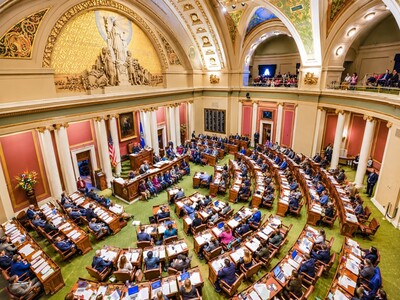
The Minneapolis City Council voted 7-6 Thursday, November 12, to approve restrictions on data center development, advancing an ordinance that would limit where facilities may operate, establish size requirements and require separate council approval for individual projects.
The decision followed months of debate over the potential effects of data centers on electricity consumption, environmental conditions, downtown redevelopment and employment. It also exposed divisions among council members over whether the city should prohibit new facilities, allow them under general zoning regulations or review each proposal individually.
The approved measure now faces the possibility of a veto from Mayor Jacob Frey, who has opposed the requirement for project-by-project council approval. A veto would require nine council votes to override, two more than the number supporting the ordinance Thursday.
The timing has become significant because Minneapolis' temporary moratorium on most new data center development is scheduled to expire November 21. Council members are expected to reconvene November 20 to address a possible veto before the moratorium ends.
Thursday's deliberations began with consideration of a complete prohibition on new data centers. That proposal failed by a 6-7 vote, after which the council approved a compromise ordinance by a 7-6 margin.
Council Members Jason Chavez, Robin Wonsley, Aisha Chughtai, Jamison Whiting, Aurin Chowdhury, Soren Stevenson and Elliott Payne supported the final measure. Michael Rainville, LaTrisha Vetaw, Linea Palmisano, Pearll Warren, Elizabeth Shaffer and Jamal Osman voted against it.
Whiting opposed the complete ban but supported the compromise, providing the seventh vote necessary for passage.
Under the ordinance, new data centers would be limited to existing buildings within two downtown zoning districts. Facilities could not become the primary use of a building, a restriction intended to preserve space for other permitted commercial activities.
The regulations would also establish limits on server space. Facilities meeting specified renewable-energy requirements could have up to 150,000 square feet of server space, while those not meeting the requirements would be limited to 50,000 square feet. The distinction concerns space devoted to servers rather than necessarily the total floor area of a property.
The requirement for individual council approval became one of the most contested provisions. Supporters argued that reviewing applications separately would allow elected officials to examine the energy demands, location and potential neighborhood effects of particular projects. Opponents questioned whether the additional approval process would create uncertainty for developers and discourage investment.
Public participation played a substantial role in the debate. Minneapolis received approximately 1,600 written comments during consideration of the regulations, with an MPR News analysis finding that most opposed data center development and nearly half supported a complete ban.
Residents and environmental advocates raised concerns about electricity demand, potential utility costs, water consumption and noise. They also questioned whether data centers would provide enough permanent employment to justify the use of substantial downtown property.
Those concerns must be evaluated according to the characteristics of individual facilities. Data centers vary in size, cooling systems, electricity requirements and operating arrangements, making it difficult to apply the same environmental or economic assumptions to every proposal.
Other council members emphasized the potential benefits of converting vacant commercial buildings into productive uses. Shaffer argued that data center development could create construction employment, generate property tax revenue and contribute to downtown economic stability.
Labor organizations, including the Minnesota AFL-CIO and Minneapolis Building and Construction Trades Council, advocated regulations that would permit development opportunities. Their involvement reflected the importance of construction employment and investment to organized labor.
The competing arguments illustrate the policy decisions facing Minneapolis as the city considers how to reuse commercial property while addressing environmental and infrastructure concerns.
The council's vote establishes its preferred regulatory approach but does not settle the matter. Frey has supported allowing data centers under certain conditions while opposing the additional requirement that each project receive a separate council vote.
If the mayor vetoes the ordinance, supporters would need to secure two additional votes to override him. Without an override, the city could face renewed uncertainty about the rules governing new applications when the temporary moratorium expires.
The November 20 council meeting is therefore expected to determine whether the approved restrictions become law or whether Minneapolis must consider another regulatory approach. The outcome will affect prospective developers, downtown property owners and residents concerned about the use of energy-intensive infrastructure within the city.

STAY CONNECTED TO MINNEAPOLIMEDIA
Local stories matter. Subscribe free to MinneapoliMedia and receive independent news, community reporting and important updates from Minneapolis, the North Metro and communities across Minnesota.
SUBSCRIBE FREE: https://minneapolimedia.town.news/subscribe
MinneapoliMedia | Community. Culture. Civic Life