38° and Clear
Image
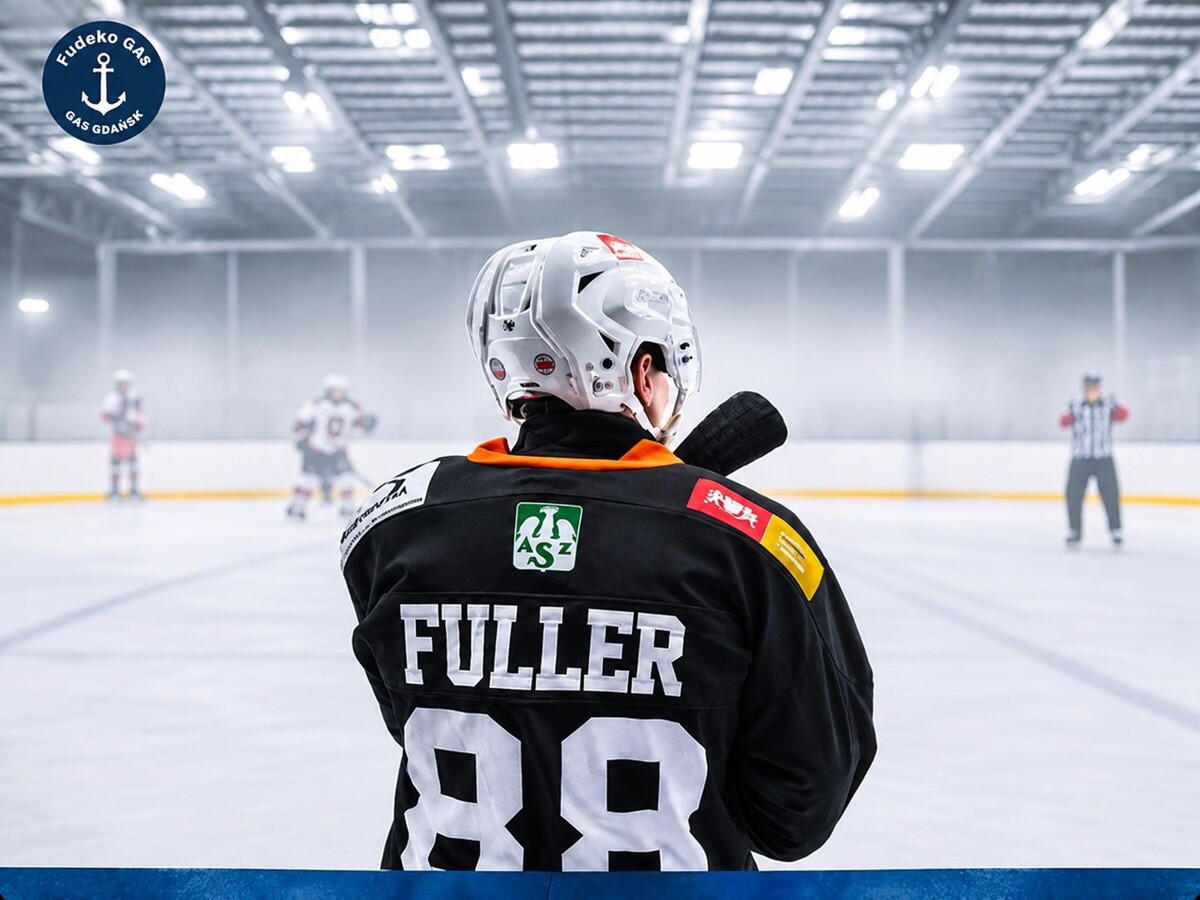



The Polish hockey club recovered from consecutive defeats against league leader Opole United with a November 14 victory over Naprzód Janów Katowice, but lost the following day's rematch. For Bloomington native Jackson Fuller, the uneven results highlight the challenges of maintaining consistency as Fudeko pursues its championship ambitions.
By Tom Akaolisa | MinneapoliMedia
GDAŃSK, POLAND (November 15, 2026). Updated November 16, 2026.
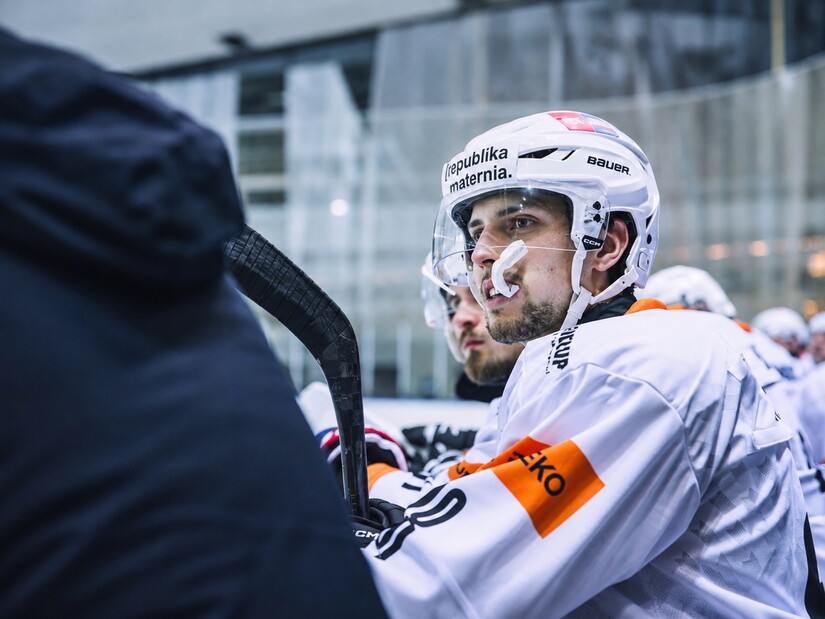
CORRECTION (November 16, 2026): An earlier version of this report incorrectly stated that Fudeko GAS Gdańsk lost its November 14 game against Naprzód Janów Katowice, 5–4. Official league records confirm that Fudeko won the game, 4–3. The report also incorrectly described the result as the team's third consecutive defeat and included an inaccurate account of the game's scoring. The game result, team record, goals-against total and related analysis have been corrected. This updated report also includes the November 15 rematch, which Naprzód Janów won 4–1. MinneapoliMedia regrets the errors.
For much of October, Jackson Fuller had reason to believe that Fudeko GAS Gdańsk was beginning to overcome the difficulties that had threatened its season before it properly began.
The Bloomington, Minnesota, hockey player had watched his team recover from two opening defeats, develop better chemistry and win four consecutive games in Poland's first division. The turnaround included two victories over crosstown rival GKS Stoczniowiec Gdańsk and a weekend sweep of SMS PZHL Katowice.
By October 25, when Fuller spoke with MinneapoliMedia about his second season overseas, he was encouraged by the progress. The players were practicing together more consistently, new arrivals were settling into their responsibilities, and the team appeared to be finding the coordination that had been missing during its opening losses.
Three weeks later, Fudeko's results present a more complicated picture.
The club suffered consecutive defeats against Opole United on November 7 and 8, losing 11–2 and 7–4. Those losses interrupted the team's four-game winning streak and raised questions about its ability to compete against the league's strongest opposition.
Fudeko responded on Saturday, November 14, defeating Naprzód Janów Katowice 4–3. The victory was particularly significant because Naprzód had defeated Fudeko twice during the opening weekend of the season.
The recovery proved brief. On Sunday, November 15, Naprzód won the rematch 4–1, leaving Fudeko with five victories and five defeats through its first 10 games.
For Fuller, a 25-year-old forward who plays center, the latest results represent another challenge in a season he entered hoping to compete for the championship that has eluded him throughout his hockey career.
They also renew questions about whether Fudeko has adequately addressed the problems Fuller described during his October interview, particularly inconsistent preparation, defensive organization and the difficulty of developing a cohesive team after a disrupted preseason.
Fudeko's season began September 19 with a 7–0 loss to Naprzód Janów Katowice. The following day, the club lost the rematch 5–4.
Fuller remembered the opening defeat as particularly discouraging.
During his October 25 interview, he explained that the team had entered the season without the preparation he believed was necessary to compete effectively.
A coaching change shortly before the opening games, the staggered arrival of players and limited access to convenient practice facilities had prevented the roster from developing a consistent routine.
According to Fuller, Fudeko had completed approximately five on-ice practices as a full group before the season began.
The lack of preparation became apparent during the opening games. Players struggled to anticipate one another's movements, defensive assignments broke down, and offensive opportunities were difficult to sustain.
The losses were particularly troubling for Fuller because he had returned to Poland believing Fudeko could compete for a championship.
He began questioning whether the team was capable of meeting those expectations.
The situation improved as players spent more time together.
A practice facility closer to the team became available, allowing Fudeko to establish a more regular schedule. Fuller reported that the players were participating in approximately four on-ice practices each week, along with gym sessions.
The increased preparation appeared to produce results.
On October 17, Fudeko defeated Stoczniowiec 4–3 in overtime after surviving a difficult third period in which Fuller recalled his team taking five penalties.
The following day, Fudeko won 7–5, although the result was less comfortable than it initially appeared. Fuller remembered his team establishing a 7–1 advantage before allowing four unanswered goals.
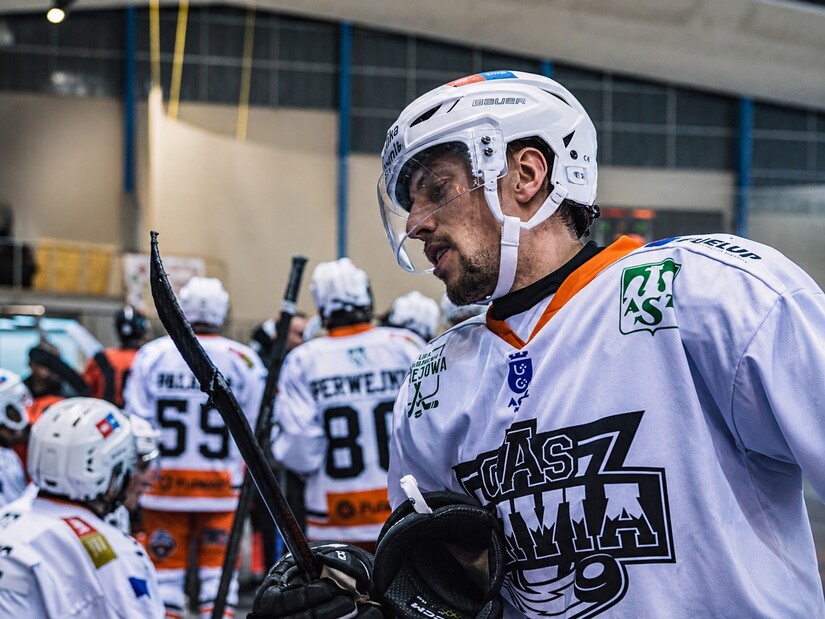
The weekend sweep gave Fudeko renewed confidence.
On October 24 and 25, the team traveled to Katowice and defeated SMS PZHL twice, winning 5–4 in overtime and 6–4.
Fudeko had recovered from its two opening defeats to win four consecutive games.
Fuller believed the improvement reflected the additional time players had spent practicing together, learning the system and understanding their responsibilities.
He also recognized that the team had much more to prove.
Fudeko's next assignment was considerably more demanding.
On November 7, the club traveled to face Opole United, one of the strongest teams in Poland's first division.
The result was an 11–2 defeat.
A day later, Fudeko lost the rematch 7–4.
The two games produced a combined score of 18–6 in Opole's favor, a significant setback for a team that had entered the weekend riding four consecutive victories.
Opole United has established itself as a formidable opponent, combining university hockey with competition in Poland's first division. Its program includes North American student-athletes pursuing their education while continuing their hockey careers in Europe.
The club's success has added another competitive challenge for Fudeko.
During his October interview, Fuller had already identified Opole as an opponent he expected to test his team. He remembered the club's physical approach, competitive intensity and willingness to engage opponents verbally during games.
He also recalled suffering an injury during a previous meeting.
The November results confirmed the difficulty of the matchup, although the scores alone do not establish why Fudeko struggled so severely.
An 11-goal performance by an opponent can reflect several problems, including defensive breakdowns, goaltending difficulties, turnovers, penalties or a combination of those factors.
Determining which contributed most heavily to Fudeko's losses requires a closer examination of the game records and the players' accounts.
What is clear is that the defeats interrupted the progress Fuller had described only two weeks earlier.
They also exposed the difference between winning close games against some opponents and competing effectively against the league's strongest teams.
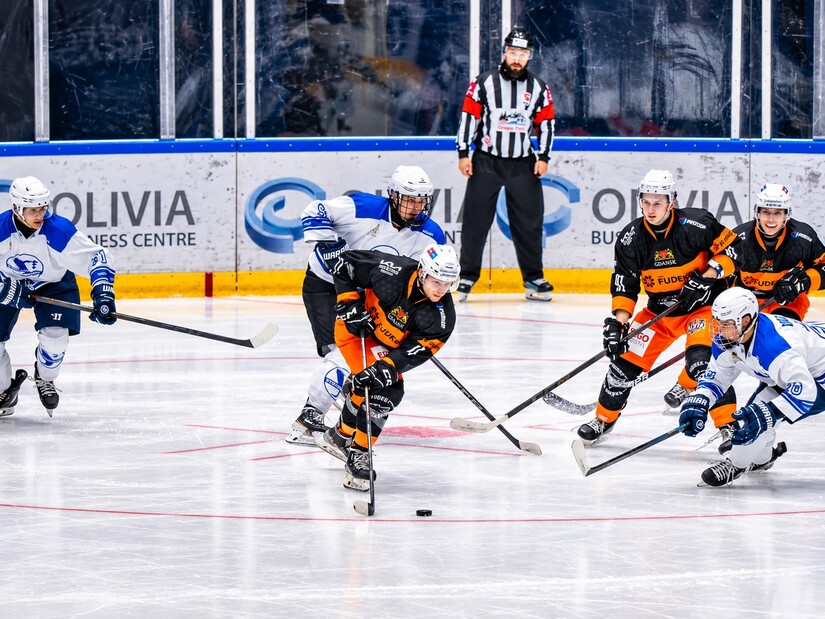
Fudeko's November 14 meeting with Naprzód Janów provided an opportunity to respond to the Opole defeats.
The teams had already met twice in September, when Naprzód recorded victories of 7–0 and 5–4.
This time, Fudeko emerged with a 4–3 victory.
The result ended the club's two-game losing streak and gave its players a measure of encouragement following the heavy defeats against Opole.
It also represented Fudeko's first victory over Naprzód in three meetings during the current season.
The result was important for a team attempting to establish itself against opponents that had previously exposed its weaknesses.
However, the second game of the weekend demonstrated that Fudeko's difficulties had not disappeared.
On November 15, Naprzód defeated Fudeko 4–1, splitting the weekend series.
Across the two games, Fudeko scored five goals and conceded seven.
The weekend offered evidence of both the team's ability to respond after disappointing results and the inconsistency that continues to complicate its season.
Saturday's victory showed that Fudeko could defeat an opponent responsible for two of its earlier losses. Sunday's defeat demonstrated that producing another competitive performance would require more work.
The split also placed the team's recent form in perspective.
Since completing its four-game winning streak on October 25, Fudeko has won once and lost three times.
The results do not support a conclusion that the team is incapable of competing. They do, however, indicate that it has struggled to maintain the consistency required to challenge stronger opponents over successive games.
Fudeko's defensive record remains an important concern.
Through its first eight games, the club had scored 32 goals and conceded 46, producing a goal differential of minus 14.
The November 14 victory over Naprzód increased those totals to 36 goals scored and 49 conceded.
Following Sunday's 4–1 defeat, Fudeko had scored 37 goals and allowed 53 through 10 games, leaving a goal differential of minus 16.
The club has therefore conceded an average of 5.3 goals per game.
The numbers suggest that Fudeko has struggled to limit opposing teams' scoring, although they do not establish whether the primary difficulties originate with defensive positioning, turnovers, goaltending, penalty killing or broader team organization.
Fuller's earlier account provides some context.
During the October 17 derby against Stoczniowiec, he remembered Fudeko taking five penalties in the third period alone. Fuller, who plays center and is regularly used on the penalty kill, was repeatedly called upon to help defend against the opposition's power play.
He admitted that he feared the penalties might eventually cost his team the game.
Fudeko survived and won in overtime, but the experience demonstrated how difficult it can be to maintain control when a team repeatedly plays shorthanded.
The November results raise further questions about the team's defensive consistency.
Opole scored 18 goals across two games, while Naprzód added seven during the November 14 and 15 series.
Those totals are substantial, particularly for a team attempting to compete for a championship.
Fudeko has also demonstrated that it can generate offense. During its October winning streak, the club scored 22 goals across four games.
The challenge is to combine that offensive production with a more reliable defensive performance.
Saturday's 4–3 victory against Naprzód showed that Fudeko could win a closely contested game against a strong opponent.
Sunday's defeat illustrated the difficulty of sustaining that performance.
For a club with championship ambitions, the ability to respond to setbacks is important. So is the ability to avoid repeating them.
Fudeko's roster includes a substantial number of young players, including several born in 2007 and 2008.
Fuller is among the more experienced members of the team, alongside veteran Polish forward Szymon Marzec and other players who have competed at higher levels.
The age composition creates opportunities for development but also places demands on a team attempting to compete consistently against stronger opponents.
Younger players may possess speed and technical ability while still developing the experience needed to manage difficult situations, maintain defensive discipline and respond to momentum changes.
That does not mean Fudeko's recent losses can be attributed to youth alone.
The team's problems may also reflect the limited preparation Fuller described earlier, the adjustment required by new arrivals and the competitive improvement of opposing clubs.
Fuller has acknowledged that the league appears stronger than it was during his first season.
Stoczniowiec, for example, recruited additional talent after a disappointing previous campaign. Its October meetings with Fudeko were much closer than some of the encounters Fuller remembered from the preceding season.
Opole United presents a different challenge, with a university-based program that draws heavily from North American hockey.
Naprzód Janów has also proved difficult for Fudeko, winning three of the teams' four meetings through November 15.
Fudeko must find ways to compete against all three opponents if it intends to remain in championship contention.
The challenge extends beyond individual skill.
Players must develop reliable defensive habits, maintain discipline and execute consistently throughout games.
Those requirements become especially important when the opposition has enough offensive talent to capitalize on mistakes.
One of the most consequential details from Fuller's October interview concerned the difficulties Fudeko experienced before the season began.
He described a coaching change shortly before the opening games and a roster that had not practiced together consistently.
The team also faced challenges finding suitable practice ice.
At one point, Fuller said, a facility available for training was approximately three hours away.
A closer rink eventually became available, allowing the team to establish a more practical routine.
Fuller believed the additional practice time contributed to the October winning streak.
The question now is whether the improvement has been sufficient to overcome the disadvantages created by the team's disrupted preparation.
Fudeko also opened the season with eight consecutive games away from home.
Travel, scheduling and access to familiar facilities can complicate a team's preparation, particularly when players are still adjusting to new teammates and coaching expectations.
The club's November 14 home game against Naprzód Janów was scheduled at a rink in Suchy Dwór rather than its larger Hala Olivia venue.
Such arrangements may be relevant to the team's operating circumstances, although there is insufficient evidence to conclude that the venue contributed directly to either the November 14 victory or the November 15 defeat.
A more complete assessment would require information from team management and coaches about the availability of practice ice, travel demands, scheduling decisions and the preparation program now in place.
While Fudeko attempts to regain consistency, Fuller continues navigating the responsibilities of his second season overseas.
The Bloomington native has been receiving substantial ice time at center, his preferred position, and has described assignments on the power play, penalty kill and during three-on-three overtime.
He has also developed a close working relationship with teammate and roommate Kuba Prokurat.
Prokurat, who previously competed at Poland's highest hockey level, has helped Fuller understand aspects of the Polish game, including breakouts, positioning, shooting opportunities and offensive systems.
Their relationship has contributed to Fuller's adjustment both on and off the ice.
During his first season in Gdańsk, Fuller experienced seven difficult weeks of loneliness and homesickness that nearly prompted him to leave Poland.
He eventually developed friendships with teammates and other people in the community, giving him reasons to remain and return for another season.
Those relationships have become an important part of his experience.
In October, Fuller described how surprised he had been when a teammate spoke to him in Polish and he answered naturally, without stopping to translate the words in his mind.
He also spoke warmly about supporters who had brought handmade posters bearing his name to games.
The developments reflected a level of familiarity and belonging that had seemed distant during his first weeks overseas.
His personal adjustment, however, does not diminish the competitive pressure he faces.
Fuller returned to Poland because he wanted another opportunity to win a championship.
He has pursued that goal since childhood, through his years at Bloomington Kennedy, junior hockey and the University of Minnesota Crookston, where he became a captain.
Despite those experiences, he has never won the championship he has long imagined celebrating with teammates.
Medical school remains part of his future, and Fuller has already delayed that ambition to continue playing hockey.
He understands that his opportunity to pursue the sport overseas may not last indefinitely.
That makes the current season especially important to him.
Fudeko's immediate challenge is to build on the November 14 victory while addressing the weaknesses exposed by its subsequent defeat.
The club is scheduled to face Opole United again on November 21 and 22, providing another opportunity to measure its progress against the opponent responsible for its most lopsided defeat of the season.
The coming games will help establish whether Fudeko can sustain the improvements that produced its October winning streak and Saturday's victory over Naprzód.
For Fuller, the answer matters because his goals extend beyond individual performance.
He wants to contribute offensively, improve his overall game and help his teammates compete for a championship.
He also wants to finish his time in Poland knowing that he made the most of an opportunity he may not have again.
When MinneapoliMedia interviewed him on October 25, Fuller was encouraged by the team's progress and the relationships he had developed in Gdańsk.
The latest results have introduced another challenge.
Whether Fudeko can respond will depend on how effectively its players and coaches address the problems that have emerged, particularly defensive consistency, discipline and the ability to compete against the league's strongest opponents.
MinneapoliMedia has sought Fuller's perspective on the recent results, including whether the team's preparation, chemistry or approach has changed since the October interview.
His response will help clarify what is happening inside the team as it attempts to establish greater consistency.
For now, the results present a season that has moved through several changes in momentum.
Two opening defeats were followed by four consecutive victories. Two heavy losses against Opole interrupted that progress before Fudeko responded with a victory over Naprzód. Sunday's rematch brought another setback.
With much of the season still ahead, Fuller and his teammates have opportunities to improve their position.
Their next performances will provide a clearer measure of how far the team has progressed and what remains to be done.

Local stories matter. Subscribe free to MinneapoliMedia and receive independent news, community reporting and important updates from Minneapolis, the North Metro and communities across Minnesota.
SUBSCRIBE FREE: https://minneapolimedia.town.news/subscribe
MinneapoliMedia | Community. Culture. Civic Life



Sunny, with a high of 52 and low of 36 degrees. Cloudy in the morning, sunny for the afternoon, clear in the evening,