82° and Sunny
Image




This annual shift is the spirit behind Bike to Work Week, a nationwide initiative that will return May 11 through May 15, 2026, culminating in National Bike to Work Day on Friday, May 15.
In Minnesota’s north metro, the effort is coordinated locally by Anoka County Commute Solutions, which is inviting businesses, institutions, and employees across the county to participate in the weeklong campaign encouraging residents to try commuting by bicycle, even if only once.
The event is part of National Bike Month, a national observance launched in 1956 by the League of American Bicyclists to promote cycling as both recreation and transportation. Seventy years later, the campaign has grown into one of the country’s largest annual transportation awareness efforts, engaging thousands of communities and workplaces.
In Anoka County, the initiative is designed to bring that national momentum down to the local level, turning everyday commutes into opportunities for healthier living, cleaner air, and stronger community connections.
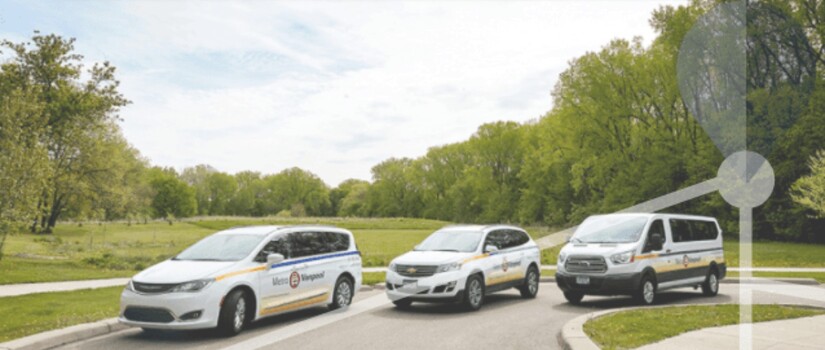
The organization leading the campaign in the north metro, Anoka County Commute Solutions, operates as a partnership between Anoka County and the Suburban Transit Association, with funding support from the federal Congestion Mitigation and Air Quality (CMAQ) program administered through the U.S. Department of Transportation.
The program’s mission is straightforward: reduce single-occupancy vehicle trips and promote alternative transportation options such as transit, carpooling, telecommuting, and biking.
Communities served by the program include cities across the county such as Andover, Blaine, Coon Rapids, Anoka, and Ramsey, where many residents commute daily throughout the Twin Cities metropolitan area.
By encouraging even short-distance commuters to experiment with cycling, organizers say Bike to Work Week helps reduce congestion, improve air quality, and introduce residents to new ways of navigating their communities.
Across the country, employers have increasingly embraced Bike to Work Week as both a wellness initiative and a cultural moment within the workplace.
According to data from the U.S. Census Bureau’s American Community Survey, bicycle commuting still represents a relatively small share of total work trips nationwide. Yet even modest increases in cycling participation can have measurable effects on transportation infrastructure and public health.
To support participation, Anoka County Commute Solutions offers registered workplaces a range of tools and resources, including:
• Event planning assistance for workplace Bike to Work celebrations
• Swag bags and promotional materials for employees who ride
• Bike to Work Week T-shirts and visibility materials
• Route planning support, including access to Anoka County’s GIS-based bicycle route mapping tools
• Information on Guaranteed Ride Home programs, which provide free emergency rides for bicycle commuters who unexpectedly need transportation during the day
These programs are designed to address one of the most common concerns among new riders: uncertainty about logistics. Knowing there is a backup ride home in case of weather or emergencies often helps first-time cyclists take the leap.
Transportation remains the largest source of greenhouse gas emissions in the United States. For that reason, even small shifts in commuting behavior can have meaningful environmental impacts.
According to the United States Environmental Protection Agency, the average passenger vehicle emits about 404 grams of carbon dioxide per mile.
For an employee with a 10-mile round-trip commute, choosing to bike instead of drive can prevent roughly 4 kilograms of carbon emissions per day.
When multiplied across dozens or hundreds of employees during Bike to Work Week, the reduction in emissions can become significant, particularly in suburban areas where many trips are relatively short.
Cycling advocates often point out that the most polluting vehicle trips are short trips under five miles, where engines operate inefficiently. These are also the trips most easily replaced by bicycle commuting.
The health benefits of bicycle commuting have also been widely documented.
One of the most frequently cited studies, published in the British Medical Journal (BMJ), tracked more than 250,000 commuters in the United Kingdom. Researchers found that individuals who cycled to work regularly had a 41 percent lower risk of dying from any cause compared with those who commuted by car or public transportation.
The same study found that cycling commuters had a 52 percent lower risk of death from heart disease and significantly reduced cancer risk.
Public health researchers often highlight commuting by bicycle as one of the most practical ways for adults to incorporate daily physical activity into their routines without needing additional time for exercise.
Beyond health and environmental benefits, bicycle commuting can also offer substantial financial savings.
The League of American Bicyclists estimates that the average annual cost of owning and operating a bicycle is around $300, including maintenance and equipment.
By comparison, the American Automobile Association (AAA) estimates that the average cost of owning and operating a sedan exceeds $10,000 per year, once fuel, insurance, depreciation, and maintenance are included.
For employees who can replace even part of their commute with cycling, the savings can amount to what advocates sometimes call a “hidden raise” in take-home income.
For employers across Anoka County, the program is designed to be flexible and easy to implement.
Organizations can participate in a variety of ways during Bike to Work Week, May 11–15, including:
• Hosting a Bike to Work Day celebration on May 15
• Creating a workplace pit stop offering coffee, breakfast, or snacks to cyclists
• Encouraging employees to bike at least once during the week
• Establishing Bike Buddy systems to help new riders learn safe routes
• Providing temporary or secure bike parking at workplaces
For many companies, the activities are simple. Sometimes they are as small as a morning coffee table set up for riders arriving at the office.
Yet organizers say those moments can have lasting effects.
Seeing coworkers arrive by bike often normalizes cycling in a way statistics alone cannot.
Programs like Bike to Work Week are part of a broader movement among cities and counties seeking recognition as Bicycle Friendly Communities, a designation administered by the League of American Bicyclists.
Communities that invest in bicycle infrastructure and encourage cycling culture often see secondary benefits: higher property values, improved public health outcomes, and increased appeal for younger workers seeking active transportation options.
For suburban counties like Anoka, where many daily trips are relatively short, bicycle commuting also represents an opportunity to rethink transportation patterns that have historically relied almost entirely on automobiles.
Bike to Work Week: May 11–15, 2026
National Bike to Work Day: Friday, May 15, 2026
Employers interested in participating can register through the Anoka County Commute Solutions website:
https://www.anokacountymn.gov/4402/Bike-to-Work-Week-2026
For organizers, Bike to Work Week is not about replacing cars overnight.
It is about introducing a simple possibility.
One morning ride.
One new route discovered.
One commute that feels less like a grind and more like movement through the world.
And sometimes, that first ride is enough to change how people travel every day after.
MinneapoliMedia
Community. Culture. Civic Life.



Patchy rain nearby, with a high of 89 and low of 69 degrees. Cloudy during the morning, partly cloudy in the afternoon, sunny during the evening, patchy rain nearby overnight.