Image
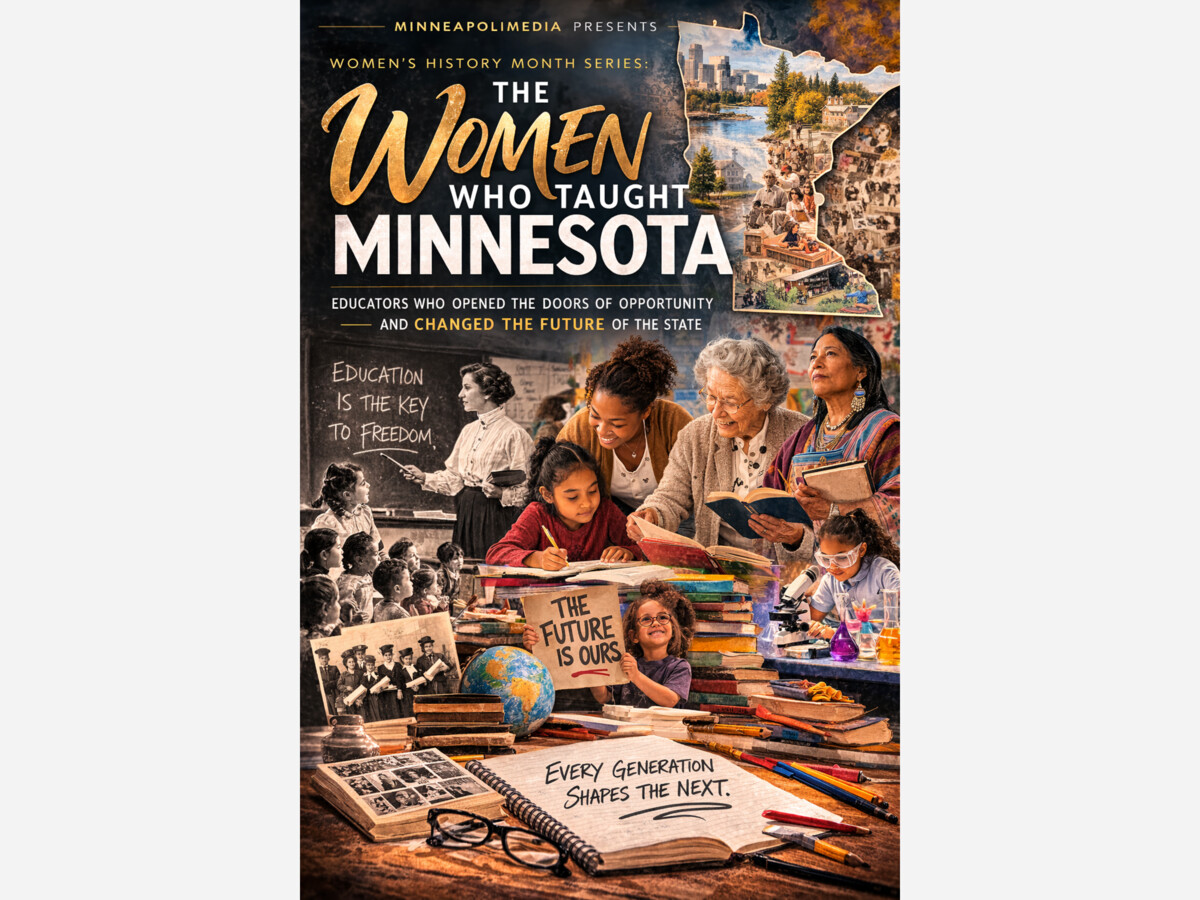



Frontier communities were scattered across a vast northern landscape. Formal school systems barely existed. Many children learned only what their families could teach them at home.
In those early years, the promise of education in Minnesota depended almost entirely on the determination of individuals who believed that learning could transform a society still in its infancy.
Many of those individuals were women.
They arrived in new settlements carrying books, slates, and the conviction that knowledge should belong to everyone, not just the privileged few. In one-room schoolhouses, church basements, and small classrooms built by hand, they laid the foundations of an educational system that would eventually become one of Minnesota’s defining strengths.
Their work did more than teach reading and arithmetic.
It helped shape the civic identity of the state.
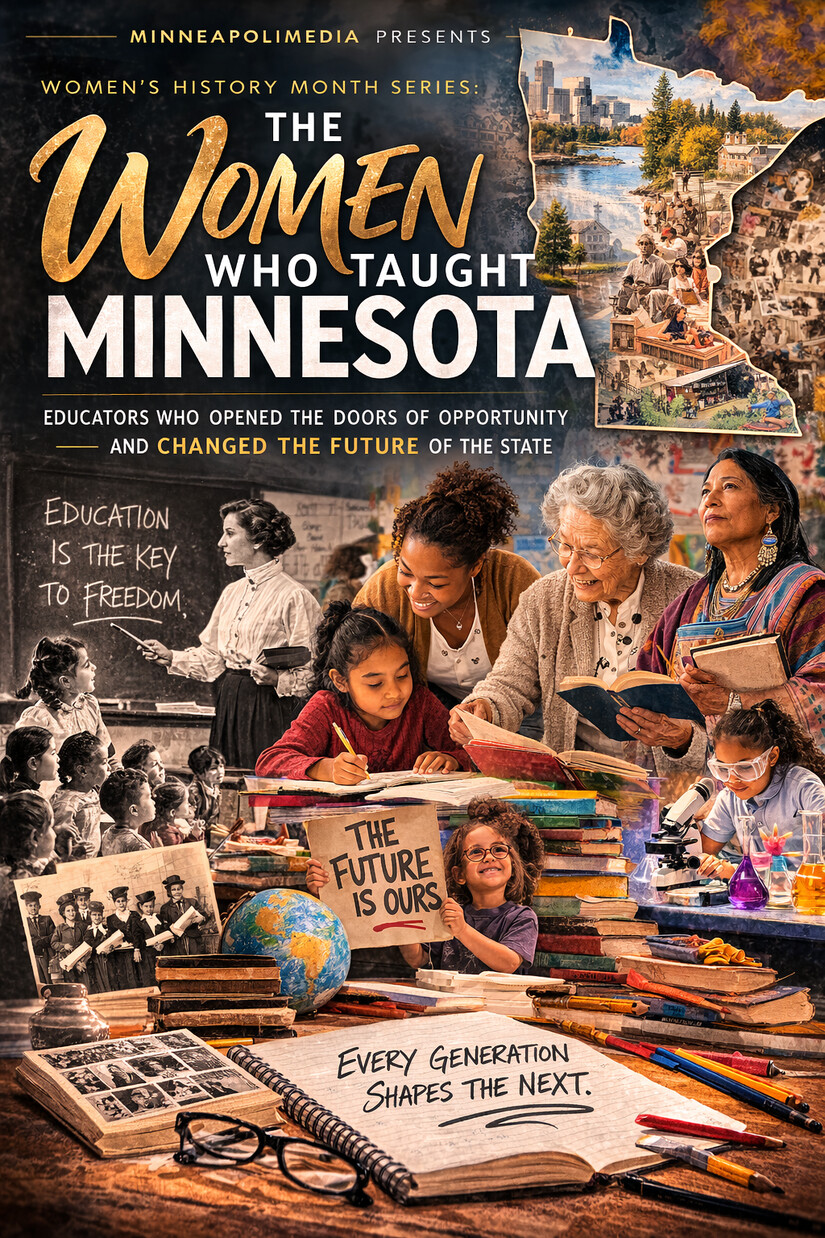
One of the earliest figures in Minnesota’s educational history was Harriet Bishop.
In 1847, Bishop arrived in St. Paul at a time when the settlement was still little more than a frontier town. Determined to create opportunities for learning, she opened the first public school in the city, teaching children in a modest log building.
Her classroom represented more than a local experiment in education. It marked the beginning of Minnesota’s commitment to public learning.
Bishop believed that education was essential to building a democratic society. Her work extended beyond the classroom as she advocated for expanded educational opportunities across the region.
From those early efforts grew a public school tradition that would eventually reach every corner of the state.
As Minnesota developed through the nineteenth and twentieth centuries, women continued to shape the educational system.
But for African American communities, access to opportunity often required confronting barriers that others rarely faced.
Schools across the United States were shaped by racial discrimination, unequal funding, and limited opportunities for students of color. Minnesota was not immune to those realities.
In response, African American educators and community leaders worked tirelessly to ensure that education could serve as a pathway toward equality rather than exclusion.
Among the most influential figures in that struggle was Josie R. Johnson.
Johnson’s career bridged civil rights advocacy and higher education leadership. She played a crucial role in advancing fair housing and educational equity in Minnesota while also helping transform the University of Minnesota into a more inclusive institution.
Her work helped ensure that the doors of higher education would open wider for communities historically denied access.
Johnson believed deeply in the transformative power of education. For her, classrooms were not simply spaces for learning facts. They were spaces where the future of democracy itself was shaped.
Another towering figure whose life intersected with education and civil rights was Anna Arnold Hedgeman.
Born in Iowa and educated in Minnesota, Hedgeman became the first African American woman to graduate from Hamline University in 1922. She went on to teach, organize, and advocate for racial equality throughout her career.
Hedgeman believed that education carried a moral responsibility.
Schools, she argued, should prepare citizens not only for employment but also for participation in a democratic society committed to justice and equality.
Her later work as a civil rights leader, including her role in organizing the 1963 March on Washington for Jobs and Freedom, reflected that belief.
Education and civic responsibility were inseparable.
While some educators became nationally recognized figures, thousands of women across Minnesota carried out the quieter but equally important work of teaching in local communities.
They taught in small towns and growing cities.
They mentored immigrant children learning English for the first time.
They helped rural communities develop school systems capable of educating new generations.
They organized after-school programs and community education initiatives that extended learning beyond classroom walls.
For many students, these teachers represented the first adults outside their families who encouraged them to imagine larger possibilities for their lives.
The influence of a teacher often extends far beyond the classroom.
A word of encouragement can alter a young person’s path.
A lesson in civic responsibility can shape a lifetime of public engagement.
Through those everyday interactions, teachers quietly shape the character of a society.
As Minnesota entered the modern era, women continued to lead in education across every level of the system.
Women became principals, superintendents, university professors, and researchers whose work influenced educational policy throughout the state.
Their leadership helped address challenges such as:
• expanding access to higher education
• improving literacy and early childhood development
• supporting immigrant and refugee students
• closing opportunity gaps affecting underserved communities
Education remained one of the most powerful tools available for strengthening Minnesota’s civic life.
And women remained central to that work.
Every society must decide what it values enough to teach its children.
In Minnesota, generations of women educators helped answer that question.
They taught students how to read the words of history.
They taught them how to question injustice.
They taught them how to participate in a democratic society.
And in doing so, they helped build a state where education is widely recognized as one of the most powerful forces for opportunity.
Minnesota’s reputation for strong schools and engaged citizens did not emerge by accident.
It was built in classrooms across the state by women who believed that knowledge should open doors, not close them.
Today, teachers across Minnesota continue the work begun by those early pioneers.
They guide students through new challenges, new technologies, and a rapidly changing world.
Yet the core mission remains the same.
Education is not only about transmitting information.
It is about preparing the next generation to build a more thoughtful, more compassionate, and more just society.
The women who taught Minnesota helped shape the intellectual and moral foundations of the state.
Their influence can be seen in every classroom, every graduation ceremony, and every citizen who carries forward the lessons they learned from a teacher who believed in them.
Their work helped define Minnesota.
And their legacy continues to shape its future.
MinneapoliMedia
Community. Culture. Civic Life.



Sunny, with a high of 87 and low of 45 degrees. Sunny for the morning, clear overnight.