82° and Patchy rain nearby
Image
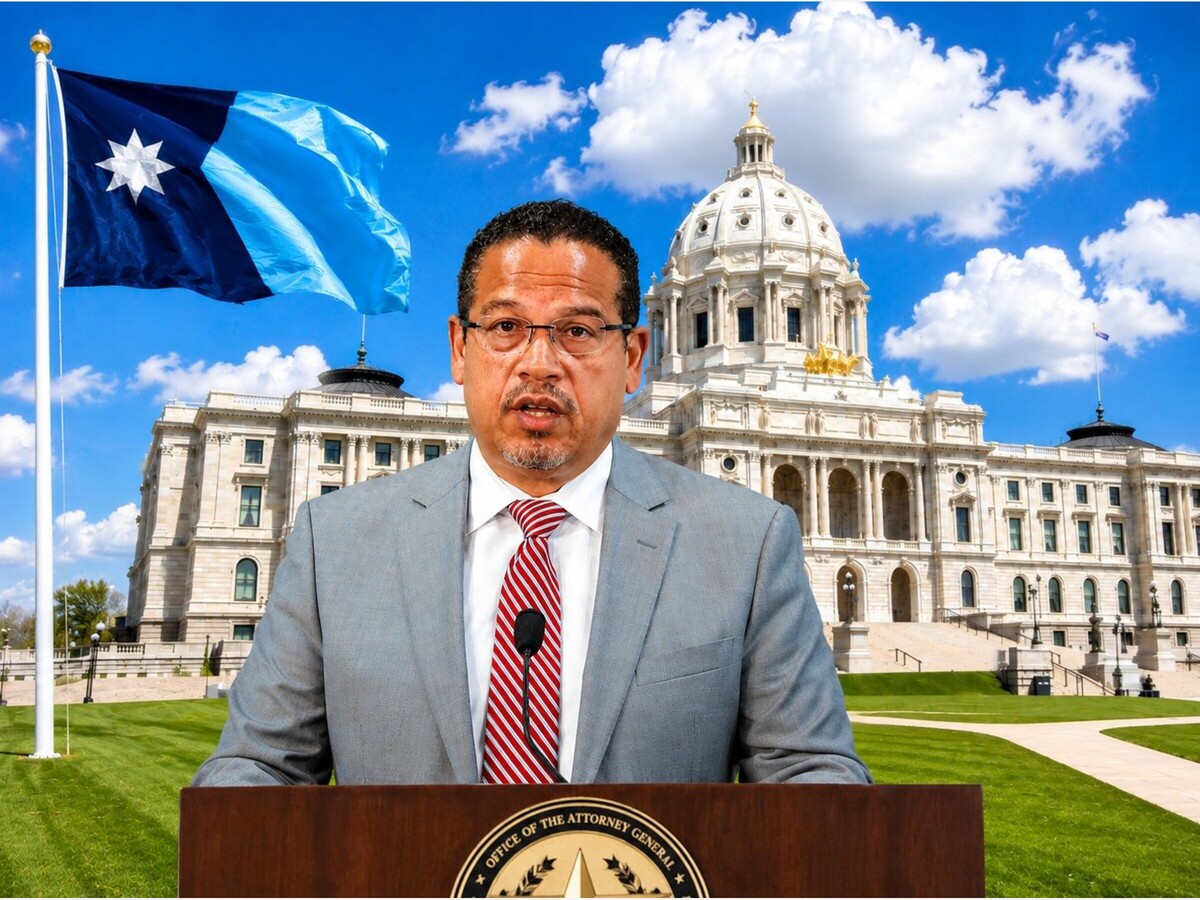



ST. PAUL, MN (June 20, 2026) A legal fight unfolding in federal court in Minnesota could help determine who ultimately controls one of the fastest-growing and most controversial sectors of online finance in America.
At stake is Minnesota's newly enacted prohibition on prediction markets, a first-in-the-nation law that seeks to ban platforms allowing users to place money on the outcomes of elections, sporting events, geopolitical developments, economic indicators, weather events, and countless other real-world occurrences.
Supporters of the law call the platforms a sophisticated form of gambling operating outside traditional gaming regulations.
Opponents describe them as federally regulated financial exchanges that provide valuable forecasting tools and market-based information.
The dispute now sits before a federal judge, with Minnesota Attorney General Keith Ellison leading the state's defense of the law and the federal government, major prediction-market operators, and industry advocates seeking to prevent it from taking effect.
The outcome could reshape the future of prediction markets not only in Minnesota but across the United States.
The conflict stems from legislation approved during the 2026 legislative session and signed by Governor Tim Walz in May.
The bipartisan measure, enacted as part of a broader public safety package, is scheduled to take effect on August 1, 2026.
Under the statute, operating, managing, facilitating, or controlling a prediction market within Minnesota would become a criminal offense, making the state the first in the nation to enact a comprehensive statewide prohibition on event-based prediction markets.
The law emerged amid growing concern among lawmakers that prediction-market platforms increasingly resemble sportsbooks and gambling operations while operating under a different regulatory framework than casinos, tribal gaming enterprises, horse-racing facilities, and licensed sports-betting operations.
Supporters argued that the rapid expansion of event-based trading platforms created a regulatory gap that state government needed to address.
Almost immediately after the legislation was signed, multiple lawsuits were filed challenging its legality.
Those challenges have now been consolidated into one of the most closely watched regulatory cases in the country.
On June 18, Attorney General Ellison filed a formal response opposing requests for a preliminary injunction that would block the law before its August implementation date.
In the filing, Ellison argues that prediction markets are fundamentally different from traditional commodities and futures markets because participants are not hedging commercial risks or facilitating economic activity. Instead, he contends, users are wagering money on uncertain future events in a manner that closely resembles gambling.
The state's filing describes the platforms as creating risks associated with addictive behavior, consumer losses, market manipulation, and exploitation of nonpublic information.
Minnesota further argues that states have long exercised broad authority to regulate gambling activities within their borders and that the prediction-market industry should not be exempt from that tradition simply because transactions are structured as financial contracts.
State attorneys also point to concerns that event contracts involving elections, sporting contests, geopolitical conflicts, and governmental actions create opportunities for participants to profit from information asymmetries or even attempt to influence outcomes.
The state maintains that protecting consumers from those risks falls squarely within Minnesota's police powers.
The state's position is being challenged by two of the industry's most prominent platforms: Kalshi and Polymarket.
Both companies have filed separate lawsuits against Ellison, Governor Walz, and Minnesota Gambling Enforcement Director Jon Anglin.
The companies argue that the law threatens their operations with criminal penalties despite what they describe as lawful participation in federally regulated markets.
Kalshi, which operates as a federally regulated exchange, contends that its event contracts are authorized under federal law and overseen by the Commodity Futures Trading Commission (CFTC).
Polymarket has similarly challenged the state's authority, arguing that Minnesota's law improperly interferes with federally governed activity.
Court filings also raise constitutional concerns. Polymarket argues that portions of the law may infringe upon First Amendment protections by restricting the dissemination of predictive market information, pricing data, and analytical forecasts generated through its platform.
Industry attorneys contend that prediction markets serve purposes extending beyond speculation.
Supporters frequently argue that such markets aggregate information from large numbers of participants and often generate forecasts that rival or exceed traditional polling, expert analysis, and public opinion surveys.
In that view, prediction markets function less like gambling and more like information-discovery mechanisms embedded within financial markets.
What makes the Minnesota case particularly unusual is that the federal government itself has joined the challenge against the state.
The Commodity Futures Trading Commission filed a separate lawsuit seeking to block enforcement of Minnesota's law, arguing that Congress granted exclusive authority over regulated derivatives markets to the federal government through the Commodity Exchange Act.
Federal regulators maintain that approved event contracts are a type of derivative instrument subject to federal oversight rather than state gambling laws.
The CFTC's position rests on the doctrine of federal preemption, the legal principle that federal law supersedes conflicting state law in areas where Congress has established exclusive jurisdiction.
If the federal government prevails, Minnesota may be prohibited from enforcing its ban regardless of legislative intent.
The agency argues that allowing states to independently prohibit federally regulated event contracts would create a fragmented regulatory landscape where legal financial instruments could become illegal merely by crossing state lines.
Such a system, federal attorneys contend, would undermine national derivatives markets and create uncertainty for exchanges operating under federal licenses.
The federal government's challenge extends beyond prediction markets tied to sports and politics.
Court filings argue that Minnesota's statutory language could have broader implications for legitimate risk-management tools used throughout the economy.
Although lawmakers included exemptions intended to preserve traditional commodity trading involving products such as corn, soybeans, oil, and livestock, federal regulators argue the law could still interfere with weather-based and climate-related event contracts used by agricultural producers.
Such contracts can help farmers manage financial risks associated with droughts, excessive rainfall, temperature fluctuations, and other environmental conditions.
The CFTC argues that limiting access to those instruments could unintentionally remove tools that producers rely upon to hedge against potentially devastating losses.
For Minnesota, where agriculture remains one of the state's most significant economic sectors, those arguments have received substantial attention from legal observers and market participants.
The broader debate surrounding prediction markets has accelerated in recent months following several incidents that drew national scrutiny.
Federal investigators have examined allegations involving individuals who allegedly used sensitive information to trade contracts tied to geopolitical developments.
Separate reports have raised questions about whether traders profited from contracts involving military conflicts and international events before information became widely public.
The incidents have intensified concerns among regulators and lawmakers regarding insider trading, market integrity, and the potential misuse of privileged information.
In Minnesota, the debate became more personal when State Senator Matt Klein was temporarily restricted by Kalshi after participating in a contract tied to his own election. Although the restriction was later addressed under company policies, the episode highlighted concerns about participants wagering on events they may influence directly.
Prediction-market companies have responded by adopting stricter compliance measures and enhanced monitoring systems intended to identify conflicts of interest and improper trading activity.
Critics argue those safeguards remain insufficient.
Supporters counter that financial markets have long managed similar risks through disclosure requirements, surveillance systems, and enforcement mechanisms.
The consolidated litigation is now moving toward a preliminary injunction hearing scheduled for July 1.
The hearing will determine whether Minnesota can enforce the law when it takes effect on August 1 or whether implementation will be delayed while the broader legal questions are litigated.
The stakes extend far beyond a single state.
At its core, the case asks whether prediction markets should be treated primarily as gambling enterprises regulated by states or as financial products governed by federal regulators.
The answer could influence not only the future of Kalshi and Polymarket but also the authority of states to regulate emerging forms of digital speculation.
For Minnesota lawmakers, the issue centers on consumer protection, public safety, and state sovereignty.
For industry operators, it is about preserving access to markets they view as lawful financial exchanges.
For federal regulators, it is a question of maintaining a uniform national framework for derivatives trading.
And for the courts, it presents a fundamental question increasingly common in the modern economy: when technology creates a new category of activity that looks partly like finance, partly like information, and partly like gambling, who gets to decide what it is?
That question now rests before a federal judge in Minnesota.
The answer may help define the future of prediction markets in America.
MinneapoliMedia | Community. Culture. Civic Life.


Overcast, with a high of 87 and low of 65 degrees. Patchy rain nearby for the morning, overcast for the afternoon,