58° and Clear
Image
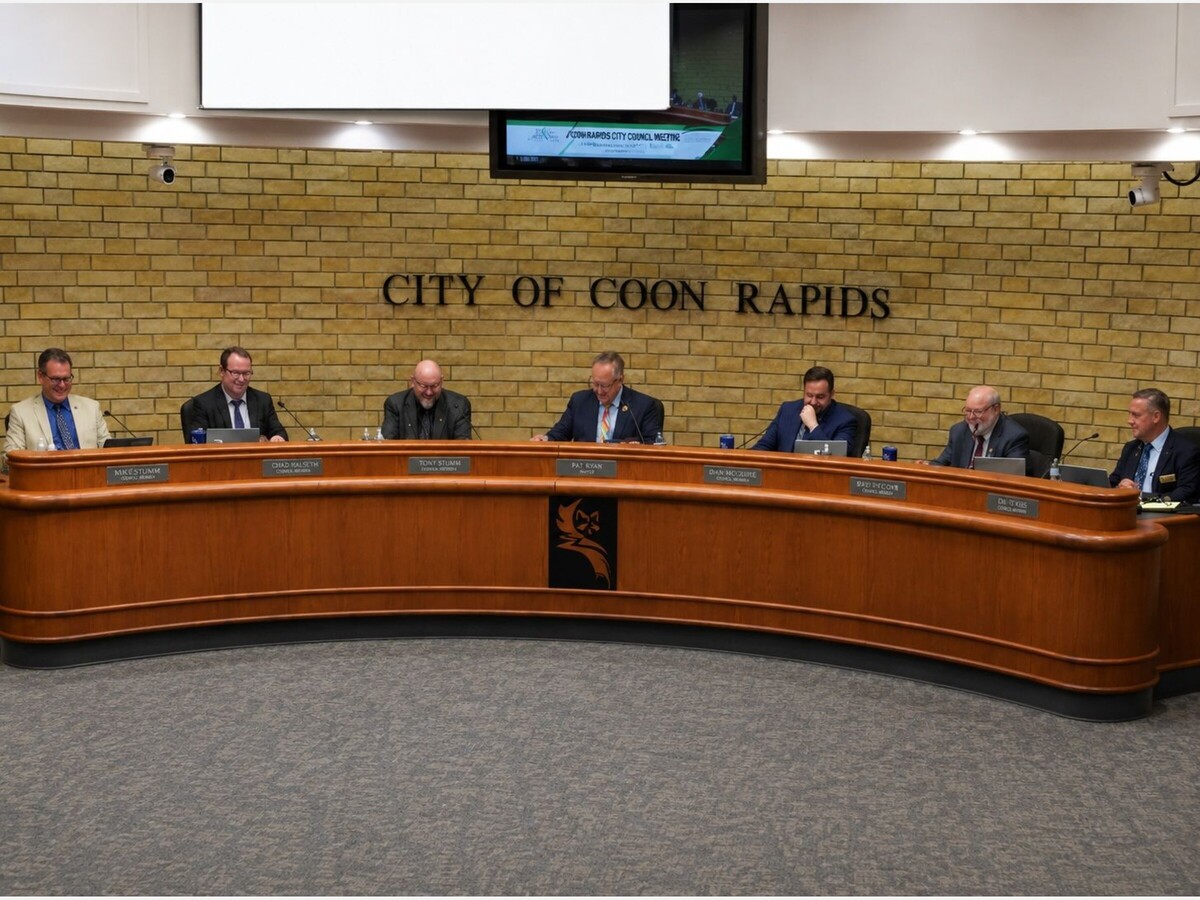



COON RAPIDS, MN (June 20, 2026) Two very different development proposals stood before the Coon Rapids Planning Commission in recent weeks, but both ultimately raised the same fundamental question facing many growing suburban communities across Minnesota: How does a city continue to grow while ensuring that the infrastructure beneath it can keep pace?
That question framed much of the discussion as commissioners reviewed and approved variance requests associated with the proposed Marikart residential development and the River North Industrial Center, two projects that would bring new housing opportunities and expanded industrial activity to different parts of the city.
The approvals mark another step forward for developments that city planners view as part of Coon Rapids' continuing evolution. Yet the conversations surrounding the projects revealed the increasingly complex balancing act confronting local governments as they seek to accommodate growth, maintain public infrastructure, protect neighborhood quality of life, and preserve long-term fiscal sustainability.
While commissioners ultimately concluded that both proposals met the standards necessary for approval, discussions throughout the meeting reflected broader concerns about sewer capacity, stormwater management, traffic impacts, site design, and the cumulative effect of new development on municipal systems.
The most extensive discussion centered on the proposed Marikart residential development, a housing project requiring several land-use variances before moving forward in the city's development review process.
Planning commissioners reviewed the proposed site layout, lot dimensions, building placement, setback requirements, and other zoning considerations that govern how new residential developments are integrated into existing neighborhoods.
From a planning perspective, variances serve as a mechanism that allows projects to proceed when unique site conditions make strict compliance with standard zoning requirements impractical, provided the requests remain consistent with the broader intent of city ordinances and comprehensive planning goals.
Although commissioners expressed support for the overall project, infrastructure concerns became a central topic during deliberations.
Questions focused particularly on the capacity of existing sanitary sewer systems serving the area and whether current infrastructure could adequately accommodate additional residential demand.
As communities throughout the Twin Cities metropolitan area continue to experience redevelopment and infill construction, sewer capacity has become an increasingly important consideration in municipal planning decisions. Infrastructure originally designed decades ago often must be evaluated to determine whether it can support new residential density without creating future service challenges.
Commission members sought clarification regarding utility connections, system capacity, and the engineering safeguards that would accompany future construction phases.
City staff indicated that the development would remain subject to engineering review and infrastructure requirements as it advances through subsequent stages of the approval process.
Stormwater management also emerged as a significant consideration.
Modern development regulations require extensive measures to control runoff and reduce pressure on public systems during major rain events. Planning and engineering staff discussed the need for drainage controls and site-management practices designed to ensure that development activity does not adversely affect neighboring properties or municipal infrastructure.
Ultimately, commissioners determined that the requested variances met the standards established under city code and approved the application, allowing the project to proceed to future phases of review and permitting.
The approval does not represent the final step in the development process. Future engineering reviews, plat approvals, utility evaluations, and building permits remain subject to city oversight and regulatory requirements.
The commission also reviewed requests associated with the proposed River North Industrial Center, a project intended to expand industrial and employment opportunities within one of the city's designated economic development corridors.
Industrial development has become an increasingly important component of municipal growth strategies throughout the metropolitan region, particularly as cities seek to diversify tax bases and attract employment-generating investment.
The River North proposal required variance approvals related to site development standards and building configuration.
Commissioners examined issues including site design, setbacks, circulation patterns, screening requirements, and overall compatibility with surrounding land uses.
Planning documents have identified the River North area as an important location for future industrial and commercial activity, positioning the corridor as a strategic area for business investment and job creation.
Supporters of the project pointed to the economic benefits associated with additional industrial space, including expanded employment opportunities, increased commercial activity, and future property tax revenue.
At the same time, commissioners considered concerns commonly associated with industrial development, including traffic generation, truck access, visual impacts, and the relationship between industrial uses and nearby properties.
To address those considerations, city staff outlined design expectations intended to minimize potential impacts on adjacent areas. Discussions included site screening, parking configurations, circulation planning, and access management strategies designed to support both operational efficiency and community compatibility.
Following review and discussion, commissioners approved the requested variances, allowing the project to continue through the municipal development process.
Although the Marikart and River North proposals differ substantially in purpose, scale, and land use, both highlighted a reality increasingly familiar to local governments throughout Minnesota.
Development decisions are no longer simply questions of where buildings should be located.
They are also questions about whether roads can handle additional traffic, whether sewer systems possess sufficient capacity, whether stormwater can be effectively managed, and whether public infrastructure can support future growth without requiring costly emergency improvements.
For communities like Coon Rapids, many of whose neighborhoods were developed during periods of rapid suburban expansion in the latter half of the twentieth century, infrastructure planning has become inseparable from land-use planning.
Every new residential subdivision, commercial facility, or industrial building adds demand to systems that cities must maintain for decades.
As a result, municipal planners increasingly evaluate development proposals not only on their immediate merits but also on their long-term impact on public infrastructure and municipal services.
The discussions surrounding both projects reflected that evolving reality.
Commissioners repeatedly returned to questions involving utility service, engineering standards, drainage controls, transportation access, and future maintenance obligations. Those considerations ultimately shaped the conditions and expectations accompanying the approvals.
The Planning Commission's work rarely generates the public attention associated with City Council votes, yet its decisions often play a critical role in shaping a community's physical future.
Housing developments influence neighborhood growth patterns. Industrial projects affect employment opportunities and economic development. Infrastructure decisions determine how effectively communities function for future generations.
The recent approvals for the Marikart residential development and River North Industrial Center illustrate the interconnected nature of those responsibilities.
Both projects represent investment in Coon Rapids. Both offer opportunities for growth. Both require careful oversight to ensure that development proceeds responsibly and that public infrastructure remains capable of supporting future demands.
As the proposals move into subsequent phases of review, city officials will continue evaluating engineering plans, utility requirements, environmental considerations, and construction details.
For now, however, the Planning Commission's actions signal a willingness to support new housing and economic development while maintaining a close watch on the infrastructure systems that make that growth possible.
In communities across Minnesota, growth often begins long before a building rises from the ground. It begins in planning commission chambers, where questions about roads, pipes, drainage systems, neighborhoods, and economic opportunity converge.
The recent meeting in Coon Rapids offered a clear example of that process in action.
MinneapoliMedia | Community. Culture. Civic Life.


Sunny, with a high of 89 and low of 54 degrees. Sunny for the morning, clear overnight.