58° and Clear
Image
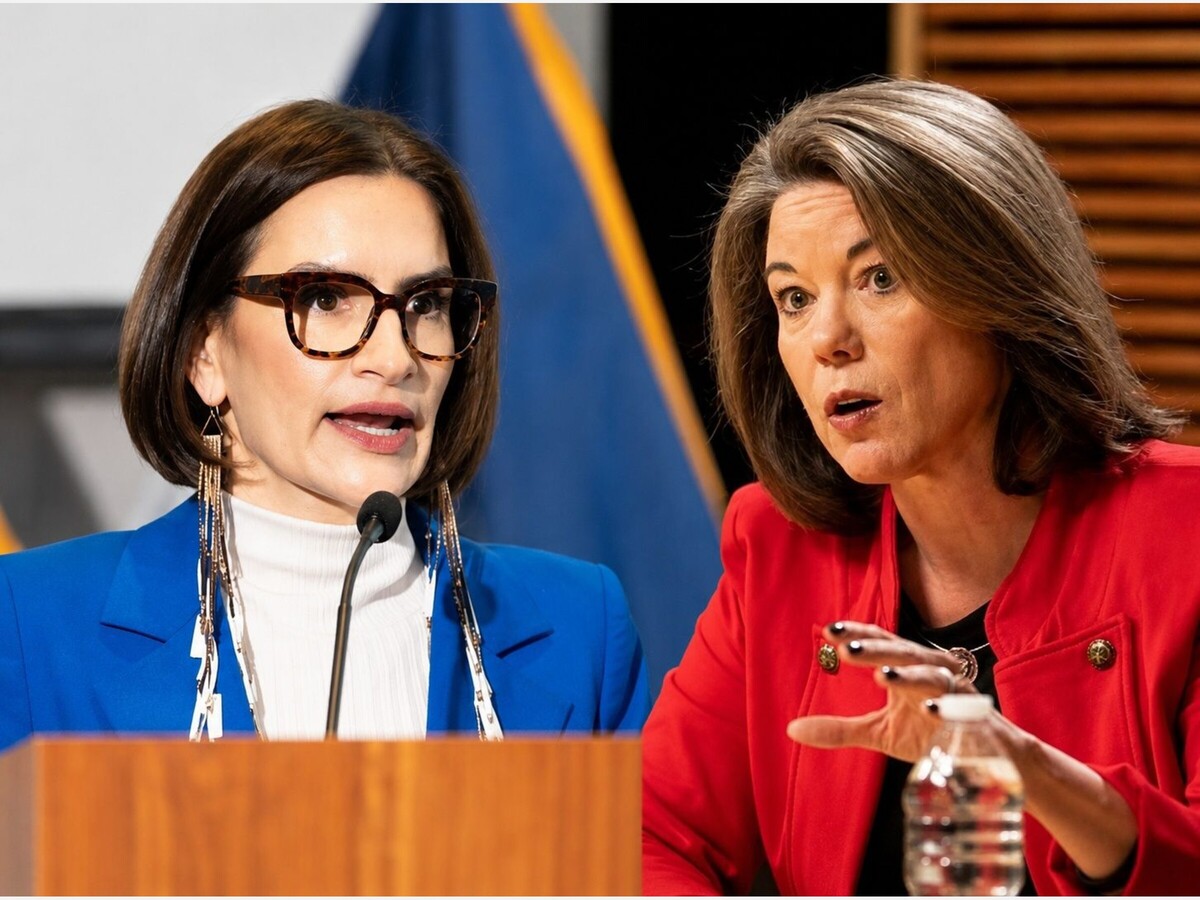



The approximately 30-minute debate, broadcast statewide on Twin Cities PBS's "Almanac," marked the first direct televised confrontation between the two leading candidates seeking the DFL nomination for the open Senate seat. With the Aug. 11 primary election less than two months away, the event underscored what has become one of Minnesota's most closely watched political contests in recent years.
While both candidates are Democrats, Friday's discussion revealed significant differences in policy priorities, political strategy, governing philosophy, and the coalition each hopes to build heading into the general election.
The debate also represented the latest chapter in a contest that has increasingly become a proxy battle between two influential wings of the modern DFL.
Flanagan, Minnesota's lieutenant governor since 2019 and one of the state's most prominent progressive voices, secured the official DFL endorsement by acclamation during the party's state convention in Rochester in May. Craig, meanwhile, declined to participate in the endorsement contest, instead choosing to focus directly on the statewide primary electorate, arguing that Minnesota's broader voting population is more representative than convention delegates alone.
The contrasting approaches have become central to the campaigns themselves.
Craig has positioned herself as a pragmatic federal lawmaker with a demonstrated record of winning difficult elections in Minnesota's politically competitive Second Congressional District. Since arriving in Congress in 2019, she has repeatedly won reelection in a district that has often been viewed as one of the state's most competitive battlegrounds.
Flanagan has presented herself as a progressive coalition builder focused on affordability, economic stability, and expanding opportunities for working families. Her campaign has emphasized issues such as housing costs, childcare affordability, healthcare access, and economic equity.
Friday's debate covered a wide range of issues, but immigration quickly emerged as one of the sharpest points of contrast.
Craig defended her support for stronger border security measures and pointed to her backing of federal immigration legislation, including the Laken Riley Act. The legislation, signed into law earlier this year, expanded mandatory federal detention requirements for certain undocumented immigrants accused of theft-related and violent offenses. Supporters have argued the law strengthens public safety protections, while critics contend it expands detention authority and contributes to broader immigration enforcement efforts that have increased arrests and detentions in states across the country, including Minnesota.
The issue has become particularly significant within Minnesota's Democratic coalition as federal immigration enforcement actions have drawn criticism from immigrant advocacy organizations, civil rights groups, and some elected officials. Flanagan used the discussion to emphasize what she described as a more humane approach to immigration policy, focusing on family stability, community trust, and due process protections.
The candidates also sparred over government accountability and oversight following a series of high-profile fraud investigations that have fueled criticism of state government operations.
Flanagan defended the administration's response, arguing that Governor Tim Walz had taken responsibility and acted to address vulnerabilities once they became known.
"The buck stops with him," Flanagan said during the debate.
Craig responded by arguing that Minnesotans expect accountability from all members of the administration and questioned whether enough responsibility had been accepted by state leadership.
The exchange highlighted a recurring challenge for Flanagan's campaign. As lieutenant governor, she must simultaneously defend the record of the current administration while persuading voters that she represents the next generation of leadership.
Campaign finance also became a flashpoint.
Flanagan highlighted her refusal to accept contributions from corporate political action committees and from the American Israel Public Affairs Committee, framing the race as a choice between grassroots organizing and traditional political fundraising.
"The money versus the many," she argued.
Craig defended her fundraising approach, noting that competitive statewide campaigns require substantial financial resources and emphasizing her ability to build coalitions capable of winning both primary and general elections.
The discussion extended to the war in Gaza, U.S.-Israel relations, Social Security, and economic concerns facing Minnesota families.
Throughout the debate, Flanagan repeatedly returned to affordability issues, arguing that rising housing costs, healthcare expenses, and childcare burdens continue to strain household budgets across the state.
Craig, meanwhile, focused heavily on electability and legislative effectiveness. She argued that her experience passing legislation in Washington and winning competitive elections provides Democrats with their strongest opportunity to retain the Senate seat in November.
Both campaigns pointed to polling data suggesting they hold an advantage among Democratic voters, underscoring the uncertainty that continues to define the race.
The stakes are unusually high.
Open U.S. Senate seats are rare in Minnesota politics. Smith's retirement created the state's first open Senate contest in years and immediately elevated the race into one of the most consequential political battles of the 2026 cycle.
The eventual Democratic nominee is expected to face a competitive Republican challenge in November. Among the most prominent Republican candidates are former sports broadcaster Michele Tafoya and businessman Adam Schwarze, both of whom have sought to capitalize on voter concerns regarding inflation, immigration, government spending, and public safety.
Friday's debate was only the beginning.
Craig and Flanagan are scheduled to meet at least two more times before primary voters cast their ballots, including a highly anticipated appearance at Farmfest in early August, where rural issues, agriculture policy, trade, and economic development are expected to take center stage.
As the campaign moves deeper into the summer, Minnesota Democrats now face a choice between two accomplished statewide figures who share many policy goals but offer distinctly different paths forward.
For Craig, the argument centers on experience, electability, and success in politically divided territory.
For Flanagan, the case rests on grassroots energy, progressive governance, and a promise to make affordability the defining issue of the campaign.
The debate made clear that the contest to replace Tina Smith is no longer simply a race between two candidates. It is increasingly a contest over what kind of Democratic politics Minnesota voters want to send to Washington for the next generation.
MinneapoliMedia | Community. Culture. Civic Life.



Sunny, with a high of 89 and low of 54 degrees. Sunny for the morning, clear overnight.