Image



Editor’s Note: In the landscape of American youth, some stories are written in statistics while others are forged in sanctuaries. For generations, the educational and social frameworks of the Twin Cities have harbored a quiet, systemic crisis, a pattern of institutional exclusion that routinely translates adolescent confidence into behavioral defiance and shuffles Black girls in particular away from learning environments. This process does not occur in a vacuum. It is the predictable outcome of zero tolerance cultures that substitute surveillance for support, establishing structural traps that compromise the emotional and economic independence of young women before they ever reach the threshold of adulthood.
To disrupt this architecture requires more than simple institutional reform; it demands an entirely new blueprint for self-determination. Over a four-day narrative series, MinneapoliMedia explores the work of Project DIVA International, a Minneapolis based nonprofit that has spent nearly two decades quietly dismantling the school to prison pipeline. From the raw metrics of the classroom pushout crisis to the sophisticated mechanics of early wealth creation, this series traces how a community rooted village is anchoring a new generation of teen girls in self-mastery, transforming the traditional narrative of exclusion into a legacy of leadership.
MINNEAPOLIS, MN. The second-period bell at the urban high school had barely stopped ringing when the classroom door clicked shut. Inside, a fourteen-year-old girl sat with her chin slightly raised, her notebook open, her pencil resting on an unfinished sentence. She had asked why a particular assignment score had been lowered. The question was delivered with the standard, direct inflection of a teenager seeking clarity. To the educator at the front of the room, however, the tone did not register as curiosity. It registered as a challenge. It was logged as defiance. Within ninety seconds, an administrative summons arrived, and the student was walked down a fluorescent lit corridor toward an office where numbers, not potential, are tracked.
The hallways of public education are designed to echo, but for Black girls in Minnesota specifically, those echoes have historically carried a distinct, chilling finality. This systemic sorting mechanism is known nationwide as the school-to-prison pipeline, a process driven by what civil rights advocates call the Pushout movement. The movement addresses a stark, documented crisis in American education: the disproportionate criminalization and structural exclusion of Black girls from learning environments. Driven by unconscious biases and unyielding zero-tolerance policies, schools routinely mischaracterize standard adolescent development in girls of color as dangerous, defiant, or hyper-adult. Where a white peer might receive a quiet reprimand or a trip to a school counselor, a Black girl is significantly more likely to face suspension, expulsion, or direct law enforcement intervention.
Stage 1: Classroom Inequity (The Trigger)
Teachers issue subjective referrals for minor behaviors like "defiance," "disrespect," or "attitude." This stage relies heavily on implicit bias rather than concrete rule-breaking.
Stage 2: Institutional Exclusion (The Escalation)
Administrative policies turn those subjective referrals into formal punishments. This leads to suspension and expulsion rates that are up to 8 times higher for targeted demographics.
Stage 3: The Legal Pathway (The Destination)
The school abdicates its educational role. Law enforcement and School Resource Officers (SROs) are called in to handle discipline, effectively substituting criminal charges for guidance counselors.
Beneath Minnesota's routinely celebrated rankings for quality of life, economic opportunity, and educational achievement lies a stark historical contradiction. Data analyzed by the Minnesota Department of Human Rights (MDHR) revealed that African American students across the state were suspended or expelled at eight times the rate of their white peers. State investigators found that 55% of all suspensions were the result of a highly subjective judgment made by school officials rather than objective safety violations.
When an administrative policy allows a student to be removed from a classroom for subjective infractions like "willful defiance" or a perceived "attitude," it invites the unchecked operation of implicit bias.
A Black girl who questions a grade, expresses frustration, or displays typical teenage boundary-testing is frequently viewed through a lens of adultification bias, which is the documented tendency to view young Black girls as older, less innocent, and more calculated than their white counterparts. She is seen not as a child navigating a developmental milestone, but as an aggressive, dangerous, or disruptive presence.
This mischaracterization criminalizes the very nature of girlhood. When schools replace counselors with school resource officers and substitute restorative dialogue with zero-tolerance mandates, the classroom stops functioning as a place of learning. It becomes a space of surveillance. National data from the Children's Defense Fund shows that a single suspension doubles the likelihood that a student will drop out, and a single arrest triples it. For many young women of color in Minnesota, the journey from the desk to the juvenile justice system is not a gradual drift, but a swift, institutional push.
The movement to disrupt these pathways was largely inspired by the research of Dr. Monique W. Morris, whose book, Pushout: The Criminalization of Black Girls in Schools, pulled back the curtain on school discipline. Disrupting these school-to-confinement pathways requires more than simple policy adjustments. Organizations like the National Black Women's Justice Institute have long argued that communities must actively replace punitive frameworks with ecosystems of support.
Against this backdrop, the Twin Cities area has become both a place of struggle for educational equity and the birthplace of a real counter-movement.
For nearly two decades, Project DIVA International, a Minneapolis-based nonprofit, has quietly and systematically dismantled this pipeline from the inside out. By focusing on teen girls between the ages of 11 and 19, the organization does not simply attempt to patch a broken system. Instead, it builds a new foundation of emotional, intellectual, and economic independence.
Today, Monday, July 13, Project DIVA International commences its Annual Boot Camp. The timing is deliberate, serving as a mid-summer intervention designed to strengthen young minds before the autumn bells ring.
This year, the gathering operates under a clear banner: Handling Your Business.
It is a title that works as both a directive and a shield. These young women are learning to anchor their identities in financial agency, mental fitness, and post-secondary planning, turning the traditional narrative of exclusion into a blueprint for self-determination.
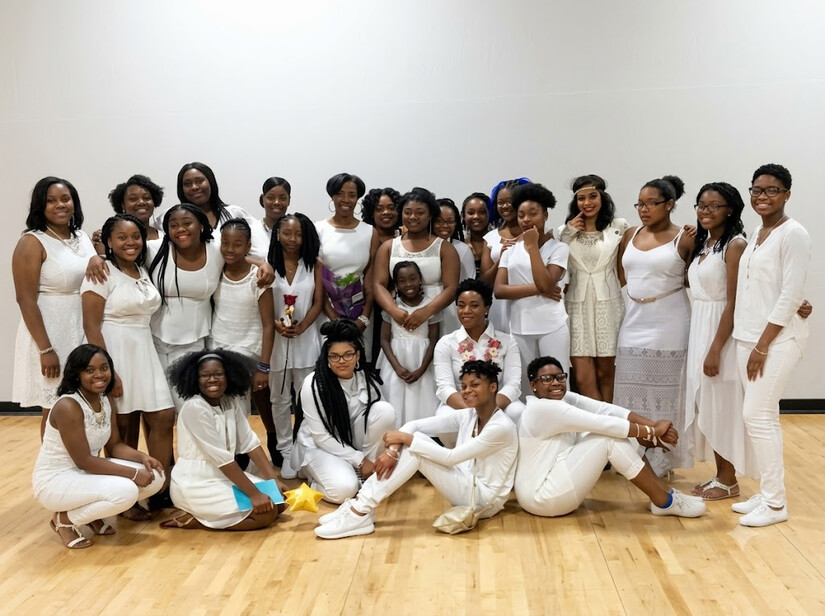
Founded in 2007, Project DIVA International is a Minnesota-based nonprofit organization dedicated to helping teen girls develop the emotional, intellectual, and economic foundation necessary to achieve lifelong independence.
Serving girls from ages 11 to 19, the organization centers its year-round cohort experiences around three core pillars: financial intelligence, emotional fitness, and mental fitness.
Tomorrow in Part Two: Inside Project DIVA International's unique approach to coaching, vocabulary redirection, and why true leadership begins long before adulthood.
MinneapoliMedia | Community. Culture. Civic Life.



Sunny, with a high of 85 and low of 49 degrees. Sunny for the morning, overcast for the afternoon and evening, clear overnight.