Image



For much of modern history, debates about policing have centered on what happens at street level. Americans have argued over patrol strategies, traffic stops, neighborhood policing, body-cameras, use of force policies, recruitment standards, and accountability mechanisms. Those conversations have unfolded where police officers and the public physically encounter one another: on sidewalks, in residential neighborhoods, at local businesses, inside schools, and along the city's busiest intersections. Today, Minneapolis finds itself confronting a fundamentally different question. It is no longer only about what happens on the ground; increasingly, it is about what happens above it.
The Minneapolis City Council's consideration of a pilot program that would allow the Minneapolis Police Department to deploy drones as first responders represents more than a decision about purchasing or testing new equipment. It marks a critical chapter in a broader national conversation about the relationship between technology, government authority, constitutional protections, and public confidence in law enforcement. The proposal has generated passionate testimony from residents, public safety officials, civil liberties advocates, and elected leaders because each side recognizes that the decision extends far beyond aviation technology. It asks what kind of city Minneapolis intends to become in an era when surveillance tools are becoming more sophisticated, more affordable, and more deeply integrated into everyday policing.
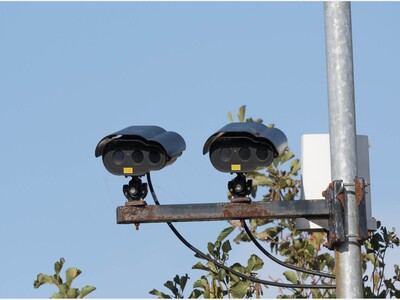
The proposal itself is relatively straightforward. Under the plan, the city would participate in a 75 day pilot program using drones supplied by California based Skydio. Operating initially within the Fourth Precinct, the drones would launch in response to qualifying emergency calls and arrive ahead of responding officers. Their purpose would be to provide dispatchers and officers with live video, allowing emergency personnel to better assess unfolding situations before committing officers, firefighters, emergency medical personnel, or other resources to a scene. If approved by the full City Council, the pilot could begin later this month.
Supporters describe the proposal as a practical, necessary evolution of emergency response. Police officials argue that drones can improve situational awareness, shorten response times, reduce unnecessary officer deployments, and better protect both first responders and civilians. They emphasize that drones are intended to supplement, not replace, police officers. Minneapolis already owns a fleet of drones that officers deploy after arriving at certain incidents. The proposed program differs because it would allow drones to become the initial responder in selected emergencies.
Opponents view the same proposal through an entirely different lens, one that cannot be separated from the city's recent history. Since the murder of George Floyd in 2020, Minneapolis has undergone one of the most significant periods of police reform in the United States. Federal investigators concluded that the Minneapolis Police Department engaged in a pattern or practice of unconstitutional policing, leading to sweeping reform efforts and continuing oversight. Although the department has undergone leadership changes, policy revisions, additional training, and ongoing reform measures, many residents remain deeply skeptical of expanding police authority before public confidence has fully recovered.
That history matters because technology does not enter a vacuum. Every new policing tool arrives carrying the weight of institutional trust, or the profound absence of it. A drone itself possesses no bias, political philosophy, or personal motive; it is simply a machine equipped with cameras, sensors, communications equipment, and software. Yet how residents perceive that machine depends almost entirely upon their confidence in the institution operating it. For some Minneapolis residents, a drone hovering overhead represents improved emergency response. For families in Northside neighborhoods like Hawthorne and Jordan, it represents another camera pointed toward communities that already experience disproportionate police attention. Both perspectives deserve to be taken seriously.
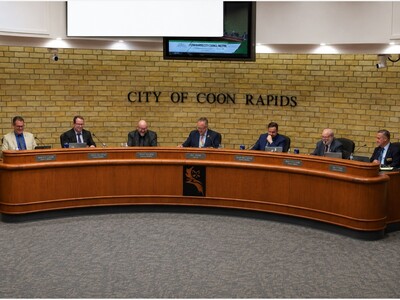
One of the strengths of the recent public hearing was that it allowed those competing views to be expressed openly. Nearly fifty residents registered to speak before the City Council's Public Health, Safety and Equity Committee. The hearing extended for hours as speakers articulated concerns ranging from constitutional privacy protections to racial equity, government surveillance, data retention, and the broader implications of introducing increasingly sophisticated technology into everyday policing. The level of participation itself revealed that this is not a niche policy issue attracting only technology enthusiasts or civil liberties organizations. It has become a fundamental question of democratic governance that ordinary residents believe warrants careful, unyielding scrutiny.
That scrutiny should not be dismissed as resistance to innovation. Throughout American history, skepticism toward expanding governmental surveillance has frequently proven healthy rather than obstructive. Constitutional safeguards were written precisely because the nation's founders understood that governmental power, once granted, rarely contracts on its own. Every expansion of investigative authority carries with it a corresponding obligation to define limits, establish oversight, and preserve individual liberty. Those principles are no less important because surveillance technology has become smaller, faster, quieter, and more autonomous. If anything, they have become more important.
Police departments across the United States increasingly view drones as indispensable public safety tools. Numerous agencies report that unmanned aircraft have helped locate missing children, identify armed suspects without immediately placing officers in danger, document crime scenes more efficiently, assist firefighters during hazardous incidents, and provide rapid aerial assessments following severe weather or traffic collisions. Minnesota has already seen departments adopt Drone as First Responder programs, including Minnetonka, whose officials describe measurable improvements in response capabilities.
These successes deserve acknowledgment. Responsible journalism requires recognizing that emerging technology often delivers genuine operational benefits. It would be inaccurate to portray every police drone solely as an instrument of surveillance. In many documented situations, drones have reduced risk by providing responders with information that otherwise would have required officers to enter potentially dangerous environments with limited knowledge of what awaited them. Yet operational effectiveness does not resolve the broader policy debate.
The central question before Minneapolis is not whether drones are capable of helping police; they clearly are. The more consequential question is whether government can demonstrate that such capabilities will remain confined within carefully defined boundaries, subject to meaningful oversight, transparent reporting, independent accountability, and continuing public consent. Supporters often frame this discussion in terms of efficiency, while critics frame it in terms of liberty. A mature democracy must evaluate both.
Efficiency is an important public objective, and taxpayers expect emergency services to use available technology responsibly. When seconds determine whether a victim survives a violent assault, a cardiac emergency, or a serious collision, every tool capable of improving response deserves careful consideration. But liberty has always demanded that efficiency operate within constitutional constraints. American history contains numerous examples where technologies initially introduced for limited public safety purposes gradually expanded beyond their original justification. License plate readers, facial recognition software, cellphone location tracking, closed circuit cameras, and digital data collection have all generated intense debates over whether government acquired capabilities that eventually exceeded the assurances originally provided to the public.
The concern often described as mission creep is therefore historical rather than theoretical. Programs introduced for one narrowly defined purpose sometimes evolve through administrative policy changes, legislative amendments, budget expansions, or technological upgrades into systems capable of far broader surveillance than initially contemplated. That possibility explains much of the anxiety expressed during the committee hearing. Residents were not merely debating today's proposal; many were asking what tomorrow's proposal might become.
Could future councils authorize automated patrols? Could artificial intelligence eventually analyze drone footage? Could drones monitor demonstrations? These questions deserve answers before deployment rather than after controversy arises. Good government anticipates public concern instead of reacting to it. That principle becomes especially important because Minneapolis continues rebuilding relationships between law enforcement and communities that have experienced decades of unequal policing outcomes. Rebuilding trust requires convincing residents that new technologies will operate within transparent, enforceable, and independently verifiable safeguards. Public trust cannot be programmed into software; it must be earned through governance.
One of the easiest mistakes to make in the current debate over police drones is to assume that legality and legitimacy are the same thing. They are not. Government actions can be lawful while still generating legitimate public concern. Likewise, public skepticism does not automatically mean a proposal lacks merit. Democratic governance depends upon something more durable than simply asking whether officials possess the legal authority to act; it also asks whether exercising that authority strengthens or weakens the public's confidence in the institutions entrusted with it. That distinction is particularly important in Minneapolis, where nearly every discussion involving policing now unfolds against the backdrop of a city that continues to redefine its relationship with law enforcement.
Supporters of the initiative have repeatedly emphasized that Minnesota law already authorizes law enforcement agencies to use unmanned aerial systems under specific circumstances. They are correct. Minnesota has one of the more comprehensive statutory frameworks governing law enforcement drone use in the country. Unlike states that left much of the decision making to local agencies, Minnesota lawmakers established explicit rules governing when police may operate drones without first obtaining a search warrant.
Those circumstances are intentionally limited. State law permits warrantless drone deployment during emergencies involving an imminent risk of death or serious bodily harm. Police may also use drones while searching for missing persons, documenting evidence at risk of immediate destruction, reconstructing serious traffic collisions, responding to disasters, conducting certain threat assessments, and supporting narrowly defined criminal investigations involving reasonable suspicion. The law also imposes data retention requirements and restrictions designed to limit unnecessary collection of information. In other words, the Legislature has already concluded that drones can serve legitimate public safety purposes when deployed under carefully defined conditions.
That legal foundation is important, and it explains why the current debate should not be reduced to a simplistic question of whether police should be allowed to own drones. They already do. The Minneapolis Police Department has operated drones since 2022, deploying them after officers arrive at selected incidents. The current proposal changes something much more specific: instead of officers requesting drones after they arrive, the drones themselves would become part of the initial emergency response. That distinction may appear modest on paper, but operationally it represents a significant shift. For the first time, aerial observation could become the opening stage of certain police responses rather than a supplemental investigative tool.
The constitutional questions are equally significant. The Fourth Amendment to the United States Constitution protects citizens against unreasonable searches and seizures, but it does not prohibit government from observing activities that occur in public view. Police officers may generally observe what anyone standing on a public sidewalk could lawfully see. Technology, however, has steadily complicated that principle. The framers of the Constitution could not have anticipated unmanned aircraft capable of hovering hundreds of feet above neighborhoods while transmitting high definition video to command centers miles away, nor could they have imagined artificial intelligence capable of identifying vehicles or recognizing behavioral patterns.
The law has struggled to keep pace with these technological developments. Over the past several decades, the United States Supreme Court has issued a series of decisions recognizing that advancing surveillance technologies sometimes create constitutional concerns even when each individual observation might otherwise appear lawful. The Court has repeatedly acknowledged that technology can fundamentally change the relationship between citizens and government. In United States v. Jones, the Court concluded that prolonged GPS tracking of a vehicle implicated Fourth Amendment protections because sustained electronic monitoring revealed an overly detailed portrait of an individual's movements. Several years later, in Carpenter v. United States, the Court held that prolonged collection of historical cellphone location records generally requires a warrant because comprehensive digital tracking exposes intimate details about daily life that traditional surveillance could rarely assemble.
Neither case involved police drones, but both nevertheless established crucial constitutional principles: duration matters, aggregation matters, and technology matters. What once required dozens of officers conducting labor intensive surveillance can now be accomplished by relatively inexpensive equipment operating quietly from the air while transmitting live video in real time. That reality does not automatically render drone deployment unconstitutional, but it does require policymakers to think beyond today's hardware.
Technology rarely remains static. The drone under consideration today will almost certainly be less capable than the drone available five years from now. Higher resolution cameras will emerge, artificial intelligence will improve, object recognition software will become more sophisticated, and autonomous navigation systems will continue advancing. Future software updates may introduce capabilities that city officials are not even discussing during the current debate. That is why governance matters at least as much as equipment specifications. Public policy should never be written only for today's technology; it must anticipate tomorrow's.
History provides ample reason for that caution. Throughout the last century, surveillance technologies have routinely expanded beyond their original purpose. Closed circuit security cameras were initially promoted as tools for monitoring high risk facilities; today they are commonplace throughout urban America. Automatic license plate readers began as instruments for locating stolen vehicles; they now assist in a wide range of criminal investigations while generating extensive databases documenting vehicle movement. Cellphone location information followed a similar trajectory. Each innovation arrived promising greater efficiency, and each eventually generated substantial public debate over privacy, oversight, transparency, and accountability.
Police drones now occupy that same crossroads. Supporters understandably emphasize immediate operational benefits, while critics understandably focus on long term institutional consequences. Neither perspective should be dismissed. One recurring criticism heard during the Minneapolis hearing deserves careful examination because it extends beyond constitutional doctrine: many residents simply said they do not trust the government to limit the technology to its stated purpose. That statement is not fundamentally about drones; it is about institutional credibility.
Trust functions differently than statutory authority. Government cannot legislate trust into existence. Trust accumulates slowly through repeated demonstrations that institutions consistently do what they promise, and it erodes rapidly when residents believe those promises have been broken. For Minneapolis, that dynamic carries unusual weight. The city remains under a federal consent decree requiring extensive reforms following findings by the United States Department of Justice that the Minneapolis Police Department engaged in a pattern or practice of unconstitutional policing. Against that backdrop, every proposal expanding police capabilities receives greater scrutiny than it might in another jurisdiction.
That heightened scrutiny should not be viewed as an obstacle; it should be viewed as an opportunity. If Minneapolis ultimately adopts Drone as First Responder technology, the city has an opportunity to establish what may become one of the nation's strongest civilian oversight models governing aerial policing. Rather than treating transparency as an afterthought, officials could make transparency the foundation of the entire program. That means publishing deployment statistics, documenting every flight, reporting response times, disclosing complaints, conducting independent audits, measuring whether promised improvements actually materialize, and evaluating whether certain neighborhoods experience disproportionate deployment.
Public trust is rarely strengthened by asking residents to simply believe government assurances. It grows when government demonstrates, through measurable evidence, that those assurances are being honored. Transparency is not the enemy of effective policing; it is one of its strongest safeguards. As Minneapolis moves closer to a final council vote, the legal questions appear relatively well defined, but the governance questions remain considerably more important. Because once a city places cameras into the sky, the debate no longer concerns aviation. It concerns democracy.
Public officials frequently describe new technology in terms of what it can accomplish, while citizens often evaluate that same technology by considering what it could eventually become. Both approaches are entirely reasonable. As Minneapolis considers authorizing a 75 day Drone as First Responder pilot program, city leaders face a challenge that extends well beyond aviation technology. The question is not whether drones are capable of arriving at an emergency scene before a patrol vehicle, nor is it whether aerial video can provide responding officers with additional information; experience from police departments across the country demonstrates that it can. The real challenge is considerably more demanding: can Minneapolis design a program that delivers measurable public safety benefits while preserving constitutional protections, strengthening public confidence, and avoiding the gradual expansion of surveillance powers that has accompanied numerous technologies introduced over the past three decades?
That is the standard by which this proposal should ultimately be judged: not by the sophistication of the aircraft, not by the manufacturer's marketing materials, and not by whether drones represent the future of policing. Instead, the pilot should be evaluated by a much simpler measure: does it solve a clearly defined public problem without creating larger ones? This question deserves careful attention because Minneapolis is not entering unexplored territory. Across the United States, law enforcement agencies have increasingly integrated drones into emergency operations, documenting successful searches for missing children, locating elderly residents suffering from dementia, and assessing hazardous situations before officers enter them.
For emergency responders, information often determines whether a situation escalates or de-escalates. A drone capable of reaching a scene within two or three minutes may allow dispatchers to determine that a reported burglary is unfounded, that a suspect has already fled, or that medical personnel rather than additional officers should receive priority. These are documented operational outcomes that explain why public safety officials continue investing in unmanned aircraft systems: information saves time, and time often saves lives. Yet supporters also have an obligation to avoid overstating what drones can accomplish. A drone cannot arrest a violent offender, administer CPR, extinguish a fire, or negotiate with someone experiencing a mental health crisis. Technology expands human capability; it does not eliminate the need for human judgment.
This distinction becomes particularly important when officials describe drones as first responders. While the phrase is understandable from an operational perspective, it is also potentially misleading. The public should not interpret drone deployment as a substitute for timely human response; rather, they should understand the aircraft as an information platform intended to improve decision making before personnel arrive. Managing expectations honestly serves everyone, and it encourages policymakers to measure outcomes objectively rather than emotionally.
Thus far, public discussion has largely emphasized reduced response times, but a meaningful evaluation must include far broader performance measures. Did drones reduce unnecessary officer deployments? Did they improve officer safety, reduce civilian injuries, or shorten incident resolution? Did they generate additional citizen complaints, or disproportionately operate within certain neighborhoods? Without answers to these questions, a successful pilot risks becoming little more than a demonstration of technological capability rather than evidence of measurable public benefit. Technology should never become its own justification.
Furthermore, most discussions surrounding drones focus on the aircraft themselves, yet the data they produce are far more important. Every flight generates digital information: video, flight paths, location coordinates, operational logs, and metadata. These records create responsibilities extending far beyond simply operating an aircraft safely. Who reviews that information, who approves access, and who verifies deletion schedules? Can footage be requested by other law enforcement agencies or incorporated into future artificial intelligence systems for analytical purposes? Each of these questions concerns governance rather than aviation, and none should remain unanswered before the pilot begins. Cloud storage has transformed modern recordkeeping, meaning information may exist simultaneously across multiple servers and archival repositories. Consequently, deletion policies require independent verification rather than simple administrative assurances.
This friction between innovation and policy explains the concern commonly described as mission creep. History demonstrates that government programs frequently evolve beyond their original objectives through gradual, incremental administrative adjustments. What initially appeared extraordinary slowly becomes ordinary, and public debate diminishes with each minor change because no single expansion appears sufficiently significant to command widespread attention. The concern is not necessarily what current officials intend today; it is what future administrations might decide tomorrow. Current city leaders may possess every intention of operating a narrowly focused emergency response program, but future administrations cannot be bound by today's good intentions alone. Only strict policy creates durable guardrails.
Minneapolis therefore faces an opportunity to build independent oversight into the foundation of the program itself. This oversight should extend beyond annual reports to include independent auditing, regular public reporting, geographic distribution analysis, and compliance verification. Public confidence increases when evaluation occurs entirely outside the chain of command responsible for daily operations, because independence strengthens credibility, and credibility strengthens trust.
This need for transparency also surfaced during the City Council hearing regarding the city's choice of vendor. Several residents objected specifically to Skydio, the California company providing the drones, because of the company's defense contracts and sales to military customers abroad, including Israel. This intersection of municipal purchasing with global geopolitical debates reflects broader ethical questions increasingly confronting local governments. Modern technology companies frequently maintain commercial relationships with defense agencies and international organizations, meaning citizens deserve to understand who manufactures government technology and what contractual protections accompany local deployment.
Ultimately, however, the success or failure of Minneapolis' drone initiative will not depend primarily upon the manufacturer or the aircraft themselves. It will depend upon institutional discipline. A drone cannot decide to exceed policy, a camera cannot choose inappropriate surveillance, and software cannot disregard constitutional principles; people do. If Minneapolis builds a program grounded in transparency, restraint, and continuing public oversight, drones may become a carefully regulated public safety tool. If those safeguards weaken over time, the intense debate that filled City Hall this summer will likely return with even greater volatility. History suggests that public trust, once lost, is significantly harder to recover than technological capability is to acquire.
Cities are often remembered less for the technologies they adopt than for the principles that guide their use. Electric streetlights, automobiles, radio communications, and body-worn cameras each generated optimism, skepticism, and uncertainty before eventually becoming part of everyday public life. Police drones now stand at a similar crossroads. Whether they ultimately become an accepted public safety tool or another source of civic division will depend far less on the aircraft than on the public policies surrounding them. Technology itself rarely determines public confidence; governance does. That distinction should remain at the center of deliberations as the City Council determines whether the proposed drone pilot moves forward.
If the pilot receives approval, Minneapolis must resist the temptation to treat the next seventy-five days as a demonstration of technological capability alone. The city should instead view the pilot as a definitive test of governmental accountability. Pilots exist to answer difficult questions; they should never exist to validate predetermined conclusions. That means city leaders must enter the evaluation prepared to acknowledge either outcome openly. If the data reveal unintended consequences, operational shortcomings, policy violations, or declining public trust, those findings deserve equal transparency. Evidence, rather than institutional momentum or ideology, must determine the future of the program.
The city therefore bears a responsibility to establish public, objective benchmarks before deployment begins. Residents should know precisely how officials intend to measure performance: how much response times must improve, how many unnecessary officer deployments are eliminated, and what specific level of community acceptance constitutes success. Without predetermined, transparent standards, evaluation risks becoming entirely subjective. Objective measurement protects both supporters and critics alike.
Just as important as operational metrics is an unyielding commitment to public disclosure. Every deployment should be documented, aggregate flight statistics should be released regularly, and data retention compliance must be independently verified. Privacy complaints and policy violations should be publicly summarized alongside clear explanations of corrective actions. None of these measures would compromise legitimate law enforcement operations; instead, they would strengthen public confidence that the city intends to operate within clearly established boundaries. Transparency should never be viewed as an administrative burden; it is a vital investment in institutional legitimacy.
Government agencies are generally strongest when external review reinforces internal accountability. Independent auditing helps identify structural weaknesses before they become crises, civilian review encourages public confidence, and regular City Council review ensures elected officials remain actively engaged rather than approving a program once and revisiting it only after controversy develops. Oversight must be continuous rather than reactive.
To achieve this, the city should carefully define not only what drones may do, but also what they are strictly prohibited from doing. Today's proposal does not contemplate facial recognition, continuous aerial patrol, or autonomous citywide monitoring. These limitations matter, and the city should preserve them through explicit, binding policy rather than relying solely upon current administrative practice. Future councils and future police chiefs will confront different operational challenges, and the strongest safeguard against inappropriate expansion is clear policy adopted before those capabilities ever arrive. This approach protects residents, police officers, and elected officials from inheriting ambiguous rules that invite systemic controversy.
Many public safety professionals have noted that drones may actually reduce certain tense police interactions by allowing dispatchers to determine when officers are unnecessary, or by helping emergency resources deploy more appropriately. Critics should acknowledge that possibility, just as supporters must acknowledge that technology capable of reducing unnecessary police contact can also expand governmental observation if left without sufficient safeguards. Recognizing this complexity is not a sign of political weakness; it is the absolute hallmark of responsible policymaking.
Perhaps the most valuable lesson emerging from this debate is that Minneapolis residents continue to care deeply about how they are governed. The lengthy public hearing demonstrated neither hostility toward innovation nor reflexive opposition to law enforcement; instead, it revealed a healthy democratic desire for community participation. The testimony offered reflected different life experiences, different expectations of government, and different understandings of public safety. Some speakers emphasized officer safety, while others focused on constitutional liberty and historical patterns of unequal policing. Reasonable people reached different conclusions because they prioritized different values, and that diversity of opinion represents healthy democratic deliberation rather than governmental failure. The challenge before elected officials is to make decisions worthy of public confidence despite that disagreement.
Minneapolis continues implementing extensive police reforms while confronting persistent concerns regarding violent crime, staffing shortages, and community trust. Those realities place unusual pressure upon policymakers seeking practical solutions. Technology may assist those efforts, but it can never substitute for them. No drone can repair relationships between government and community, no aircraft can restore institutional credibility, and no camera can create legitimacy. Those responsibilities remain uniquely human.
As Minneapolis considers the future of drones as First Responder technology, officials must remember that innovation and restraint are not opposing values; the most successful public institutions embrace both. They adopt new tools when evidence supports their effectiveness, they establish clear boundaries before those tools become routine, and they welcome independent oversight rather than resisting it. Communities cooperate more readily with institutions they trust, turning residents into partners rather than adversaries. That relationship cannot be manufactured through technology; it must be cultivated through consistent, accountable governance.
Ultimately, Minneapolis is deciding how government should exercise authority in an era when technology expands what the state is capable of seeing, recording, storing, and analyzing. That decision deserves patience, evidence, and humility. History teaches that technological capability often advances faster than public policy, and the cities that navigate those transitions most successfully are rarely those that adopt innovation the fastest; they are the ones that govern innovation the wisest.
If Minneapolis chooses to proceed with this pilot, its success should be measured years from now by a far more enduring question: did the city strengthen both public safety and public trust? If the answer is yes, Minneapolis will have demonstrated that technological progress and constitutional principles can thrive together. In a constitutional democracy, the legitimacy of government has never rested solely on what it has the power to do; it rests on what the people are willing to entrust it to do on their behalf. As Minneapolis looks upward toward a future where emergency response begins in the sky, city leaders should remember that the foundation of effective policing has never been built in the air. It has always been built on the ground, in the confidence of the communities law enforcement exists to serve.
MinneapoliMedia | Community. Culture. Civic Life.



Sunny, with a high of 85 and low of 49 degrees. Sunny for the morning, overcast for the afternoon and evening, clear overnight.