74° and Overcast
Image
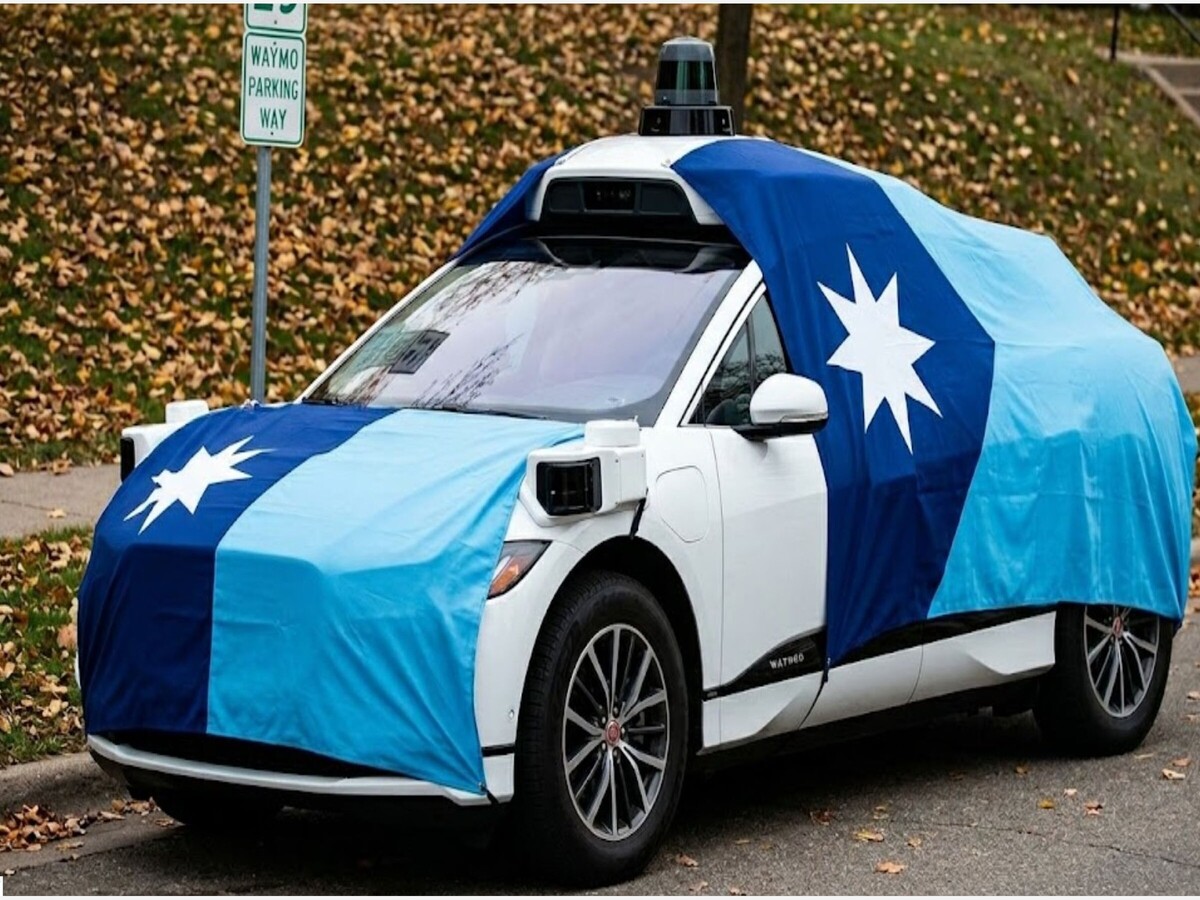



MINNEAPOLIS, MN (September 22, 2026). Minneapolis has reached the point where a discussion about driverless cars must become a discussion about public responsibility.
Waymo vehicles have been driving city streets since the company announced in November that it was preparing for a future ride service. The company has invited residents to sign up for notice when rides become available, though it has not announced a public launch date. Meanwhile, the Minnesota Legislature ended its 2026 session without adopting a specific framework for fully autonomous commercial rides. The city now faces a proposal to regulate that service locally before passengers begin climbing in.
The Minneapolis City Council's Business, Housing and Zoning Committee scheduled a public hearing for Tuesday on the "Workers Drive Minneapolis" ordinance concerning commercial autonomous vehicles. Its sponsors propose a city license and a licensed, paid human monitor seated behind the wheel. Council Member Robin Wonsley, one of the authors, has said the proposal would take effect in October 2027 if adopted. Additional public consideration is expected next week. Tuesday's hearing is a chance to examine the measure, not evidence that it has become law.
There are legitimate reasons to welcome the technology. A vehicle available to people who have been denied rides or cannot drive themselves could expand mobility. A company that can demonstrate fewer injuries on the roads where it operates deserves a serious hearing.
There are also legitimate reasons to question whether a car tested elsewhere will respond reliably to a Minneapolis winter, whether a rider in distress can reach a responsible person promptly, and whether a city can investigate a dangerous incident without depending entirely on the company for the facts. Those questions belong in enforceable rules before service begins.
The State Left Cities to Decide
Waymo did not arrive without notice. In its initial announcement, the company said it would begin driving a mixed fleet of Jaguar I-PACE and Zeekr RT vehicles in Minneapolis as groundwork for a fully autonomous ride service. It cited testing in Michigan's Upper Peninsula, California's Sierra Nevada and upstate New York as part of its preparations for snow and ice. That work is relevant, but a company's description of its testing is not a substitute for the conditions Minnesota will impose on commercial operations here. Residents need to know who will check the claims, what happens when a system cannot handle road conditions and who has authority to require a change.
State lawmakers had an opportunity this year to answer those questions. A House proposal sponsored by Rep. Jon Koznick addressed vehicle operations, insurance and transportation service networks. It also would have assigned the state controlling authority over autonomous vehicle regulation, limiting the ability of cities and counties to set their own rules. After a March committee hearing with 18 testifiers and extensive discussion of amendments, the committee laid the bill over rather than advance it. Other proposals addressed different parts of the problem. The session ended without a comprehensive statewide law for this kind of passenger service.
That legislative history matters because it explains why Minneapolis is acting. A city cannot ignore a new commercial activity on its streets while waiting indefinitely for a statewide agreement. It also should not pretend that a city ordinance can resolve every issue involving motor vehicle law under Minnesota Statutes Chapter 169, insurance, and operations across municipal borders. An autonomous vehicle will not stop needing clear rules when it crosses from Minneapolis into St. Paul or a suburb. State lawmakers must return to the issue with enough time to hear from passengers, drivers, disability advocates, emergency responders, local governments and companies before writing a durable framework.
Evaluating the Onboard Human Monitor
The proposed human monitor is the most consequential and disputed part of the Minneapolis measure. Its sponsors say a licensed person in the driver's seat would be able to take control when necessary and would be paid under applicable minimum compensation rules. They also say the provision would protect people whose livelihoods depend on driving for hire. Waymo and other operators have built their business case around providing rides without a human driver in each car. A monitor requirement could prevent that service from launching in the form the companies intend, acting as a de facto restriction. The City Council should acknowledge that practical effect plainly as it weighs the measure.
An onboard person could provide immediate help in some situations, but the council should ask what tasks that person would actually perform. Would the monitor be required to remain alert to the road every moment? What training would be necessary to take over safely, and how much warning would the system provide? What authority would the monitor have to end a ride, assist a passenger or report a vehicle malfunction? If the city cannot define and verify those duties, putting someone behind the wheel may create an appearance of protection without establishing how that protection works.
The proposal's October 2027 effective date creates room for a careful review. It should not become an excuse to leave critical details for later. Council members should make the text, staff analysis and public testimony easy to inspect; explain how a license would be issued, suspended or revoked; and state how the city would assess compliance. They should also seek a written account of how their proposed rules interact with existing state and federal responsibilities. A policy that reaches the right public concerns still needs to be workable and enforceable.
Emergency Accountability and Civic Accessibility
Emergency response deserves particular attention. If a vehicle stops across an intersection, approaches an active fire scene or becomes involved in a collision, police officers, firefighters and paramedics need a reliable way to identify the operator and secure the vehicle. A passenger should be able to reach a human being with the authority to help, including when the vehicle's normal communication system fails. Local agencies should know how to obtain information needed to investigate an incident and how long that information will be retained. These are practical operating requirements, not speculative objections to new technology.
Federal oversight already covers part of the picture. The National Highway Traffic Safety Administration (NHTSA) requires identified manufacturers and operators to report certain crashes involving automated driving systems. Its reporting order gives the agency information for safety investigations and potential enforcement. Federal crash reports do not, by themselves, establish a Minnesota passenger licensing system, a local emergency protocol or a process for responding to every blocked lane and interrupted ride. NHTSA also cautions that its published crash reports cannot simply be compared across companies without accounting for different operations, miles traveled and access to crash information. City and state officials should use federal data with those limits in mind.
Minnesota must also take accessibility seriously enough to measure it. Testimony at the House hearing reflected a real promise: some people with disabilities said autonomous rides could help them avoid discrimination they have experienced with rideshare drivers. That perspective cannot be dismissed because the industry is new. At the same time, an app and an available car do not guarantee an accessible ride. The rules should address wheelchair access, assistance for people with visual or hearing disabilities, safe pickup locations and a dependable response when a passenger needs help during a trip. Operators should disclose what service they can actually provide and where it is available.
The effect on workers is equally real, even if no one can responsibly forecast a precise number of lost jobs from a service that has yet to open here. Rideshare driving supports thousands of workers and their families throughout the Twin Cities, including many immigrant families. Elected officials should hear those workers directly and examine how a commercial rollout might change their income and available work. They should not rely on an unsupported claim that every current trip would otherwise have been driven by a local worker, or that every new autonomous trip would create an entirely new market. A sound labor argument can stand on documented conditions and a direct account of what workers face.
Establishing Regional Rules and Public Decisions
This is where the state can do work that Minneapolis cannot do alone. A statewide licensing structure should identify the legal operator responsible for each vehicle, set meaningful insurance requirements, define who may approve driverless passenger service and establish a process for reporting serious incidents to the state and affected local governments. It should require operators to provide emergency responders with usable procedures before service begins. It should specify the kinds of performance and incident information that can be made public without exposing passengers' personal data. Cities should retain a meaningful role in managing curb space, street operations and local emergency response, even if the state sets the central vehicle rules.
Winter operations deserve an explicit standard. Snowbanks change sight lines. Lane markings disappear under slush. Plows, stalled cars, cyclists and pedestrians can occupy space that a clear-weather map does not anticipate. Waymo says it has tested in snowy regions; that statement is a reason to request the relevant evidence, not to assume the question has been settled. Minnesota regulators should require operators to define the conditions in which their vehicles may run, explain what triggers a safe stop and show how a stranded passenger receives assistance. A service should be able to restrict its operating area or suspend rides when conditions exceed what its system can safely handle.
Public reporting would help residents judge the service on evidence rather than advertising or fear. The state should consider requiring counts of driverless miles, disengagements, collisions, incidents involving pedestrians and cyclists, service interruptions, emergency responses and complaints, with enough context to distinguish a serious safety problem from a minor inconvenience. Reporting rules should be consistent across operators. The public should know which agency receives the data, what it will publish and how it will act when an operator repeatedly falls short. Disclosure must be designed carefully so that individual riders are not exposed in the name of transparency.
Companies deserve clear standards, too. If an operator can meet defined safety, accessibility and insurance requirements, it should know how to apply and how a decision will be made. Uncertainty benefits neither residents nor an applicant willing to invest in compliance. But a company's timetable cannot set the timetable for public safeguards. The fact that vehicles are already gathering experience on Minneapolis streets makes it more urgent to decide the rules for carrying paying passengers, not less.
A Decision Before the First Ride
The dispute over an onboard monitor should therefore be argued on its merits. Supporters must explain the safety and labor benefits they expect and how they would measure them. Opponents must explain what practical alternative would give riders and first responders dependable assistance and give regulators enforceable oversight. Neither side should treat the word "innovation" or the word "safety" as a complete answer. A rule that effectively bars driverless rides needs a clear public justification. A proposal to allow them needs a credible account of who answers when something goes wrong.
Minneapolis should use the ongoing committee hearings to establish a record that residents can understand and lawmakers can use. The council should ask for concrete operating procedures, independent evidence where available and candid descriptions of the proposed ordinance's effect. The Legislature should use the months ahead to build a statewide law before a public passenger launch makes its choices reactive. Minnesota has time to make this decision carefully. It should use that time to decide who may operate, under what conditions and with what accountability to the people sharing the road.
The city does not have to promise that driverless cars will solve its transportation problems, and it does not have to declare that they never belong on its streets. It does have to insist that a passenger service be answerable to the public from its first ride. That is the standard the council should apply to the ordinance before it, and the standard state lawmakers should carry into their next session.

Local stories matter. Subscribe free to MinneapoliMedia and receive independent news, community reporting and important updates from Minneapolis, the North Metro and communities across Minnesota.
SUBSCRIBE FREE: https://minneapolimedia.town.news/subscribe
MinneapoliMedia | Community. Culture. Civic Life


Overcast, with a high of 63 and low of 48 degrees. Overcast in the morning, sunny in the afternoon, patchy rain nearby in the evening, overcast overnight.