60° and Clear
Image



BROOKLYN PARK, MN (October 4, 2026).
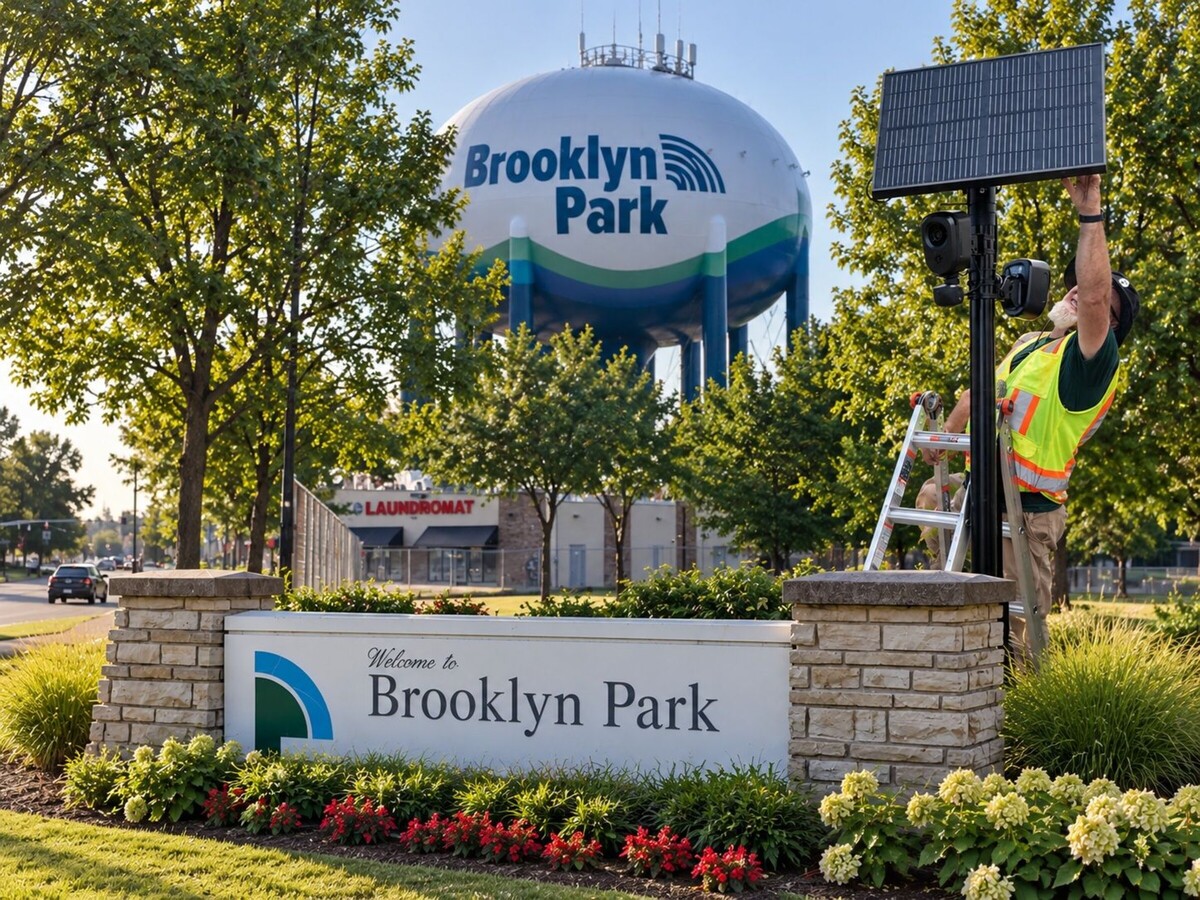
Brooklyn Park police are drawing a distinction between automated license-plate readers and the company that has become the center of Minnesota's growing surveillance debate, arguing that the technology can help solve crimes without exposing residents' travel information to the broader data-sharing practices that caused the department to abandon Flock Safety.
The department ended its relationship with Flock after a one-year contract, citing concerns about the company's data-sharing practices rather than rejecting automated license-plate reader technology itself.
Brooklyn Park subsequently moved to an Axon system and now operates four automated license-plate reader cameras, with plans to add two more and the possibility of eventually operating as many as eight.
The distinction is significant because automated license-plate readers have become a major privacy issue across Minnesota. The cameras can capture license plates from passing vehicles and make those records searchable by law enforcement, allowing investigators to identify vehicles connected to crimes or locate wanted vehicles more quickly than conventional investigative methods.
The same capability creates a corresponding civil-liberties question: how much information should government retain about vehicles that are not connected to criminal activity, who should be allowed to search that information and whether data collected in one community should be broadly accessible elsewhere.
Brooklyn Park Deputy Police Chief Elliot Faust told the City Council that those concerns were central to the department's decision to move away from Flock. The department says its Axon data are not broadly shared with other agencies and officers must provide a case number and factual justification before searching the system. Access must be connected to reasonable suspicion involving a criminal investigation.
Brooklyn Park has also adopted a shorter retention period than Minnesota law permits. The department retains plate information for 30 days, compared with the 60 days allowed under state law.
The city has created an Axon ALPR transparency portal where residents can review policies and usage information. Brooklyn Park describes the system as a tool for retrospective criminal investigations and real-time alerts involving vehicles associated with wanted people or criminal cases.
Police point to falling vehicle-theft numbers as one indication of the technology's value. According to figures presented by the department, Brooklyn Park recorded 207 motor-vehicle thefts in 2025, the city's first full year using automated plate readers. Ninety thefts had been reported so far in 2026 at the time of the council presentation.
Those figures alone do not establish that license-plate readers caused the reduction. Vehicle theft can rise or fall because of multiple factors, including changes in vehicle security, prosecution, policing strategies and broader crime trends. Police nevertheless contend the technology has contributed to their ability to investigate and interrupt vehicle-related crime.
The department also cited the investigation into the fatal 2024 shooting of Ramone Blue outside a clothing store as a case in which automated plate-reader technology played an important role in capturing the man later convicted.
Brooklyn Park's approach places the city in an increasingly important middle position in Minnesota's surveillance debate. It has not abandoned automated plate tracking. Instead, it has rejected one provider while arguing that tighter access rules, shorter retention and greater local control can preserve investigative benefits without accepting unrestricted information sharing.
Whether those safeguards are sufficient is likely to remain a matter of public debate, particularly as the city adds cameras.
For residents, the expansion means automated plate reading will become more extensive in Brooklyn Park even as the department emphasizes that its system operates under different rules from the Flock network it left behind.

Local stories matter. Subscribe free to MinneapoliMedia and receive independent news, community reporting and important updates from Minneapolis, the North Metro and communities across Minnesota.
SUBSCRIBE FREE: https://minneapolimedia.town.news/subscribe
MinneapoliMedia | Community. Culture. Civic Life



Overcast, with a high of 73 and low of 57 degrees. Overcast during the morning, partly cloudy overnight.