72° and Sunny
MINNEAPOLIMEDIA NEWS | MyVote MyVoice Roundtable Calls for Year-Round Action to Prevent Domestic Violence



The October 22 virtual gathering connected Minnesota and international participants around relationship education, institutional accountability and support that respects survivors’ safety and choices.
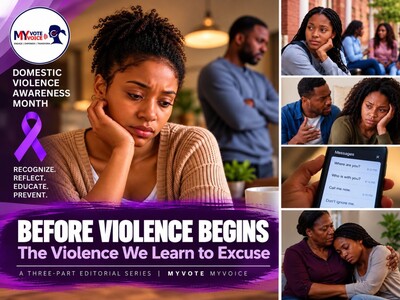
MINNEAPOLIS, MN (October 23, 2026). Teaching children to respect boundaries, preparing faith leaders to respond responsibly to abuse and investing in prevention before a crisis develops emerged as central priorities during MyVote MyVoice’s annual Domestic Violence Awareness Month virtual roundtable on October 22.
Convened under the theme “Before Violence Begins: Teaching Respect, Building Healthy Relationships and Choosing Non-Violence,” the gathering examined how families, schools, religious institutions, public agencies and humanitarian organizations can address behaviors and social expectations that allow abuse to take root.
The discussion connected Minnesota-based advocates with participants joining internationally, including from Nigeria. Speakers brought perspectives from community education, legal practice, youth development, faith communities and humanitarian work.
Neda Kellogg, founding Executive Director of Project DIVA International, moderated the discussion. Ntomchukwu Akaolisa, Servant-In-Chief of MyVote MyVoice, delivered the keynote following a program change.
Throughout the gathering, speakers returned to a practical question: what should institutions do differently after Domestic Violence Awareness Month ends?
Recognizing Control Before Visible Injury
In his keynote, Akaolisa challenged the tendency to excuse controlling behavior as affection or concern. He described jealousy, persistent monitoring and repeated intimidation as behaviors communities need to examine rather than dismiss because no visible injury has occurred.
His remarks distinguished care from control and emphasized the responsibility adults carry when children observe how they handle frustration, disagreement and personal boundaries.
Children learn from everyday interactions, he argued, including whether adults accept another person’s refusal, resolve conflict respectfully and allow family members independence. Teaching healthy relationships therefore requires deliberate instruction supported by consistent adult behavior.
Akaolisa urged participants to stop excusing harmful conduct, teach children intentionally and identify at least one practical prevention measure within each institution represented.
The emphasis on patterns of control also appeared in the panel discussion. Human Rights Expert and Gender Equality Specialist Chioma Ngoka described demands for access to messages, passwords and location information, along with restrictions on employment and financial independence, as behaviors that can be presented as love while limiting another person’s autonomy.
Violence Free Minnesota’s public educational materials similarly describe relationship abuse as a pattern of behaviors used to establish and maintain power and control over a current or former intimate partner.
Faith Communities and the Responsibility to Respond
Dr. Diane D. Thibodeaux, author of Abuse, The Hidden Cry and founder of Agape Oasis, called on Pastors and Christian leaders to deepen their understanding of domestic violence and address it openly within their congregations.
She described family-focused discussions and opportunities for people to seek help confidentially as approaches faith communities can develop. Her broader message was that religious leadership carries a responsibility to recognize abuse and respond with informed support.
Dr. Beatrice Onoja, Executive Director of Glorious Teens Ministry, raised a related concern about young people’s access to trusted adults. Religious programs can concentrate on parents while providing too little space for children and teenagers to discuss what they experience at home, she said.
Onoja advocated age-appropriate engagement and relationships with adults who can listen meaningfully to young people’s concerns.
Ngoka questioned how open family discussions would translate across cultural settings where children are expected to remain silent in the presence of adults. The exchange highlighted the need to adapt prevention efforts to local circumstances while preserving opportunities for young people to be heard.
Speakers also examined the influence of religious authority. Their discussion emphasized that institutions must be prepared to examine their own practices and respond when authority, reputation or social standing discourages disclosure.
Listening to Survivors and Examining Institutional Barriers
Attorney Ayodele “Dele” Famodu brought a legal perspective to the discussion of accountability, stressing the importance of taking disclosures seriously and examining how institutions respond.
She discussed the pressures that can complicate a person’s decision to report abuse, including financial dependence, concern for children and fear of consequences affecting the household.
Her contribution challenged institutions to look beyond an initial disclosure and consider whether their procedures make assistance accessible.
Ngoka also addressed the social consequences survivors may face when seeking help. Family expectations, community pressure and religious interpretations can make it difficult for someone to disclose abuse or consider a change in living arrangements, she said.
During the audience discussion, contributors emphasized listening without judgment and connecting people with appropriate support. They cautioned against responses that place blame on the person seeking help or reduce a complicated situation to a simple instruction.
The discussion treated safety, emotional well-being, children’s needs and access to resources as interconnected concerns requiring attention to individual circumstances.
Investing in Prevention Beyond Annual Awareness Campaigns
Several speakers called for more sustained investment in the people and institutions positioned to recognize harmful behavior early.
Onoja urged funding bodies to devote greater resources to prevention and capacity building. She identified teachers, religious leaders, security personnel, traditional leaders and other community stakeholders as important participants in that work.
Her proposal emphasized equipping people to recognize problems and respond responsibly before abuse escalates.
Ngoka directed a similar challenge toward humanitarian organizations and United Nations agencies. She called for structured, long-term prevention activities involving men, boys, community leaders and faith leaders, with attention to the norms that excuse intimidation and unequal power.
Famodu emphasized the responsibilities of public institutions and people in positions of authority. Prevention and accountability, she argued, require attention within government and professional systems as well as individual households.
Together, the contributions called for practical changes in education, funding and institutional conduct that would continue throughout the year.
Connecting the Discussion to Minnesota Resources
Ash Wirth-Petrik, speaking as a representative of Violence Free Minnesota, outlined the coalition’s work in policy, systems change, technical assistance, community education and public awareness.
The presentation also highlighted the organization’s domestic violence homicide reporting and its relationships with culturally specific programs.
Violence Free Minnesota describes itself as a statewide coalition of more than 90 member programs working to end relationship abuse. Its role includes supporting member organizations, representing survivors’ concerns and challenging institutional practices that undermine safety.
Kellogg’s moderation brought a youth-development perspective to the exchanges. In introducing Project DIVA International’s work, she described its focus on helping teenage girls develop emotional regulation, mental fitness and financial curiosity before adulthood.
That emphasis connected with the roundtable’s larger argument that relationship education must begin early and be reinforced across the settings where young people learn.
From Discussion to Practical Commitments
The gathering concluded with appreciation for the speakers and a call to continue the work beyond the annual event.
Participants were encouraged to identify practical prevention initiatives within their institutions and forward additional questions for subject-matter experts.
The discussion produced proposals ranging from better preparation for faith leaders and dedicated engagement with young people to longer-term prevention programming and stronger institutional accountability. These were calls for action rather than announcements of funded programs or completed reforms.
For MyVote MyVoice, the next measure of progress will be how those proposals translate into sustained education, responsible referrals and changes in the institutions represented.
Information about Minnesota relationship-abuse resources and member programs is available through Violence Free Minnesota.
Disclosure: MinneapoliMedia founder and publisher Ntomchukwu “Tom” Akaolisa serves as Servant-In-Chief of MyVote MyVoice, which organized the roundtable. He also delivered the event’s keynote address.

STAY CONNECTED TO MINNEAPOLIMEDIA
Local stories matter. Subscribe free to MinneapoliMedia and receive independent news, community reporting and important updates from Minneapolis, the North Metro and communities across Minnesota.
SUBSCRIBE FREE: https://minneapolimedia.town.news/subscribe
MinneapoliMedia | Community. Culture. Civic Life