58° and Patchy rain nearby
MINNEAPOLIMEDIA ENTERTAINMENT | More Than 200 Voices, Twelve Harps and One Extraordinary Cathedral: Philip Brunelle and VocalEssence Open Their 58th Season With a Monumental Night of Music



An extraordinary gathering of singers and instrumentalists brought Hector Berlioz's monumental Te Deum to the Cathedral of Saint Paul, celebrating French musical heritage, decades of artistic dedication, and the remarkable cultural legacy of VocalEssence founder Philip Brunelle.
By Tom Akaolisa, Editor
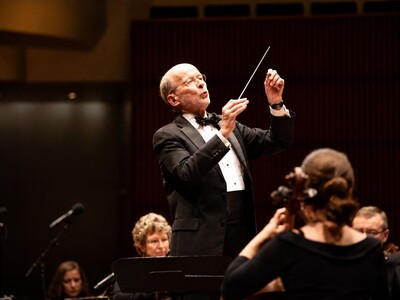
SAINT PAUL, MN (November 1, 2026). On Friday evening, October 30, the Cathedral of Saint Paul became the setting for one of the most ambitious musical undertakings of the Twin Cities' fall concert season. More than 200 singers, a full symphony orchestra, twelve harps, and the cathedral's magnificent pipe organ came together for Hector Berlioz's monumental Te Deum, the centerpiece of a performance that opened VocalEssence's 58th season and offered another demonstration of Philip Brunelle's extraordinary contribution to Minnesota's cultural life.
The concert, Lineage: French Choral Masterworks, brought together the VocalEssence Chorus, VocalEssence Ensemble Singers, Festival Choir, orchestral musicians, and guest artists under the direction of Brunelle and VocalEssence Associate Artistic Director G. Phillip Shoultz III. Its program traced relationships among generations of French composers before arriving at Berlioz's immense nineteenth-century work, a composition conceived for the combination of voices, orchestra, and organ within a large church.
For Brunelle, VocalEssence's founder and artistic director, the evening represented considerably more than the beginning of another concert season. It brought a major work back to a cathedral where the organization had presented its Twin Cities premiere eighteen years earlier. It also reunited a substantial community of musicians around a composition whose performance requires exceptional resources, careful preparation, and a shared artistic purpose.
The occasion carried particular meaning because of the institution Brunelle has spent more than half a century building. Founded in 1969, VocalEssence has become an enduring presence in Minnesota's cultural life, introducing audiences to established masterworks, unfamiliar compositions, emerging artists, and music from traditions extending far beyond the conventional choral repertoire. Its longevity reflects the work of generations of singers, conductors, instrumentalists, administrators, supporters, and audiences who have participated in its development.
MinneapoliMedia attended Friday's performance and spoke with audience members and a longtime VocalEssence singer whose experiences offered additional insight into the evening. Their perspectives brought the scale of the production into closer focus, connecting the extraordinary musical forces assembled inside the cathedral with the personal commitments that make performances of this magnitude possible.
The result was an opening worthy of sustained attention, both for the musical ambition of the program and for what it revealed about Brunelle's continuing leadership. At a time when cultural organizations face difficult questions about resources, participation, and the future of live performance, VocalEssence began its 58th season with a concert built around collaboration on an unusually expansive scale.
A Monumental Return to the Cathedral of Saint Paul
The Cathedral of Saint Paul was central to the conception of Friday's concert. Its soaring interior, expansive nave, and powerful organ provided the architectural setting for a work that Berlioz designed to take advantage of the relationship between sound and space. Rather than treating the building as an incidental venue, VocalEssence made its distinctive musical possibilities part of the evening's artistic design.
Berlioz composed Te Deum in 1849, although the work did not receive its premiere until April 30, 1855, at the Church of Saint-Eustache in Paris. Its conception reflected the composer's interest in unusually large musical forces and his ability to combine public grandeur with passages of personal reflection. The work calls for a substantial orchestra, multiple choral groups, tenor soloist, and organ, creating a musical dialogue that depends upon the distribution and interaction of those forces.
The original premiere involved approximately 950 performers, according to VocalEssence's concert materials. That historical scale helps explain why Te Deum remains an uncommon undertaking. Its musical requirements extend well beyond the normal resources of many choral organizations, demanding not only a large number of performers but also a venue capable of accommodating them and supporting the composer's intended effects.
In his program welcome, Brunelle explained that Berlioz composed the work with the acoustics of Saint-Eustache in mind. The Paris church had a reverberation lasting approximately seven or eight seconds, which Brunelle compared with the acoustical character of the Cathedral of Saint Paul. The opening exchanges between orchestra and organ were conceived to make use of precisely that kind of resonance.
The arrangement gives the organ a distinctive role. Rather than serving merely as an accompaniment to the singers, it participates in the work's architectural and musical design, responding to the orchestra across the space. This relationship helps distinguish Te Deum from other large sacred compositions and gives particular significance to the choice of performance venue.
VocalEssence's return to the cathedral also carried an important institutional connection. Eighteen years earlier, the organization had presented the Twin Cities premiere of Berlioz's work in the same building. Revisiting the composition in 2026 created an opportunity to recognize that earlier achievement while introducing another generation of performers and listeners to its extraordinary demands and possibilities.
The October 30 concert therefore joined two histories. One belonged to Berlioz and the musical imagination of nineteenth-century France. The other belonged to Brunelle and VocalEssence, whose continuing willingness to undertake ambitious repertoire has helped define the Twin Cities' choral landscape for decades.
For an organization entering its 58th season, that relationship between history and renewal was especially appropriate. VocalEssence did not simply reproduce an earlier program. It placed a major composition within a broader exploration of French musical heritage, allowing audiences to encounter the traditions and artistic relationships surrounding the work before experiencing its full scale.
Twelve Harps and the Extraordinary Imagination of Berlioz
Among the most remarkable features of the performance was the presence of twelve harps, an instrumental gathering seldom encountered in a conventional orchestral concert. Their inclusion was not an embellishment devised for the occasion. Berlioz specified the instruments as part of the work's original conception, recognizing that a single harp would struggle to establish its musical presence against the enormous orchestral forces he intended to employ.
Brunelle addressed that decision in his program notes, explaining that the composer understood the need to multiply the instruments to achieve the effect he envisioned. The twelve harps consequently represented both fidelity to Berlioz's intentions and VocalEssence's determination to honor the composition's extraordinary instrumentation.
The assembled harpists were Lynne Aspnes, Finn Coleman, Eliana Fast, Emily Gerard, Esther Gilbertson, Samara Isakson, Shari Latz Rothman, Amalia Ranstrom, Larcom Scott, Andrea Stern, Phala Tracy, and Atari Veldey. Their participation reflected the extensive coordination required to bring together specialized musical resources for a single performance.
For audience members, the unusual instrumentation was immediately memorable. One attendee interviewed by MinneapoliMedia remarked on the sheer rarity of seeing so many harps gathered for one concert, observing that even encountering two together would be unusual. Another, whose wife participated in the choir, described the gathering with amused appreciation, comparing the sight to a convention of harpists.
Those reactions captured an important dimension of the evening. The twelve harps were an unmistakable visual representation of the composer's imagination and the practical work necessary to realize it. They also provided an accessible point of connection for listeners who might not have been familiar with the technical requirements of Te Deum.
The harpists were part of a much larger instrumental community. The orchestra included strings, woodwinds, brass, and percussion, with Chris Ganza serving as organist and Casey Rafn as pianist. Tenor Andy McCullough was featured as the soloist in the work's fifth principal movement, Te Ergo Quaesumus.
Each component had a defined musical responsibility. Berlioz's orchestration combines imposing public statements with passages of greater intimacy, placing considerable importance on the relationship among instrumental sections, singers, and soloists
. The work's grandeur emerges from the composer's ability to organize those contrasting elements into a coherent musical design.
The six principal movements alternate expressions of praise with prayers for mercy and protection. The score also includes marches associated with the presentation of standards. In the more expansive passages, Berlioz draws upon the ceremonial force of brass, percussion, and massed voices. Elsewhere, he turns toward more restrained musical writing, allowing the tenor soloist and choral textures to express a different emotional character.
The concluding Judex Crederis brings the work's concern with judgment and divine mercy into particularly powerful focus. The contrast between collective proclamation and personal supplication is essential to the composition, demonstrating that its significance lies not simply in its size but in the expressive range Berlioz achieves through those resources.
Friday's performance gave Minnesota audiences an opportunity to encounter this remarkable score in a setting closely aligned with its original architectural conception. It also demonstrated the extent of the preparation involved when an organization commits itself to presenting a work that cannot be assembled through ordinary concert arrangements.
For Brunelle, whose career has repeatedly brought unfamiliar or demanding repertoire to local audiences, the decision to open the season with Te Deum was consistent with a longstanding artistic philosophy. Ambition, in this context, meant taking the composer's intentions seriously and gathering the musicians necessary to make the work available to the community.
French Musical Heritage Across Generations
Although Berlioz's Te Deum supplied the evening's monumental conclusion, the first half of Lineage: French Choral Masterworks was essential to the concert's broader artistic purpose. The program introduced music by several French composers whose careers, teaching relationships, and musical influences helped shape the country's choral tradition across generations.
The selection included works by Camille Saint-Saëns, Olivier Messiaen, Marcel Dupré, Francis Poulenc, Maurice Duruflé, Pierre Villette, and Charles-Marie Widor. Presented together, their compositions offered an account of French sacred music that extended beyond a single historical period or stylistic approach.
The VocalEssence Ensemble Singers opened the program with Saint-Saëns's Choeur Triomphal, drawn from his Mass for Four Voices. Saint-Saëns occupied an important position in French musical life as a composer, organist, pianist, and conductor whose work ranged across opera, orchestral music, chamber music, and sacred composition. His interest in earlier musical traditions provided an appropriate point of departure for a concert concerned with artistic inheritance.
Messiaen's O Sacrum Convivium! introduced another dimension of French sacred expression. Written in 1937, the motet reflects the composer's distinctive harmonic language and his lifelong engagement with religious subjects. Its presence on the program demonstrated how twentieth-century composers continued to draw upon traditional sacred texts while developing musical approaches unmistakably their own.
Marcel Dupré's Sustinuit Anima Mea, from De Profundis, connected the program to the period surrounding the First World War. Composed in 1917, the work emerged from a time of immense upheaval in Europe. Dupré, an accomplished organist and improviser, was also a student of Widor, whose music appeared later in the concert.
That relationship was one of the clearest examples of the evening's central theme. Musical traditions survive not only through published compositions but also through teaching, mentorship, performance, and the exchange of ideas between generations. Widor's influence on Dupré offered a direct historical illustration of that process.
Poulenc's Exultate Deo brought a different musical character to the first half. The composer's sacred music frequently combines a strong connection to earlier choral traditions with harmonies and rhythmic choices associated with the twentieth century. His work helped demonstrate that continuity within a musical tradition need not require composers to imitate their predecessors.
The VocalEssence Chorus continued the exploration with Duruflé's Ubi Caritas, a setting associated with the composer's Four Motets. Duruflé's music is particularly admired for its treatment of Gregorian chant and its ability to integrate ancient melodic material into a refined modern harmonic language.
Pierre Villette's Jesu, Dulcis Memoria extended the program's account of artistic influence. Villette studied with Duruflé, and his music reflects connections to the French sacred tradition while retaining its own expressive identity. Placing the two composers within the same program allowed audiences to consider their relationship through the music itself.
Poulenc returned with Laudamus Te, from his Gloria. The movement's playful rhythmic character offered a striking contrast to the more meditative works elsewhere in the program. Poulenc famously associated its exuberant spirit with the sight of Benedictine monks playing soccer, an anecdote that illustrates his ability to bring unexpected vitality into a sacred composition.
The first half concluded with Widor's setting of Psalm 84, How Lovely Are Thy Temples, performed by the VocalEssence Chorus and Ensemble Singers. Widor's long career as an organist and teacher made him a particularly fitting figure in a program examining the transmission of musical knowledge. His influence extended through students and colleagues who helped shape subsequent generations of French musicians.
The sequence was more than a collection of attractive sacred works. It provided a carefully organized account of artistic continuity, allowing the audience to encounter different approaches to choral composition while recognizing the relationships connecting the composers.
Shoultz, in VocalEssence's announcement of the concert, described the organization as one committed to passing artistic knowledge from one generation to another. He connected the program's historical relationships to VocalEssence's own practice of commissioning music and supporting developing composers.
That connection gave the title Lineage particular relevance. The concert celebrated music inherited from earlier generations while acknowledging the responsibility of contemporary institutions to sustain the conditions under which new artistic work can emerge.
The Discipline Behind an Extraordinary Performance
The scale of Berlioz's Te Deum demanded more than the assembly of an unusually large group of musicians. It required the coordination of singers, instrumentalists, organist, and conductors within one of Minnesota's most distinctive performance spaces. The Cathedral of Saint Paul's architecture and expansive acoustics contributed to the occasion's grandeur while placing particular importance on attentive ensemble singing, precise conducting, and the shared discipline developed through rehearsal.
A longtime VocalEssence singer, reflecting on her nineteen years with the organization, offered a fascinating insight into the remarkable discipline required to perform inside the Cathedral of Saint Paul. She explained that the cathedral's expansive acoustics call for exceptional concentration, with singers relying closely on the conductor's visual direction to maintain precision across the large ensemble. Her observations illuminated the preparation, experience, and collective commitment behind the performance, providing a deeper appreciation of the musicianship and artistic leadership that brought Berlioz's monumental composition to life.
That discipline was especially significant in a work bringing together more than 200 voices, a full orchestra, twelve harps, and the cathedral's organ. Under the artistic leadership of Philip Brunelle, with G. Phillip Shoultz III also conducting during the program, the performance represented the work of an extensive musical community. Each participating singer and instrumentalist contributed to an undertaking whose success depended on preparation, mutual attentiveness, and a common understanding of the music.
The singer's perspective also offered a reminder of the experience accumulated within VocalEssence over decades. Musicians who return season after season carry with them an understanding of the organization's artistic expectations, its repertoire, and the collaborative responsibilities that accompany large-scale performances. Their dedication is an essential part of the institution Brunelle has built, connecting its history to the musicians and audiences who continue to sustain it.
The singer also recalled traveling with VocalEssence Ensemble Singers to Westminster Abbey during the summer of 2025. That experience formed part of her broader account of performing in significant architectural spaces, where musicians must bring together technical skill, concentration, and an appreciation of the building's particular acoustic character.
Such experiences are important to understanding the depth of VocalEssence's artistic community. An organization that has sustained choral performance over nearly six decades develops knowledge that cannot be captured by a concert program alone. Singers carry that experience from rehearsal to rehearsal and from season to season, while new participants enter an established culture of preparation and collaboration.
Large-scale choral performances also depend upon substantial work beyond the musicians visible to an audience. Rehearsal planning, score preparation, instrumental coordination, scheduling, venue arrangements, and the many practical responsibilities of concert production are necessary to bring a program of this magnitude to the stage.
The participation of more than 200 singers represented a considerable commitment of time and effort. Each rehearsal formed part of a larger process through which individual preparation became collective performance. For instrumentalists, conductors, and soloists, that process required an equally serious engagement with the score and with the responsibilities of performing as part of an unusually large ensemble.
The cathedral itself made the coordination especially meaningful. Berlioz's writing takes advantage of the spatial relationship between orchestra and organ, requiring performers to remain connected across a substantial physical distance. The musicians' ability to work within that setting reflected the importance of experienced direction and disciplined ensemble practice.
Brunelle's role in such a production extends beyond the public act of conducting. His artistic leadership includes the decision to undertake demanding repertoire, the development of a program that gives the music context, and the ability to bring together the people and resources necessary for its realization.
The presence of Shoultz as a fellow conductor also reflected the collaborative structure of VocalEssence's artistic leadership. Together, the two conductors represented an institution committed to sustaining established musical traditions while developing the relationships and opportunities that will shape its future.
For those who attended the concert, the scale of the performance was immediately apparent. The preparation behind it was less visible, but no less important. The longtime singer's account helped illuminate that essential dimension of the evening, recognizing the people whose dedication made the performance possible.
The Families and Audiences Who Share in the Achievement
One of the most meaningful aspects of Friday's concert emerged in conversations with people whose connections to VocalEssence extended beyond the concert hall. For them, the performance was not simply an evening of music. It was an opportunity to support family members, maintain relationships, and participate in an artistic community that has become part of their lives.
Among those interviewed by MinneapoliMedia was a woman who had traveled from southern Wisconsin to attend the performance and see her daughter, a VocalEssence singer. She explained that her daughter had been involved with the organization for approximately six or seven years and that the visit provided an opportunity to spend time together before she returned home the following day.
Her journey illustrated the personal significance that performances can hold for the families of participating musicians. The commitment required of a singer is often shared, in different ways, by relatives and friends who follow rehearsals, attend concerts, and make arrangements to be present for important occasions.
The woman also recalled VocalEssence's use of video performances during the COVID-19 pandemic, when normal concert activity was disrupted. Her recollection pointed to the importance of maintaining musical connections during a period when organizations and audiences were unable to gather in familiar ways.
That history added another dimension to Friday's performance. The gathering of hundreds of musicians and audience members inside the cathedral represented the continuing vitality of a community that had navigated a period of extraordinary interruption and returned to the shared experience of live music.
Another attendee spoke about his wife's participation in the choir and expressed particular enjoyment of the unusual gathering of harpists. His reaction combined personal pride with the curiosity that a production of this scale can inspire among listeners.
Such conversations offered a valuable counterpoint to the technical details of the performance. The music was unquestionably the evening's central purpose, but the relationships surrounding it helped explain why the event mattered to those who attended.
A large choral organization creates connections across generations, professions, neighborhoods, and communities. Singers may arrive with different backgrounds and levels of experience, but they participate in a shared undertaking that requires regular commitment and cooperation. Families and audiences become part of that wider network through their continuing support.
VocalEssence has long embraced the idea that singing together can strengthen community life. Its stated mission emphasizes nurturing community, inspiring creativity, affirming the value of individuals, and expanding the influence of choral music. Friday's gathering offered a practical example of that philosophy, bringing together people whose relationships with the organization were both artistic and personal.
For the woman who traveled from Wisconsin, the concert was an occasion to hear a daughter whose musical involvement had become a sustained part of her life. For the husband of a participating singer, it was an opportunity to share in an achievement made possible by the choir's collective work. For the longtime singer, it was another experience in an artistic journey extending across nineteen years.
These perspectives are essential to understanding the full significance of VocalEssence's 58th-season opening. A concert of this magnitude depends upon exceptional artistic leadership, but its enduring value also comes from the people who continue to participate, support, and return.
The organization has built its history through performances, commissions, educational initiatives, and collaborations. It has also built that history through relationships, many of which remain largely unseen by audiences encountering the music for the first time.
Friday's concert brought those dimensions together. The cathedral contained a remarkable assembly of musical talent, but it also held the families, friends, supporters, and longtime listeners who have helped sustain the institution over decades.
Philip Brunelle and the Musical Institution He Built
To understand the significance of Friday's concert, it is necessary to consider the career of Philip Brunelle and the institution he founded in 1969. For more than half a century, Brunelle has occupied a distinctive place in Minnesota's musical life, combining an extensive knowledge of choral repertoire with a sustained commitment to bringing music and musicians into public view.
His achievement cannot be measured only through the number of concerts conducted or seasons completed. It also rests upon the breadth of the repertoire VocalEssence has presented, the opportunities it has created for singers and composers, and the relationships it has developed within Minnesota and beyond.
The organization has introduced audiences to music from different historical periods, cultural traditions, and artistic movements. Its work has included major compositions from the established choral canon alongside new commissions and performances of music that might otherwise receive limited exposure.
According to VocalEssence, its performance history includes more than 350 commissions and world premieres. That record reflects an institutional commitment to the creation of new work as well as the preservation and interpretation of existing music.
Commissioning is an especially important part of that contribution. When an organization supports a composer in creating a new work, it helps expand the repertoire available to future performers and audiences. The resulting music becomes part of a continuing artistic conversation, connecting the present generation with those who will encounter the composition in years to come.
Brunelle's approach has also helped establish VocalEssence as an organization willing to take artistic risks through thoughtful programming. A concert built around Berlioz's Te Deum demonstrates that willingness through the considerable resources required to present a monumental historical work. Other programs express the same philosophy through unfamiliar composers, contemporary collaborations, and music from communities whose artistic contributions have not always received sufficient recognition.
In an earlier conversation with MinneapoliMedia for the Builders of Minnesota interview series, Brunelle identified curiosity as a defining quality of his artistic life. That emphasis offers a useful way to understand the breadth of his work. His career has been marked by an interest in discovering music, learning from composers, and introducing audiences to artistic experiences they may not have anticipated.
Curiosity, however, is only one part of the achievement. Sustaining an organization for nearly six decades requires determination, relationships, administrative continuity, and an ability to respond to changing circumstances without losing sight of its central purpose.
VocalEssence's continued presence reflects the contributions of many people, including the singers and musicians who have participated in its ensembles, the conductors and composers who have collaborated with it, and the staff, board members, donors, and audiences whose support makes its programs possible.
Brunelle's leadership has provided an enduring artistic foundation for that collective work. His commitment to ambitious repertoire and musical discovery has helped establish expectations that extend beyond any individual concert.
Friday's performance was a particularly fitting expression of those qualities. The decision to return to Berlioz's Te Deum connected VocalEssence's present with one of its earlier landmark achievements. The inclusion of music by several generations of French composers placed the performance within a broader historical framework. The participation of hundreds of musicians demonstrated the institution's continuing capacity to organize substantial artistic collaborations.
The concert also provided an opportunity to recognize Brunelle's influence on Minnesota's cultural identity. The Twin Cities' reputation as a center of musical activity has been shaped by numerous institutions, artists, educators, and community organizations. VocalEssence has contributed to that reputation through its distinctive combination of professional performance, community participation, education, and commissioning.
Its work has helped broaden public understanding of what a choral organization can accomplish. Rather than confining its activities to a narrow definition of repertoire, VocalEssence has explored the connections between music, history, culture, and contemporary community life.
That expansive vision has been one of Brunelle's most enduring contributions. It has allowed the organization to honor the achievements of earlier composers while remaining attentive to the voices and creative possibilities of the present.
The respect Brunelle has earned is therefore inseparable from the opportunities he has helped create for others. The singers who have participated in VocalEssence, the composers whose work it has introduced, and the audiences who have encountered unfamiliar music through its performances are all part of that legacy.
At the Cathedral of Saint Paul, the scale of that legacy was represented by an extraordinary gathering of musicians. The occasion celebrated a monumental composition, but it also recognized the decades of artistic commitment that made such a performance possible.
A Season of Musical Discovery and Collaboration
Friday's concert was the opening chapter of a 2026–27 season designed to explore the breadth of choral music through historical masterworks, contemporary composition, collaboration, and community participation.
The programs announced by VocalEssence demonstrate that the ambition of Lineage: French Choral Masterworks is not confined to a single evening. The season moves among different musical periods and artistic traditions, creating opportunities for audiences to encounter both familiar works and new approaches to choral performance.
In December, VocalEssence will present selections from Johann Sebastian Bach's Christmas Oratorio in collaboration with the Bach Society of Minnesota. The performances will bring together period instruments and vocal forces to explore one of the central works of the Baroque sacred repertoire.
The holiday season will also include Welcome Christmas, a longstanding VocalEssence tradition that combines familiar seasonal music with new artistic contributions. The 2026 program includes a newly commissioned work by Minnesota composer Shruthi Rajasekar, continuing the organization's practice of supporting contemporary composers.
That commission reflects an important aspect of Brunelle's artistic philosophy. A healthy musical culture depends not only upon performances of established works but also upon opportunities for living composers to contribute new music. By including new commissions within programs that attract broad audiences, VocalEssence helps create connections between contemporary artistic voices and longstanding concert traditions.
The season's WITNESS: The Poet Sings program will explore the relationship between music, poetry, cultural memory, and social change. The announced collaboration includes Minneapolis hip-hop artist Nur-D alongside VocalEssence ensembles, with a program connecting West African storytelling traditions to contemporary forms of musical expression.
The WITNESS series has become an important part of VocalEssence's broader engagement with cultural history and community life. Its programming demonstrates the organization's recognition that choral music can provide a setting for artistic exchange across traditions and generations.
In April 2027, VocalEssence will welcome the Choir of King's College, Cambridge, bringing an internationally recognized choral institution to Twin Cities audiences. The visit will offer another opportunity to connect Minnesota's musical community with performers whose work represents a distinguished tradition of choral singing.
The season will conclude in May with Temptation to Tranquility, a program pairing Gabriel Fauré's Requiem with SEVEN: A Cycle of Sins, a collection of works by seven American composers responding to the theme of the seven deadly sins.
The pairing promises a contrast between contemporary musical interpretations of human behavior and one of the most admired sacred works in the French repertoire. It also returns the season to French musical heritage, creating a connection with the composers and traditions explored during Friday's opening concert.
Beyond the principal concert series, VocalEssence will continue its work with Singers Of This Age and Vintage Voices. These programs reflect the organization's commitment to musical participation at different stages of life, extending its activities beyond conventional concert presentation.
Singers Of This Age provides opportunities for young people to develop their musical abilities and participate in collaborative performance. Vintage Voices engages older adults through singing and community connection, recognizing the continuing value of musical participation throughout life.
Together, these activities reveal the breadth of VocalEssence's institutional purpose. The organization presents ambitious concerts, supports new compositions, works with established and emerging artists, and creates opportunities for community members to participate directly in music-making.
The 58th season therefore extends the themes established at the Cathedral of Saint Paul. Artistic inheritance, mentorship, collaboration, and discovery will continue to shape its programming in the months ahead.
For Brunelle, whose career has been characterized by a sustained interest in music from many periods and traditions, the season offers another opportunity to share that curiosity with audiences. For VocalEssence, it represents a continuation of the artistic mission that has guided the organization since its founding.
An Evening Worth Preserving in Minnesota's Cultural Record
The significance of Friday's performance extends beyond its place on the 2026–27 concert calendar. It belongs to the continuing history of an organization that has helped shape Minnesota's musical life for nearly six decades and to the larger story of the people who have sustained that work.
Berlioz's Te Deum was an appropriate centerpiece for such an occasion. Its extraordinary musical forces required VocalEssence to bring together a large community of singers and instrumentalists, while its historical relationship with the Cathedral of Saint Paul gave the performance an additional connection to the organization's past.
The twelve harps, full orchestra, powerful organ, and more than 200 voices provided the musical resources envisioned by a composer whose imagination frequently exceeded the practical conventions of his time. Their assembly represented a substantial artistic and organizational undertaking, made possible through the commitment of many individuals working toward a shared purpose.
The first half of the concert supplied an equally important perspective. Through works by Saint-Saëns, Messiaen, Dupré, Poulenc, Duruflé, Villette, and Widor, VocalEssence presented an account of musical traditions sustained through teaching, influence, and artistic renewal. That historical framework connected naturally with the organization's own emphasis on mentorship, commissioning, and the development of future generations of musicians.
The conversations MinneapoliMedia conducted with those attending and participating in the performance added a personal dimension to the evening's significance. A longtime singer described the concentration and discipline required to perform in the cathedral. A mother traveled from Wisconsin to support her daughter. Another audience member took particular delight in the unusual gathering of harpists while sharing in his wife's participation in the choir.
Their experiences reflected the different ways people become connected to an artistic institution. Some devote years to rehearsals and performances. Others travel to support family members, attend concerts regularly, or discover unfamiliar music through a single occasion. Each relationship contributes to the community surrounding the organization.
Those personal commitments deserve recognition alongside the achievements of the conductors and composers. A performance of this magnitude is made possible by the combined efforts of artists, administrators, production personnel, supporters, and families whose contributions may not be immediately apparent from the audience.
For Philip Brunelle, the concert represented another substantial achievement in a career defined by extraordinary dedication to music and the people who make it. His leadership has helped sustain an institution capable of presenting major historical works while continuing to support new artistic voices and expand opportunities for participation.
The October 30 performance also demonstrated the importance of preserving Minnesota's cultural history through serious attention to the people and institutions responsible for it. Major concerts are often remembered through programs, photographs, and recordings, but their deeper significance also resides in the artistic decisions, collaborative relationships, and personal experiences that bring them into existence.
VocalEssence's 58th-season opening offered all of those elements. It connected a monumental nineteenth-century composition with a modern musical community, returned an important work to a familiar cathedral, and recognized the continuing value of artistic traditions passed from one generation to another.
As VocalEssence moves through the remainder of its season, the Cathedral of Saint Paul performance will stand as an important opening achievement. It demonstrated the organization's capacity to undertake an unusually demanding musical production while remaining connected to the people whose dedication has sustained its work.
For Minnesota, the evening offered another reason to appreciate the cultural institution Philip Brunelle founded and continues to lead. For the singers, instrumentalists, and families who participated, it represented the culmination of preparation, commitment, and shared musical purpose. And for the audiences gathered inside the cathedral, it provided an opportunity to experience a remarkable work in a setting chosen to honor the composer's intentions.
More than fifty-seven years after VocalEssence began, Brunelle's work continues to bring musicians together around music that challenges, inspires, and enlarges the possibilities of communal performance. On October 30, that enduring commitment found an especially memorable expression in the Cathedral of Saint Paul, where more than 200 voices, twelve harps, and a monumental score came together to open another chapter in Minnesota's musical history.

STAY CONNECTED TO MINNEAPOLIMEDIA
Local stories matter. Subscribe free to MinneapoliMedia and receive independent news, community reporting and important updates from Minneapolis, the North Metro and communities across Minnesota.
SUBSCRIBE FREE: https://minneapolimedia.town.news/subscribe
MinneapoliMedia | Community. Culture. Civic Life