58° and Patchy rain nearby
Image



SAINT PAUL, MN (November 1, 2026).
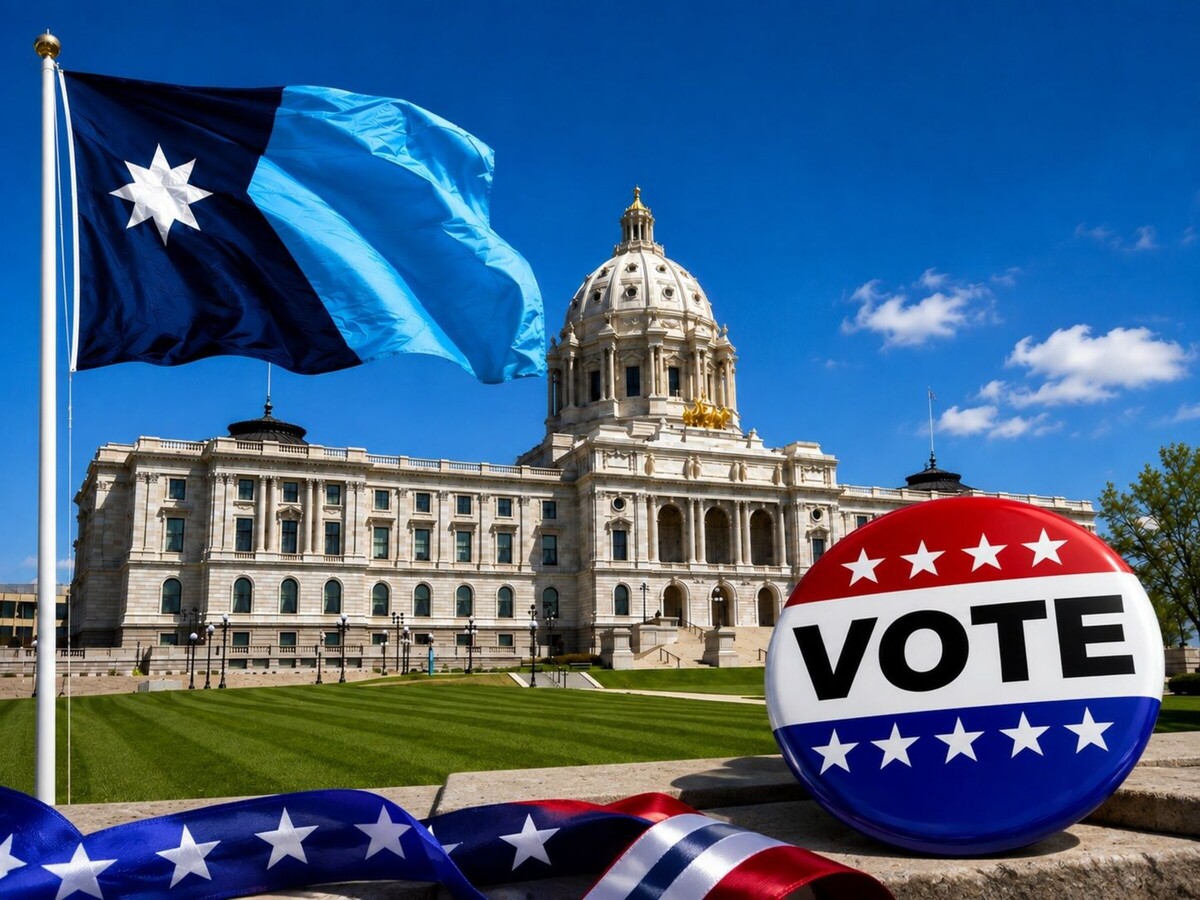
Minnesota enters the final two days before its November 3 general election with several of the state's most consequential political offices on the ballot, including an open governor's seat, an open U.S. Senate seat and every seat in the Minnesota Legislature.
The election will determine the direction of state government at a time when voters are weighing concerns about public spending, fraud oversight, economic conditions, immigration, education and the responsibilities of elected officials.
It will also test the ability of both major political parties to reach voters beyond their established areas of support.
In the governor's race, Democrat Amy Klobuchar faces Republican Lisa Demuth and a third candidate in the contest to succeed retiring Gov. Tim Walz.
The race brings together candidates with different political backgrounds and approaches to state government.
Klobuchar enters the contest with substantial statewide name recognition from her service in the U.S. Senate.
Demuth has emphasized Republican concerns about state spending, accountability and the direction of the Minnesota government.
The outcome will determine who leads the executive branch and shapes the state's budget negotiations, administrative priorities and relationship with the Legislature.
Minnesota voters will also choose a successor to U.S. Sen. Tina Smith, who is leaving the Senate.
Democrat Peggy Flanagan faces Republican Michele Tafoya and two additional candidates.
The Senate contest has implications beyond Minnesota because the balance of power in Washington will determine which party controls legislative committees, confirmation proceedings and the Senate's broader agenda.
The state legislative elections are similarly consequential.
All seats are on the ballot at a time when the Minnesota Senate has been closely divided and the House has operated under an exceptionally narrow partisan balance.
Before a Republican vacancy, the House was tied 67-67.
Democrats held a one-seat advantage in the Senate.
Those margins mean that relatively small changes in election outcomes could substantially alter the ability of either party to advance legislation.
Control of the Legislature affects decisions involving taxes, education funding, transportation, healthcare, housing and other areas of state policy.
A governor whose party controls both chambers may have greater ability to advance a legislative agenda.
Divided government, by contrast, generally requires negotiation among parties and can limit the speed or scope of major policy changes.
Minnesota's political geography will be important in determining the results.
The Twin Cities metropolitan area has traditionally provided substantial support for Democratic candidates, while many rural communities have favored Republicans.
Duluth, Rochester, suburban districts and competitive areas elsewhere in the state may also influence statewide and legislative outcomes.
The election comes amid unusually high early-voting participation.
According to the Minnesota Secretary of State's Office, 728,961 ballots had been accepted by the close of business October 29, exceeding the total number of absentee and mail ballots cast during the entire 2022 election.
That figure includes 483,520 ballots cast in person and 245,441 returned by mail.
The office reported that 948,465 absentee and mail ballots had been distributed, leaving more than 208,000 not yet returned at the time of the update.
The participation figures show that a substantial number of Minnesotans have already made their decisions.
They do not, however, establish which party or candidate will benefit.
Early-voting totals measure participation, not the political preferences recorded on ballots.
The remaining campaign period will involve final voter outreach, transportation arrangements, election administration and efforts to ensure that voters understand where and when they can cast ballots.
For residents who have not yet voted, early in-person voting remains available Sunday, November 1, from 9 a.m. to 3 p.m. at designated local election offices.
Early voting continues Monday, November 2, until 5 p.m.
On Election Day, Tuesday, November 3, most polling places will open at 7 a.m., and all polling places will close at 8 p.m.
Voters who are in line by 8 p.m. will be permitted to cast their ballots.
Residents who still have absentee ballots at home should pay particular attention to return deadlines.
State officials have advised against returning those ballots through the mail this late in the election period because of the risk that they may not arrive on time.
The deadline for returning absentee ballots in person is 5 p.m. on Election Day.
Different rules apply to ballots returned by mail and certain other methods, with an 8 p.m. deadline for applicable categories.
Minnesota also allows eligible residents to register when they vote, provided they bring acceptable proof of identity and residence.
Election officials provide voter information and assistance in multiple languages.
The state's voter information system includes resources for checking registration, locating polling places and tracking absentee ballots.
The final hours of the campaign will be particularly important for voters who have not yet decided whether to participate.
But the consequences of the election extend beyond the campaigns themselves.
The next governor and Legislature will inherit ongoing debates about public program oversight, economic development, education, public safety and the allocation of state resources.
Minnesota's next U.S. senator will participate in federal decisions involving national spending, judicial and executive nominations, and legislation affecting the state.
For voters, November 3 is therefore an opportunity to determine not only which candidates hold office but also the governing arrangements under which those decisions will be made.
The results will not be known until ballots are counted and election officials complete the applicable reporting and certification processes.
For now, the state enters November with unusually high early participation and several major contests still undecided.
VOTER INFORMATION
Official voter information: www.mnvotes.gov.
Minnesota Secretary of State election assistance: 1-877-600-8683.
Local stories matter. Subscribe free to MinneapoliMedia and receive independent news, community reporting and important updates from Minneapolis, the North Metro and communities across Minnesota.
SUBSCRIBE FREE: https://minneapolimedia.town.news/subscribe
MinneapoliMedia | Community. Culture. Civic Life


Overcast, with a high of 68 and low of 55 degrees. Overcast during the morning, partly cloudy during the afternoon, overcast for the evening,