36° and Overcast
Image
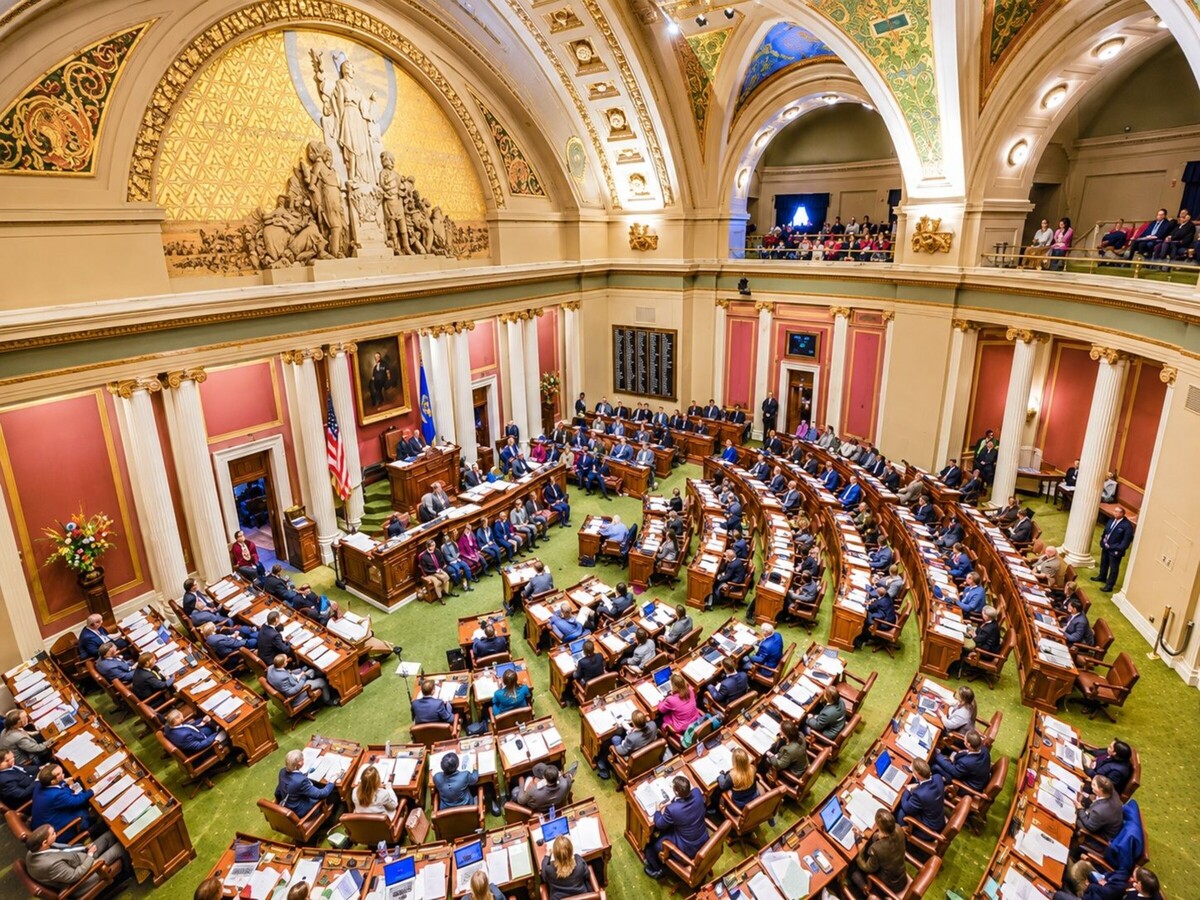



ST. PAUL, MN (November 16, 2026). At 9:45 p.m. on Sunday, May 19, 2024, a Minnesota legislative conference committee was scheduled to take up a report on House File 5247, a tax bill. By the end of the night, the Minnesota Senate had passed a package of more than 1,400 pages. It included minimum pay rates for Uber and Lyft drivers, changes to the state’s paid leave law and a ban on certain rapid-fire gun triggers. A Minnesotan who had been following any one of those issues had little time that night to find it in the combined package, check the final wording and reach a senator before the vote.
The public bill history shows how much has changed. The Senate had passed a version of HF 5247 on May 7. The House declined to accept the Senate’s amendments, and conferees were appointed. The May 19 conference report called for replacing the bill’s text. The Senate adopted the report and passed the revised bill that night. The Revisor’s bill page lists May 20 as the posting date for the fourth engrossment, the version incorporating those changes. That date establishes when the revised bill was posted in that form. The record available here leaves open the precise time the conference report first went online. What the official meeting schedule and bill history do establish is that the report came before lawmakers and the Senate passed the measure on the same night.
Many of the policies in that package had been debated during the session. A driver who had followed the rideshare negotiations still had reason to check the rates and terms that made it into the final bill. An employer following paid leave had reason to see which version lawmakers were about to enact. Earlier hearings gave people a chance to speak about proposals as they stood at the time. The final language was what would govern them.
Before the 2027 session gets underway, the Senate should adopt a rule requiring advance publication of substantive amendments and the final text of negotiated bills. It should ordinarily give the public at least one working day to review the language before a vote. Exceptions should be narrow, with the text and the reason for proceeding posted as part of the public record. The requirement should apply in committee and on the floor, including when the Senate takes up a conference committee report.
The end of the 2024 session was an unusually large example. The Senate’s own guidance describes a more routine problem. It says most committee amendments are made public when they are offered at a hearing and are available in paper form to those attending. The Senate also provides for advance posting in some circumstances. Once an amendment is adopted, it becomes part of the committee report, which is posted online after the full Senate adopts the report. That procedure gives Minnesotans a way to look up an adopted change later. It can leave someone watching the hearing remotely without the text while the committee is considering it.
Consider a parent following a special education bill. She can read the bill before the hearing, watch the discussion and hear a senator explain that an amendment changes how expenses are counted. The effect may turn on which expenses are included, which districts qualify or when the formula takes effect. Those details are in the wording. With the amendment available ahead of time, she could send the relevant section to her district and ask what it would mean for students. District staff could run the numbers and tell committee members whether the change would work as described.
A small city has much the same problem when a late amendment adds a reporting requirement. Its clerk may know that the information the state wants is kept in two systems and that complying by July would require staff time the city has already budgeted elsewhere. That is a practical problem a senator could address by changing the effective date. The clerk needs a chance to see that date and explain the consequences. The committee needs a chance to hear from her before voting on the provision.
The people most likely to have that time under current procedures are those whose work already takes them to the Capitol. They may have staff following different committees, copies of the latest drafts and colleagues ready to scan a new amendment as it is handed out. A resident working a shift in Brooklyn Park or a county employee following a hearing from Greater Minnesota may have the same stake in the outcome. Their access to the wording should depend on the public bill page they can open from wherever they are.
The Senate has a public bill-tracking system and a journal that records legislative actions. Its 2025–26 rules generally require Senate bills reported favorably or without recommendation by a committee to be available electronically or in print before consideration by the Senate or the Committee of the Whole, unless the Senate orders otherwise. That provision sets no minimum time for public review of a newly offered committee amendment. The Senate can build on its existing system by making the public bill page the place to find the text that is coming up for a vote.
Each posting should identify the amendment, its sponsor, the time it was posted and the hearing or floor action where it is expected to come up. Agendas and floor calendars should link to that page. If the amendment is revised, the new version should carry its own timestamp, and earlier versions should remain available and clearly labeled. Someone who spent an evening reading the first draft should be able to see whether the amendment scheduled for the next morning is the one they read. A substantive revision should start a new review period.
The full language should be searchable and readable with assistive technology. A parent should be able to find a reference to special education without scrolling through a scanned document page by page. A city clerk should be able to copy the relevant sentence into an email and send along a link that still works the next day. For a lengthy replacement bill, a section-by-section summary and links to the earlier versions would help people find the changes that concern them. The official text should appear alongside those materials so readers can check a description against the wording.
The notice requirement should turn on what a change does. Fixing a section number can usually be handled without delay. Changing a reimbursement rate, narrowing eligibility or moving an effective date warrants review even if the change takes up a single line. The reverse is also true. Several pages of renumbering may have little effect on anyone outside the drafting office. A workable rule would distinguish changes by their consequences and give the chair or presiding officer responsibility for explaining close calls.
One working day is a reasonable minimum for ordinary substantive changes. A Thursday morning vote should ordinarily come with text posted early enough on Wednesday for residents to read it, seek help interpreting it and reach a legislative office. A posting late Wednesday night may technically precede the vote while giving a school district, a small business or a community organization practically no working time to assess the proposal. A substantial replacement bill or a large conference agreement deserves a longer review period.
Negotiations can run late for legitimate reasons. The two chambers may need time to resolve a dispute, or staff may discover a drafting problem that would have real consequences if left in place. The Senate should preserve the ability to act in those circumstances. If the presiding officer allows a vote on a substantive change without the ordinary notice, the public should be able to open the text as soon as it is offered and see why the vote was allowed to proceed. The record should show when the language became public and which version came to a vote.
When a deadline is missed and no exception applies, the committee can hear discussion and defer action. The chair can announce where the amendment is posted and when the committee will return to it. If a late conference report contains a major budget agreement, leaders should make time for public review when they set the final calendar. Members of both parties have reason to insist on that practice. Control of the chamber changes, and a rule should protect the public’s time regardless of who controls the schedule.
Senate leaders should publish a proposed rule early in the 2027 session and hear from the people who would use and administer it. Committee staff can explain what it takes to keep documents current during a hearing. Local officials can describe what they need to assess a new obligation. Minnesotans who follow proceedings remotely can identify where they lose track of a proposal today. At the end of the session, the Senate should publish how often it waived notice, for which measures and why. Repeated waivers near the same deadlines would give senators a concrete reason to adjust the calendar or tighten the exception.
The May 2024 bill is easy to find now. Minnesotans can read the text, trace the votes and see what became law. The next test comes when changes are still pending. A driver following a pay provision should be able to see the rate in the final agreement. A school district should have time to run its numbers. A city clerk should be able to tell a senator what a deadline would mean for the people expected to meet it. The Senate should publish the language early enough for those conversations to take place before it votes.

Local stories matter. Subscribe free to MinneapoliMedia and receive independent news, community reporting and important updates from Minneapolis, the North Metro and communities across Minnesota.
SUBSCRIBE FREE: https://minneapolimedia.town.news/subscribe
MinneapoliMedia | Community. Culture. Civic Life



Sunny, with a high of 52 and low of 36 degrees. Cloudy in the morning, sunny for the afternoon, clear in the evening,