61° and Patchy rain nearby
Image



MINNEAPOLIS, MN (November 22, 2026).
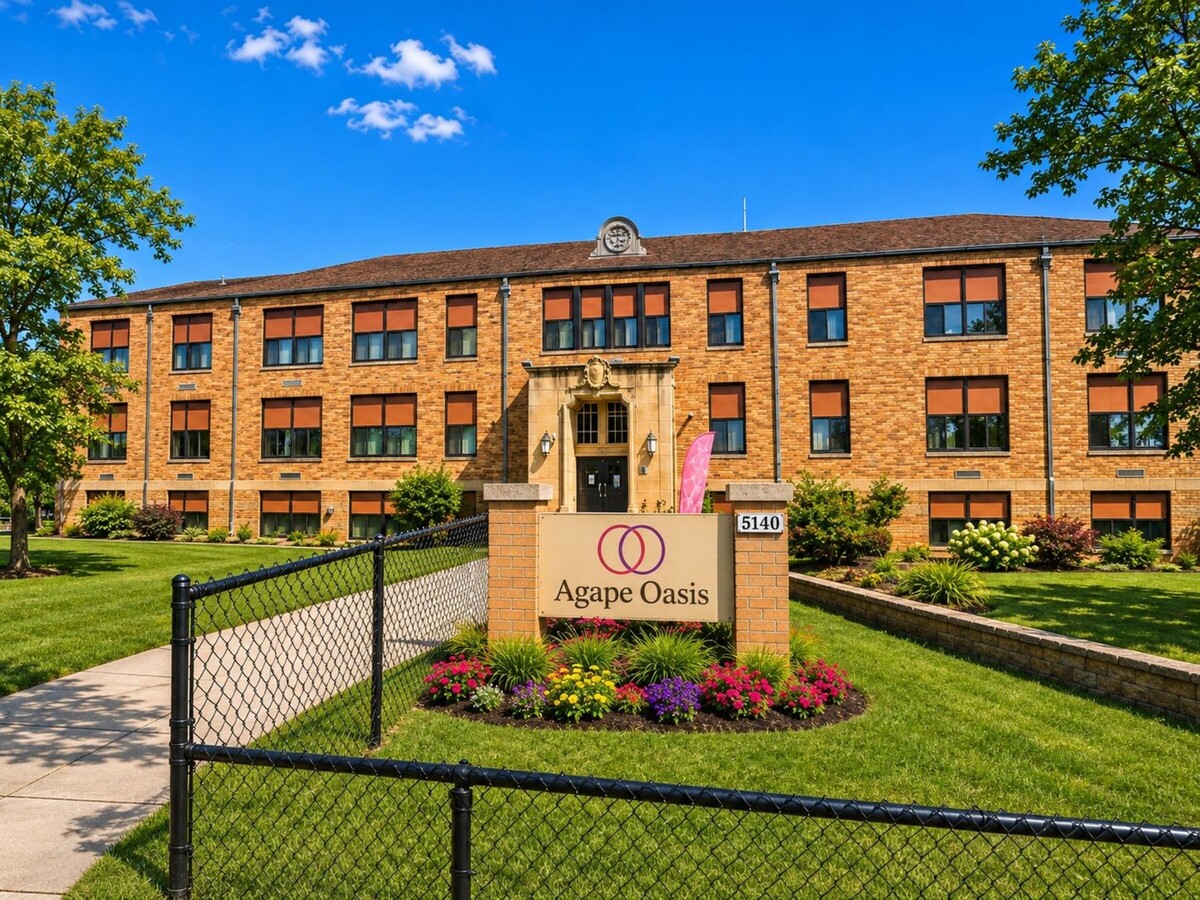
Agape Oasis opened the doors of its new North Minneapolis campus Saturday with a ribbon cutting, building tours and food prepared by local chefs. The celebration at 5140 Fremont Avenue North marked a visible change for an organization whose work has long centered on families dealing with needs that do not fit neatly into a single program.
Inside the new building, Agape has room to care for 24 infants at a time, according to President and CEO Jori Thibodeaux. Its previous location could accommodate 12. Agape currently serves 133 children through childcare offered 24 hours a day, seven days a week, she told MinneapoliMedia at the November 21 event.
Those numbers explain part of the opening’s significance. For parents who work evenings or overnight shifts, a childcare place can determine whether they can accept or keep a job. For Agape, the additional space presents a second challenge: ensuring that its educators and family support services can grow along with the building.
MinneapoliMedia interviewed Thibodeaux, child development center director Helene Pearson and educators Jacob, Indya and Lakota during the celebration. Their conversations moved between the institution’s four-decade history and the immediate demands of its next chapter: preparing classrooms, supporting teachers and giving children more opportunities to learn.
Agape’s story began in 1985, when Dr. Diane D. Thibodeaux Ashby established Oasis of Love Crisis Intervention Program to assist people affected by domestic violence.
In an October 23 interview with MinneapoliMedia for The Power of Her, Thibodeaux Ashby recalled starting with one volunteer and limited financial resources. The families she encountered needed help reaching safety, but their difficulties did not end there. Some also needed housing, employment and childcare before they could establish a more stable life.
That experience helped lead to Agape Child Development Center, established in 1996 with a 24-hour model. Its schedule served a practical need for parents whose working hours fell outside those of conventional childcare providers.
Agape’s programs later broadened into early childhood education, parenting and youth initiatives, community engagement and crisis support. Saturday’s move gave those ambitions a larger physical home, although the programs Thibodeaux envisions for the campus will develop over time.
The organization’s history is also a family history. Founder Thibodeaux Ashby is Jori Thibodeaux’s mother-in-law. Jori Thibodeaux said she and her husband returned to Minnesota from Chicago to help carry forward work his parents had begun. She joined Agape as director of operations 17 years ago and has served as president and CEO for about a decade.
In her interview, Thibodeaux described the responsibility of succeeding a founder. She spoke of preserving the purpose of the original work while building an organization capable of serving families in new ways. Of her years at Agape, she identified the opening of this campus as the greatest milestone.
The clearest immediate change is infant capacity. Thibodeaux said Agape can now accommodate twice as many infants at one time as it could in its previous building. She described the financial work required to prepare the new space and make it suitable for the youngest children.
She also said the campus gives Agape room to expand its services more broadly. She did not provide a new total enrollment figure, specify how many additional families are already receiving services or give a timetable for filling the infant places. Those distinctions matter: the building’s capacity has grown, while its effect on enrollment will become clearer as operations develop.
Thibodeaux’s ambitions extend beyond adding places. Agape calls the children in its care “scholars,” and she wants the new school setting to help prepare them for elementary education. She described plans for an innovation lab that would expose children to science, technology, engineering, the arts and mathematics.
She also discussed an early childhood educator training center, further youth programming and potential partnerships with historically Black colleges and universities. Those initiatives remain plans. Saturday’s opening established the building and its increased infant capacity; it did not establish when each proposed program will begin.
For Helene Pearson, Agape’s child development center director, the building’s future rests heavily with the people working in it.
Pearson told MinneapoliMedia that she is in her eighth year with Agape. She previously spent roughly 20 years in Chicago Public Schools as a teacher, counselor and administrator. After moving to Minnesota, she turned to early childhood education and became a trainer for other educators.
She spoke about what teachers encounter when children arrive from different households, each with its own routines and pressures. Educators must help children learn and feel secure while responding to behavior and needs that cannot always be addressed by following the same plan for every classroom.
Pearson said she works to provide additional help when a group of children needs closer attention. She also described Agape’s partnership with an organization that provides a licensed therapist for weekly check-ins with educators. Thibodeaux raised the availability of therapist support during her own interview, describing the emotional demands placed on staff.
The interviews identified a practical limit that a ribbon cutting cannot resolve. Additional room for children requires enough educators to care for them, training to help those educators succeed and support that makes it possible for them to remain in the field.
Pearson also helped shape Saturday’s celebration. She said local chefs prepared meals using ingredients from local farmers, an effort to introduce families to healthy food and people producing it in their community. The food was part of a broader idea she expressed throughout the interview: children’s development involves their bodies and well-being alongside what they learn in class.
Jacob, Indya and Lakota each spoke with MinneapoliMedia about their work at Agape.
Jacob said he comes from a family of educators. He described his presence as a Black male teacher as meaningful for children who may see few men who look like him in educational roles. He wants young people to recognize possibilities for their own lives, and he welcomed the greater space and opportunities the building could offer them.
Indya described more than two decades in education, including a period when she operated a home childcare program. Lakota, who also works at another school, said that experience strengthened her interest in teaching younger children. She was relatively new to Agape at the time of the opening.
Their interviews offered perspectives that a capacity figure alone cannot convey. The expansion will be experienced by children through daily contact with teachers: the routines they establish, the attention they provide and the confidence they help children build before elementary school.
The educators’ accounts also reinforced Pearson’s point about staffing. Agape’s ability to use its larger space will depend on whether it can continue bringing people with different experience and strengths into its classrooms and give them the support to do their work.
Saturday was a celebration of arrival. It was also the beginning of a more demanding measure of success.
Agape has moved into a building with twice its previous infant capacity, according to its CEO. It has plans for educational programs that could broaden what children encounter there. Its director and teachers are thinking about the daily work needed to make that space useful to families.
The questions ahead are concrete: how many more children will ultimately receive care, which proposed programs will open, and what staffing and resources will sustain them? Agape’s leaders did not claim those answers were settled at the ribbon cutting.
Four decades after Thibodeaux Ashby began helping families affected by violence, the organization she founded has a larger place to continue that work. Its new address marks the expansion. What happens for the children, parents and educators who use the campus will define its value.

Local stories matter. Subscribe free to MinneapoliMedia and receive independent news, community reporting and important updates from Minneapolis, the North Metro and communities across Minnesota.
SUBSCRIBE FREE: https://minneapolimedia.town.news/subscribe
MinneapoliMedia | Community. Culture. Civic Life



Partly Cloudy, with a high of 42 and low of 30 degrees. Sunny during the morning, partly cloudy during the afternoon and evening, patchy rain nearby overnight.