49° and Sunny
Image
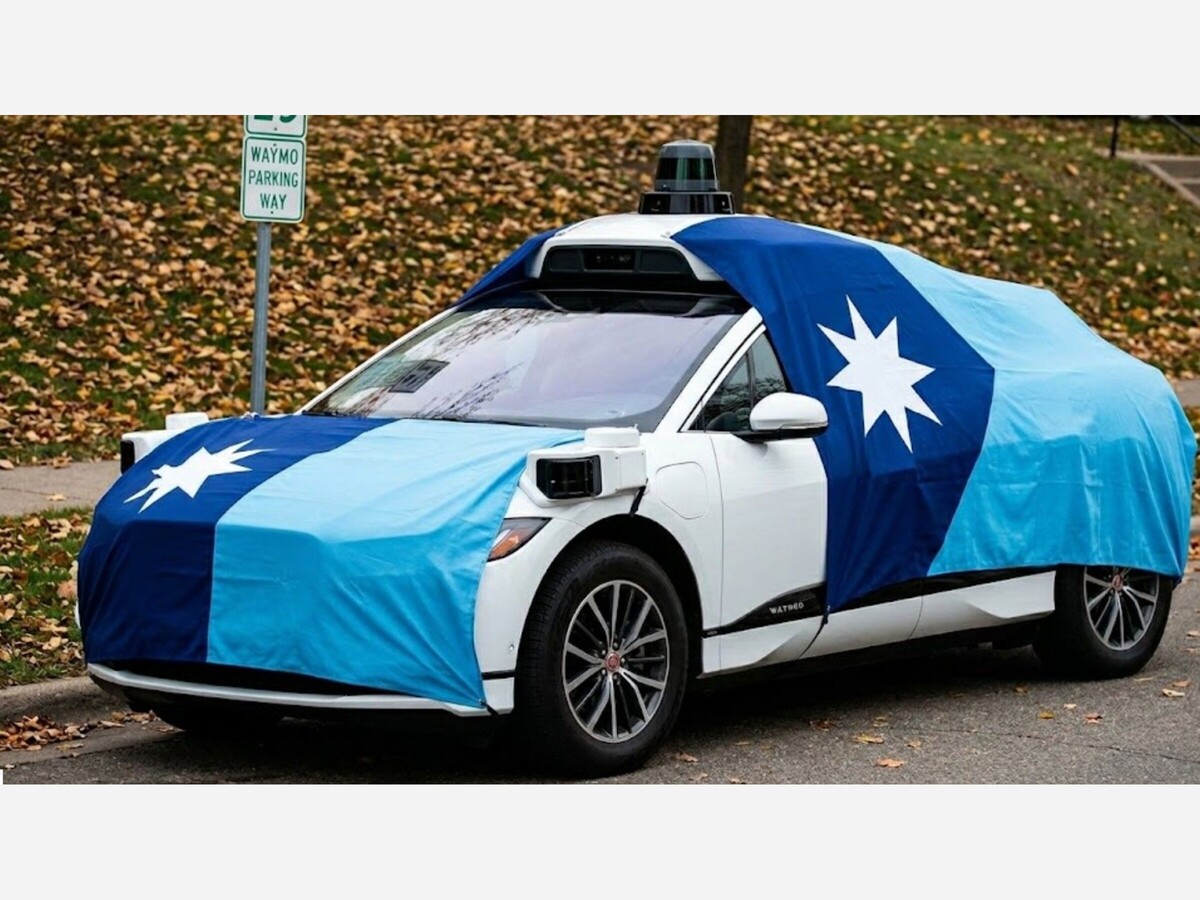



There are moments in a state’s life when the debate unfolding in committee rooms is larger than the bill numbers attached to it.
The arrival of autonomous vehicle testing in Minneapolis by Waymo is one of those moments.
On the surface, the question appears technical. Should Minnesota authorize fully driverless commercial vehicles? Should the state preempt cities from imposing their own bans? What level of insurance should be required? How should first responders interact with vehicles that have no human operator?
But beneath those procedural questions lies something far more consequential.
Minnesota is confronting, in real time, the first large scale test of how it will govern the automation economy.
The white sensor crowned SUVs mapping Minneapolis streets are not merely vehicles. They are a signal.
They signal that labor, liability, privacy, urban design, and even human interaction are entering a new phase. And they ask a foundational question.
Will Minnesota shape this transition deliberately, or will it allow inevitability to become an excuse?
This editorial is for the record.
To understand the stakes, one must begin not with philosophy, but with math.
Estimates suggest that across the Twin Cities metropolitan area, between 15,000 and 25,000 individuals participate in ride share driving at some point during a calendar year. Not all drive full time. Many rotate in and out. But a significant core rely on it as primary income.
If autonomous fleets scale aggressively in Minneapolis and surrounding corridors, displacement would not occur in a single day. It would occur in phases. But economic modeling gives us a sobering picture.
Assume conservatively that 8,000 drivers in the metropolitan region rely on ride share income as their primary source of earnings.
Assume further that a fully autonomous fleet, operating continuously without wage costs, could capture 40 percent of the ride share market within five years.
That would translate into roughly 3,200 displaced primary drivers.
Now calculate income impact.
Average gross ride share earnings vary widely, but after platform fees and expenses, many drivers report net annual income between $28,000 and $40,000 depending on hours worked.
Using a conservative midpoint of $32,000 annually, 3,200 displaced drivers represent approximately $102 million in annual income removed from local households.
That $102 million does not vanish abstractly. It leaves rent payments. Grocery purchases. Remittances. Tuition deposits. Car maintenance shops. Religious contributions. Neighborhood small businesses.
Economic multipliers suggest that every dollar in wage income circulates several times through local economies. Even at a modest multiplier of 1.5, the broader economic ripple could approach $150 million annually.
Automation advocates will argue that autonomous fleet operations will create jobs in software maintenance, remote supervision, fleet cleaning, and technical support.
But those positions are fewer in number and often require specialized training not immediately accessible to displaced drivers.
Without policy intervention, the net short term effect is contraction in household income concentrated in specific communities.
This is not speculation. It is arithmetic.
Minnesota has confronted mechanization before.
On the Iron Range, technological modernization in mining reduced labor intensity dramatically across the 20th century. Equipment grew larger. Processes became more efficient. Employment levels declined even as output rose.
In meatpacking and food processing plants across southern Minnesota, automation reshaped work lines, increasing productivity while compressing labor needs.
Each wave of modernization was framed as necessary for competitiveness. Often it was.
But communities bore the cost unevenly.
Union organizing emerged not from hostility to progress but from insistence that progress include worker protection.
Minnesota’s labor history includes the 1934 Teamsters strikes in Minneapolis, moments when workers demanded that economic restructuring not erase their dignity.
The state’s identity has long included a belief that markets are powerful but incomplete moral systems.
The Waymo debate echoes those earlier confrontations.
No one argues that the steam shovel should have been banned to preserve manual digging jobs. But history also records the hardship endured by communities when transitions were unmanaged.
The lesson is not resistance to technology. It is intentional integration.
Two competing legislative visions are emerging.
One proposes a regulatory framework authorizing autonomous vehicles statewide under uniform standards. It includes minimum insurance requirements, operational reporting obligations, and first responder interaction protocols. Crucially, it asserts state preemption over local restrictions.
The other insists that a natural person remain seated in the driver’s seat of commercial vehicles at all times, even if automation is active.
The debate is not merely about safety.
It is about authority.
State preemption offers clarity for companies. A single set of rules. Predictable deployment. No patchwork.
But cities argue that streets are local ecosystems. Traffic density, pedestrian activity, transit integration, and neighborhood character vary block by block.
Preemption language effectively removes municipal leverage to regulate fleet density, impose local impact fees, or pause deployment pending evaluation.
Legislative text matters here.
The difference between “may operate” and “shall be permitted to operate” is not semantic. It determines whether authorization is discretionary or mandatory once baseline criteria are met.
The difference between advisory boards and binding oversight is structural.
Minnesota lawmakers must scrutinize not only the promise of innovation but the permanence of statutory language. Once preemption is enacted, reversing it requires political momentum rarely easy to assemble.
This is governance architecture.
Proponents emphasize millions of autonomous miles driven in Phoenix and San Francisco.
But Minneapolis is not Phoenix.
Winter conditions introduce technical variables that complicate autonomy:
Waymo has conducted testing in colder regions, including limited operations in Michigan. But sustained commercial density in Upper Midwest winters remains relatively untested at scale.
Minnesota policymakers must require not only assurances but empirical winter performance data under prolonged sub zero conditions.
Safety cannot be assumed transferable.
In Phoenix, autonomous fleets operate at significant scale. Reports indicate lower crash severity rates compared to human baselines. Incidents that occur often involve human drivers striking autonomous vehicles.
In San Francisco, expansion encountered friction. During power outages, some vehicles stalled in traffic corridors. Emergency responders requested clearer communication protocols. Municipal officials demanded data transparency regarding incident reporting.
These cities offer lessons.
Deployment requires constant adaptation. It also reveals that friction between companies and municipalities is common.
Minnesota can learn from these precedents.
Phased deployment tied to performance benchmarks may prevent avoidable missteps.
Autonomous vehicles collect extraordinary amounts of environmental data.
Cameras capture pedestrians. Sensors map private property edges. Systems record geolocation trajectories.
Data retention policies vary by company.
Without explicit statutory guardrails, the potential exists for:
• Secondary commercial use of mapping data
• Law enforcement access without clear warrant standards
• Long term storage of identifiable imagery
Minnesota has strong privacy traditions. The state must codify:
• Data minimization principles
• Retention limits
• Anonymization requirements
• Transparency reporting
Trust erodes quickly when residents believe their daily movements are permanently archived.
Automation without privacy protection risks social backlash.
There is a philosophical tension at the heart of this debate.
Technological determinism suggests that innovation follows its own logic. That once possible, it becomes inevitable. That resistance is futile.
Democratic governance suggests the opposite. That societies retain agency over how technology is integrated. That inevitability does not equal immediacy.
History supports the latter view.
Nuclear technology was inevitable once physics unlocked it. Its deployment was regulated by treaties.
The internet was inevitable. Its governance remains contested.
Artificial intelligence is advancing rapidly. Its use in military, healthcare, and labor contexts is subject to policy choice.
Minnesota’s autonomous vehicle debate tests whether lawmakers embrace determinism or exercise agency.
If inevitability becomes justification for haste, governance weakens.
If inevitability is acknowledged but shaped through deliberate policy, governance strengthens.
Autonomous vehicles promise convenience. But convenience shapes behavior.
If robotaxis become cheap and abundant, riders may abandon buses and light rail.
Public transit operates on thin margins. Reduced ridership can trigger service cuts, creating a feedback loop of decline.
Alternatively, autonomous fleets could integrate with transit corridors, offering first and last mile connectivity.
The policy framework must incentivize complementarity, not competition.
Fleet operators could be required to share data with transit planners. Dynamic pricing could discourage short distance trips that duplicate bus routes.
Urban design must not be an afterthought.
All of these elements converge on a deeper concern.
What happens when automation reshapes not just work but interaction?
Ride share drivers often provide more than transport. They offer conversation. Cultural exchange. Human presence.
As automation expands across sectors, human contact diminishes.
Bank tellers replaced by apps. Cashiers replaced by kiosks. Drivers replaced by code.
Individually, each substitution seems minor.
Collectively, they thin civic life.
Minnesota prides itself on community cohesion. That cohesion is sustained through daily contact.
The automation economy risks replacing contact with convenience.
The question is whether society will notice before the texture shifts irreversibly.
Autonomous fleets reduce labor costs dramatically.
Labor represents the largest expense in ride share operations. Remove it, and profit margins widen.
The beneficiaries are shareholders and technology firms.
The costs are borne by displaced drivers.
Absent intervention, this is a wealth transfer from labor to capital.
Minnesota must decide whether that transfer is acceptable unmodified.
Transition funds, retraining grants, and cooperative equity models could redistribute some gains.
But without statutory requirements, market incentives will not provide them voluntarily.
This is the inflection point.
Automation can either widen inequality or be structured to share benefits.
The choice is political.
To integrate innovation without eroding community, Minnesota should adopt a multi layered approach:
Innovation should proceed.
But it should proceed responsibly.
The arrival of autonomous vehicles in Minneapolis is not merely a transportation story.
It is the first visible frontier of algorithmic infrastructure reshaping daily life.
When historians examine this period, they will ask whether Minnesota confronted automation passively or deliberately.
Did policymakers focus narrowly on crash metrics?
Or did they confront economic displacement, privacy risk, and urban design consequences with equal seriousness?
The vehicles may be driverless.
The state must not be.
Let it be recorded that Minnesota recognized inevitability without surrendering agency.
Let it be recorded that innovation did not eclipse equity.
Let it be recorded that when the future arrived at our intersections, we chose to shape it.
For the archives.



Patchy rain nearby, with a high of 64 and low of 46 degrees. Sunny for the morning, clear overnight.