66° and Cloudy
Image



The return of the International Festival of Minnesota to downtown St. Paul this spring arrived with the atmosphere of a cultural celebration, but the significance of the event extended beyond food booths, dance performances, school field trips, and crowded exhibition halls. For two days in April, thousands of Minnesotans gathered again at the Saint Paul RiverCentre for the revived festival now known as IFest-MN, formerly the Festival of Nations, one of the oldest multicultural public gatherings in the Midwest. The event returned after a seven-year absence that included the collapse of the original festival structure, the disruptions of the COVID-19 pandemic, and years of uncertainty about whether the institution would ever return at all.
Its reappearance comes at a consequential moment in both Minnesota and American public life.
Across the country, political discourse has increasingly hardened around questions of immigration, race, religion, identity, nationalism, demographic change, and belonging. Public trust in institutions has declined. Political polarization has widened. Social media ecosystems increasingly reward outrage and fragmentation. Community spaces that once created regular interaction between people of different backgrounds have weakened or disappeared altogether. Civic participation has become more transactional and more ideological at the same time.
Against that backdrop, the return of IFest-MN carries significance that reaches far beyond the confines of a cultural festival calendar.
The event is not important because it offers a weekend of entertainment. It is important because it reintroduces a public civic space where Minnesotans encounter one another outside the frameworks that increasingly dominate modern American life. The structure of the festival itself matters. People are not gathered around partisan affiliation, ideological alignment, social status, or algorithmic sorting. They gather around food, language, dance, music, storytelling, migration histories, family traditions, and community identity. Those encounters may appear ordinary on the surface, but in a fractured political environment, they are becoming increasingly rare.
The return of IFest-MN therefore raises a larger question that extends beyond the festival itself: what kind of state is Minnesota becoming, and what kinds of institutions will shape how its residents understand one another in the years ahead?
That question has become increasingly urgent over the last two decades as Minnesota has undergone one of the most significant demographic and cultural transformations in its modern history.
For generations, Minnesota projected a relatively stable civic identity to the rest of the country. It was frequently described through familiar shorthand: Scandinavian roots, strong civic institutions, high voter participation, functioning local government, strong public schools, labor traditions, and a political culture that valued moderation and public cooperation. While those narratives often overlooked longstanding racial and economic disparities inside the state, they nonetheless shaped Minnesota’s public image nationally.
That image no longer fully describes the state as it exists today.
Minnesota in 2026 is far more globally connected, culturally diverse, linguistically varied, and demographically dynamic than it was even twenty years ago. Communities from East Africa, Southeast Asia, Latin America, the Middle East, Eastern Europe, and West Africa have reshaped neighborhoods, schools, businesses, religious institutions, commercial corridors, and local economies across the Twin Cities and increasingly throughout Greater Minnesota.
The transformation is visible in nearly every part of public life.
In Brooklyn Park, one of the state’s most diverse suburbs, dozens of languages are spoken in local schools. Somali-owned businesses operate alongside Liberian restaurants, Hmong markets, Mexican grocery stores, and long-established Minnesota retailers. In St. Paul, the Hmong community remains one of the largest urban Hmong populations in the United States. Minneapolis continues to serve as a center of East African diaspora life. New immigrant communities continue expanding into suburban and regional communities that once saw little demographic change for generations.
These changes have altered the cultural composition of Minnesota, but they have also altered the civic questions confronting the state.
The central question is no longer whether Minnesota is becoming multicultural. That transformation has already occurred. The more important question now is whether Minnesota’s institutions, political culture, public spaces, and civic habits are capable of adapting to that reality in a healthy and sustainable way.
The return of IFest-MN offers one partial answer.
The original Festival of Nations began in 1932 under the International Institute of Minnesota during a period when many immigrant communities in the United States faced suspicion, discrimination, and pressure to assimilate into dominant American culture. The festival’s early purpose was relatively straightforward: provide immigrant communities a public platform to share traditions, maintain cultural identity, and foster understanding among residents of different backgrounds.
Over time, the event evolved into one of Minnesota’s most recognized multicultural institutions. Generations of students attended school field trips there. Families returned year after year. Cultural organizations used the festival to preserve traditions and introduce younger generations to heritage practices that might otherwise fade over time. For many Minnesotans, Festival of Nations became one of the first spaces where they encountered cuisines, languages, clothing traditions, music, and performances from communities outside their own.
The significance of that exposure should not be understated.
For much of modern American history, public life remained highly segregated socially, economically, geographically, and culturally. Many communities experienced one another primarily through stereotypes, media representations, or political narratives rather than through direct interaction. Festivals like Festival of Nations helped create low-barrier forms of cultural encounter that normalized diversity long before the language of multiculturalism entered mainstream political discourse.
The festival did not eliminate prejudice or inequality. No cultural event can perform that function. But it contributed to a civic environment in which difference became more familiar and therefore less threatening to many residents.
That role became even more important as Minnesota’s demographics changed.
The suspension and eventual disappearance of Festival of Nations after 2019 therefore represented more than the loss of an annual event. It represented the disappearance of one of the state’s few longstanding public institutions specifically organized around cross-cultural civic interaction.
When the International Institute of Minnesota announced that it would discontinue the event, the organization cited the need to focus resources on its growing core mission serving immigrants and refugees. That decision reflected broader pressures facing many nonprofit institutions nationally after the pandemic, including financial strain, staffing challenges, operational restructuring, and shifting public priorities.
Still, the loss left a noticeable void.
The years following the festival’s disappearance coincided with some of the most socially and politically destabilizing years in modern Minnesota history.
The COVID-19 pandemic disrupted community life across the state and intensified existing social inequalities. Public institutions struggled under pressure. Economic disruption altered neighborhoods and businesses. Schools faced unprecedented strain. Public trust deteriorated. Social isolation deepened.
Then came May 2020.
The murder of George Floyd by former Minneapolis police officer Derek Chauvin triggered one of the largest protest movements in modern American history and placed Minnesota at the center of a global conversation about policing, racial inequality, state violence, and institutional accountability.
The aftermath reshaped Minnesota politically, socially, and psychologically.
Communities experienced grief, anger, trauma, exhaustion, fear, polarization, and distrust simultaneously. Public debate hardened rapidly. Political rhetoric intensified. National narratives often flattened Minnesota into competing caricatures depending on ideological perspective.
Yet during these same years, ordinary civic life also changed in quieter ways that received far less national attention.
People increasingly withdrew into social, ideological, and digital silos. Community gathering spaces weakened. Casual cross-cultural interactions declined. Public discourse became more performative and less relational. Online environments rewarded simplification and outrage over nuance and familiarity.
These shifts did not originate solely in Minnesota. They reflected broader national and global trends accelerated by technology, political media ecosystems, economic pressure, and post-pandemic social fragmentation.
But the cumulative effect created an environment in which many Americans increasingly experienced one another through conflict before community.
That context matters when evaluating the return of IFest-MN.
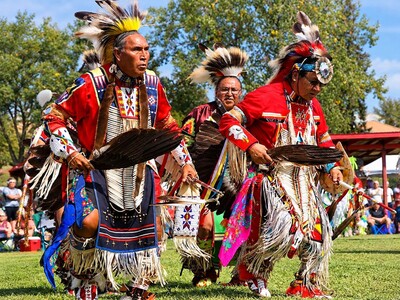
At the RiverCentre this spring, thousands of attendees navigated crowded corridors lined with cultural exhibits, artisan displays, educational booths, food vendors, and performance stages. School groups moved between exhibitions while families sampled dishes from communities they may never previously have encountered directly. Traditional clothing, languages, dance traditions, and musical forms from dozens of communities occupied the same civic space simultaneously.
None of this erased political disagreement or social tension outside the venue walls. But the event temporarily reorganized how people encountered one another.
The interaction structure changed.
Individuals first encountered one another as cooks, performers, artists, parents, volunteers, students, elders, entrepreneurs, dancers, historians, musicians, and neighbors rather than primarily through ideological categories.
Food plays a particularly important role in this process.
One of the defining features of IFest-MN remains its global cafés and culinary exhibitions. On the surface, food may appear secondary to larger civic conversations. In reality, food often serves as one of the most accessible forms of cultural encounter available in public life.
Every immigrant community carries food traditions shaped by geography, memory, migration, survival, religion, economics, and family structure. Recipes often preserve histories that formal institutions fail to document adequately. Meals transmit identity across generations. Restaurants frequently become early economic entry points for immigrant entrepreneurs seeking stability in unfamiliar environments.
In Minnesota, immigrant food economies have transformed both urban and suburban dining landscapes over the last two decades.
Hmong markets, Somali tea shops, Liberian restaurants, Mexican bakeries, Ethiopian cafés, Middle Eastern grocery stores, Vietnamese pho restaurants, Nigerian kitchens, and Caribbean food establishments now shape commercial life throughout the metropolitan region.
These businesses are not simply culinary attractions. They are community infrastructure.
They provide employment, cultural continuity, intergenerational gathering spaces, and neighborhood economic activity. They also create informal forms of public education. Many Minnesotans first encounter unfamiliar communities not through academic study or political dialogue but through restaurants and food businesses.
The educational component particularly reinforces this point.
More than 5,000 students attended festival programming tied to educational initiatives developed alongside the Minnesota Humanities Center. The student framework emphasized cultural literacy, identity exploration, and understanding global traditions through direct engagement.
Critics in some political environments increasingly frame multicultural education as divisive or ideologically driven. But the practical reality inside diverse states like Minnesota is far simpler: students are already growing up inside multicultural communities whether formal institutions acknowledge that fact or not.
Schools across Minnesota increasingly serve students from dozens of cultural, linguistic, and religious backgrounds simultaneously. Students encounter diversity daily in classrooms, neighborhoods, sports teams, workplaces, and public spaces.
The question therefore becomes whether institutions help young people navigate that reality constructively.
Cultural literacy is not merely symbolic education. It increasingly functions as practical civic competence in diverse societies.
This is particularly relevant in Minnesota because the state’s future workforce, political culture, and economic sustainability will depend heavily on communities that previous generations often considered peripheral to mainstream Minnesota identity.
The shift has altered Minnesota’s public culture in measurable ways.
Political representation has changed. Business ownership patterns have changed. School demographics have changed. Religious landscapes have changed. Commercial corridors have changed. Media ecosystems have changed.
IFest-MN reflects that transformation visibly.
The festival no longer presents multiculturalism as a niche curiosity operating outside mainstream Minnesota life. Instead, it presents diversity as a central and permanent characteristic of the state itself.
That shift distinguishes contemporary multicultural festivals from earlier assimilation-era cultural showcases.
The original Festival of Nations emerged during a period when many immigrant communities faced pressure to preserve traditions privately while assimilating publicly into dominant American norms. Contemporary Minnesota operates differently. Cultural pluralism is now woven directly into public institutions, economic systems, and community life.
That reality creates both opportunities and tensions.
The return of IFest-MN should also be understood within a broader national context.
Across the United States, many longstanding civic institutions have weakened during the last several decades. Local newspapers declined. Religious participation changed. Labor unions weakened. Neighborhood associations diminished. Public gathering spaces disappeared. Civic participation fragmented into narrower ideological and digital communities.
The weakening of shared public spaces carries consequences.
When communities lose institutions that create routine interaction across social differences, mistrust often grows more easily. Polarization intensifies. Public discourse becomes more abstract and less relational. Individuals increasingly perceive unfamiliar groups primarily through mediated narratives rather than lived experience.
Multicultural festivals alone cannot reverse these trends, but they can function as partial counterweights.
They create temporary civic environments where coexistence becomes visible, practical, and normalized.
The turnout itself matters.
Organizers estimated approximately 25,000 attendees over the course of the festival weekend. That level of participation suggests substantial interest in cultural gathering despite years of social fragmentation, digital isolation, and political exhaustion.
The audience composition also matters.
Students, families, longtime Minnesotans, immigrant communities, suburban residents, urban residents, elders, children, and visitors from neighboring states all participated within the same civic environment.
That mixture reflects the actual composition of contemporary Minnesota more accurately than many political narratives do.
The festival additionally highlights another frequently overlooked reality: multiculturalism in Minnesota is no longer confined primarily to Minneapolis and St. Paul.
Suburban communities now increasingly drive demographic transformation across the state.
Brooklyn Park, Brooklyn Center, Burnsville, Eagan, Maplewood, Richfield, Shakopee, Eden Prairie, Blaine, and other suburbs have experienced substantial cultural diversification over the last two decades. Many younger immigrant families have established long-term roots in suburban school districts once considered relatively homogeneous.
The future of Minnesota will not be determined solely through elections, legislative sessions, demographic reports, or economic forecasts. It will also be shaped by the kinds of civic relationships communities are able to sustain during periods of rapid change.
That process requires institutions capable of creating familiarity without demanding uniformity.
IFest-MN appears to understand this responsibility.
The festival’s structure consistently emphasized participation over spectacle. School programming emphasized learning rather than branding. Cultural exhibitions highlighted continuity and community identity rather than novelty alone. Food, music, art, and storytelling operated not merely as entertainment but as vehicles for public encounter.
In practical terms, the event demonstrated something increasingly important in American civic life: people from very different backgrounds remain capable of occupying shared public space peacefully and productively when institutions are designed intentionally around participation and respect.
Public discourse often exaggerates irreconcilable division while underreporting ordinary coexistence. Conflict generates attention. Cooperation rarely does.
Yet much of daily civic life still depends on quiet forms of coexistence that rarely become headlines: neighbors sharing neighborhoods, students sharing classrooms, workers sharing workplaces, families sharing parks, commuters sharing transit systems, and communities sharing public institutions.
Festivals like IFest-MN make those relationships visible.
The return of IFest-MN therefore matters not because it resolves Minnesota’s tensions, but because it reflects an ongoing effort to navigate them constructively.
The state still faces substantial challenges. Racial disparities remain severe. Political polarization remains real. Economic inequality persists. Public distrust continues affecting institutions across sectors.
But alongside those realities, Minnesota also continues building one of the most culturally diverse regional populations in the Midwest.
That transformation will define the state’s future whether political institutions fully acknowledge it or not.
The more important question is whether public life evolves in ways capable of sustaining trust, familiarity, and civic participation across that diversity.
The return of IFest-MN suggests many Minnesotans still believe that work is possible.
MinneapoliMedia | Community. Culture. Civic Life.

Sunny, with a high of 71 and low of 48 degrees. Overcast in the morning, sunny for the afternoon, clear during the evening, overcast overnight.