47° and Light drizzle
Image



The legislation at the center of the confrontation, Senate File 4067, carried some of the most aggressive firearm restrictions proposed in modern Minnesota legislative history. The bill sought to ban the sale, transfer, manufacture, and possession of semiautomatic military-style assault weapons and high-capacity magazines. It also included expanded safe-storage requirements intended to reduce unauthorized firearm access and accidental shootings involving minors.
Supporters argued the legislation represented a direct response to repeated acts of mass violence, including the deadly shooting at Annunciation Catholic School that intensified pressure on lawmakers to act during the 2026 session. Opponents argued the proposal violated constitutional protections under the Second Amendment and unfairly targeted law-abiding gun owners rather than criminal offenders.
But by the end of the session, the debate surrounding the bill had evolved into something larger than the legislation itself. The controversy no longer centered only on gun policy. It became a public fight over democratic process, legislative gatekeeping, political accountability, and the power of leadership to determine whether controversial proposals ever receive a public vote at all.
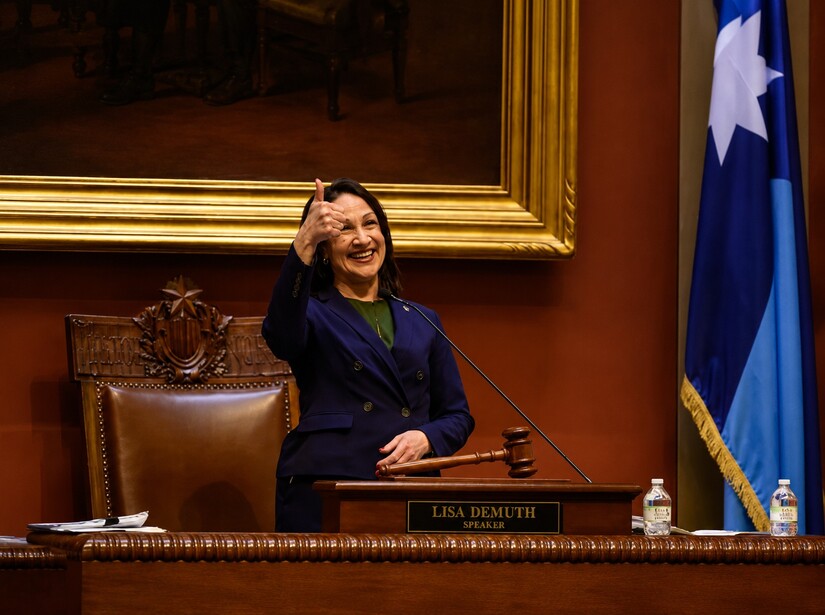 Lisa Demuth (R) | MN House Speaker | Image courtesy of Pioneer Press
At the center of that fight stood Lisa Demuth.
As Speaker of the Minnesota House, Demuth exercised the procedural authority that ultimately prevented SF 4067 from reaching the floor before adjournment. In a chamber divided evenly between Democrats and Republicans at 67-67, leadership power became decisive. Without the Speaker allowing the bill to advance, the legislation had no path forward before the constitutional deadline.
By midnight, the session closed without a vote.
The result immediately triggered outrage from gun-control advocates, survivors of gun violence, and Democratic lawmakers who argued that Minnesotans deserved at minimum a recorded debate and public vote on legislation carrying enormous statewide implications. Republicans countered that leadership had an obligation to stop legislation they viewed as constitutionally flawed and procedurally incomplete.
What transformed the legislative battle into a nationally discussed political story, however, was not only the death of the bill itself. It was the deeply personal conflict that emerged publicly between Speaker Demuth and members of her own family.
Among the most visible critics of the Speaker was her daughter, Shelisa Demuth, a school shooting survivor who publicly condemned her mother’s handling of the legislation. The dispute unfolded in real time through social media statements and public commentary that quickly drew statewide attention.
In one widely circulated public statement, Shelisa Demuth criticized the Speaker for delaying action on the gun bill despite their family’s own history with school gun violence. The conflict escalated further when Shelisa published a sharply critical opinion piece arguing that political ambition and partisan calculations had taken precedence over public safety concerns.
The political implications were immediate. The emotional implications were even more significant.
Minnesota had now reached a point where the state’s debate over firearms legislation was no longer confined to party caucuses, committee hearings, or ideological talking points. The conflict had entered private homes, family relationships, and public grief. The argument over gun policy had become deeply personal in a way that reflected the broader national fracture surrounding firearms in America.
That reality matters because gun debates in the United States rarely remain purely legislative. They become emotional proxies for competing understandings of freedom, safety, government authority, personal responsibility, and constitutional identity. In Minnesota, those national tensions increasingly mirror the same polarization visible across much of the country.
Yet the collapse of SF 4067 also exposed another growing reality within modern state politics: procedural control can become as politically consequential as policy itself.
In Minnesota, the Speaker’s authority over floor scheduling, committee movement, and legislative timing proved powerful enough to stop one of the session’s most controversial proposals without lawmakers ever publicly casting final votes on it in the House chamber. To supporters of the bill, that represented democratic avoidance. To opponents, it represented responsible leadership.
That divide raises legitimate questions that extend beyond one legislative session.
Should leadership have the authority to indefinitely block legislation with major public support from even reaching the floor? Does refusing a vote protect institutional stability or undermine democratic transparency? At what point does procedural strategy become political obstruction?
Those questions are especially important in an evenly divided House where procedural mechanisms effectively become substitutes for legislative majorities.
Democrats argued throughout the final days of the session that the public deserved accountability through recorded votes. Their 36-hour sit-in was designed not only as protest but also as political theater intended to pressure House leadership publicly. Democratic lawmakers repeatedly urged Speaker Demuth to “open the drawer,” a reference to the bill remaining procedurally stalled rather than advancing toward debate.
Republicans rejected the criticism and maintained that the legislation lacked proper committee advancement and raised serious constitutional concerns under current Supreme Court interpretations of the Second Amendment.
Their argument reflected a larger national shift in gun-rights jurisprudence following recent United States Supreme Court decisions that strengthened constitutional protections surrounding firearm ownership. Conservative lawmakers across the country increasingly view broad assault-weapon bans as legally vulnerable under current judicial standards.
That legal reality complicates the political environment significantly.
Minnesota Democrats framed SF 4067 as a public-safety response to escalating violence and mass shootings. Republicans framed it as government overreach directed at lawful firearm owners rather than violent offenders. Neither side approached the issue merely as policy disagreement. Both treated it as a larger ideological conflict tied to fundamental constitutional principles.
The result was legislative paralysis.
The political consequences of that paralysis now extend far beyond the Capitol.
For survivors of gun violence and advocates for stronger firearm restrictions, the failure of the bill reinforced a growing belief that legislative systems are incapable of responding meaningfully even after repeated public tragedies. For many gun-rights advocates, however, the collapse of the bill represented proof that constitutional protections can still withstand periods of intense political pressure.
Those competing interpretations explain why gun legislation increasingly produces emotionally absolute political reactions with little middle ground.
The Annunciation Catholic School shooting intensified those emotions further because school violence uniquely destabilizes public trust. Mass shootings involving children or educational institutions often produce the strongest public calls for legislative intervention because schools are culturally understood as protected civic spaces. When violence enters those environments, political pressure on lawmakers escalates rapidly.
Minnesota lawmakers therefore entered the 2026 session under enormous emotional and political strain.
That pressure became particularly visible during floor demonstrations and public protests near adjournment. Democratic lawmakers described the issue as a moral emergency requiring immediate action. Republican lawmakers warned against emotionally driven policymaking that could erode constitutional rights permanently.
Both positions reflected deeply rooted political fears.
Gun-rights supporters often fear incremental erosion of constitutional protections through legislation introduced during periods of public trauma and heightened emotion. Gun-control advocates fear that repeated legislative inaction normalizes mass violence and permanently lowers political expectations surrounding public safety reform.
The difficulty for lawmakers is that both anxieties now coexist simultaneously inside the same electorate.
Minnesota’s political geography further complicates the issue. Urban and suburban voters increasingly support expanded gun restrictions, while many rural communities maintain strong firearm cultures tied to hunting traditions, self-defense rights, and skepticism toward government regulation. That divide has widened over the last decade and increasingly shapes statewide elections.
As Speaker, Lisa Demuth sits directly at the center of those competing political pressures.
Her handling of SF 4067 will likely remain a defining issue both for her speakership and for any future statewide political ambitions. Supporters view her actions as evidence of constitutional consistency and disciplined leadership under intense pressure. Critics view the decision as procedural avoidance that denied Minnesotans transparent legislative accountability.
The controversy intensified further after reports highlighted that Speaker Demuth had reportedly utilized protections available under Minnesota’s 2023 red-flag law following concerns involving an armed stalker. The issue generated immediate political scrutiny because Demuth had previously opposed the same red-flag legislation when it passed.
Critics argued the situation reflected political contradiction. Supporters argued that personal use of existing legal protections does not automatically require support for broader expansions of gun regulation.
The episode nevertheless exposed a recurring pattern within American politics: public officials often experience policy consequences differently once confronted personally with threats, violence, or vulnerability.
That dynamic is not unique to gun policy. It appears repeatedly across healthcare, policing, immigration, and public-safety debates nationwide. But within firearm politics, where constitutional language and personal fear intersect so directly, those contradictions become especially politically explosive.
The emotional intensity surrounding the Demuth family conflict also revealed another reality often overlooked in political coverage: legislative decisions can fracture families and private relationships just as deeply as they divide political parties.
For many Americans, gun policy is no longer merely ideological. It is experiential.
Survivors of shootings often speak from trauma. Gun owners often speak from cultural inheritance and constitutional conviction. Parents often speak from fear. Rural communities often speak from identity and distrust of metropolitan policymaking. Urban communities often speak from direct exposure to firearm violence.
Each perspective carries emotional legitimacy for the people living inside those experiences.
That complexity is precisely why the Minnesota debate resisted easy resolution.
Simplistic political framing often fails because firearm policy in America exists at the intersection of constitutional law, crime prevention, civil liberties, public fear, political identity, and cultural history. Reducing the debate to slogans rarely produces durable policy outcomes.
Minnesota lawmakers now face a difficult political reality moving forward.
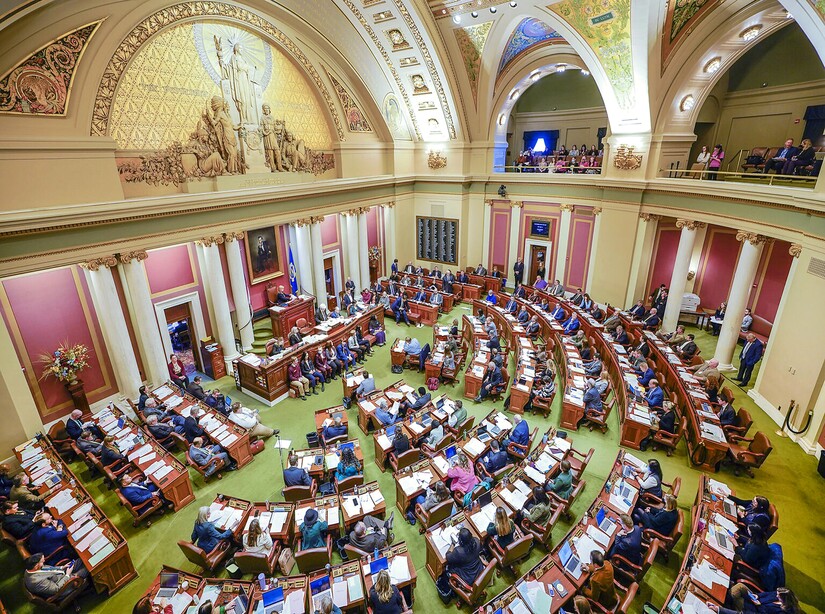 Inside the MN legislative session
 The collapse of SF 4067 does not end the gun debate. It likely intensifies it.
Democrats will almost certainly continue using the issue as a central electoral argument, particularly in suburban districts where concerns surrounding school safety and gun violence resonate strongly with swing voters. Republicans will likely continue framing expansive firearm restrictions as unconstitutional overreach disconnected from criminal enforcement realities.
Neither side appears politically inclined toward retreat.
That raises another critical question for Minnesota politics: can the state still sustain meaningful legislative compromise on emotionally charged issues, or has procedural warfare replaced negotiation entirely?
Increasingly, modern legislatures operate through strategic delay, committee bottlenecks, procedural blocking, and deadline management rather than through open floor negotiation. The Minnesota gun debate reflected that broader institutional shift.
In practical terms, legislative leadership now often determines policy outcomes before floor debate even begins.
For voters, that reality can create deep frustration regardless of political ideology. Citizens may disagree sharply on policy substance while still believing controversial proposals deserve transparent public votes and visible accountability.
That frustration is amplified when tragedies involving children or schools are connected to legislative inaction, even indirectly.
At the same time, constitutional concerns raised by opponents of SF 4067 are not politically trivial or legally imaginary. Courts across the country continue wrestling with how far states may regulate semiautomatic firearms under evolving Second Amendment interpretations. Several similar laws nationwide already face active constitutional challenges.
Minnesota lawmakers therefore confronted both emotional urgency and genuine legal uncertainty simultaneously.
That tension helps explain why the issue produced such extraordinary political intensity.
The broader danger for Minnesota is that legislative paralysis can deepen public cynicism toward democratic institutions themselves. When major public debates repeatedly end through procedural collapse rather than transparent resolution, voters increasingly lose confidence that legislatures are capable of addressing contentious issues directly.
That erosion of trust affects both parties eventually.
Democrats may celebrate procedural victories when in power. Republicans may do the same under different political conditions. But over time, governance built primarily around blockage rather than persuasion weakens institutional legitimacy regardless of ideology.
Minnesota has historically maintained a stronger tradition of pragmatic governance than many states. The state’s political culture has often emphasized negotiation, coalition-building, and civic engagement even amid sharp disagreements.
The battle over SF 4067 suggests that tradition is under growing strain.
The emotional weight surrounding gun violence makes compromise extraordinarily difficult because both sides increasingly interpret concessions as existential losses. Gun-rights advocates fear permanent constitutional erosion. Gun-control advocates fear permanent normalization of preventable violence.
In that environment, legislative delay itself becomes politically symbolic.
To supporters of the bill, the refusal to allow a vote represented institutional silence in the face of repeated tragedy. To opponents, stopping the bill represented institutional restraint against unconstitutional policymaking.
Those interpretations are fundamentally incompatible.
Yet democratic governance requires institutions capable of functioning despite incompatible political worldviews.
That may ultimately become the central issue emerging from Minnesota’s 2026 gun-control battle.
The debate is no longer only about semiautomatic weapons, magazine limits, or safe-storage mandates. It is also about whether legislative systems can still process emotionally catastrophic issues without collapsing into procedural warfare and public mistrust.
The public confrontation between Lisa Demuth and members of her own family ensured that this controversy would resonate beyond ordinary legislative reporting. It transformed the story into a broader reflection of America’s unresolved national fracture surrounding guns, grief, constitutional identity, and political power.
Minnesota now stands inside that national struggle.
The state’s lawmakers, regardless of party, will eventually face the issue again. Another bill will emerge. Another public tragedy may intensify pressure further. Another procedural battle will likely follow.
The larger question is whether Minnesota’s political institutions can still create space for transparent democratic engagement before public trust deteriorates further.
Because in the end, the controversy surrounding SF 4067 was not only about a bill that died before midnight.
It was about what happens when one of the state’s most consequential public debates never fully reaches the floor at all.
MinneapoliMedia | Community. Culture. Civic Life.


Sunny, with a high of 52 and low of 41 degrees. Patchy rain nearby during the morning, sunny in the afternoon, clear for the evening, overcast overnight.