49° and Clear
Image




The Round of 16 reached its absolute dramatic conclusion Tuesday night as the 2026 FIFA World Cup officially completed its high-stakes transformation from the largest tournament in soccer history into an eight-team championship chase. Twenty-seven days after forty-eight nations embarked upon the initial bracket crossing across North America, the global field has been reduced to the final elite eight survivors. Every remaining program now stands exactly three victories away from lifting the FIFA World Cup Trophy, as the theoretical scenarios and wildcard percentages are permanently retired into the print archive.
If the opening days of the single-elimination phase emphasized strict defensive containment and tactical caution, Day 27 became a historic celebration of physical and psychological resilience under maximum environmental stress. In Atlanta, defending world champion Argentina found itself staring directly into the abyss of international elimination after an inspired Egypt constructed a sensational two-goal advantage that threatened to produce the most cataclysmic upset in modern tournament history. Rather than fracturing beneath the weight of historical expectation, Lionel Scaloni's squad authored a legendary late rescue mission, overturning the multi-goal deficit through relentless wide overloads before midfielder Enzo Fernández completed the comeback deep in stoppage time.
Hours later, Vancouver provided a completely different, clinical portrait of knockout execution. Switzerland and Colombia locked horns in a grueling tactical stalemate that refused to yield a solitary goal across 120 minutes of highly organized, physically punishing football. With neither side capable of unpicking the opposing defensive ring in open play, the tournament's final quarterfinal ticket was determined from twelve yards, where Swiss goalkeeper Gregor Kobel and substitute forward Rubén Vargas permanently rewrote a painful lineage of penalty heartbreak for their program. The final eight are locked, and the tournament grid moves to an uncompromising, world-class frontier.
|
Match |
Score |
Venue |
Status |
|
Argentina vs. Egypt |
3 – 2 |
Mercedes-Benz Stadium, Atlanta, GA |
Argentina advances |
|
Switzerland vs. Colombia |
0 – 0 (4 – 3 PSO) |
BC Place, Vancouver, BC |
Switzerland advances |
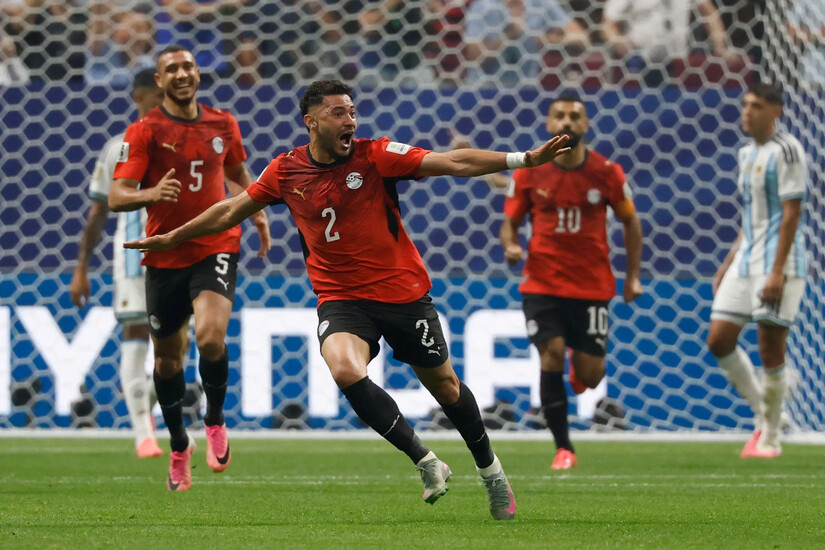
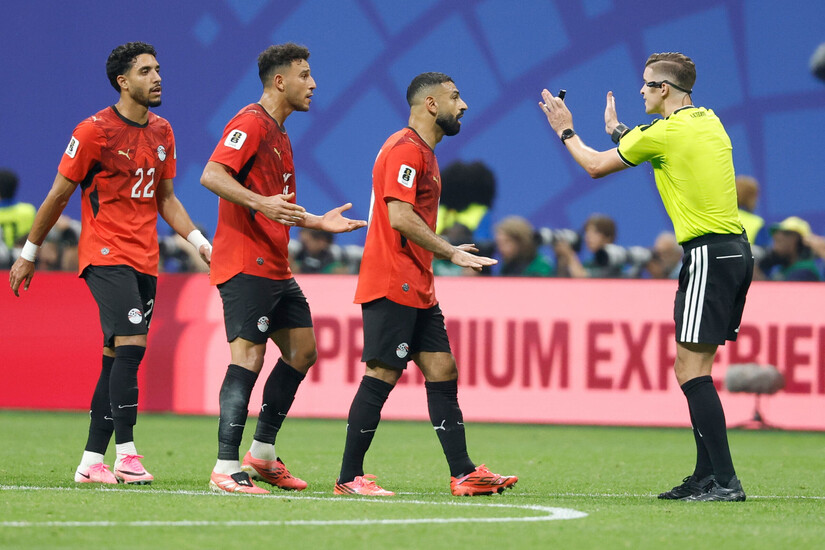
Mercedes-Benz Stadium became the stage for one of the defining competitive dramas in World Cup history. Few pre-match models anticipated that Egypt would push the reigning world champions to the absolute brink of disaster, and fewer still could have imagined the Albiceleste trailing by two goals entering the final quarter-hour of regulation. Yet for nearly seventy minutes, Hossam Hassan's Pharaohs executed a world-class blueprint that came within inches of sending shockwaves through the global game.
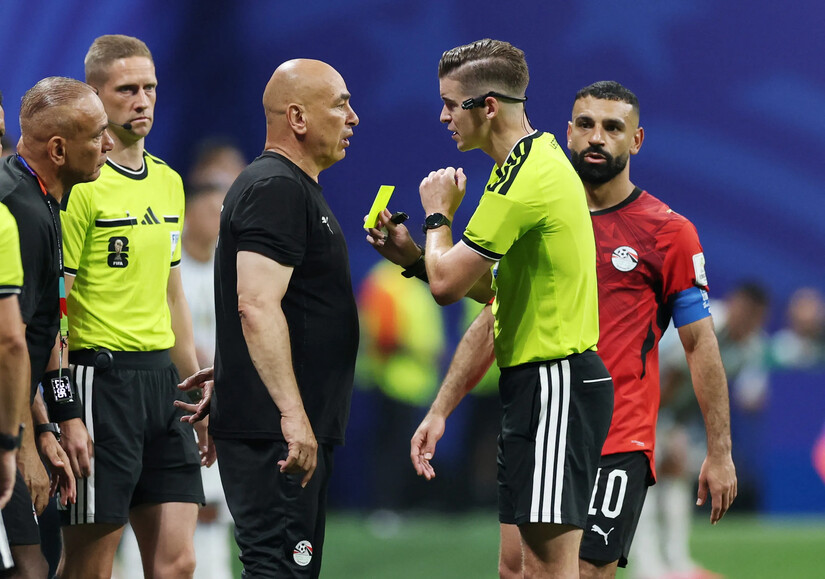
The opening exchanges immediately validated Egypt's confidence. Rather than retreating into a deep, conservative low block, the North Africans executed a highly synchronized, aggressive front press that choked out Argentina's deep buildup corridors. Squeezing passing lanes out of the central circle, the Pharaohs forced Alexis Mac Allister and Rodrigo De Paul to circulate possession laterally, far from dangerous interior attacking zones.
The aggressive tactical posture yielded immediate rewards in the 15th minute. Earning a premium set piece near the right touchline, Mohamed Salah delivered a lethal, dipping cross into the heart of the eighteen-yard box. Out-jumping Lisandro Martínez with perfect aerial timing, center-back Yasser Ibrahim powered a magnificent header past the outstretched palm of Emiliano Martínez to claim a shocking 1-0 advantage.
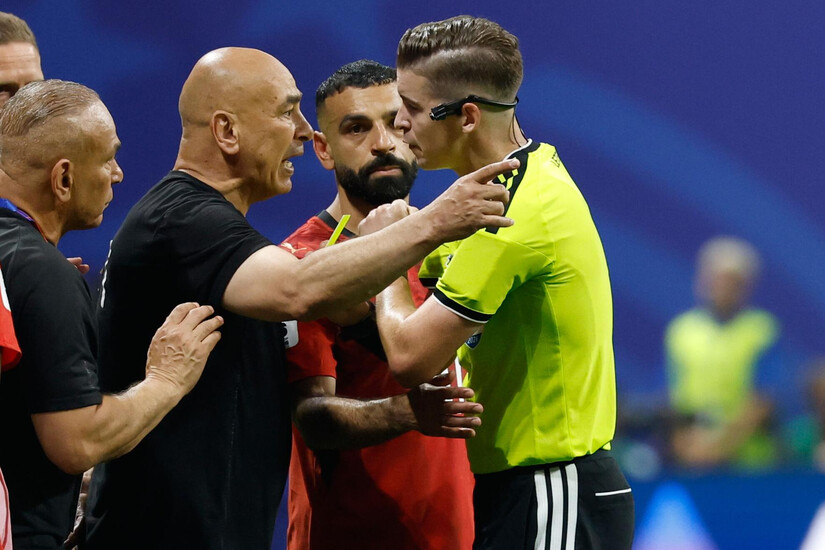
Argentina responded by accelerating their possession tempo, leveraging Enzo Fernández to orchestrate quick horizontal strings designed to stretch Egypt's mid-block structure. The defending champions gradually pinned Egypt deep inside their own defensive third, probing patiently for mechanical tracking errors. The premier breakthrough opportunity materialized shortly before the halftime intermission when sustained interior pressure inside the box drew a heavy sliding infraction, forcing the referee to point to the penalty spot.
Lionel Messi stepped up to the spot under immense international scrutiny, as a capacity crowd held its breath. Most observers anticipated a routine, clinical finish from the captain to restore structural parity. Instead, Egyptian goalkeeper Mostafa Shobeir authored a legendary tournament moment: anticipating the trajectory flawlessly, Shobeir launched full-length to his right to block Messi's strike, preserving the 1-0 cushion and sending an immense jolt of adrenaline through the Egyptian lines.
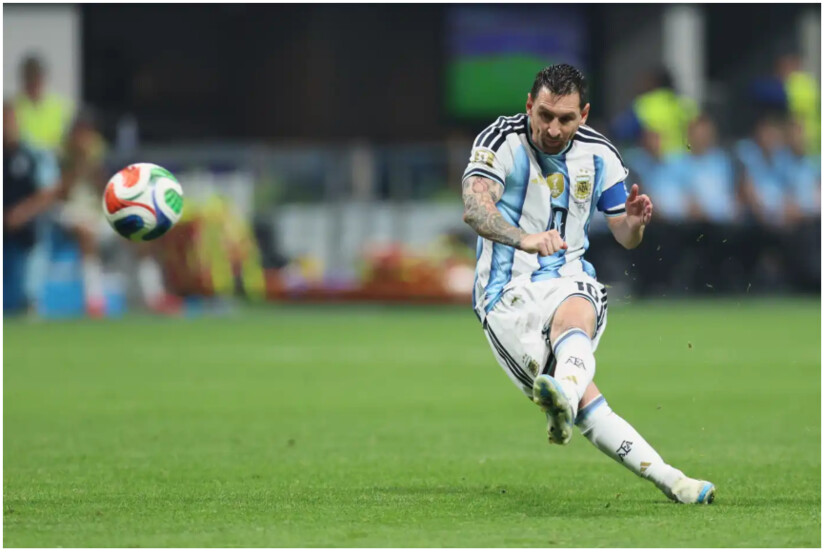
The penalty save transformed hope into cold tactical conviction, and the situation deteriorated rapidly for Argentina in the 67th minute. Absorbing an extended spell of South American attacking pressure, Egypt launched a devastating, lightning-fast counter-attack that caught Argentina's advanced fullbacks completely out of position. Exploding into vacant transitional space, forward Mostafa Zico collected a vertical pass before calmly slotting a composed finish past Martínez to double the advantage to 2-0.
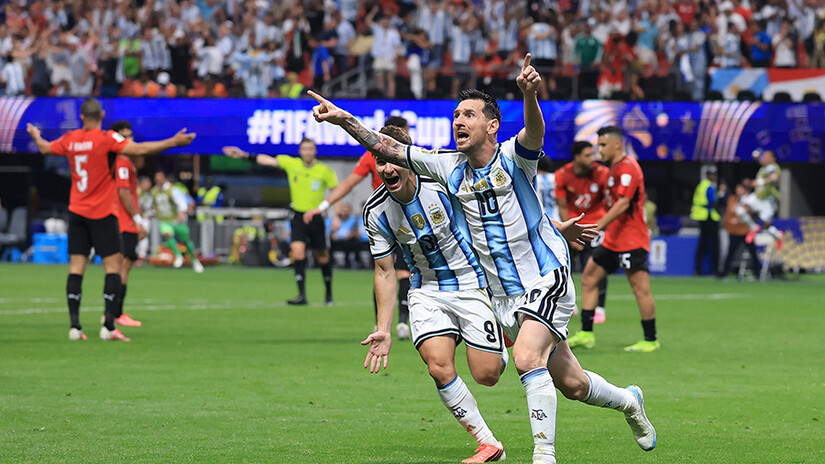
Confronting immediate elimination, Scaloni abandoned all defensive caution, executing immediate attacking substitutions to flood advanced vertical channels. Argentina pushed their fullbacks into traditional winger roles, accepting massive defensive risks to establish numerical overloads inside the Egyptian penalty area. The physical and territorial load became absolutely relentless, systematically wearing down a fatiguing African defensive ring.
The critical breakthrough arrived in the 79th minute. Escaping his tracking marker during a corner kick delivery, Cristian Romero rose authoritatively to power a commanding header into the back of the net, narrowing the deficit to 2-1. The strike completely flipped the emotional momentum of the match, inducing immediate structural fatigue across the Egyptian ranks.
Just four minutes later, Messi executed complete redemption for his earlier spot-kick failure. Collecting a sharp pass inside the box, the captain generated a microscopic sliver of separation via a rapid body feint, unleashing a thunderous, signature left-footed strike that whistled past Shobeir to level the match at 2-2.
While extra time appeared inevitable as regulation time dissolved, Argentina produced a final, world-class vertical surge in the 92nd minute. Unpicking the right flank, Lautaro Martínez delivered an inviting cross into a packed six-yard box. Timing his interior run with pristine efficiency, Enzo Fernández rose above the defensive line to guide a precise, looping header into the far corner of the net to make it 3-2. The spectacular turnaround triggered absolute pandemonium across the Argentine bench, capping one of the greatest escape missions in tournament lore and preserving their title defense by the absolute skin of their teeth.
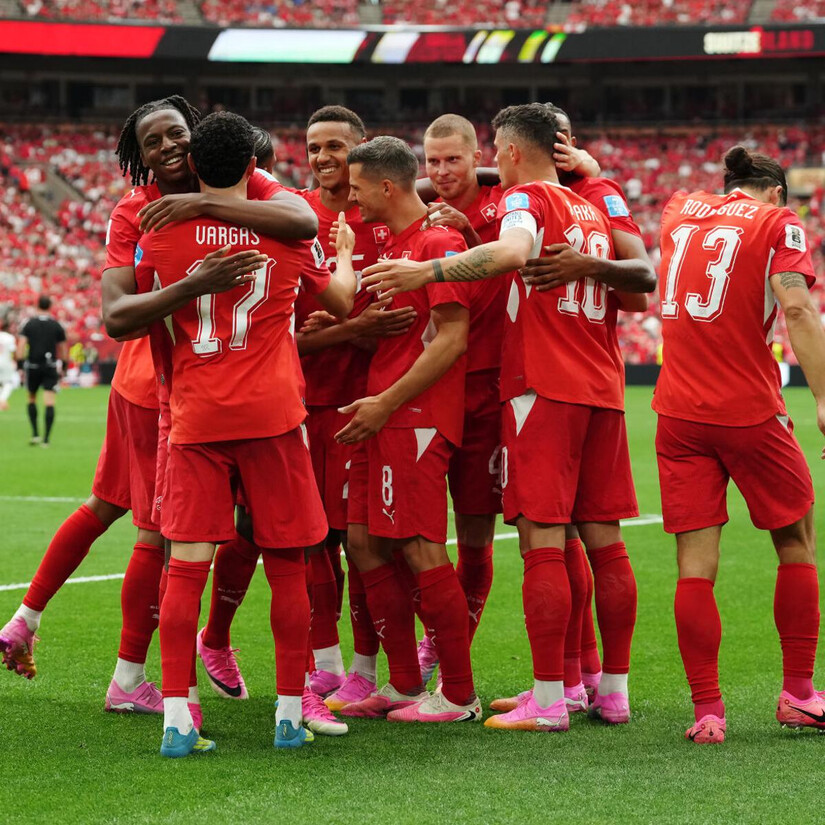
While Atlanta delivered high-scoring transitional volatility, BC Place in British Columbia presented an absolute masterclass in tactical discipline and geometric defensive stasis. This was 120 minutes of unrelenting structural organization, where neither Switzerland nor Colombia manifested any willingness to surrender vital central territory. Both managers approached the match with a high-floor defensive focus, fully aware that a singular mechanical tracking error would terminate their international life.
The primary half evolved into an intricate, physical battle of attrition across the center circle. Néstor Lorenzo's Colombia selection attempted to dictate vertical tempo through the creative vision of James Rodríguez, while Luis Díaz utilized his world-class isolation pace to challenge the Swiss wingbacks from wide areas. Switzerland answered via textbook tactical coordination. Midfield anchor Granit Xhaka orchestrated possession with complete composure, refusing to accelerate transitional strings unnecessarily to ensure the Swiss retained defensive numbers behind the ball.
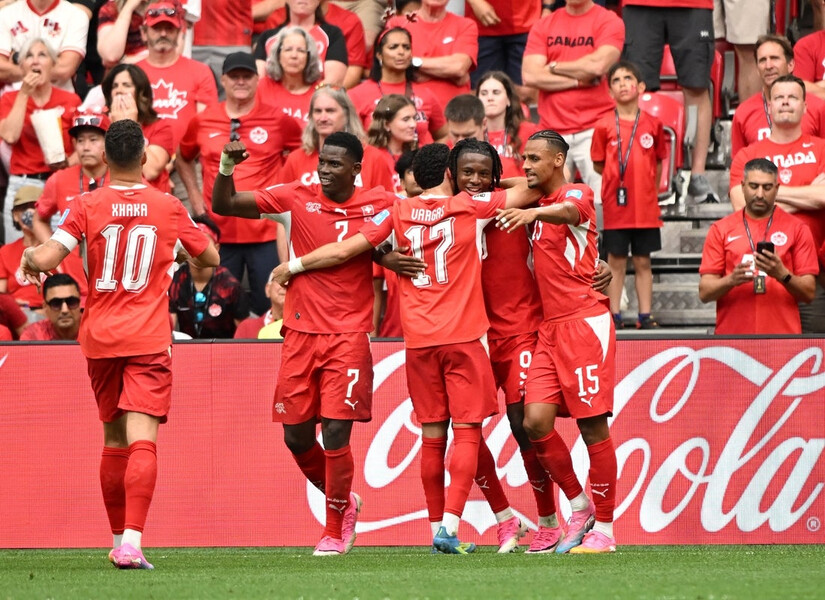
Center-back Manuel Akanji turned in a magnificent performance, organizing an exceptionally disciplined backline that compressed horizontal distances and completely denied Colombia clear paths inside the half-spaces. Goalkeeping parameters grew increasingly vital as the second half advanced; Gregor Kobel commanded his penalty area with absolute authority, collected aerial deliveries, and swept behind his line to neutralize long balls.
As the match pushed past the 90-minute mark into extra time, profound cardiovascular fatigue systematically replaced tactical experimentation. Both squads remained unyielding in their defensive commitments, preferring to recycle possession safely rather than execute risky, low-probability vertical gambles. Heavy tactical challenges yielded a collection of yellow cards, but high-quality scoring looks remained remarkably scarce, with Kobel and Camilo Vargas marshaling their lines to push the scoreless stalemate into a penalty shootout.
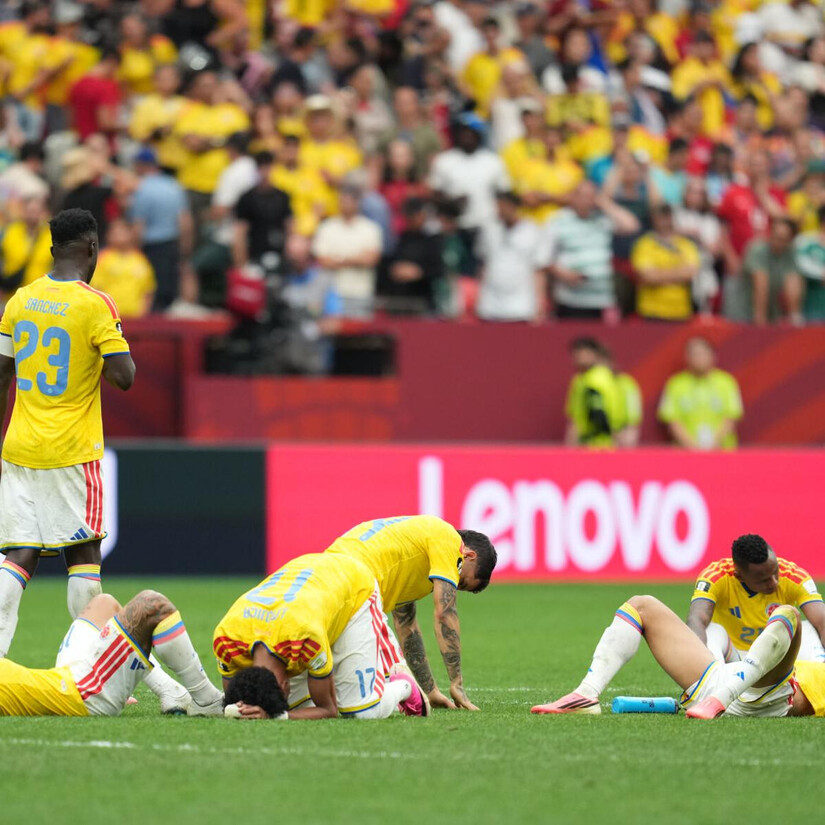
For Switzerland, the twelve-yard boundary carried profound historical trauma, having suffered repeated elimination heartbreaks across multiple generations of major tournament shootouts. The penalty competition began under immense psychological strain. While both squads executed clean early strikes, Kobel emerged as the definitive protagonist of the evening. Displaying immense patience on his line, the Swiss keeper delayed his movement to interpret body language, executing a sensational diving stop to shift the structural advantage completely to the Europeans. Substitute Rubén Vargas stepped up to the spot to handle the decisive fifth penalty, calmly driving his strike into the bottom corner to seal the 4-3 shootout victory and launch Switzerland into their deepest World Cup run in seventy-six years.
The formal closure of the Round of 16 solidified several critical competitive realities:
The global landscape of the final eight is officially set. With Morocco, France, Norway, England, Spain, Belgium, Argentina, and Switzerland advancing their matrices into the quarterfinals, the 2026 World Cup reaches its most cutthroat operational tier. Projections are completely finalized; every subsequent match features a program fully equipped to capture global immortality, where a singular defensive lapse carries permanent tournament termination.
MinneapoliMedia | Community. Culture. Civic Life.



Overcast, with a high of 65 and low of 48 degrees. Overcast for the morning, clear in the afternoon and evening, overcast overnight.