67° and Cloudy
Image




The Vessel
Marvalyne Tripp did not set out to change Minnesota law. She set out to save her nephew's life. Nine years, one coma, and one act of the legislature later, she still is not done.
The moment Marvalyne Tripp finally understood she had been heard did not happen in a courtroom. It happened in an elevator.
She was on her lunch break, working her first year at Saint Paul City Hall, still on probation, still telling herself to keep her head down. The doors opened on the third floor and the man who stepped in was the judge who had presided over her sister's child protection case, the case that had swallowed years of Tripp's life and nearly ended her sister's. Tripp meant to get off. Instead the shock of seeing him carried her past her floor, past the fourth, all the way to the fourteenth. When she finally came back down and stepped out alone, she broke down in the hallway.
“I didn’t call him judge anymore,” she says now. “To me, he was just the man who let it happen.”
That single sentence carries the weight of what Tripp has spent the better part of a decade building: a public record of what a family endures when a state system decides it knows better than the people who love a child, and a second, harder won record of what one woman did with that experience once the worst of it was over.
Today, Tripp sits on Minnesota’s Children’s Justice Act Task Force. She has worked alongside the team that implemented the state’s African American Family Preservation Act, testified before legislators, briefed county attorneys, and helped shape the structured decision-making training that caseworkers now sit through. She did not arrive at that table by application. She arrived by insisting on it, one meeting, one motion, one hallway conversation at a time.
THE CASE THAT CHANGED EVERYTHING
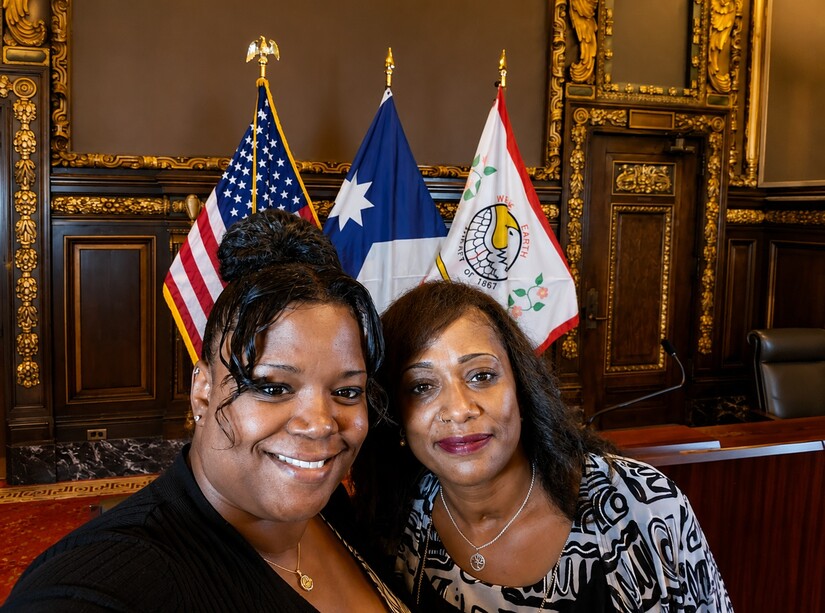
It started with her sister, in 2015. Tripp’s nephew, born prematurely after what she describes as a preventable placenta abruption, developed a serious skull and brain complication that she says went undiagnosed until it nearly killed him. Instead of examining what had gone wrong medically, Tripp says, caseworkers and a hospital intent on protecting itself built a case around her sister instead, first alleging abuse, then, when that could not be substantiated, pivoting to a claim of neglect.
“You can accuse a mother of abuse without any evidence,” Tripp says. “But when I pointed out the actual abuse, once he was placed with someone else and hospitalized again, nobody wanted to hear it.”
Her family, she says, had no history with the system, no prior involvement, nothing but a mother who was low income and, in Tripp’s telling, an easy target once a hospital wanted to avoid accountability. Her sister was a single mother of four young children at the time. None of the other three were removed. Only the infant.
“So how is she a good mother for three kids, and not for this one,” Tripp says. “It never made sense. It was never supposed to make sense. It just had to hold up on paper.”
“They were fabricating an entire case and trying to silence us. Everybody involved didn’t like me, because I was holding everyone accountable.”
BUILDING THE FILE

What followed was four years that Tripp describes less as advocacy than as a second, unpaid job that consumed the first one. She pulled medical records before, she says, anyone could alter them. She photographed her nephew at every visit, documenting weight loss, bruising, a formula prescription she says a caregiver never filled. She tracked which nurses came on which shifts and cross checked what she was told against what she could verify. When a caseworker restricted her visits because of that documentation, she filed to become a party to her sister’s case herself.
She and her sister eventually assembled a fifty-seven page motion supported by more than three hundred exhibits, built almost entirely at night, because her sister’s hands, affected by a chronic condition, could not hold a pen or type for long. Tripp became the typist. “I didn’t sleep for months,” she says. “I couldn’t. Every document mattered.”
A first version of the motion was denied for lack of supporting evidence. They resubmitted it, exhibits attached, and carried copies to the county attorney’s office themselves. Court dates, Tripp says, were quietly moved without notice in what she believed was an attempt to close the case by default. She caught it by checking the clerk’s calendar herself, then hand delivered notice to every party involved and had each one sign for it.
“They weren’t expecting us to know, or to show up,” she says. “When they saw us, they were furious.”
Even armed with police reports, medical records, and photographs, Tripp says a judge told her directly that he would deny her motion regardless, because a judge’s finding, once entered, functioned as fact whether or not it was true. “A lawyer told me, even if it isn’t true, once the judge says it is, it’s fact,” she says. “That is when I understood the size of what we were up against.”
WHAT IT COST

The fight did not remain confined to the courtroom. In the midst of it all, Tripp says her sister suffered a serious cardiac event that left her in a coma for approximately six months.
During that time, Tripp says she did not simply visit the hospital, she lived there. Fearing that hospital staff would contact authorities if they discovered she was caring for her young daughter, she kept the child's presence hidden. She slept in the parking ramp, where her daughter remained in the car, and from her sister's hospital room she maintained a clear view of the vehicle through the window. Throughout the ordeal, she moved constantly between the parking ramp and her sister's bedside, checking on her daughter while remaining at the hospital to watch over her comatose sister.
She brought coffee and food to the nursing staff, she says, not as a courtesy but as a strategy, so that every person walking into her sister’s room knew someone was watching and documenting everything they did. She read Psalm 37 aloud at her sister’s bedside every night at the same hour for seven days straight, and continued reading it before any procedure for the rest of her sister’s hospitalization.
At the time, Tripp was carrying nineteen college credits a semester while doing all of this. When her sister’s condition worsened, she says her own body began to give out under the strain, headaches, difficulty speaking, an inability to concentrate long enough to finish coursework she had already mastered. She eventually withdrew entirely, later returned to complete her degree, and is now finishing advanced coursework.
She also lost her apartment during this stretch, she says, after a landlord who had let the unit fall into disrepair, a collapsed ceiling, a rodent infestation, water pouring through her cabinets, retaliated against her complaints with an eviction filing timed to land while her sister was still in a coma. She eventually had that eviction expunged from her record, which she credits with making it possible to secure the apartment she lives in now.
“God floated me through my whole life,” she says. “I don’t know how else to explain half of what happened to me.”
THE ONLY STRUCTURE WE HAD
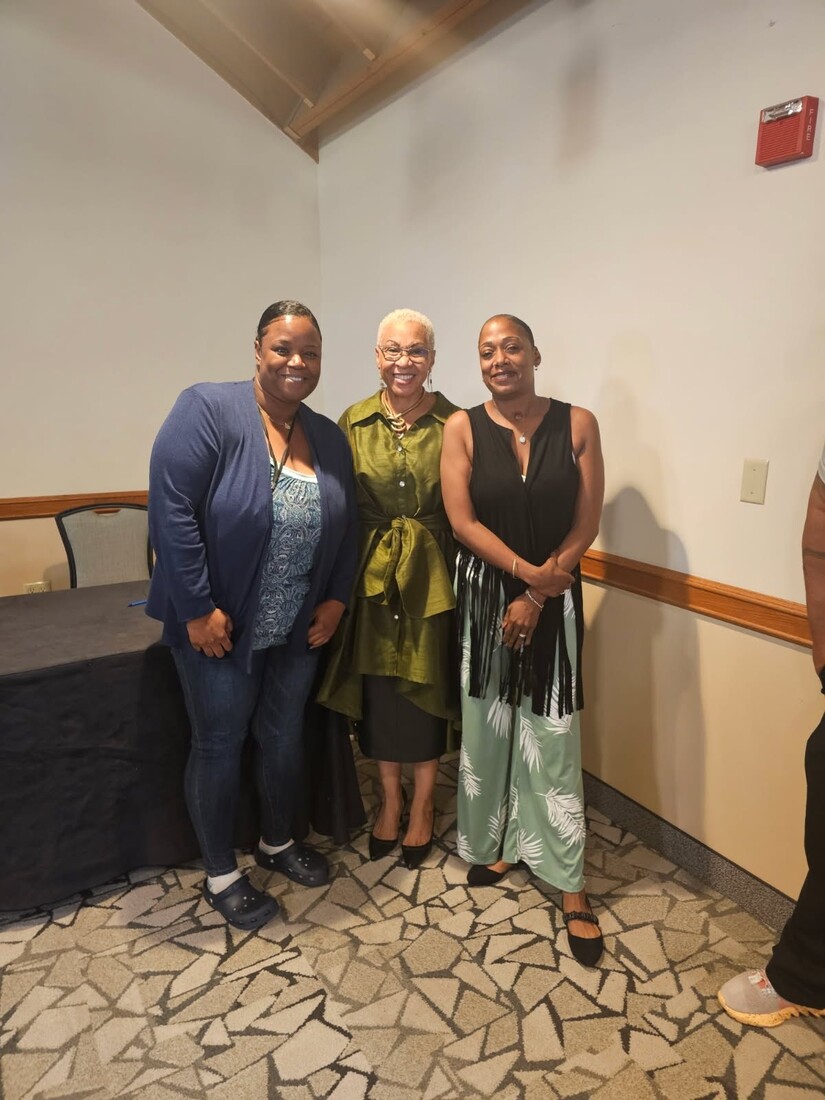
Ask Tripp what carried her through those years and she does not point to a therapist, a support group, or a formal system of care. She points to faith, and to her sister, in that order.
“We didn’t have a system, we didn’t have a structure,” she says. “All we had was God, and each other.”
She describes deliberately suppressing her own emotion for years so her sister would have someone steady to lean on, a role she says came at a real cost once the crisis passed and her own body forced her to stop. “I hid what I was going through and kept showing up with a smile, until I couldn’t eat, until I was in and out of the hospital myself,” she says. “My body was telling me I hadn’t actually healed. I had just kept moving like it never happened.”
She was, by her own account, reluctant to ever see a therapist herself, having watched the county attempt to use therapy notes against her sister in court. Her sister eventually found her own independent therapist, one Tripp says would not bend her observations to match the narrative the county wanted on the record.
“I don’t move off my own understanding. If I did, I could make errors. I ask God to lead every step, because I don’t want to be the one deciding alone.”
FROM THE HALLWAY TO THE TABLE

By the time her nephew’s case closed and her sister’s parental rights were restored, Tripp had built, without meaning to, a working knowledge of Minnesota’s child protection system that few people outside it ever acquire. She started using it.
She showed up at a Children’s Justice Act Task Force meeting uninvited and pulled organizers aside to tell them that one of the members sitting at their table was the same abuse specialist whose findings she believed had wrongly targeted her family. She joined the group. She has been part of it since.
The Minnesota African American Family Preservation and Child Welfare Disproportionality Act passed the legislature in May 2024, on Tripp’s birthday, nine years after her family’s case began. She credits community advocate Kelis Houston, founder of Village Arms, with championing the push for the bill for the better part of a decade from outside the legislature, alongside the work of chief House author Representative Hodan Hassan and Commissioner Tikki Brown. She names Commissioner Rena Moran and State Senator Clare Oumou Verbeten among the officials she says showed up consistently and in good faith, along with State Senator Bobby Joe Champion and Senator Foung Hawj. When the workgroup implementing the new law was being assembled, Tripp says she pushed to have her sister, whose case had shaped so much of the underlying policy conversation, included alongside her. Both were eventually seated.
“When I rise, my sister rises,” she says. “That has never not been true.”
She is careful to frame her role in these rooms as building rather than blaming. “I’m not there to point fingers,” she says. “I’m there because I know what happened, and I expect people to show up and lead in this space anyway. That’s all I want.”
THE PEACEKEEPER

Tripp’s daughter, now fifteen, features in nearly every chapter of her mother’s story, often as its quiet moral center. As a kindergartner, Tripp says, her daughter began cutting cardboard into small badges she called peace badges and handing them out to classmates, part of a self-invented effort to get children to intervene when they saw someone being bullied.
When a teacher dismissed her for reporting bullying as a “tattletale,” Tripp says her daughter answered, “you’re supposed to protect me,” and was met, in Tripp’s account, with lowered grades rather than an apology. Tripp pushed back, requesting to see the leveled reading materials behind her daughter’s marks and challenging what she describes as an algorithm driven grading process she felt was being used to justify predetermined conclusions about her child.
Her daughter now studies through an arts focused school, teaching herself guitar in her spare time. “She made single parenting easy,” Tripp says. “She cares about her own outcomes more than I have to push her to. I don’t take credit for that. I just tried to raise her the way I needed to be raised.”
A DIFFERENT KIND OF GUARDIANSHIP

The policy idea Tripp returns to most often is what she calls immediate temporary kin guardianship, a proposal that would name a relative or trusted adult as a child’s legal guardian from the moment the state removes a child from their home, rather than defaulting custody to the county’s responsible social services agency while relatives wait, often without standing, to be heard.
“When I had my nephew, I had no legal standing at all,” she says. “I could see he was regressing. I could see something was wrong. And I had no right to demand anything be done, because on paper, I wasn’t anybody.”
Under her proposal, a named kin guardian would receive basic legal representation, paid for by the state for families who cannot afford it, giving relatives standing to advocate for a child’s medical care and placement without stripping the biological parents of their own rights. The goal, she says, is a plan built around stabilizing a family rather than simply relocating a child. Under additional kin funding that is not available under the current method used, like a DOPA (Delegation of Parental Authority).
“The government can’t raise our babies,” she says. “We need a system that actually works for them.”
WHAT SHE WANTS REMEMBERED
Asked, at the end of a conversation that ran more than two hours, what she hopes people take from her story, Tripp does not mention legislation, task forces, or titles.
“First, my connection with God,” she says. “Then my perseverance through that connection. I hope I’m remembered as someone who lived with intention, who lived with purpose, and who tried to pass on whatever I was given so somebody else could have a piece of it too.”
She has forgiven, she says, even the judge she once feared meeting in an elevator, not because the harm was undone but because she believes holding onto it would have cost her more than it cost him. “I asked God to give him the chance to do better with whatever came next,” she says. “I can’t carry that weight and still do this work. So I let it go, and I kept moving.”
She is, by her own description, not finished. She is now working through advanced coursework, well past the degree she once had to pause. She is still sitting on the task force. She is still, as she puts it, waiting to see where she is being led next.
“I didn’t chase this,” she says. “I just refused to be quiet. Everything after that just kept happening.”
THE POWER OF HER RECOMMENDS
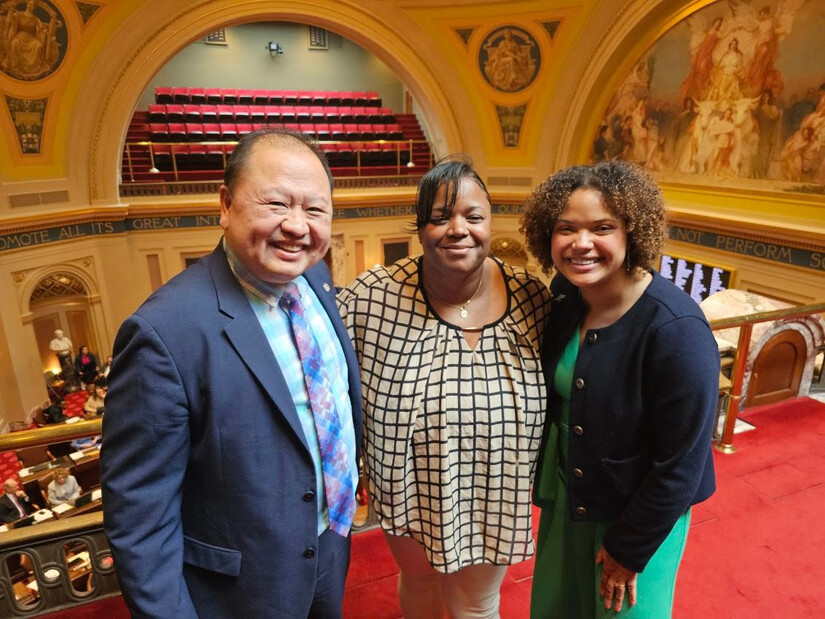
Each Power of Her guest is invited to name women in the Twin Cities whose work she believes deserves its own spotlight. Marvalyne Tripp named four.
Commissioner Rena Moran, for what Tripp describes as consistent, good faith leadership on family preservation policy.
Kelis Houston, community advocate and founder of Village Arms, whom Tripp credits with championing Minnesota’s family preservation legislation for nearly a decade before its passage.
State Senator Clare Oumou Verbeten, whom Tripp credits with taking the time to hear her sister’s story directly.
And her own sister, whose case shaped the policy work Tripp now does. “When I rise, we rise,” Tripp says. “She’s out here doing this work too.”
MinneapoliMedia | Community. Culture. Civic Life.



Overcast, with a high of 86 and low of 67 degrees. Moderate rain for the morning, overcast in the afternoon,