39° and Clear
Image
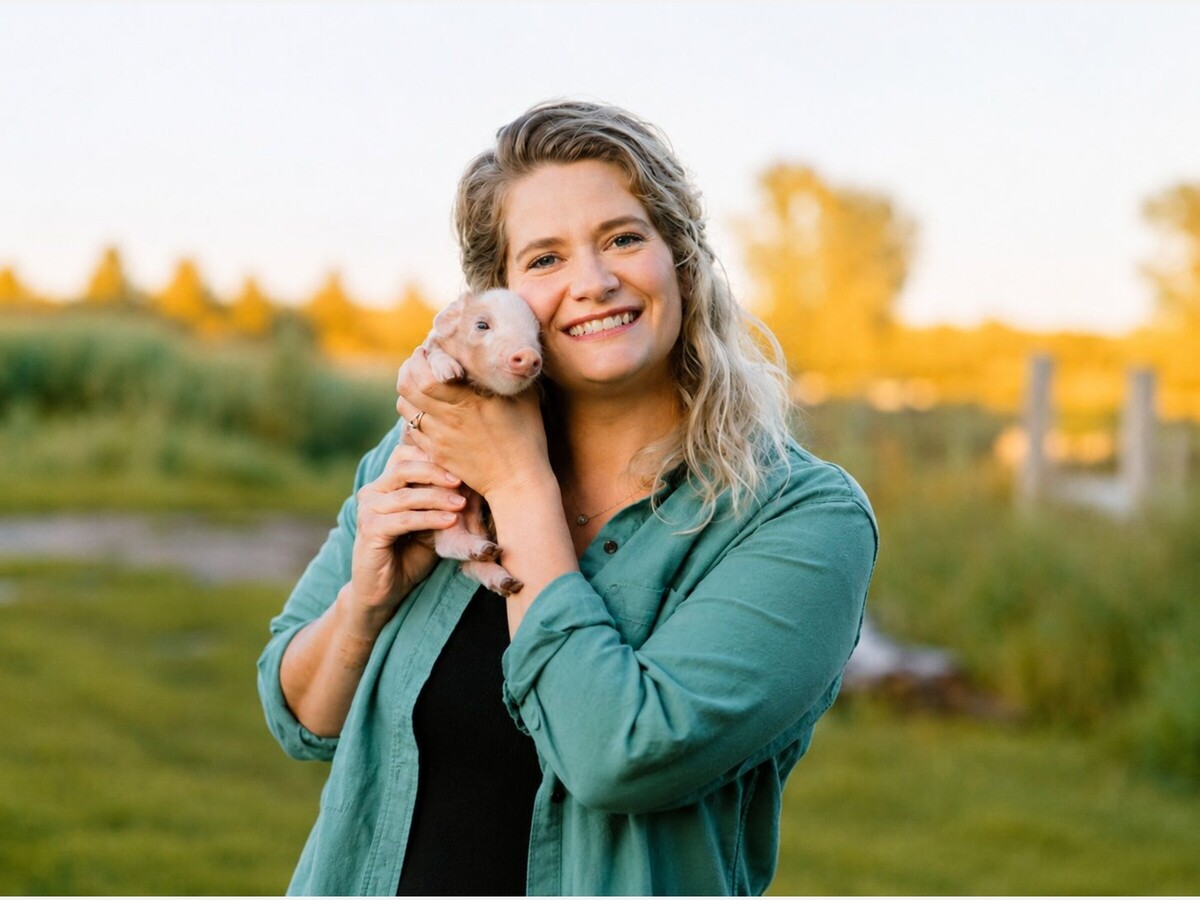



MINNEAPOLIS, MN (September 8, 2026). The baby began crying just as the conversation reached the future of the family farm.
For most of the interview, Trisha Zachman had been talking from her home near Belgrade about soil, pigs, agricultural economics and the gradual evolution that carried her from the crop-protection industry into regenerative farming. Then came a question about whether a small, independent operation like hers could remain economically viable for another generation.
Before she could answer, her newborn needed her.
Zachman apologized and stepped away. The interview paused. When she returned, she explained with the weary affection of a mother who recognized the sound immediately: the baby wanted dinner, and he wanted it now.
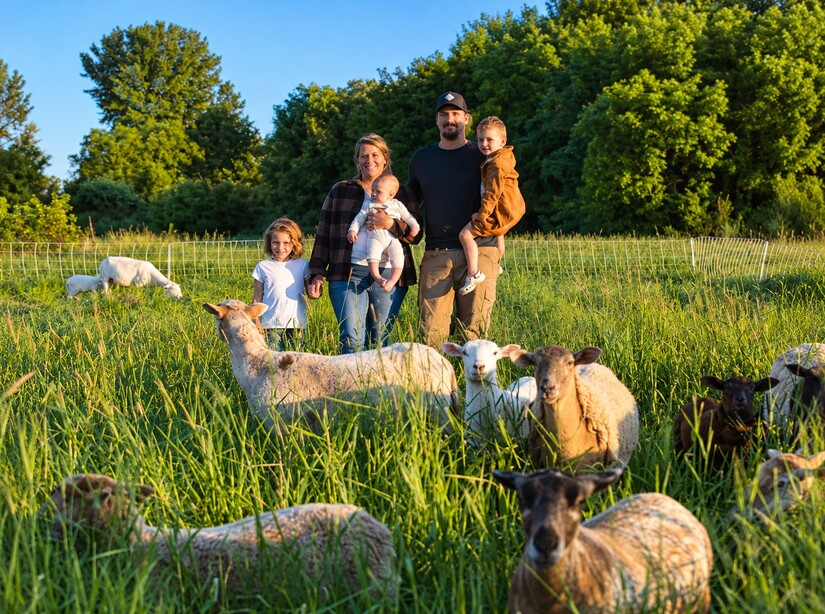
The interruption lasted only a few minutes, but it placed nearly everything Zachman had been discussing into one unplanned scene. Her farm is not an abstract environmental project, an agricultural demonstration preserved for visitors or a business plan constructed on paper. It is a working place where animals must be cared for, children are being raised, crops must produce, bills must be paid and decisions made today will determine what remains for the next generation.
That combination of responsibility and possibility brought Zachman to Minneapolis as one of six women featured in Celebrating Minnesota’s Farmers: A Love Story, a Food Tank storytelling event held August 25 at the Minneapolis Central Library’s Pohlad Hall. Presented with the City of Minneapolis, Minnesota Farmers Union and Niman Ranch, the gathering placed six distinct agricultural lives before an audience that might otherwise encounter farming primarily through prices, labels and finished food.
Zachman arrived with a story built around a striking act of reassessment. She grew up in agriculture, studied it, worked professionally within its conventional systems and eventually chose to farm differently.
“I’ve grown up here my whole life,” she said during an interview with MinneapoliMedia on the evening before the event. “I got to be chosen to speak and just share my perspective of someone who’s lived here their whole life and has done so many different jobs within farming. That’s really shaped who I am today.”
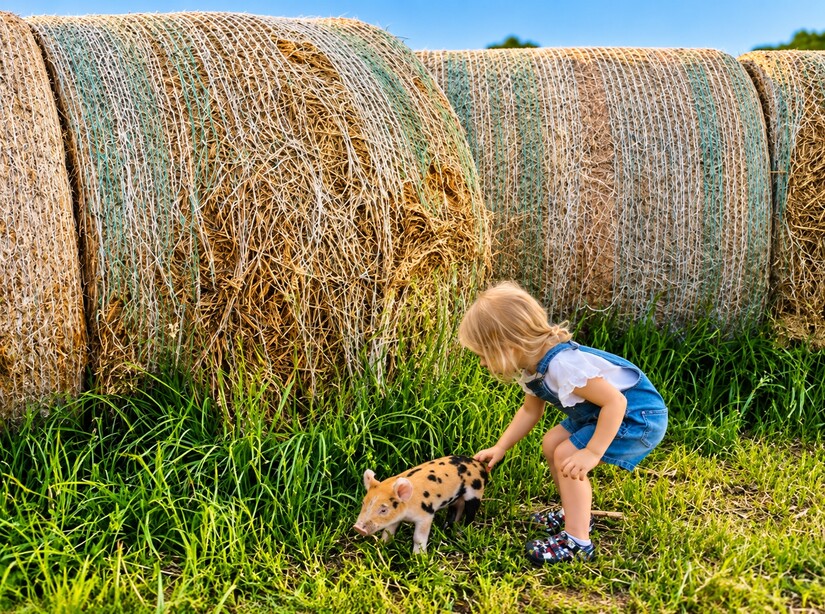
Zachman grew up on a dairy farm in Elrosa, a small central Minnesota community where agriculture was not an occasional experience but the daily structure of family life. Her memories begin with animals: cows, kittens and almost any creature she could find around the farm.
“I’ve always loved animals,” she said. “I loved the cows. I loved the kittens. I loved any critter we pretty much found on the farm.”
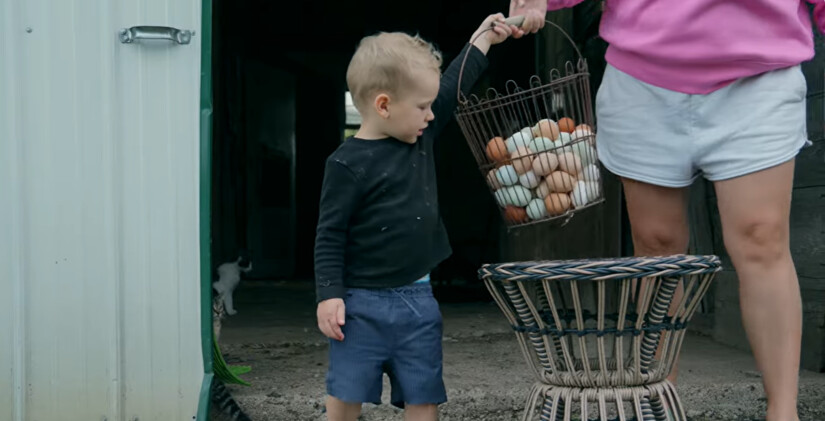
As a child, she understood animal care first as attachment. The larger vocabulary of production systems, input costs, market premiums, soil biology and federal farm policy would come later. What stayed was the satisfaction she found in caring for living things.
“The true nature of loving animals and caring for them was just very special for me,” she said. “Now I’m here on the farm today, and we focus on humanely caring for pigs and really giving them the best quality of life they possibly could have. It just totally fills my cup.”
The return to animal care was not a return to precisely the same agriculture she had known as a child. Zachman and her husband, Nolan, both studied agriculture at North Dakota State University. She then spent about a decade working in crop protection, gaining experience with chemicals, seed, precision-agriculture technology and the economic calculations farmers make when deciding how to manage their land.
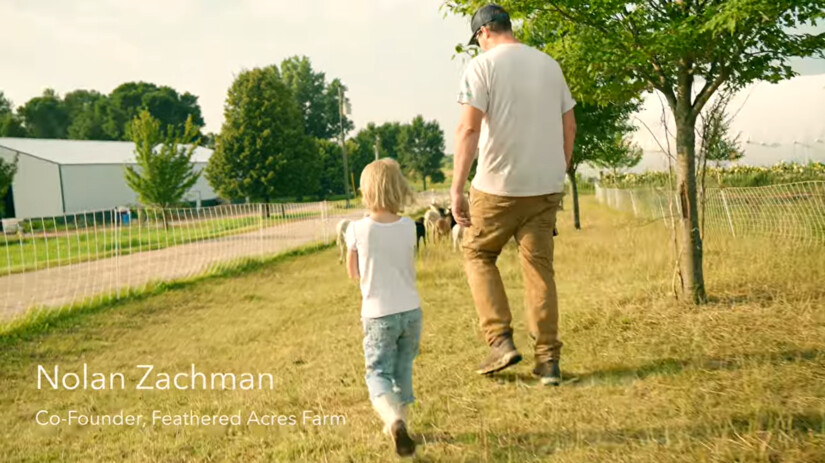
Trisha and Nolan had known each other since high school. They attended North Dakota State University together and married in 2018. The farm they would eventually purchase had belonged to Nolan’s family, but Feathered Acres was not handed to them as a finished enterprise with an established formula. They had to decide what the property would become, how it could support their family and where they could create value without simply reproducing the scale-dependent model that dominates much of commodity agriculture.
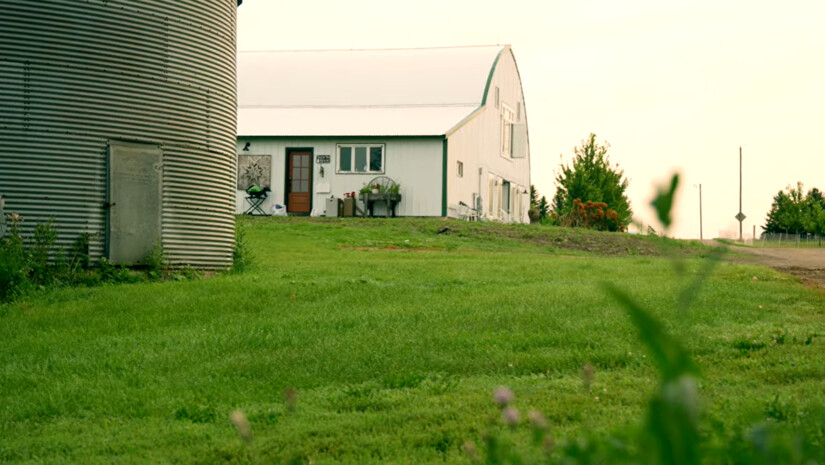
In 2020, the Zachmans acquired 13 acres near Belgrade and rented another 13 acres. The property carried the visible remains of an earlier agricultural life, including a dairy barn and silo, but the operation emerging there would combine livestock, crops, lodging, education and direct relationships with consumers.
The timing was difficult. They were building a farm while absorbing startup expenses and entering a period when fertilizer and other production costs were rising sharply. The economics did not allow them to treat purchased inputs as an unquestioned part of farming. Every expense had to justify itself.
That background makes her present work difficult to reduce to a simple rejection of conventional farming. She understands why farmers use familiar systems. She and Nolan were more comfortable with conventional production because it was what they had studied and what they knew.
Her movement toward regenerative agriculture began not with an ideological conversion but with a practical problem.
“Honestly, it was more of an economic decision,” she said.
While working for a chemical company, Zachman heard farmers describe the mounting burden of paying for fertilizer and chemical inputs. At the same time, she and Nolan were beginning their own operation. They chose a regenerative route in an effort to reduce as many purchased inputs as possible.
“I just became kind of sad hearing farmers complain about all the inputs they were putting in their fields, like fertilizer and chemicals, and how it was just so tough to keep that going,” she said. “From an economic standpoint, we decided to go the regenerative route to try to cut out as many inputs as we can.”
Approximately six years into that process, the financial reasoning remains, but it is no longer the whole explanation.
“It started out that way,” she said. “But as time went on, it’s like, ‘Oh, there’s so much more to it.’ The beauty of the ecosystem and the healthy soils, and seeing so many things flourish differently on our farm, it’s just been great and amazing.”
That progression matters because the term “regenerative agriculture” is often presented as though it describes one settled system. In practice, farms applying the label can use different methods, measurements and definitions. At Feathered Acres, the clearest evidence is found in specific decisions: planting cover crops, placing animals on pasture, reducing dependence on synthetic inputs, maintaining plant diversity and allowing livestock to contribute to the farm’s nutrient cycle.
Some of the Zachmans’ fields have obtained organic certification, while regenerative practices are being introduced more broadly where they fit the land and the operation. The work involves experimentation rather than the application of a universal manual. Soil type, rainfall, livestock, machinery, available labor and markets all affect whether a practice succeeds.
In an earlier profile produced through Food Tank and Niman Ranch, Zachman described farmers as “the original researchers,” people who continually test different approaches and determine what works under their own conditions. Her own career gives that observation unusual credibility. She has occupied the position of someone selling agricultural products and the position of someone deciding whether those products remain economically necessary.
The cover crops are intended to protect and rebuild soil rather than leave it bare between cash-crop seasons. Greater organic matter can improve the soil’s ability to retain water, reduce erosion and withstand periods of stress. For Feathered Acres, those environmental benefits are tied directly to financial resilience. A farm that can rely more heavily on biological processes and less heavily on volatile purchased inputs gains a measure of independence.
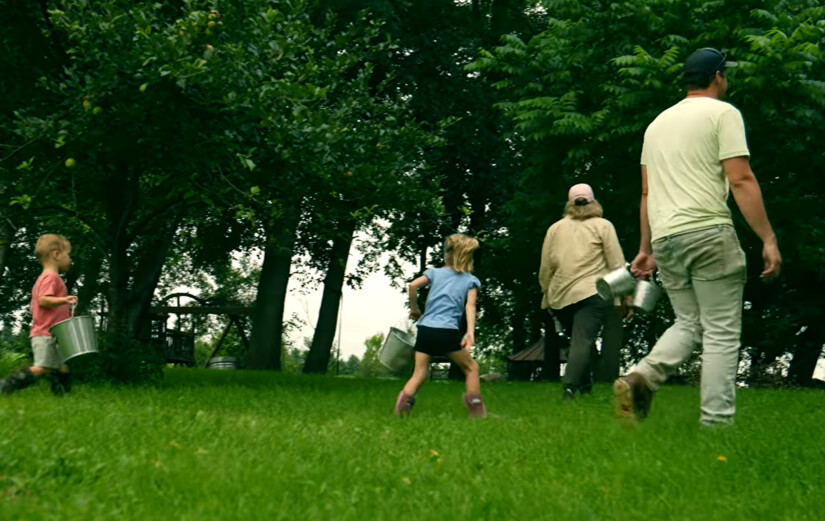
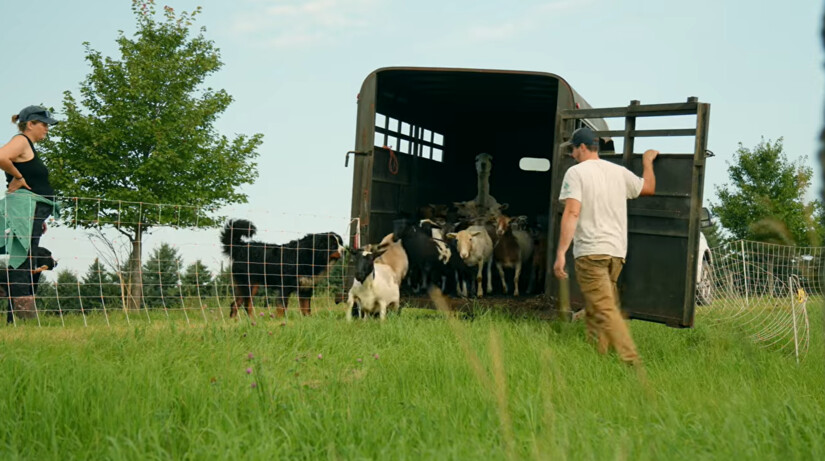
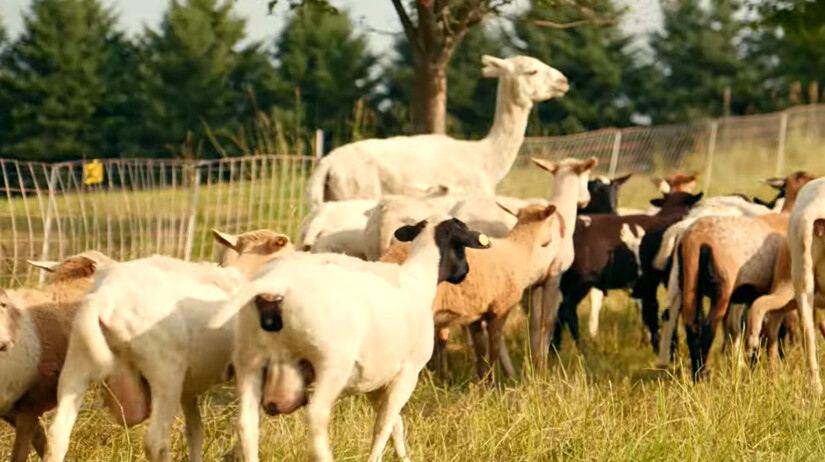
At Feathered Acres Learning Farm & Inn, regenerative agriculture is expressed through daily work rather than a slogan. The Zachmans pasture and farrow pigs, raise sheep and chickens and grow cover crops between rows of cash crops. The farm also has a relationship with Niman Ranch, which purchases most of its pigs for a specialty market built around animal-welfare standards.
Asked what a visitor would see by following her for a day, Zachman began with the animals.
“I would give you a deep dive in how we pasture and farrow our pigs,” she said. “From start to finish, I would show you that life cycle of a piglet becoming a finisher at 300 pounds. I would show you our sheep. I would show you that whole process and our chickens.”
Then the walk would continue toward the land.
“I’d take you on a little walk down along the river to look at one of our fields,” she said, “and I would show you some of our cover crops that we have planted in between the rows of our cash crops.”
The pigs occupy an important place in both the farm’s ethical commitments and its business model. Zachman said the family goes beyond minimum welfare requirements, an investment she believes is reflected in the pork. Niman Ranch has provided instruction and mentorship on animal care while paying a premium that helps make the production system economically possible.
“They have really taught us a lot and been a great mentor to us on how to care for our animals as best as possible and uphold all these wonderful welfare standards,” she said. “By that, they give us a premium on our product, helping make it more economical for us.”
At one point, the farm was raising approximately 225 pigs. That number may sound substantial to a visitor, but Zachman has described it as tiny when compared with large conventional hog operations. The distinction helps explain why the relationship with Niman Ranch is not merely a branding arrangement.
Without a buyer willing to guarantee a market and pay for differentiated production, a small farm can be trapped between high costs and commodity prices established by systems operating at vastly greater scale. Zachman has said that without Niman Ranch, her family would not be raising pigs.
The specialty market allows the Zachmans to remain an operation their family can manage. They do not have to construct massive confinement buildings, employ a large workforce or expand animal numbers simply to pursue economies of scale. That smaller structure also makes it possible for the children to remain close to the work without the farm becoming an industrial complex surrounding their home.
Their animal-care practices have also evolved through exchange with other farmers. After learning from producers in the Niman Ranch network, the Zachmans began farrowing mother pigs on pasture rather than inside barns. Zachman said the animals thrived outdoors while giving birth.
The farm later received a $10,000 grant from the Niman Ranch Next Generation Foundation to expand and replace pasture fencing. Fencing can appear mundane beside larger debates about sustainability, but it is essential infrastructure in a pasture-based livestock system. It determines where animals can safely graze, how frequently they can be moved and whether the farm can protect both livestock and land while making rotational systems workable.
Feathered Acres is deliberately called a learning farm. It offers farm stays and educational experiences that allow guests to see agricultural production at close range. Some visitors arrive with a deep understanding of farming. Zachman has hosted retired farmers who no longer have their cows and want to reconnect with a life they once knew. Others arrive having never set foot on a farm.
The educational mission was not part of Zachman’s original plan. The family first began seeing another possibility after restoring the old barn and making space available for overnight guests. Visitors were curious about the animals, the fields and the origin of their food. Zachman discovered that the ordinary details of her life were unfamiliar and valuable to people arriving from outside agriculture.
The business grew around that curiosity. Feathered Acres now offers lodging in converted farm buildings, farm tours, classes, weddings, direct meat purchases and interactive experiences with animals. Guests may gather eggs, meet sheep and chickens, watch pigs on pasture or simply stay on the property without participating in chores.
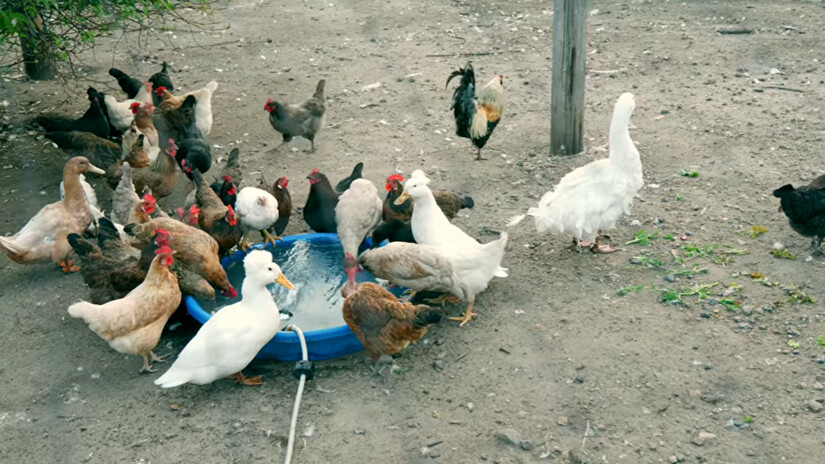
The name itself came from the chickens wandering freely around the farm. Zachman has explained that she saw feathers moving across the property and associated them with animals able to express their natural behavior. What began as affection for free-ranging chickens expanded into a broader commitment to livestock systems built around outdoor access and movement.
She welcomes both.
“I’m just so thankful for people like that who come out here,” she said of visitors with little agricultural experience. “I’m so proud of them for wanting to learn more about farming.”
Their questions sometimes reveal how far modern consumers have become separated from the origins of their food. Feathered Acres occupies a former dairy farm with a silo that is no longer in use. Visitors have asked whether dairy farmers stored milk inside it. Others have misunderstood why hay bales appeared across a field.
Zachman does not tell those stories to ridicule anyone. The questions challenge assumptions she did not realize she carried about what other people knew.
“Those are such great questions because it keeps me learning,” she said. “I just assumed people knew certain things, especially where milk is kept, in a bulk tank. But that’s not the case. I get the range of people from one spectrum to the other.”
That response captures an important part of her educational approach. Agricultural literacy is not advanced by embarrassing people for what they were never given an opportunity to learn. Feathered Acres allows questions to begin with a silo, a hay bale or a piglet and expand into larger conversations about food, soil, animal care and the economics of production.
Farmfest’s 2026 recognition of Zachman noted that Feathered Acres also welcomes local schools at no cost. That choice removes a barrier for children whose schools or families might not otherwise be able to purchase a farm experience. It turns the operation into a community classroom where livestock, food production and land stewardship can be encountered directly.
The farm’s public role also extends to other producers. On August 21, just days before the Minneapolis storytelling event, Feathered Acres hosted a Soil Health Field Day at its Crow River Township operation. Events of that kind shift the farm from being merely an example discussed online into a place where agricultural practices can be examined, questioned and compared on the ground.
Education, however, is also part of the farm’s diversification strategy. Lodging, tours, classes, meat sales and events create income streams beyond crop and livestock markets. For a smaller operation, that diversity can reduce dependence on any one commodity price or production year. It also requires Zachman to perform several jobs at once: farmer, host, marketer, teacher, advocate and business planner.
Zachman’s concern for consumer understanding extends into policy. She has traveled to Washington, D.C., to advocate for family farms and has publicly opposed federal efforts she believes would weaken specialty markets for livestock raised under enhanced welfare standards.
By the time Farmfest recognized her in 2026, Zachman had traveled to Washington four times to speak with policymakers about small farms, humane livestock production and the consequences federal decisions can carry into rural businesses. In October 2025, she joined more than 200 farmers from more than 30 states in Washington to oppose federal preemption of state animal-welfare standards.
During the interview, she connected the survival of her own operation to Proposition 12, the California law establishing space requirements for certain farm animals and restricting the sale of covered products that do not satisfy those standards. Massachusetts has adopted related restrictions. Those policies have created demand for pork produced without the confinement practices barred by the state standards.
California voters approved Proposition 12 in 2018. The law covers breeding pigs, egg-laying hens and calves raised for veal and applies sales restrictions to products sold in California even when the animals were raised elsewhere. In 2023, the United States Supreme Court rejected a constitutional challenge brought by pork-industry groups.
The law remains contested. Critics argue that allowing individual states to impose production requirements on goods originating elsewhere increases costs and fragments the national agricultural market. Supporters argue that states should retain authority to establish conditions for products sold within their borders and that farmers who invested in compliant systems should not have those markets eliminated after the fact.
Zachman stands within a less frequently acknowledged part of that dispute: she is a pork producer who views the higher-welfare market as an economic opportunity rather than only a regulatory burden.
That demand matters to Feathered Acres.
“I sell into a specialty market with my pigs, so they value quality over quantity,” Zachman said.
She is concerned about federal proposals, including legislation promoted as the Save Our Bacon Act, that would preempt state agricultural requirements. To supporters, such legislation would prevent individual states from dictating production practices beyond their borders. To Zachman, it threatens investments made by farmers who built operations specifically to serve consumers seeking pork raised differently.
“If that was to pass in the farm bill, that would take away this special market,” she said. “As a small farmer, if all these small markets disappear, that would hurt small farmers like us who are raising pigs this way, and it only continues to make it easier for the big guys.”
Her position is not simply that one production model should replace every other model. It is that farmers and consumers should retain meaningful alternatives.
“What’s at stake is really protecting our specialty markets and making sure there are choices for consumers out there,” she said, “because not everyone wants pork raised one certain way.”
For smaller farms, specialization can create economic space in a livestock industry dominated by scale and consolidation. A premium market can help compensate for more labor-intensive production and allow an independent operation to compete on characteristics other than volume. If those markets are erased, the consequences extend beyond a label on a package. They reach the families deciding whether they can continue farming at all.
The disagreement demonstrates why agricultural policy cannot always be divided cleanly between farmers and everyone else. Different producers have made different investments and depend upon different markets. A requirement one farmer experiences as an expensive mandate may provide another farmer with the customer base that keeps a smaller operation alive.
For Zachman, “consumer choice” therefore requires more than several brands on the same shelf. It means preserving materially different production systems and allowing customers to support them. It also means ensuring that federal policy does not quietly remove the economic reward for farmers who accepted the cost and labor of building those alternatives.
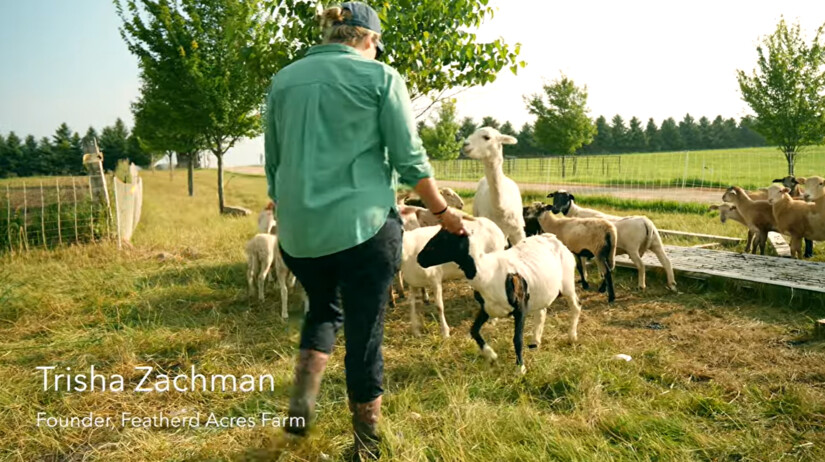
Zachman’s selection as one of five finalists for the 2026 Farmfest Woman Farmer of the Year Award brought statewide attention to work that ranges from pasture management and animal care to tours, marketing, education, direct sales and business planning.
The Farmfest award evaluates more than visibility. Its finalists are recognized for commitment to their operations, contributions to profitability and diversification, community involvement, resilience and passion for agriculture. Zachman’s candidacy placed the combined structure of Feathered Acres at the center: regenerative production supported by education, hospitality, direct sales and policy engagement.
She believes Minnesota agriculture is improving in its recognition of women, although the progress remains incomplete.
“There’s a lot more recognition, or credit, that’s given to the woman,” she said.
That recognition requires a fuller understanding of what farm labor looks like. A woman may spend long hours operating machinery. She may also keep the books, manage financial records, coordinate sales or perform the administrative work without which the operation cannot function. On another farm, those roles may be reversed between spouses.
At Feathered Acres, Zachman rejects the idea that one partner’s labor can be treated as secondary.
“My husband and I, we would never be able to farm without each other,” she said. “I could never farm without Nolan, and Nolan could never farm without me. We are on the same team, and everything we both do is valuable.”
Her description avoids substituting one narrow image of a farmer for another. Recognition does not require every woman to occupy the tractor seat or every man to handle fieldwork. It requires understanding that bookkeeping, financing, marketing, customer communication, animal observation, records and care work are not auxiliary to the farm. They are among the functions that determine whether it survives.
The six women who appeared in Minneapolis represented different commodities, generations, cultural histories and routes into farming. Along with Zachman, the program featured Emily Zweber, Maddie Hokanson, Mhonpaj Lee, Sina War and Anita Nain Fondikum.
Zachman said their differences were part of the event’s value.
“We all represent the opportunities to be in agriculture,” she said. “Some people came here from another country and were able to start farming, and it just shows the possibilities and opportunities for all of us to make our own mark on farming because we’re all so different and we’re all doing something so crazy different.”
She returned repeatedly to the need for diversity and options, not only in who farms but in how farming is practiced and understood. Agricultural knowledge brought from other countries strengthens Minnesota, she said, while multigenerational operations preserve lessons accumulated through decades of change.
“We better be learning and welcoming people from other places to help make us grow,” she said. “I’m glad it’s not just one person. I’m glad it’s a really nice mix of people because it really represents what Minnesota should be represented as.”
Zachman identifies herself as technically a sixth-generation farmer, although earlier public profiles have described her as fourth-generation. The difference may reflect which branch of family history or definition of farm succession is being counted. Without a complete genealogy, MinneapoliMedia cannot independently resolve the numbering. The more consequential inheritance, however, is not the number attached to her place in the family line. It is the set of decisions she and Nolan are making about what kind of farm their children will know.
She does not presume they will choose agriculture. If they do, she hopes they inherit neither rigidity nor the belief that honoring tradition requires repeating every practice unchanged.
“I hope that my kids, if they choose to farm, keep an open mind and choose to be flexible and ready to pivot if they need to,” she said. “I think that determines someone who’s going to be successful or someone who will not be successful.”
That lesson comes from experience. The farm she and Nolan operate is different from what either imagined while studying agriculture. Their willingness to reconsider familiar systems led them toward regenerative production, specialty livestock markets, agritourism and public education.
“We’re doing very different things than we ever thought we’d be doing,” she said, “and I feel like it’s only led to our success because we’ve kept a very open mind. We want to do what fits us best and not what we think people think we should do.”
The statement reaches beyond farming technique. It is a definition of resilience grounded in judgment rather than stubbornness. A family farm survives not merely by enduring change but by recognizing when change is necessary.
The crying baby, heard briefly in the middle of the interview, belongs to that future. So do the older children learning around the animals and fields of Feathered Acres. Their inheritance will include work, uncertainty and the pressure to make a living from land and livestock. It may also include healthier soil, room to question received wisdom and permission to build an operation suited to their own time.
The Zachmans’ three children, Esther, Burke and Elmer, are included in daily chores with the hope that the work will teach responsibility, practical skills, affection and respect for animals. The children’s presence does not guarantee succession, and Trisha does not describe farming as an obligation they must accept. Her hope is conditional: if they choose it, they should be prepared to think independently.
That distinction gives her idea of legacy greater honesty. Passing down a farm cannot mean passing down a prohibition against change. The operation her children may inherit already exists because their parents departed from the production model they knew best, experimented with pasture farrowing and cover crops, opened old farm buildings to guests and sought value in markets built around different expectations.
The title of the Minneapolis gathering called farming a love story, but Zachman did not romanticize the life. She acknowledged the hard seasons, financial pressure and constant responsibility. Her affection for farming does not depend on pretending those burdens do not exist.
Instead, the difficulty gives the good moments their weight.
“The beautiful moments are so much more special because of the hard moments and the struggles and getting through different phases of life,” she said. “You’re together with your family. I think that makes it all more special, especially when the good moments come and you see such great progress.”
After years spent learning agriculture in classrooms, selling products within the industry and listening to farmers struggle with rising inputs, Zachman has arrived at a life that joins thought with physical work. Her farm is still evolving. Its markets are not guaranteed. Its animals need care in every season, and its children make their needs known on their own schedule.
Yet when asked what keeps her choosing this life, her answer was uncomplicated.
“Working with my hands and being with my family,” she said. “That’s all I want to do, be with my family and learn and care for animals.”
At Feathered Acres, that is not merely the ending of Zachman’s love story with farming. It is the work of writing its next generation.

Local stories matter. Subscribe free to MinneapoliMedia and receive independent news, community reporting and important updates from Minneapolis, the North Metro and communities across Minnesota.
SUBSCRIBE FREE: https://minneapolimedia.town.news/subscribe
MinneapoliMedia | Community. Culture. Civic Life



Sunny, with a high of 67 and low of 48 degrees. Partly Cloudy in the morning, sunny for the afternoon, clear during the evening,