39° and Clear
Image
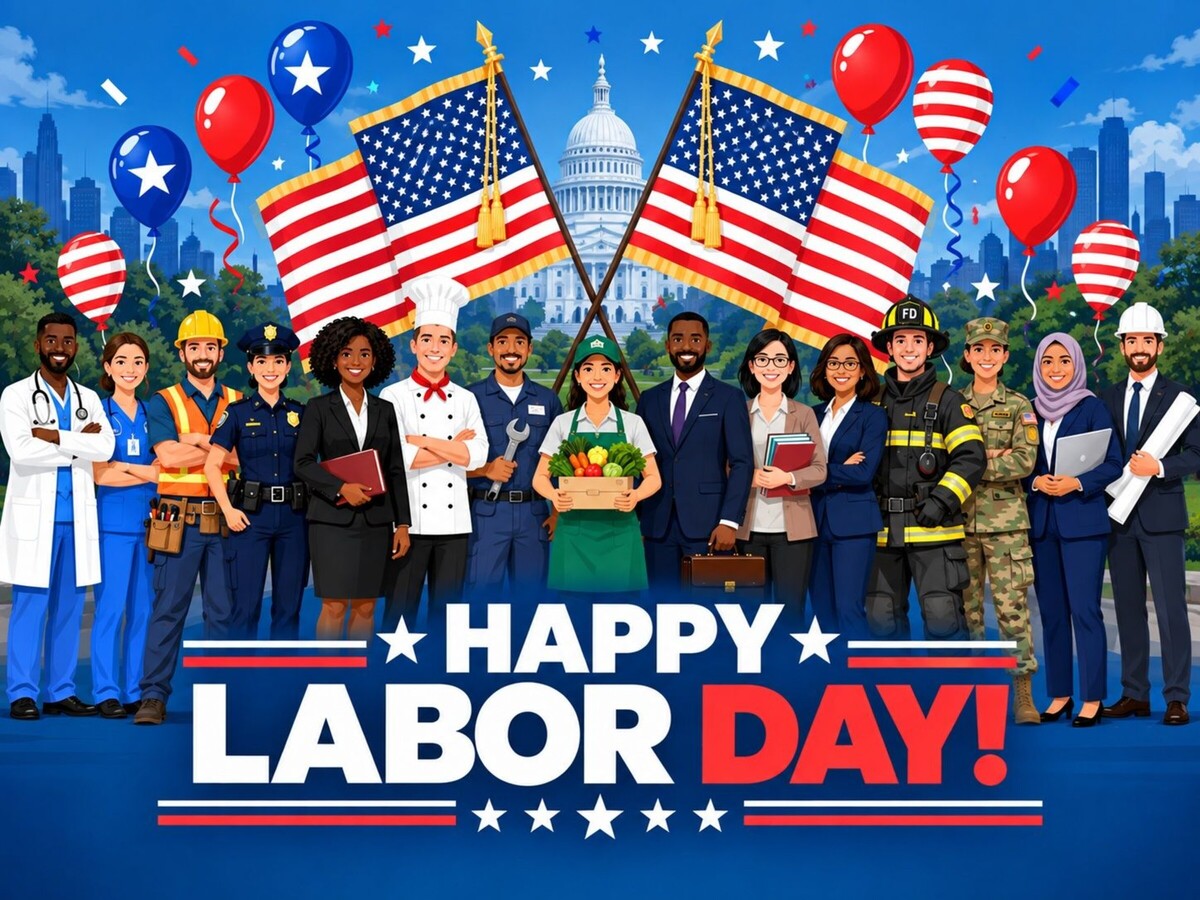



MINNEAPOLIS, MN (September 7, 2026). Before the gates opened at the Minnesota State Fair this morning, workers were already on the grounds.
Food-service employees prepared kitchens and stocked counters. Agricultural workers tended animals. Maintenance crews inspected public spaces. Sanitation employees collected waste left from the night before. Vendors organized supplies, transit operators began moving visitors toward Falcon Heights, and public-safety personnel prepared for another day of traffic, crowds and emergency calls.
By the time the final visitors leave tonight, many of those workers will still have hours remaining in their shifts. Others will be arriving to clean, secure equipment, remove waste, account for inventory and begin dismantling the temporary structures that supported 12 days of activity.
This is how Minnesota observes Labor Day.
The holiday is widely treated as the unofficial conclusion of summer. It is a day for cookouts, travel, retail sales and the last visit to the Great Minnesota Get-Together. For many of the workers who make those activities possible, however, Labor Day is another scheduled shift.
That does not make the holiday meaningless. It makes its purpose more urgent.
Minnesota’s celebration depends on people who cannot stop working long enough to join it. The buses must run, the roads must remain safe, the food must be prepared, the restrooms must be cleaned and emergency calls must be answered. Hospitals, nursing homes, hotels, restaurants, grocery stores, airports and public utilities cannot suspend operations because the calendar has designated a day to honor labor.
The state’s responsibility is not to romanticize that necessity. It is to ensure that the people carrying it receive fair compensation, adequate rest, safe conditions and a reasonable measure of control over their working lives.
The Minnesota State Fair provides an unusually visible example of how much labor is required to create a public tradition. The fair opened August 27 and concludes today after 12 consecutive days. Its own employment information says most fair-time positions prefer applicants who can work throughout the entire run. Those positions include ticket sellers, parking attendants, custodians, barn workers, security personnel, information staff, maintenance employees and other workers whose responsibilities extend across the grounds.
They represent only part of the workforce. Independent vendors hire cooks, cashiers, dishwashers, servers and supply workers. Carnival operators employ ride attendants and game workers. Exhibitors, delivery drivers, contractors, entertainers and agricultural families bring additional labor into the fairgrounds. Metro Transit, law-enforcement agencies, fire departments and emergency medical providers support the crowds from outside the fair’s direct payroll.
Visitors experience the result as entertainment. Workers experience it as a workplace.
The distinction matters because public enthusiasm can hide the conditions under which an event operates. A customer sees a food order delivered through a service window. The worker inside may be standing near hot equipment after hours of continuous demand. A visitor sees a clean table or restroom. The employee responsible for it has been moving through dense crowds, handling waste and responding to one request after another. A family boards a bus and expects to arrive safely. The operator must manage traffic, schedules, accessibility needs and hundreds of passenger interactions.
None of this is a complaint about the State Fair. Large public events cannot function without demanding work, and many employees value the income, tradition and community that fair-time employment provides. The point is that praise for the Great Minnesota Get-Together should include an honest understanding of who makes it possible.
Labor Day provides an opportunity to express appreciation, but appreciation is the least expensive thing an institution can offer. It requires no payroll adjustment, no staffing change and no enforcement action. A statement thanking workers may be sincere, yet sincerity alone does not pay rent, cover child care or prevent an injury.
Minnesota should measure its respect for labor by what happens after the holiday.
The state minimum wage is $11.41 an hour in 2026. That rate applies to covered employees regardless of whether they work full time or part time. Minneapolis and Saint Paul maintain their own local minimum-wage requirements, which may be higher depending on the employer and effective date.
The legal minimum is a floor, not a declaration that every job paying it provides economic stability. At $11.41 an hour, a worker putting in 40 hours a week would earn less than $24,000 over a full year before taxes, assuming steady employment and no unpaid interruptions. A seasonal employee may work intense hours for a brief period without receiving the predictable income that supports a household across the year.
Labor Day should invite a candid conversation about that difference. A job can comply with minimum-wage law and still leave a worker unable to afford housing, transportation, food, health care and child care in the community where the work is performed.
Minnesota does not require employers to pay time and a half merely because an employee works on a holiday. The Minnesota Department of Labor and Industry notes that many employers voluntarily provide premium holiday compensation, but state law does not generally require it.
That fact is worth remembering whenever customers tell workers they are sorry the person has to work on Labor Day. The most practical acknowledgment is to treat that employee with patience, tip appropriately where tipping is customary and support workplace policies that recognize holiday service through additional pay or paid time off.
Workers should not have to depend on customer courtesy to receive basic protections. Employers carry the primary responsibility, and the government must enforce the laws it adopts.
Minnesota strengthened its meal-and-rest-break requirements beginning January 1. Employers must generally allow a paid rest break of at least 15 minutes within every four consecutive hours of work and an unpaid meal break of at least 30 minutes when an employee works six or more consecutive hours, according to the Department of Labor and Industry.
These requirements are particularly relevant in crowded, fast-moving workplaces where employees may feel pressure to continue serving customers without interruption. A legal right to a break means little if staffing is so thin that taking it shifts an unreasonable burden onto a colleague or produces retaliation from a supervisor.
Proper staffing is therefore part of compliance. Employers should schedule enough people to allow every worker to step away, use a restroom, eat a meal and return without placing the operation in danger. Busy conditions do not suspend labor law. They are the reason protections are necessary.
Minnesota’s earned sick and safe time law provides another important standard. Covered employees earn at least one hour of paid sick and safe time for every 30 hours worked, up to the minimum annual accumulation required by law. The benefit can help workers care for themselves or certain family members without immediately losing income.
The statewide Paid Leave program, which began January 1, provides eligible workers with partial wage replacement and job protections for qualifying family and medical needs. By July, more than 75,000 Minnesotans had used the program, receiving more than $600 million in payments, according to the Minnesota Department of Employment and Economic Development.
These policies reflect a basic reality that Labor Day speeches often avoid: workers are human beings before they are units of production. They become sick. They raise children, care for parents, attend medical appointments and experience emergencies. A labor market that provides no room for those responsibilities transfers its costs to families, schools, hospitals and community organizations.
Public policy has begun responding to that reality, but rights on paper require awareness and enforcement. Seasonal workers, young workers, immigrants and people employed through subcontractors may not know which protections apply to them. Some fear losing hours or future assignments if they question their pay. Others may not understand written notices provided only in English.
Employers should post wage, break, safety and leave information prominently and in the languages their employees use. Supervisors should receive training before a busy season begins. Workers should be told how to report concerns without retaliation, and agencies should make complaint systems understandable to people who are not lawyers or human-resources professionals.
Minnesota must also continue confronting wage theft. When an employer fails to pay for all hours worked, makes unlawful deductions, withholds overtime or requires duties to be performed before clocking in or after clocking out, the loss is not a paperwork error. It is money taken from a worker.
The Department of Labor and Industry makes clear that employees must be paid for all time spent performing required duties, including training, cleaning and work completed away from the principal jobsite. That principle should apply with particular force to temporary operations where setup and cleanup can extend beyond the hours visible to customers.
The State Fair is only today’s most obvious example. The same questions apply throughout Minnesota.
Home-care workers will help older adults get dressed and eat today. Nursing assistants will move between rooms in facilities that cannot close. Child-care employees will support parents whose own jobs require holiday work. Airport crews will handle baggage and guide aircraft. Hotel housekeepers will turn rooms for travelers. Restaurant employees will prepare meals for families enjoying a day away from their own workplaces.
Highway maintenance crews, tow-truck operators and emergency responders will work alongside roads filled with holiday traffic. Sanitation workers will manage the waste produced by public gatherings. Utility employees will remain ready to restore electricity or water service. Journalists, dispatchers and security workers will continue monitoring events most residents experience from a position of leisure.
Many of these workers occupy jobs that became known as essential during the COVID-19 pandemic. Public language changed quickly during that emergency. Employees who had previously been overlooked were called heroes. Signs appeared in windows, officials expressed gratitude and customers were urged to show patience.
Much of that attention disappeared as ordinary routines returned.
The jobs did not become less essential. The workers simply became less visible again.
Minnesota should resist repeating that pattern on Labor Day. Public recognition should not rise during a crisis or holiday and fade when meaningful workplace decisions must be made. If an occupation is essential enough that society cannot function without it, the person performing it deserves compensation and conditions reflecting that value.
This responsibility extends to consumers. Courtesy is not a substitute for labor policy, but daily behavior affects working conditions. A customer who berates a cashier over a delay, drives dangerously near a road crew or treats a transit operator as an obstacle adds strain to an already demanding job.
People attending the State Fair can acknowledge labor through simple conduct. They can follow instructions from workers managing lines and traffic, dispose of waste properly, show patience during delays and remember that the employee in front of them may have served hundreds of people during the shift.
That is personal decency. The larger obligation belongs to employers and public officials.
Minnesota’s leaders should use Labor Day to report what the state is doing to protect workers, not merely to thank them. The public should know how minimum-wage and break laws are being enforced, how many wage-theft complaints are resolved, whether penalties deter repeat violations and whether workers can obtain assistance in their own languages.
The state should examine whether temporary and seasonal workers face gaps in protection. It should strengthen enforcement against employee misclassification, which can improperly deny workers overtime, unemployment insurance, workers’ compensation and other benefits. It should ensure that public contracts reward responsible employers rather than businesses that gain an advantage by cutting wages or ignoring safety.
Local governments have responsibilities as well. Minneapolis and Saint Paul have adopted labor standards that exceed some statewide requirements. Those protections require adequate staffing, public education and enforcement. A city cannot claim leadership because it passed an ordinance if workers cannot use the rights the ordinance provides.
Employers should not view these standards solely as costs. Fair pay, predictable scheduling, adequate staffing and reasonable leave can reduce turnover and help experienced employees remain in their jobs. Constantly replacing workers carries expenses of its own. It weakens service, increases training demands and places greater pressure on the employees who stay.
Unions remain part of this discussion. Labor Day grew from the organized labor movement and its demands for shorter hours, safer workplaces and recognition of workers’ collective power. Many protections now treated as ordinary were secured through years of organizing rather than voluntarily granted by employers.
Union membership does not solve every workplace problem, and no institution should be exempt from scrutiny. Workers must nevertheless retain the practical right to organize, discuss conditions and bargain collectively without intimidation. A Labor Day celebration that erases the movement responsible for the holiday reduces history to decoration.
Minnesota should also recognize unpaid labor. Parents, family caregivers and volunteers perform work that sustains households and communities even though no paycheck records it. Their contribution becomes especially visible when paid systems fail. A relative leaves a job to care for an older family member because professional care is unavailable. A parent reduces working hours because child care costs exceed earnings. Volunteers distribute food because wages and benefits do not cover basic needs.
The existence of unpaid care does not remove the need to improve paid employment. It shows how closely the two are connected. When workers lack leave, predictable hours or affordable care, families supply the missing support at their own financial cost.
Labor policy is therefore community policy. Wages determine whether families can remain housed. Schedules affect whether parents attend school meetings. Health coverage influences whether a condition receives early treatment. Paid leave determines whether a worker can care for a newborn or an aging parent without risking economic collapse.
Those consequences extend beyond individual employers and employees. They influence school stability, public health, homelessness, food insecurity and local business activity. Fair working conditions are not a private benefit provided to a select group. They strengthen the civic and economic systems on which Minnesota depends.
The final day of the State Fair makes that connection unusually easy to see. The event gathers agriculture, transportation, food production, public safety, entertainment, retail and public service within one crowded space. Every sector relies on another. Farmers and exhibitors need transportation. Vendors need suppliers, utilities and sanitation. Visitors need buses, accessible facilities, emergency response and safe grounds.
The fair is called the Great Minnesota Get-Together because people come together there. They can do so only because workers have already come together to build and operate it.
When the gates close tonight, the public celebration will end. The labor will continue.
Employees will remain behind to clean the grounds, secure buildings and equipment, move animals, break down stands and prepare materials for departure. Transit operators will carry passengers home. Police officers and emergency personnel will manage the final crowds. Road workers will maintain the routes people use to leave.
Tomorrow, most Minnesotans will return to the regular workweek. The public expressions of appreciation will recede, but the obligations of employers and government will remain.
Minnesota should judge its commitment to workers by whether wages arrive accurately and on time, whether employees can take lawful breaks, whether injuries are prevented, whether complaints lead to action and whether a family emergency can be managed without destroying a household’s financial stability.
Those standards are less ceremonial than a Labor Day statement. They are also more meaningful.
The workers staffing today’s celebration do not need to be romanticized for sacrificing their holiday. They need their time recorded, their rights respected and their work valued accurately. They need customers who recognize their humanity, employers who obey more than the minimum requirements and public agencies prepared to intervene when the law is violated.
Labor Day should honor the people whose work allows Minnesota to gather, travel, eat, recover and return home safely. It should also remind the state that gratitude without material respect is incomplete.
Minnesota’s Labor Day celebration runs on people who cannot take the day off. The obligation beginning tomorrow is to ensure they are not forgotten when everyone else goes back to work.

Local stories matter. Subscribe free to MinneapoliMedia and receive independent news, community reporting and important updates from Minneapolis, the North Metro and communities across Minnesota.
SUBSCRIBE FREE: https://minneapolimedia.town.news/subscribe
MinneapoliMedia | Community. Culture. Civic Life



Sunny, with a high of 67 and low of 48 degrees. Partly Cloudy in the morning, sunny for the afternoon, clear during the evening,