39° and Clear
Image
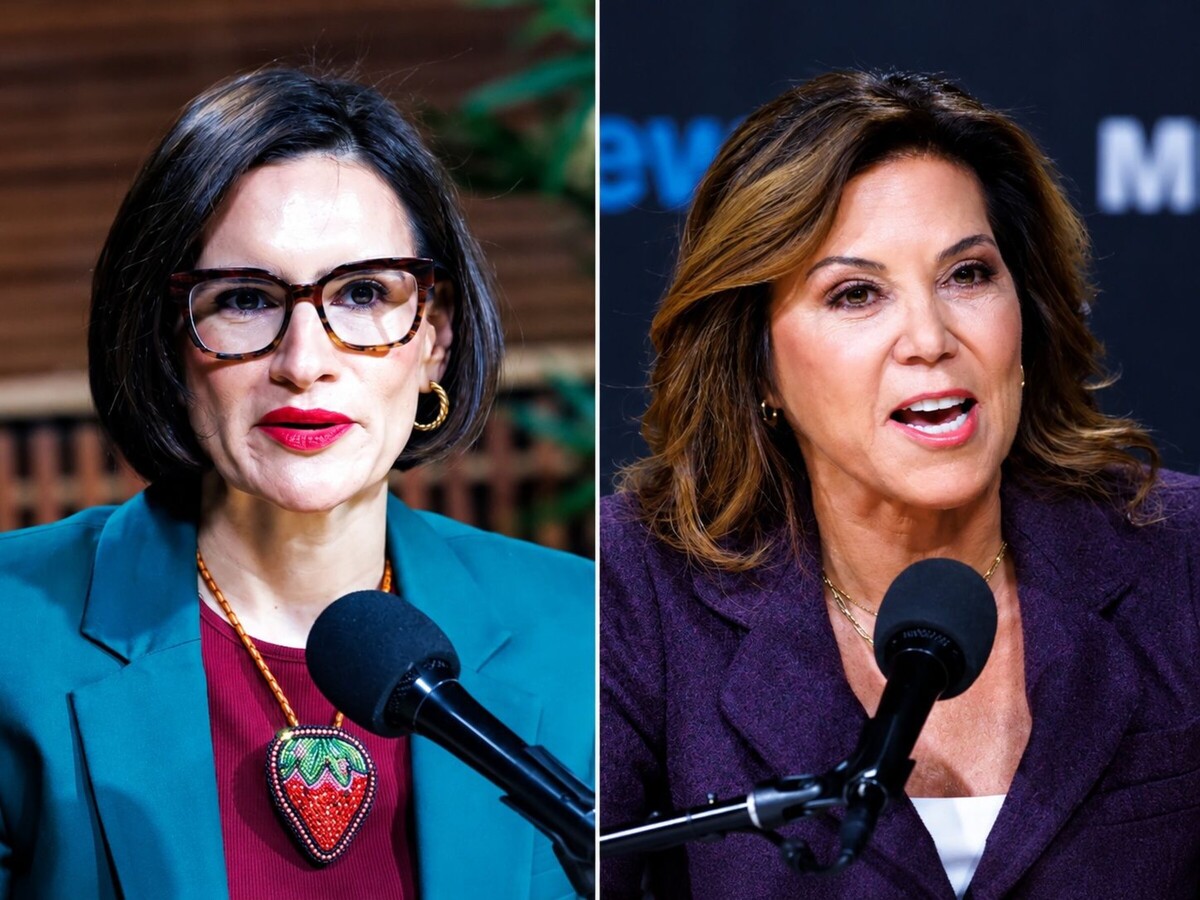



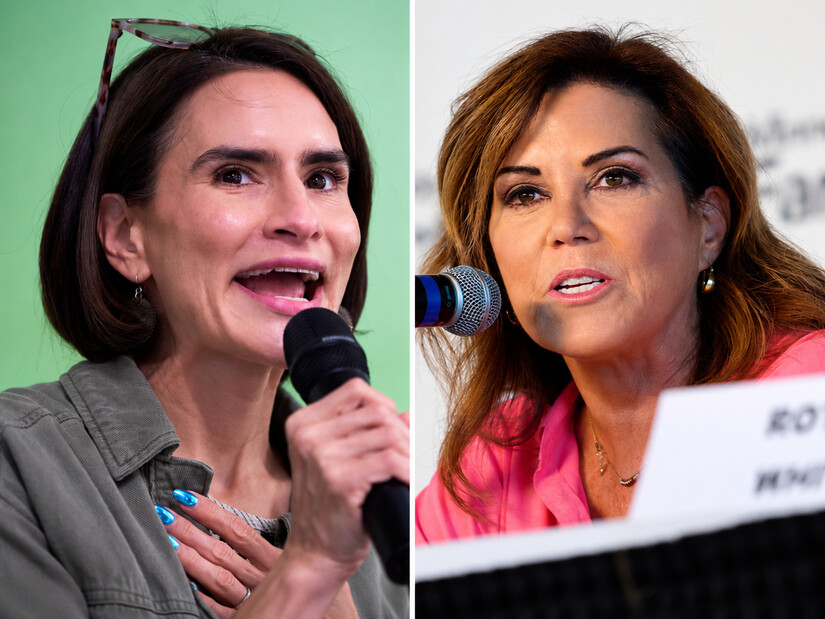
MINNEAPOLIS, MN (October 16, 2026). Democratic Lt. Gov. Peggy Flanagan and Republican Michele Tafoya confronted each other Friday over Minnesota's welfare-fraud scandals, President Donald Trump's policies, immigration enforcement and the rising cost of health care during an hourlong U.S. Senate debate that gave voters their most extensive side-by-side examination of the candidates ahead of the November 3 election.
The debate, moderated by MPR News politics editor Brian Bakst, covered a broad range of domestic and international issues, including the war in Iran, U.S. relations with Israel and Russia, tariffs, Social Security, reproductive rights, Supreme Court appointments and artificial intelligence. Although both candidates acknowledged the need to address rising costs and protect public programs, they disagreed sharply about the government's responsibilities and the policies Minnesota's next senator should support.
Flanagan repeatedly challenged Tafoya's independence from Trump, who endorsed the Republican candidate earlier in the week. Tafoya countered by questioning Flanagan's record as lieutenant governor and arguing that Minnesota's current administration had failed to adequately protect taxpayer dollars, improve educational outcomes and maintain public safety.
The contest will determine who succeeds retiring Democratic Sen. Tina Smith. With early voting underway, the debate provided an opportunity for Minnesotans to assess how the candidates would approach federal legislation and whether their campaign arguments were supported by specific policy commitments.
The debate opened with a question about Trump's recently announced agreement involving diesel purchases from Russia. Tafoya said she opposed the arrangement because she did not believe it would meaningfully reduce fuel prices for Minnesota consumers and feared it would benefit Russian President Vladimir Putin.
She described the decision as one of several issues on which she was willing to disagree with Trump.
Flanagan challenged that position, pointing to Tafoya's acceptance of Trump's endorsement and suggesting that the Republican candidate was attempting to present herself differently as the election approached.
Tafoya responded that she wanted support from voters across the political spectrum, including Republicans, Democrats and independents. She said her campaign was focused on Minnesota rather than any national political figure.
The president's influence resurfaced throughout the discussion. Flanagan linked Tafoya to Trump's positions on tariffs, health care, immigration and the war in Iran. Tafoya maintained that she would evaluate issues independently and work with members of both parties.
Near the end of the debate, Bakst asked whether Tafoya would appear alongside Trump if the president visited Minnesota during the campaign's closing weeks. She did not answer directly, instead saying she welcomed voters regardless of their political affiliations.
Flanagan faced a similar question about campaigning with Gov. Tim Walz. She emphasized that the Senate campaign was her own and described the extensive travel she had undertaken to meet voters across Minnesota.
Minnesota's welfare-fraud scandals produced some of the debate's most contentious exchanges.
Tafoya argued that Flanagan should accept responsibility for failures in the administration in which she has served as lieutenant governor. She repeatedly cited allegations of extensive fraud involving public programs and accused state leaders of failing to prevent taxpayer money from being misused.
Flanagan acknowledged that Minnesota's response had fallen short.
She said fraud was unacceptable and agreed with Walz's acknowledgment that the administration should have acted sooner. She cited her support for an independent inspector general and stronger penalties for people convicted of fraud.
When Bakst asked what responsibility she personally accepted, Flanagan said the governor had taken responsibility for executive oversight. She distinguished that responsibility from her own work on paid family and medical leave, child tax credits and school meals.
Tafoya rejected the distinction, arguing that Flanagan had publicly identified herself with the administration's accomplishments and should also answer for its failures.
During the exchange, Tafoya cited a figure of up to $9 billion in fraud. That figure was presented as a campaign assertion, not as a verified total established during the debate. The amount of confirmed losses, alleged fraud and estimated exposure requires careful distinction.
Flanagan questioned whether Tafoya applied the same standards to the Trump administration. She criticized the president's removal of federal inspectors general and his pardons involving people convicted of financial crimes.
The discussion exposed a significant political challenge for Flanagan. Her experience in state government is central to her qualifications for the Senate, but that experience also places her under scrutiny for administrative failures during the past eight years.
Tafoya, meanwhile, was pressed on whether her proposed federal enforcement measures would protect legitimate service providers and beneficiaries from losing funding because of misconduct committed by others.
The candidates offered sharply different assessments of federal immigration enforcement in Minnesota, particularly Operation Metro Surge and the conduct of Immigration and Customs Enforcement agents.
Flanagan reiterated her position that ICE should be dismantled and replaced with an immigration system that maintains border security while protecting due process and providing a pathway to citizenship for qualifying immigrants.
She criticized the federal operation's effect on Minnesota communities and challenged Tafoya over her earlier support for the enforcement initiative.
Tafoya said she supported immigration enforcement but believed the operation had been poorly managed. She argued that the country must maintain secure borders while preserving opportunities for lawful immigration.
Drawing on her family's immigration history and her experience as an adoptive mother, Tafoya said immigration and public safety should be treated as complementary responsibilities.
She also criticized Minnesota's state leadership, arguing that local law enforcement should have played a more active role in protecting residents, demonstrators and federal officers.
Flanagan rejected that account and accused Tafoya of minimizing the consequences of aggressive federal enforcement.
The candidates disputed how to characterize confrontations involving officers and protesters. Tafoya cited violence directed at law enforcement personnel, while Flanagan emphasized the rights of residents and the disruption caused by federal operations.
Tafoya also proposed tougher consequences for fraud committed by noncitizens, including removal from the country and restrictions on returning. Flanagan raised concerns about due process, arguing that accusations alone should not determine whether someone is deported.
The debate did not establish how Tafoya's proposal would distinguish between allegations and convictions or how federal agencies would implement those consequences within existing legal protections.
Public safety was another area in which the candidates disputed both the seriousness of particular problems and the appropriate government response.
Bakst noted that violent crime had declined nationally and in Minnesota according to government statistics, then asked what additional federal action would be necessary.
Tafoya emphasized stronger enforcement against violent offenders and closer cooperation among federal, state and local agencies.
Flanagan pointed to investments in law enforcement resources, crime prevention and services for victims.
The discussion turned to gang violence involving young people of Somali descent and Trump's public comments about Minnesota's Somali community.
Tafoya said the president's language about the community had been inappropriate. She nevertheless argued that officials should identify specific criminal activity rather than avoid discussing it out of concern about political sensitivity.
She suggested that the FBI, U.S. Marshals Service and local law enforcement agencies could work together more closely, including on criminal activity organized or promoted through social media.
Flanagan acknowledged the seriousness of gang violence but warned against treating an entire community as responsible for the actions of individuals.
She cited coordination through the Minnesota Bureau of Criminal Apprehension and state investments in local public safety.
The candidates also disputed their relationships with law enforcement organizations. Tafoya cited endorsements from police groups, while Flanagan pointed to public safety funding and her work with communities across the state.
Those competing claims concern different measures of support and effectiveness. Endorsements alone do not establish the success or failure of a public safety policy.
Foreign policy occupied a substantial portion of the debate, beginning with U.S. relations with Russia and continuing through the war in Iran.
Tafoya said the conflict with Iran needed to end quickly and argued that no president should be permitted to wage war indefinitely without congressional authorization and public accountability.
She also maintained that Iran must not acquire nuclear weapons and called for a withdrawal strategy that would protect international security and commerce.
Flanagan said she had opposed the war from its beginning. She accused Tafoya of supporting the operation until its political and economic consequences became difficult to defend.
Flanagan cited military casualties, federal spending and rising fuel prices as evidence of the conflict's consequences for American families.
Tafoya disputed Flanagan's characterization of her earlier position. She said she would review classified intelligence and support ending the war if it continued after she took office.
Both candidates expressed opposition to an indefinite conflict, but they disagreed about responsibility for the war and how Congress should respond.
Asked about a proposed $1.5 trillion Pentagon budget, Flanagan said the military should receive necessary resources but opposed additional funding for the Iran war.
Tafoya emphasized the national debt and the need for cooperation between parties on federal spending. She did not directly endorse the proposed defense budget.
The candidates also discussed Defense Secretary Pete Hegseth. Flanagan gave his performance a failing assessment and supported impeachment. Tafoya said his performance remained incomplete and required further evaluation.
The candidates expressed substantially different views on Israel's military operations in Gaza.
Flanagan condemned Hamas's October 7 attacks while criticizing the destruction and civilian suffering that followed Israel's military response.
She said she would oppose additional offensive weapons and military assistance to Prime Minister Benjamin Netanyahu's government and supported a two-state solution.
Tafoya defended Israel as an American ally and rejected Flanagan's description of Israel's actions as genocide.
She said that characterization had deeply troubled Jewish Minnesotans with whom she had spoken and emphasized her support for Israel and the Jewish community.
The disagreement concerned both the language used to describe the conflict and the conditions under which American military assistance should continue.
Neither candidate's statements, by themselves, establish a legal determination concerning allegations of genocide.
Tafoya criticized Trump's diesel purchase agreement with Russia, saying the arrangement would provide little relief at Minnesota gas stations while strengthening Putin's position.
Flanagan also opposed the agreement and criticized Trump's approach to Russia.
On Ukraine, Flanagan said the United States should continue treating the country as an ally.
The debate did not produce a detailed proposal from Tafoya concerning future American financial or military assistance to Ukraine.
Both candidates connected foreign policy decisions to Minnesota's economy, particularly the cost of diesel fuel for farmers and transportation-dependent businesses.
Those costs became a recurring subject as the debate turned toward tariffs and international trade.
Flanagan criticized Trump's tariffs, arguing that they had increased costs and damaged relationships with important trading partners.
She pointed to the difficulties facing Minnesota farmers, particularly producers of corn and soybeans, and argued that trade disputes had created uncertainty in markets already affected by high operating expenses.
Flanagan acknowledged that some targeted tariffs, including those involving steel, could be justified. She nevertheless called for Congress to exercise greater authority over trade policy.
Tafoya defended the use of tariffs as a negotiating tool.
She argued that American producers had operated under unequal trading conditions and that temporary tariffs could encourage other countries to negotiate more favorable agreements.
Tafoya said she would have preferred a different approach from Trump in some instances, particularly in dealing with major trading partners.
The candidates also cited agricultural endorsements. Tafoya pointed to support from the Minnesota Farm Bureau, while Flanagan cited the Minnesota Farmers Union.
Their differences centered on the consequences of tariffs for Minnesota producers and whether the potential benefits of renegotiated trade agreements justified the immediate costs.
Neither presented a detailed economic analysis of individual tariffs during the debate.
The candidates disagreed over the federal government's approach to taxation, spending and assistance for working families.
Tafoya supported tax relief involving tips, overtime earnings, Social Security benefits and an expanded child tax credit.
She argued that lower taxes would allow Minnesotans to retain more of their earnings and make decisions without additional government involvement.
Flanagan said she supported certain tax provisions benefiting working people, including relief for tips and overtime.
She challenged Tafoya's suggestion that she opposed all elements of the federal tax legislation and criticized provisions she said would reduce access to health care and food assistance.
Flanagan also argued that federal tax policy had provided disproportionate benefits to wealthy households.
Tafoya repeatedly raised concerns about the national debt and argued that reducing federal spending would require cooperation across party lines.
The debate did not include comprehensive tax plans from either candidate, leaving questions about how their proposals would affect federal revenue, deficits and different income groups.
Social Security produced one of the debate's clearest differences in the specificity of the candidates' proposals.
Bakst asked how they would address the approaching depletion of the program's retirement trust fund.
Flanagan supported raising the amount of earnings subject to Social Security payroll taxes, referring to income of $250,000 or more.
She also endorsed the Social Security Expansion Act and argued that the proposal would strengthen the program's finances for decades.
Tafoya acknowledged the seriousness of the problem but declined to commit to a specific financing mechanism.
When asked whether she would support higher taxes or an increase in the retirement age, she said the issue required careful consideration and bipartisan negotiations.
She argued that a responsible solution could not be developed during a brief debate exchange.
Flanagan criticized Tafoya for not presenting a specific plan.
Tafoya maintained that effective legislation would require senators willing to negotiate rather than insist on predetermined answers.
The candidates therefore differed not only over their preferred approach but also over how much detail they believed voters should expect before the election.
Flanagan identified a proposed revenue mechanism. Tafoya emphasized negotiation without specifying which changes she would support.
The financial effect of Flanagan's proposal would require independent actuarial analysis, while Tafoya's position leaves voters without a clear indication of how she would vote on potential changes to taxes, benefits or retirement eligibility.
Health care produced another substantial disagreement.
Flanagan endorsed Medicare for All, arguing that Minnesota families face unaffordable premiums, deductibles and treatment costs.
She described conversations with residents whose annual deductibles reached $16,000 and $18,000.
Flanagan also called for eliminating prior authorization requirements that can delay medical treatment.
She criticized decisions made by insurance administrators and automated systems that interfere with care recommended by medical professionals.
Tafoya rejected Medicare for All as financially unrealistic, arguing that the proposal would require enormous federal spending and expand government control over health care.
She instead called for reforms addressing hospital prices, pharmaceutical costs and insurance-industry practices.
Tafoya said she would work with lawmakers from both parties to address those problems.
Both candidates acknowledged that health care costs are too high. Their disagreement concerned whether the country should pursue a substantially different insurance system or focus on reforming existing arrangements.
The debate did not establish the projected cost of Medicare for All or the potential savings from the candidates' respective proposals.
The possibility of future Supreme Court vacancies prompted questions about how each candidate would exercise the Senate's confirmation authority.
Flanagan supported expanding the number of Supreme Court justices, considering staggered terms and strengthening judicial ethics requirements.
She criticized Trump's judicial appointments and said she could not presently envision supporting one of his nominees, although she also described evaluating nominees individually.
Tafoya opposed expanding the court.
She said she favored judges who interpret the Constitution according to its text and rejected judicial activism.
Tafoya argued that increasing the number of justices for political purposes would undermine the Court's independence.
Flanagan viewed structural changes as necessary to address concerns about ethics and public confidence in the judiciary.
Their positions matter because the Senate has the authority to confirm Supreme Court justices and other federal judges, making judicial appointments a direct responsibility of the office they are seeking.
Tafoya described herself as a pro-choice Republican and said she did not intend to change Minnesota's existing abortion protections.
She argued that the Supreme Court's reversal of Roe v. Wade had returned significant authority over abortion policy to the states.
Flanagan challenged whether Tafoya's position was consistent with a letter she had signed addressing Republican delegates and her support for conservative judicial nominees.
Tafoya said she had faced criticism within her party for her position on abortion.
Bakst pressed Tafoya to explain what she meant by reasonable access during the first three months of pregnancy and whether she would support federal restrictions after that period.
She did not identify a specific federal legislative standard.
Flanagan argued that abortion access remained a federal issue because Congress and the courts could affect protections nationwide.
Tafoya's description of herself as pro-choice and her support for preserving Minnesota law did not establish how she would vote on a proposed nationwide abortion restriction.
That question remained unanswered at the conclusion of the exchange.
Artificial intelligence received attention during the debate's closing portion.
Tafoya emphasized technological innovation and local authority over data-center development.
She argued that communities should decide whether to permit large facilities and negotiate arrangements that serve local interests.
She opposed broad federal mandates governing those local decisions.
Flanagan also emphasized the interests of affected communities but called for stronger federal oversight of artificial intelligence companies.
She proposed establishing an independent regulatory body and placing inspectors within companies to monitor potential risks.
Flanagan argued that AI development presented serious concerns requiring government intervention.
Neither candidate outlined detailed legislation, but their responses indicated different priorities.
Tafoya concentrated on innovation and local decision-making. Flanagan favored a more active federal regulatory role.
Tafoya repeatedly challenged Flanagan to identify occasions when she had disagreed with Democratic leaders.
Flanagan cited work with Republicans during her career in child advocacy and in the Minnesota Legislature.
She also identified support for year-round E15 biofuel sales as an issue on which she differed from some members of her party.
Tafoya described herself as willing to work with Democrats and Republicans, particularly on fiscal policy and Social Security.
Both candidates presented bipartisan cooperation as an important qualification for the Senate.
The debate offered examples of their stated intentions and past political relationships, but it did not independently establish how effectively either would negotiate legislation in Washington.
Bakst asked whether the candidates would commit to holding regular in-person town halls.
Flanagan said she intended to continue traveling throughout Minnesota and meeting constituents, citing the statewide tours she had conducted during the campaign.
Tafoya also committed to town halls and said she would hold as many as constituents wanted.
Neither established a minimum number.
On congressional term limits, Tafoya expressed support for limiting service to two or three terms.
Flanagan opposed term limits, arguing that voters should determine how long elected officials remain in office.
The responses provided a clear difference in how the candidates viewed congressional tenure.
Tafoya closed by arguing that Flanagan's years in Minnesota government had produced insufficient results.
She cited fraud, education, public safety and state finances, telling voters that Flanagan should be held accountable rather than promoted to federal office.
Tafoya promised lower taxes, stronger crime enforcement and greater government accountability.
Flanagan concluded by emphasizing affordability, Medicare for All, universal child care, higher wages and opposition to the Iran war.
She returned to Trump's endorsement of Tafoya and argued that the Republican candidate would support the president's policies in Washington.
Both candidates used their final statements to reinforce arguments they had made throughout the debate rather than introduce new proposals.
Friday's debate clarified several important policy differences.
Flanagan supports Medicare for All, expanding the Supreme Court, raising Social Security payroll-tax contributions from higher earners, stronger federal regulation of artificial intelligence and replacing ICE with a restructured immigration system.
Tafoya opposes Medicare for All and Supreme Court expansion, supports targeted health care cost reforms, favors using tariffs as a negotiating tool, emphasizes local control of data centers and proposes stronger consequences for fraud.
Both candidates said the war in Iran should end and that Social Security must be protected. Both also supported stronger action against fraud, although they disagreed over enforcement methods and political responsibility.
Some questions remained unresolved.
Tafoya did not identify a specific Social Security financing plan or a clear position on federal abortion restrictions. Flanagan did not provide detailed financing or implementation proposals for Medicare for All or her proposed restructuring of immigration enforcement.
The candidates also presented competing claims about the scale of Minnesota fraud, the effects of federal tax legislation, crime trends, military spending and the costs of their policy proposals.
Those assertions require examination against government records, court documents, independent financial analyses and other evidence. Their appearance in a debate does not make them established facts.
With the November 3 election approaching, Minnesota voters have limited time to assess the candidates' records and proposals.
Tafoya faces questions about how her stated independence from Trump would translate into Senate votes, particularly on judicial appointments, immigration enforcement and federal spending.
Flanagan faces continued scrutiny over her role in the Walz administration and whether her federal policy proposals can be implemented within existing budgetary and political constraints.
The debate provided substantial information about their priorities, but it also demonstrated the limits of campaign exchanges as a substitute for detailed policy plans.
Minnesota's next U.S. senator will serve a six-year term and participate in decisions involving federal spending, health care, immigration, foreign policy and judicial appointments.
Friday's debate gave voters a clearer understanding of the candidates' differences. The remaining task is to examine the evidence behind their claims and determine which approach they believe would best serve Minnesota.

Local stories matter. Subscribe free to MinneapoliMedia and receive independent news, community reporting and important updates from Minneapolis, the North Metro and communities across Minnesota.
SUBSCRIBE FREE: https://minneapolimedia.town.news/subscribe
MinneapoliMedia | Community. Culture. Civic Life

Sunny, with a high of 60 and low of 38 degrees. Sunny in the morning, clear for the afternoon and evening,