47° and Overcast
Image
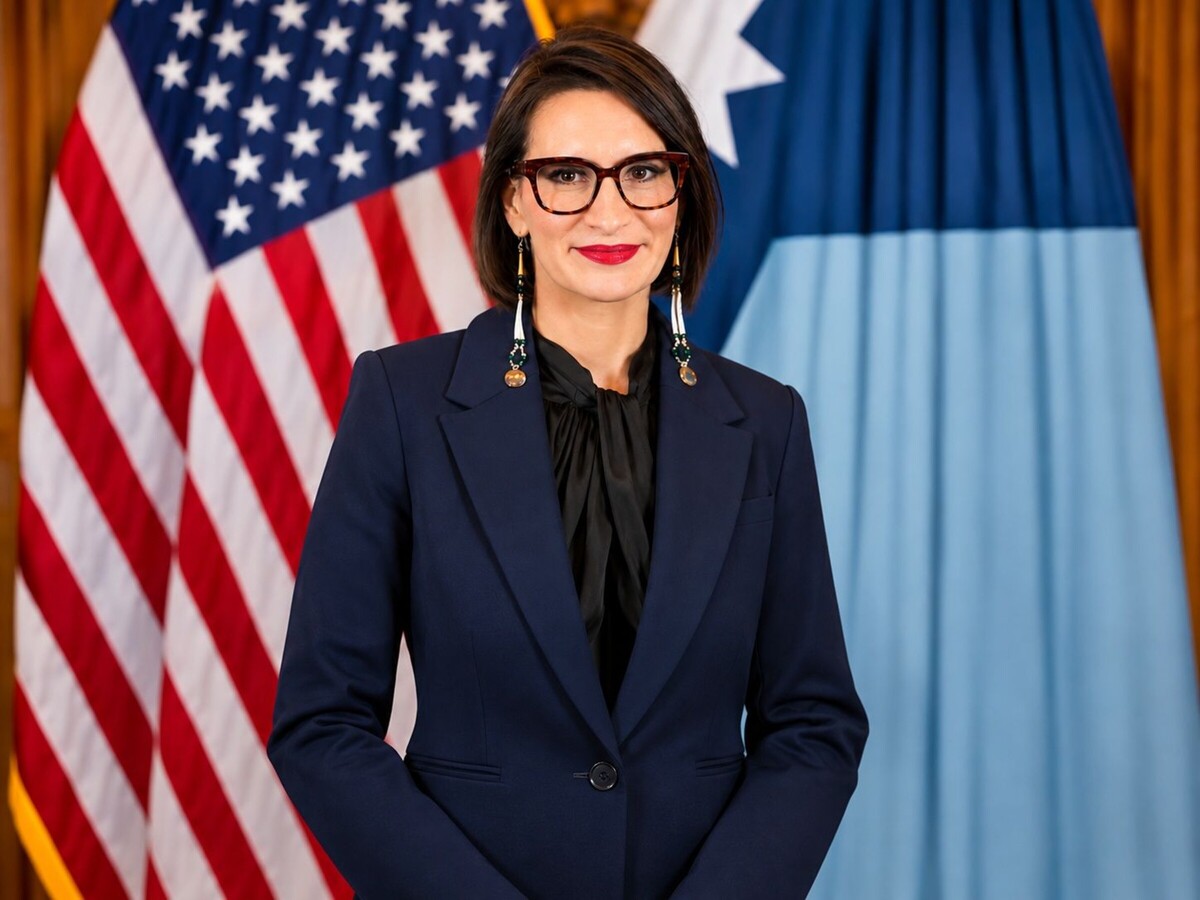



SAINT PAUL, MN (November 5, 2026).
More than two decades ago, Peggy Flanagan attended an education event at the Minneapolis American Indian Center and offered to help anyone interested in running for the Minneapolis school board. Franny Fairbanks, the center's longtime director, challenged her to consider becoming a candidate herself. Flanagan accepted that encouragement, won a seat on the board in 2004, and began an elected political career that would eventually take her to the Minnesota Legislature, the lieutenant governor's office, and the United States Senate.
On November 3, Minnesota voters elected Flanagan to the Senate, defeating Republican Michele Tafoya and making her the first Native American woman elected to the chamber in American history. She also became the first person of color elected to represent Minnesota in the Senate, succeeding retiring Senator Tina Smith when the new Congress convenes in January.
The election marks an extraordinary development in American political representation. A citizen of the White Earth Band of Ojibwe will enter an institution that has exercised enormous authority over Indigenous peoples, their lands, their governments, and their treaty rights for generations. Her election is especially significant because Native women have spent decades leading community organizations, defending families, and advocating for political recognition while remaining largely absent from the highest levels of federal elected office.
But Flanagan's victory deserves attention for another reason. Her political career was built through sustained involvement in Minnesota communities long before she became a nationally recognized figure. She organized Native voters, trained political candidates, advocated for children, worked with families experiencing economic hardship, and helped advance legislation intended to address problems she had encountered through years of community engagement.
The central argument of this editorial is that those years of public service helped establish the political relationships and credibility that Flanagan carried into her Senate campaign. Minnesota's election result cannot be explained by her personal record alone. Voters considered party affiliation, economic conditions, federal immigration enforcement, competing policy proposals, and questions about the administration in which she served. Nevertheless, her career provides an important perspective on the candidate Minnesotans chose and the responsibilities they have now entrusted to her.
For years, Peggy Flanagan worked to bring people into the political process. Minnesota has now elected her to represent the state in Washington.
Flanagan's political development is inseparable from the history of Native women's leadership in Minnesota.
She was born in 1979 and raised in St. Louis Park by her mother, Patricia Flanagan, who relied at times on public assistance while raising her daughter. Her father, Marvin Manypenny, was a White Earth activist involved in efforts to defend tribal land claims.
Those experiences connected Flanagan to two concerns that would remain prominent throughout her public career: the economic circumstances of working families and the political rights of Indigenous communities.
After graduating from the University of Minnesota in 2002, she worked at the Division of Indian Work in Minneapolis, helping Native children and their families navigate relationships between home and school. She also became involved in organizing urban Native voters during the political career of the late Senator Paul Wellstone.
Her early development took place within a network of Native community institutions whose histories extended well beyond her own involvement.
Along Franklin Avenue in Minneapolis, generations of Indigenous leaders had established organizations supporting education, family services, housing, cultural preservation, and political participation. The Minneapolis American Indian Center and the Division of Indian Work were among the institutions that provided resources and leadership opportunities for Native families.
Women played central roles in building and sustaining those organizations.
MPR News has documented the contributions of leaders including Louise and Emily Peake, Winnie Jourdain, and Ignatia Broker, whose work helped establish institutions serving Minneapolis's Native community.
Fairbanks was part of that tradition. Her encouragement helped persuade Flanagan to seek elected office rather than remain exclusively in a supporting role.
Another influential figure was the Rev. Marlene Whiterabbit Helgemo, a Ho-Chunk Nation citizen who served as pastor of All Nations Indian Church in Minneapolis and helped establish the National Native American Boarding School Healing Coalition.
Helgemo became a mentor to Flanagan, encouraging emerging leaders to recognize their potential and pursue opportunities to serve their communities.
These relationships matter because Flanagan's political career did not develop independently of the people and organizations around her. She benefited from generations of Indigenous women who had already undertaken the difficult work of creating institutions, organizing families, defending tribal interests, and developing community leadership.
Her election is an individual achievement, but its history includes the women who encouraged her to enter public life and helped establish the organizations through which she learned to serve.
Flanagan's first elected office was on the Minneapolis Board of Education. Elected in 2004 at age 25, she became the board's youngest member at the time.
School board service introduced her to the practical responsibilities of public administration, including educational resources, student needs, family engagement, and the competing demands placed on public institutions.
Her interest in children's well-being continued when she became executive director of Children's Defense Fund-Minnesota, where she advocated for policies addressing child poverty, economic security, and educational opportunity.
The connection between children and family economic conditions was central to her work.
Families struggling to afford housing, food, transportation, or health care often face difficulties that affect children's education and development. Parents who cannot obtain affordable child care may struggle to maintain employment. Children experiencing housing instability may face interruptions in schooling and access to essential services.
Flanagan's advocacy reflected an understanding that supporting children requires attention to the circumstances of the adults responsible for raising them.
She supported increasing Minnesota's minimum wage and strengthening policies intended to provide economic assistance to families with limited incomes.
Her work at Children's Defense Fund-Minnesota also helped establish relationships with advocates, educators, community organizations, and policymakers involved in children's issues.
Those relationships would become important as she moved from nonprofit leadership into the Legislature and later statewide executive office.
Flanagan also spent nearly a decade working with Wellstone Action, the organization established to continue the political organizing tradition associated with the late Senator Paul Wellstone.
Her responsibilities included training activists, organizers, and aspiring political candidates.
Among those she helped train was Tim Walz, then a Mankato schoolteacher preparing to seek a congressional seat. Walz would later become Minnesota's governor and serve alongside Flanagan in the state's executive branch.
The work involved teaching people how to develop campaigns, communicate with voters, build volunteer networks, and participate in the political process.
It also required understanding the obstacles faced by people who lacked access to established political institutions.
For many communities, participation in government begins with learning how decisions are made and identifying opportunities to influence them.
Flanagan's organizing experience provided practical knowledge of how political relationships develop and how sustained engagement can encourage participation.
That experience would later become central to her own Senate campaign, particularly during a Democratic primary in which her opponent possessed considerably greater financial resources.
Flanagan entered the Minnesota House of Representatives in 2015, representing District 46A, which included St. Louis Park and surrounding communities.
Her legislative work focused on issues involving children, families, economic opportunity, education, and the representation of historically marginalized communities.
She also participated in efforts to strengthen Indigenous representation within the Legislature.
By 2017, four Native American women were serving in the Minnesota House, and they established a Native American caucus. Flanagan was also involved in developing the broader People of Color and Indigenous Caucus.
These efforts reflected a growing recognition that lawmakers from historically underrepresented communities could collaborate to identify policy priorities and strengthen their influence within the legislative process.
Flanagan's service also provided experience with the challenges of translating community concerns into law.
Advocates can identify problems and mobilize support, but legislation requires negotiation, financial planning, administrative coordination, and agreement among elected officials with competing priorities.
Her years in the House helped prepare her for those responsibilities when she entered statewide executive office.
Flanagan became Minnesota's 50th lieutenant governor in January 2019, serving alongside Governor Tim Walz. At the time, she was the highest-ranking Native American woman elected to statewide executive office in the United States.
Her responsibilities included work involving children and families, Indigenous communities, housing stability, and relationships between state government and tribal nations.
During the Walz-Flanagan administration, Minnesota enacted several major policies consistent with priorities Flanagan had pursued throughout her career.
Among them was the universal school meals law enacted in 2023, which made breakfast and lunch available without charge to students attending participating schools, regardless of household income.
Flanagan was a prominent advocate for the program.
For families facing rising costs, school meals represent a recurring household expense. Universal access also reduces the distinctions created when students receive meals through different income-based eligibility categories.
The administration also supported the creation of Minnesota's child tax credit in 2023, intended to provide financial assistance to eligible families raising children.
The credit reflected a broader effort to reduce child poverty and strengthen family economic security.
Flanagan's advocacy for these measures was consistent with her earlier work at Children's Defense Fund-Minnesota.
The administration also supported paid family and medical leave, expanded child care assistance, and substantial investments in affordable housing and homelessness prevention.
These policies were enacted through the collective work of the governor, legislators, state agencies, community advocates, and organizations that had pursued reforms for years. They cannot reasonably be credited to Flanagan alone.
Her contribution was as an advocate and member of an administration that made these issues part of its governing agenda.
The policies themselves remain subject to legitimate examination. Their costs, implementation, effectiveness, and long-term sustainability require continuing oversight.
Nevertheless, their enactment demonstrates a connection between the issues Flanagan championed during her years in community advocacy and the priorities advanced during her service in state government.
One of the more consequential examples of Flanagan's advocacy involved pregnant and postpartum women in Minnesota's correctional system.
In 2021, Minnesota enacted the Healthy Start Act, allowing eligible incarcerated pregnant women and new mothers to participate in community-based alternatives that could help them remain with their infants.
The legislation followed years of work by incarcerated and formerly incarcerated women, community advocates, researchers, lawmakers, and corrections officials.
Their efforts drew attention to the consequences of separating mothers from newborn children and the possibility of developing alternatives that considered maternal health, infant development, rehabilitation, and public safety.
Flanagan listened to women who described their experiences and publicly supported the legislation.
In the administration's announcement accompanying the law, she connected the measure to the experiences of incarcerated mothers and recognized the advocacy that had brought the issue before lawmakers.
Her involvement provides a documented example of how listening to affected communities can inform public policy.
The women who advocated for change were not simply recipients of government assistance. Their experiences helped identify the problem and shape the response.
The Healthy Start Act also demonstrates why public service cannot be measured exclusively through policies that attract widespread political attention.
Some of the most important questions facing government involve people whose circumstances rarely become central issues in statewide campaigns.
Flanagan's participation in this effort reflected her broader commitment to family well-being and the importance of considering how public institutions affect children.
Flanagan's work involving Indigenous communities has been another defining part of her public career.
Minnesota became the first state to establish an office dedicated to Missing and Murdered Indigenous Relatives, responding to longstanding concerns about violence affecting Native women, girls, and Two-Spirit people.
Families searching for missing relatives have encountered serious difficulties involving jurisdiction, investigative coordination, communication with authorities, and the allocation of public resources.
The establishment of the office followed sustained advocacy by Indigenous families, community organizations, lawmakers, and others who had demanded stronger government responses.
Flanagan was a prominent supporter of the initiative.
Her advocacy also included strengthening consultation between state agencies and Minnesota's 11 tribal nations.
Tribal governments are sovereign political entities with distinct legal relationships to state and federal governments. Their participation in decisions involving land, natural resources, public services, education, and community welfare requires recognition of those relationships.
During the Walz-Flanagan administration, Minnesota enacted legislation requiring state agencies to consult with tribal nations.
The policy represented an effort to strengthen government-to-government relationships and ensure that tribal perspectives were considered in decisions affecting their communities.
Flanagan's election creates an opportunity to bring that experience into federal discussions involving treaty obligations, tribal health care, education, public safety, and economic development.
Her presence in the Senate will not resolve those issues by itself. It will, however, place a Native woman with substantial experience in tribal advocacy inside an institution whose decisions have long affected Indigenous communities.
Flanagan's responsibilities as lieutenant governor also included chairing the Minnesota Interagency Council on Homelessness.
The council's work involved coordinating state responses to housing instability, an issue affecting families with children, older adults, veterans, people with disabilities, and individuals confronting economic hardship.
During the administration, Minnesota approved substantial investments in affordable housing development and homelessness prevention.
Flanagan supported those efforts and emphasized the importance of housing stability for family well-being.
The state's housing challenges remain considerable, and government appropriations alone cannot establish whether programs have succeeded. Their effectiveness must be evaluated through implementation and measurable outcomes.
Flanagan also worked on initiatives intended to increase opportunities for young women to participate in public policy and leadership.
As lieutenant governor, she co-chaired Minnesota's Young Women's Initiative, which sought to incorporate the experiences of young women into discussions involving education, economic opportunity, health, and community well-being.
The initiative reflected an understanding that young people can contribute directly to identifying public problems and developing responses, particularly when they come from communities that have historically lacked access to decision-making institutions.
These responsibilities extended Flanagan's earlier work training organizers and encouraging political participation.
They also demonstrated that her public-service priorities were not confined to a single issue or constituency.
Flanagan's 2026 Senate campaign began with a difficult contest for the Democratic-Farmer-Labor nomination against U.S. Representative Angie Craig.
Craig entered the race with substantial financial resources and experience in Congress.
During the primary, Craig's campaign benefited from significantly greater spending, including substantial support from outside political organizations.
Flanagan responded with a campaign emphasizing volunteers, local relationships, party organization, and direct voter contact.
Her organizing background became particularly relevant as she sought to compete against a better-funded opponent.
On August 11, Flanagan won the Democratic primary with 411,853 votes, or 59.01 percent, compared with Craig's 274,920 votes, or 39.39 percent, according to Minnesota's official results.
The outcome demonstrated that a substantial financial advantage does not guarantee electoral success.
Campaign money remains important for advertising, staffing, travel, and voter outreach. But the primary showed that political relationships, volunteer networks, and organizational strength can remain influential in statewide elections.
Flanagan's victory also reflected support from progressive Democratic voters and the party's endorsement process.
After winning, she sought to bring Craig's supporters into the general-election campaign, recognizing that the next contest would require a broader coalition.
Flanagan continued emphasizing direct voter engagement during the general election.
By October, she reported participating in more than 300 campaign events across 112 Minnesota communities. Her campaign also organized a statewide tour involving 30 stops over 30 days.
Those figures were reported by Flanagan during a CBS Minnesota interview and reflected the scale of her campaign's stated field activity.
Minnesota's political geography makes such engagement important.
Residents of Minneapolis and St. Paul, suburban communities, regional cities, and rural areas may share concerns about affordability while experiencing different challenges involving transportation, housing, employment, health care, and public services.
A statewide candidate must account for those differences and explain how federal policy might address them.
Flanagan's campaign appearances provided opportunities to discuss those issues directly with voters.
They also placed her in communities where political support could not be assumed.
Personal appearances do not guarantee agreement, and Tafoya also traveled, attended community events, and developed relationships with voters.
Nevertheless, Flanagan's campaign activity demonstrated continuity with the organizing methods that had shaped her earlier career.
The general election against Tafoya became an expensive and contentious contest.
Tafoya, a former national sports broadcaster, entered the race with substantial name recognition and fundraising support.
Campaign finance reports showed Tafoya raising more money than Flanagan during the general-election cycle, although candidate spending and independent expenditures by outside organizations presented a more complicated financial picture.
The distinction matters because Flanagan was substantially outspent during the Democratic primary, but the available general-election figures do not support a blanket claim that she was outspent in every category.
The race also featured increasingly sharp criticism from both campaigns.
Tafoya made fraud involving Minnesota government programs a central issue, arguing that Flanagan should share responsibility for failures of oversight during the Walz administration.
Those criticisms raised legitimate questions about the responsibilities of senior elected officials when public funds are misused.
Flanagan condemned the fraud, supported stronger oversight measures, and argued that she had not directly managed the agencies involved.
The disagreement remained an important part of the election.
Tafoya's campaign also questioned Flanagan's personal financial circumstances.
One advertisement alleged that Flanagan had become wealthy while ordinary Minnesotans struggled financially. FOX 9 examined the claim and reported that it omitted significant context, including changes in Flanagan's household circumstances following marriage and an inheritance after her mother's death.
The reporting raised questions about whether the advertisement provided voters with a fair understanding of her finances.
Flanagan's campaign also ran negative advertising, criticizing Tafoya's positions on immigration enforcement, tariffs, federal policy, and her relationship with President Donald Trump.
Both campaigns sought to define their opponents through political advertising.
The appropriate standard for evaluating those messages is whether they accurately represented the candidates' records and positions.
Flanagan ultimately prevailed despite criticism involving her administration's record, her policy positions, and her personal finances.
Her victory did not settle every disagreement about those issues, but it established that the criticism had not prevented her from securing statewide electoral support.
Flanagan's election cannot be separated from the broader political circumstances of 2026.
Minnesota had experienced intense controversy involving federal immigration enforcement, including Operation Metro Surge and the deaths of Renée Good and Alex Pretti during encounters with federal immigration officers.
Those events contributed to debates over federal authority, public safety, civil liberties, and the treatment of immigrant communities.
Flanagan strongly criticized the enforcement operation and made opposition to President Trump's policies a prominent part of her campaign.
Tafoya emphasized government accountability, fraud prevention, immigration enforcement, and conservative approaches to federal policy.
The candidates also disagreed over health care, reproductive rights, tariffs, government spending, and the appropriate scope of federal intervention in economic and social issues.
Flanagan campaigned on affordability, expanded health coverage, and stronger support for working families.
Tafoya argued that Minnesota needed greater fiscal oversight and a different approach to government.
These differences mattered because voters were choosing between competing policy agendas as well as candidates with different professional backgrounds.
National political conditions also influenced the election, particularly dissatisfaction with the Trump administration's policies.
Flanagan's community-organizing experience was an important part of her candidacy, but it was not the only factor shaping the outcome.
The geographic distribution of the vote provides a more precise understanding of Flanagan's victory.
According to unofficial results analyzed by Axios Twin Cities, Flanagan won the seven-county Twin Cities metropolitan area by nearly two to one.
She received approximately 72 percent of the vote in Hennepin and Ramsey counties, while Tafoya won about 56 percent of the vote in Greater Minnesota counties.
Those figures demonstrate that Flanagan's victory depended heavily on strong support in the state's most populous metropolitan communities.
They also show that Minnesota did not vote uniformly.
Many rural voters preferred Tafoya, reflecting political differences that remain important to understanding the state's electorate.
Flanagan's statewide victory therefore should not be interpreted as universal agreement with her policies or record.
It represented a majority assembled across a politically diverse state, with particularly strong support in the Twin Cities metropolitan area.
That distinction will matter when she enters the Senate.
Her responsibilities will extend to communities where she won overwhelming support and communities where most voters preferred her opponent.
A senator represents the entire state, not simply the counties or constituencies that provided the winning margin.
For Flanagan, whose career has emphasized listening and participation, maintaining that broader responsibility will be an important measure of her public service.
The significance of Flanagan's election extends beyond Minnesota.
The United States Senate has exercised extensive authority over policies affecting Indigenous peoples, including treaties, land rights, federal recognition, education, health care, and tribal sovereignty.
For generations, Native communities experienced federal policies that dispossessed tribal nations of land, restricted political participation, and undermined Indigenous institutions.
The Senate participated in decisions involving treaties with the Ojibwe and Dakota nations of Minnesota and federal actions that profoundly affected tribal communities.
Native Americans were not universally recognized as United States citizens under federal law until 1924, and barriers to voting continued in various jurisdictions afterward.
Native American men have previously served in the Senate, including Charles Curtis, Robert Owen, Ben Nighthorse Campbell, and Markwayne Mullin.
No Native American woman had been elected to the chamber before Flanagan's November 3 victory.
Her election therefore changes the historical record of representation in an institution whose decisions have profoundly affected Indigenous communities.
It also carries significance for Native women who have spent generations organizing communities, defending treaty rights, supporting families, and seeking greater participation in public institutions.
Flanagan's achievement belongs to her individual political career, but it is connected to that broader history.
The women who encouraged her to run for school board, the organizations that trained emerging leaders, and the Indigenous advocates who worked to strengthen political participation all form part of the history that preceded her election.
Flanagan's election is a historic accomplishment, but public office carries responsibilities that cannot be satisfied through symbolism alone.
When she enters the Senate in January 2027, she will confront federal decisions involving health care, economic policy, national security, immigration, agriculture, energy, transportation, and government spending.
She will also have opportunities to address issues closely connected to her earlier work, including child poverty, affordable housing, maternal health, disability rights, tribal sovereignty, and the crisis of missing and murdered Indigenous relatives.
Her experience as lieutenant governor provides familiarity with public administration, but federal legislative responsibilities differ substantially from those of a state executive official.
She will have to develop relationships with Senate colleagues, participate in committee work, evaluate federal legislation, and explain her decisions to Minnesotans with competing priorities.
Her record will also remain subject to scrutiny.
The fraud and oversight controversies involving the Walz administration will not become irrelevant because she won an election. Voters and journalists will continue to have legitimate reasons to examine her explanations, her responsibilities, and the lessons drawn from those failures.
That accountability is not inconsistent with recognizing her historical achievement.
It is part of the responsibility that accompanies public trust.
Flanagan has spent much of her career advocating for people who believed government was not adequately listening to them.
As a senator, she will be expected to demonstrate that she remains accessible to those concerns, including when the people raising them disagree with her.
Peggy Flanagan's election brings together several important developments in Minnesota's political history.
It reflects the growing presence of Indigenous leaders in elected office, the continuing influence of community organizing, and the importance of public policies affecting children and working families.
It also demonstrates that voters can evaluate candidates through a combination of personal history, policy positions, administrative records, party affiliation, and national political circumstances.
Flanagan's career provides substantial evidence of sustained involvement in Minnesota civic life.
She organized Native voters, trained emerging leaders, served on a school board, advocated for children, helped establish legislative caucuses, and participated in an administration that enacted major changes to family assistance, education, housing, and other public policies.
Her work also included advocacy involving incarcerated mothers, Indigenous families affected by violence, tribal consultation, homelessness prevention, and opportunities for young women.
Those contributions deserve recognition without overlooking the questions and controversies that remain part of her public record.
Her election also provides an important lesson about the nature of political relationships.
The value of community engagement cannot be measured solely through campaign appearances or election results. It is demonstrated over time through responsiveness, public decisions, and the willingness to remain accountable to people after their votes have been counted.
For Flanagan, that responsibility has now expanded from Minnesota's executive branch to the United States Senate.
The historic nature of her election is established. The work that follows will determine its lasting significance for the people she represents.
There is an enduring relationship between public service and democratic trust. Candidates ask voters to believe they will represent their interests, while voters expect those who win to remain attentive to the concerns that brought them into public life.
Flanagan's political career has been shaped by that relationship for more than twenty years.
Minnesota has now elected her to one of the country's highest offices, making history in the process.
The most meaningful way to honor that achievement will be through the responsibilities of the office itself: listening to constituents, protecting public resources, respecting disagreement, and pursuing policies that can be evaluated through their effects on people's lives.
Peggy Flanagan spent decades helping Minnesotans participate in government. On November 3, Minnesota voters gave her the opportunity to represent them in Washington.
Her election marks a historic change in who can occupy one of the nation's most powerful legislative offices. Whether it also produces lasting changes for the communities she has spent her career serving will depend on the work she undertakes after the celebration ends.

Local stories matter. Subscribe free to MinneapoliMedia and receive independent news, community reporting and important updates from Minneapolis, the North Metro and communities across Minnesota.
SUBSCRIBE FREE: https://minneapolimedia.town.news/subscribe
MinneapoliMedia | Community. Culture. Civic Life

Overcast, with a high of 49 and low of 35 degrees. Overcast during the morning, clear in the afternoon and evening, overcast overnight.