Image



By the MinneapoliMedia Editorial Board
ROCHESTER, MN (November 24, 2026).
Minnesota faces a consequential infrastructure decision that will test whether the state can expand its electrical grid without weakening the environmental and governmental standards that should guide such development.
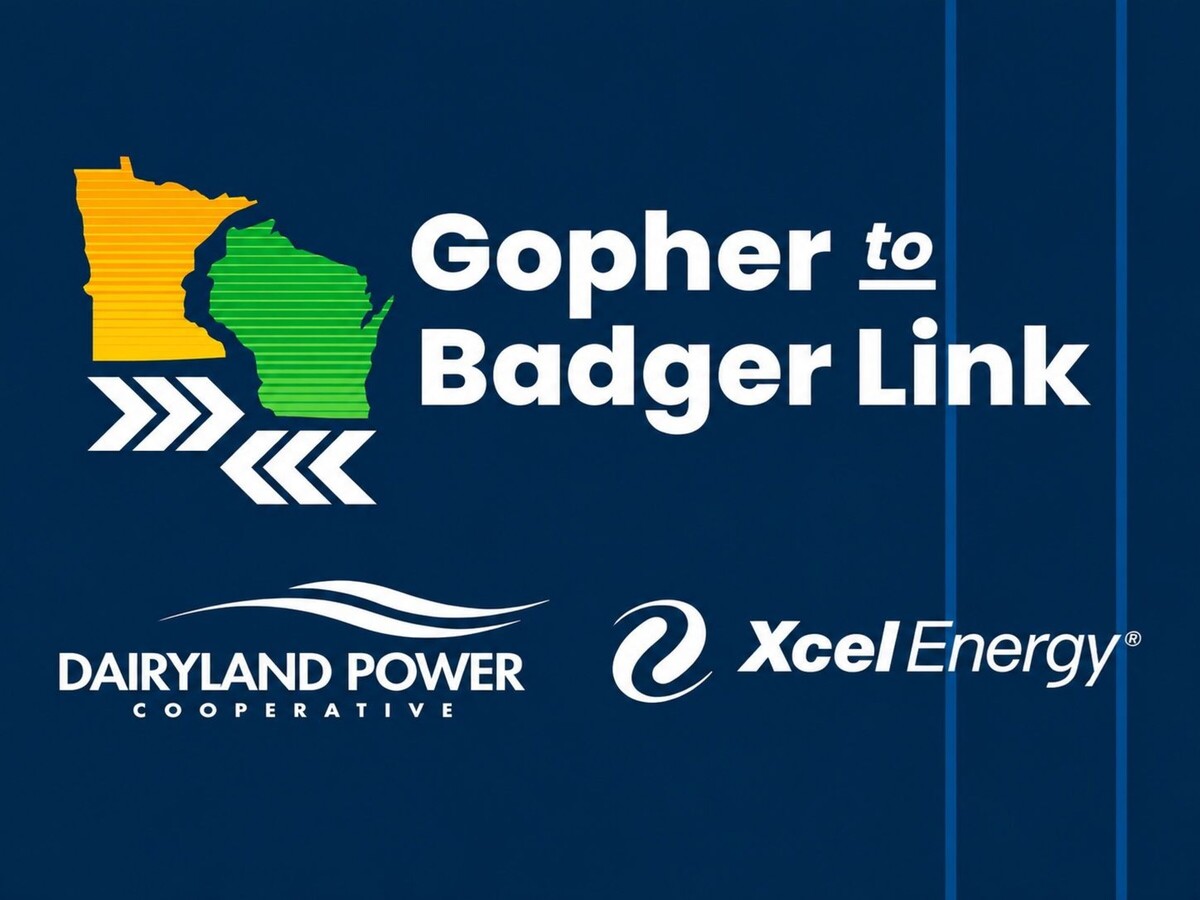
Xcel Energy and Dairyland Power Cooperative filed a route-permit application with the Minnesota Public Utilities Commission on November 5 for the proposed Gopher to Badger Link. The project would establish a 765-kilovolt transmission connection extending approximately 139 miles through southeastern Minnesota before reaching the Wisconsin border.
The utilities maintain that the project is needed to strengthen grid reliability, reduce congestion and prepare the regional power system for increasing electricity demand. Those are legitimate public concerns. Minnesota will need additional transmission capacity as electricity consumption changes, renewable generation expands and new industrial users seek access to the grid.
The project’s stated purpose, however, cannot substitute for a complete examination of its necessity, route and long-term consequences.
The proposed line would pass through a region defined by working farms, small communities, cold-water streams, forested slopes and vulnerable groundwater systems. It would also cross ancestral landscapes containing places of cultural and historical importance to Tribal nations whose connections to the region predate Minnesota statehood.
Minnesota does not have to choose between a reliable electrical system and responsible land stewardship. It must insist upon both.
The Public Utilities Commission should approve the project only if the utilities demonstrate that the proposed facilities are necessary, that less damaging alternatives cannot adequately meet the identified need and that unavoidable effects can be reduced through enforceable permit conditions. Tribal governments, landowners, local officials and conservation organizations must receive enough time and information to participate meaningfully before the commission reaches a decision.
Anything less would reduce public review to a procedural formality and place the burdens of regional energy planning on communities with limited power over the final outcome.
A Project of Exceptional Scale
The Gopher to Badger Link is not a routine replacement of local distribution equipment.
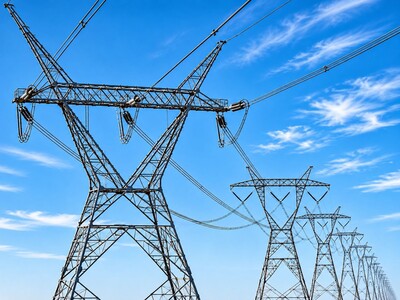
According to the Public Utilities Commission’s project record, the Minnesota portion consists of two major segments. The first would run approximately 34 miles between the existing North Rochester Substation and an area near Marion. It would use a new single-circuit 765-kilovolt line supported by lattice structures generally ranging from 150 to 175 feet in height. The structures would normally stand between 1,100 and 1,300 feet apart within a right-of-way approximately 250 feet wide.
The second segment would extend approximately 105 miles from near Marion to the Wisconsin border. Dairyland Power Cooperative proposes to replace an existing 161-kilovolt transmission line with a double-circuit structure carrying both 765-kilovolt and 161-kilovolt lines. The lattice structures would generally range from 150 to 199 feet in height, stand between 1,200 and 1,500 feet apart and require a right-of-way approximately 250 feet wide.
That distinction is important. Some of the southern segment would use an existing transmission corridor, which could reduce certain effects compared with establishing an entirely new corridor. It does not eliminate the need for close review. Replacing an existing 161-kilovolt line with substantially larger structures and a much wider operating footprint can still affect farms, residences, vegetation, wildlife habitat, historic properties and local views.
The utilities anticipate that the line could enter service in 2034. Before construction could begin, the project must pass through a multiyear regulatory process that includes a Certificate of Need proceeding and a route-permit review.
The Certificate of Need is being considered under Docket 25-121. The route-permit application is proceeding under Docket 26-156. The commission has not approved the project, and no final route has been selected.
Those facts should guide public discussion. The project must not be treated as inevitable simply because the utilities have submitted a preferred route. The purpose of regulatory review is to determine whether the proposal should proceed, what alternatives deserve consideration and what route would impose the least avoidable harm.
The Need Must Be Demonstrated in Public
Electricity demand is changing. Homes and businesses are using more electric equipment. Transportation and heating are becoming increasingly electrified. Renewable generation often develops far from population centers, creating a need for transmission connections. Large industrial facilities and data centers can add significant loads to the system.
These conditions may support additional transmission investment. They do not automatically prove that every proposed line is necessary in its proposed form.
The utilities must provide clear, accessible evidence explaining the demand projections behind the Gopher to Badger Link. The public should know which expected loads are driving the project, how much of the projected demand comes from ordinary residential and commercial growth, and how much may be associated with large industrial developments.
Regulators must also examine who will benefit and who will pay. A regional transmission project can distribute power across several states while concentrating its physical footprint within particular Minnesota communities. Ratepayers and landowners deserve to understand the allocation of construction costs, operating costs and regional benefits.
The commission should test the utilities’ assumptions against multiple demand scenarios. Forecasts are necessary for long-term planning, but they are not guarantees. Industrial projects can be delayed, relocated or canceled. Energy-efficiency improvements can reduce demand. Distributed generation and storage can alter when and where electricity is needed.
A sound regulatory decision must account for that uncertainty.
The utilities should also explain the consequences if the project is not built. General warnings about congestion or reliability are insufficient for a proposal of this scale. Regulators need specific evidence showing the problems the line is intended to solve, the expected timing of those problems and the ability of competing options to address them.
Minnesota should neither reject major transmission development reflexively nor approve it on the strength of broad regional claims. The decision must rest on evidence capable of withstanding independent examination.
The Driftless Region Requires a Careful Environmental Review
Southeastern Minnesota presents unusual environmental conditions that cannot be addressed through generic construction practices.
The region includes karst landscapes formed in soluble bedrock, particularly limestone. Karst terrain can contain sinkholes, caves, fractures and underground drainage pathways that allow surface water to reach groundwater more directly than in other geological settings.
Minnesota law recognizes the importance of groundwater discharge from springs and seepage areas in the Driftless region. That groundwater sustains cold-water aquatic ecosystems and contributes to the environmental, agricultural, recreational and economic health of southeastern Minnesota.
The area also contains designated trout streams, steep forested slopes and remnant natural communities. Conservation work supported through Minnesota’s Legacy Amendment has identified southeastern Minnesota as one of the state’s most biologically diverse regions. Native brook trout populations remain in only a portion of the region’s cold-water streams, and their survival depends heavily on stable groundwater flow, water quality and connected habitat.
These conditions do not prove that the Gopher to Badger Link will cause unacceptable damage. They establish why the project requires detailed, location-specific analysis before construction is authorized.
The environmental review should examine the location of towers, access roads, staging areas and vegetation-clearing zones in relation to sinkholes, springs, trout streams, wetlands, steep slopes and groundwater recharge areas. It should evaluate erosion and runoff during construction, not merely the conditions expected after the line begins operating.
The review must also examine habitat fragmentation. A transmission right-of-way can alter vegetation and create new edges within forested areas. The severity of those effects depends on the route, the width of existing corridors, construction methods and long-term vegetation management. Regulators should identify the most sensitive areas and require route adjustments where avoidance is reasonably possible.
Wildlife impacts must be assessed with the same precision. It is not enough to make generalized claims that transmission lines either threaten or do not threaten birds. The review should identify migration routes, nesting areas and species of concern within the project area, then determine whether particular line configurations or locations create measurable risks.
Permit conditions must be enforceable. If approval requires seasonal construction limits, vegetation protections, restoration work, water monitoring or avoidance of particular resources, those obligations should be written clearly enough for regulators and the public to determine whether the utilities complied.
Environmental protection cannot depend on voluntary assurances issued during the permitting process and forgotten after construction begins.
Tribal Consultation Is a Governmental Responsibility
The debate over the Gopher to Badger Link is taking place while Tribal nations are raising broader concerns about federal efforts to accelerate infrastructure permitting.
The U.S. Senate passed the Bipartisan American Affordability and Jobs Act on November 19. Supporters argue that the legislation would reduce delays affecting energy and infrastructure development. Tribal representatives have objected to provisions affecting Section 106 of the National Historic Preservation Act, the federal process used to consider effects on historic properties.
Prairie Island Indian Community Tribal Council President Grant Johnson and Tribal historic preservation compliance officer Franky Jackson have warned that compressed review periods could prevent Tribal historic preservation offices from investigating proposed projects adequately. Tribal representatives have also objected to changes that could give federal agencies greater control over decisions concerning effects on culturally significant places.
Those objections deserve serious consideration.
Tribal consultation is not equivalent to a public-comment period. Federally recognized Tribal nations are sovereign governments. Consultation with them is a government-to-government responsibility grounded in law, treaties, federal policy and the political status of Tribal nations.
That does not mean every Tribal government possesses an automatic veto over every infrastructure proposal. It means agencies must engage early enough for Tribal knowledge and concerns to influence the decision rather than requesting comments after the important choices have already been made.
A rigid deadline can be particularly damaging when a Tribal historic preservation office is responsible for reviewing projects across a large ancestral territory. Identifying burial places, cultural landscapes, archaeological resources or areas of continuing spiritual significance may require fieldwork, archival research and consultation with knowledge keepers.
That work cannot always be completed according to a timetable designed for administrative convenience.
The Minnesota Public Utilities Commission and the project applicants should not wait for disputes over federal law to define the minimum level of engagement. They should establish a transparent consultation process with affected Tribal governments during the state review.
The process should begin before a route is approved. It should include access to relevant maps and studies, protection for sensitive cultural information and sufficient time for Tribal historic preservation professionals to evaluate areas that could be disturbed.
If Tribal consultation identifies a cultural property or sensitive area, regulators should first consider avoidance. When avoidance is impossible, the commission should require documented mitigation developed with the affected Tribal government.
Consultation loses its meaning when an agency listens politely and then proceeds without explaining how Tribal concerns affected the decision.
Permitting Reform Must Not Predetermine the Outcome
There are legitimate reasons to improve permitting.
Infrastructure reviews can become fragmented among agencies. Applicants and communities may struggle to understand which government is responsible for a particular decision. Studies can be repeated unnecessarily. Delays can increase costs without improving environmental protection or public participation.
A more efficient process can benefit the public when it establishes clear schedules, assigns responsibility and gives communities timely access to accurate information.
Efficiency becomes dangerous when it is achieved by restricting the evidence agencies may consider, shortening consultation beyond what responsible review permits or limiting the ability of affected parties to challenge unlawful decisions.
The purpose of environmental review is not to obstruct every project. It is to expose consequences before they become irreversible and to require agencies to consider alternatives before committing public resources or authorizing private construction.
The same principle applies to historic preservation. Section 106 does not guarantee that every historic property will remain untouched. It requires agencies to identify affected properties, consult appropriate parties and consider ways to avoid, minimize or mitigate harm.
Those requirements are not procedural clutter. They exist because the history of American infrastructure development includes communities displaced, cultural sites damaged and environmental costs imposed on people who had little influence over the decisions.
Minnesota should support reasonable permitting improvements while rejecting any assumption that speed is the highest public value. A decision reached quickly is not necessarily a sound decision.
Alternatives Deserve Serious Analysis
Opponents of large transmission projects often point to reconductoring, dynamic line ratings, distributed solar generation, local storage, energy efficiency and microgrids as alternatives to new corridors.
These technologies deserve examination, but they should not be presented as interchangeable or automatically sufficient.
Reconductoring can increase the capacity of an existing transmission line by replacing conventional conductors with advanced materials. Dynamic line-rating systems can provide more accurate information about how much electricity a line can carry under current weather conditions. Storage can shift electricity from periods of lower demand to periods of greater need. Distributed generation can reduce some pressure on the larger grid by producing electricity closer to where it is consumed.
Each option addresses a different part of the power system. None should be declared a complete replacement for the Gopher to Badger Link without technical analysis.
The commission should require the utilities to disclose which alternatives they evaluated, what assumptions they used and why those options were accepted or rejected. The analysis should include combinations of technologies rather than comparing the proposed line only with one alternative at a time.
Regulators should also examine route alternatives within the project itself. The southern segment’s use of an existing transmission corridor may reduce the need for a completely new path, but the scale of the replacement still requires study. The northern segment, where a new 765-kilovolt corridor is proposed, demands especially careful comparison of route options.
The standard should be practical. Minnesota must determine whether another approach can provide comparable reliability within a reasonable period and at a defensible cost while reducing harm to landowners, Tribal cultural resources and the environment.
The answer may differ among project segments. A responsible review should leave room for that possibility.
Landowners and Communities Need More Than Notice
Public participation must begin with accurate information.
Residents should receive clear maps showing proposed routes, alternative routes, right-of-way boundaries and anticipated access points. Property owners need understandable explanations of easements, compensation, construction activity, vegetation management and restrictions on future land use.
Local governments should have enough information to evaluate effects on roads, emergency response, drainage, agriculture and development plans. Farmers need project details that account for equipment movement, field access, soil compaction and drainage systems. Small communities need to understand how construction traffic and long-term maintenance may affect local services.
Public meetings should not be treated as opportunities merely to explain a preferred proposal. They must allow residents to present route alternatives, identify overlooked resources and challenge the assumptions behind the project.
The commission should maintain a public record showing how substantive concerns were handled. When an alternative is rejected, regulators should explain the technical, environmental or legal basis. When a route is changed in response to public input, that change should be documented.
Public participation cannot guarantee that every resident receives the outcome sought. It can ensure that the final decision acknowledges the evidence presented and explains why one public interest was given greater weight than another.
Minnesotans may submit information in the Certificate of Need proceeding under Docket 25-121 and the route-permit proceeding under Docket 26-156. Participation should focus on facts relevant to necessity, alternatives, routing, cultural resources, agriculture, water, habitat and community effects.
A large volume of generalized opposition or support is less useful than specific evidence tied to a location or regulatory question. The commission should help residents understand that distinction and make its commenting process accessible to people without attorneys or technical consultants.
Minnesota Must Establish a Higher Standard
The Gopher to Badger Link will test whether Minnesota’s energy transition can proceed with public legitimacy.
The state will need a stronger and more flexible electrical grid. It will also need clean water, productive farmland, functioning ecosystems and respectful relationships with Tribal nations. One public goal cannot be pursued as though the others are disposable.
The Public Utilities Commission should require a full demonstration of need, an independent examination of reasonable alternatives and an environmental review that reflects the distinctive conditions of southeastern Minnesota. Tribal consultation must begin early, continue throughout the process and influence routing and mitigation decisions. Landowners and local governments must receive enough information to participate effectively.
If the evidence ultimately establishes that the project is necessary, Minnesota should approve only the route and design that avoid the greatest amount of preventable harm. Permit conditions should be measurable, enforceable and open to public review.
If the evidence shows that portions of the project can be modified, relocated or replaced through less damaging measures, regulators should require those changes.
If the utilities fail to demonstrate the need for the proposed facilities, the commission should deny the application.
That is not hostility toward energy development. It is the work of responsible regulation.
Minnesota should not define progress by how quickly steel towers can be placed across the landscape. Progress should be measured by whether the state can provide reliable electricity while respecting sovereign Tribal governments, protecting essential natural systems and treating rural communities as participants in public decision-making.
The Gopher to Badger Link remains a proposal. The state still has time to examine it carefully and require a better outcome.
Minnesota must use that time well.

Local stories matter. Subscribe free to MinneapoliMedia and receive independent news, community reporting and important updates from Minneapolis, the North Metro and communities across Minnesota.
SUBSCRIBE FREE: https://minneapolimedia.town.news/subscribe
MinneapoliMedia | Community. Culture. Civic Life


Overcast, with a high of 33 and low of 24 degrees. Overcast during the morning,