27° and Partly Cloudy
Image



ST. PAUL, MN (November 23, 2026).
Minnesota schools are now required to provide mental health education to students in grades four through twelve, implementing a statewide policy intended to help young people recognize emotional difficulties, understand mental health conditions and seek assistance before problems become more serious. The requirement, which took effect during the 2026–27 academic year, represents a significant expansion of the state's approach to student wellbeing at a time when educators and mental health professionals continue to report concerns about anxiety, depression, emotional exhaustion and the lasting effects of social disruption.
The mandate originated in legislation approved in 2024 and is incorporated into Minnesota Statutes, section 120B.21. School districts and charter schools must provide age-appropriate mental health instruction that can be integrated into existing programs, curriculum or the general school environment. The law also addresses suicide and self-harm prevention, requiring schools that provide such instruction to use resources supplied by the state or other evidence-based materials.
The policy does not require every school to adopt an identical curriculum or teach the subject according to a single statewide schedule. Districts retain discretion over how instruction is delivered, allowing schools to adapt lessons to student age, local needs and existing educational programs. That flexibility may help schools incorporate mental health education without creating entirely separate courses, but it also means students' experiences may vary depending on the resources and personnel available in their districts.
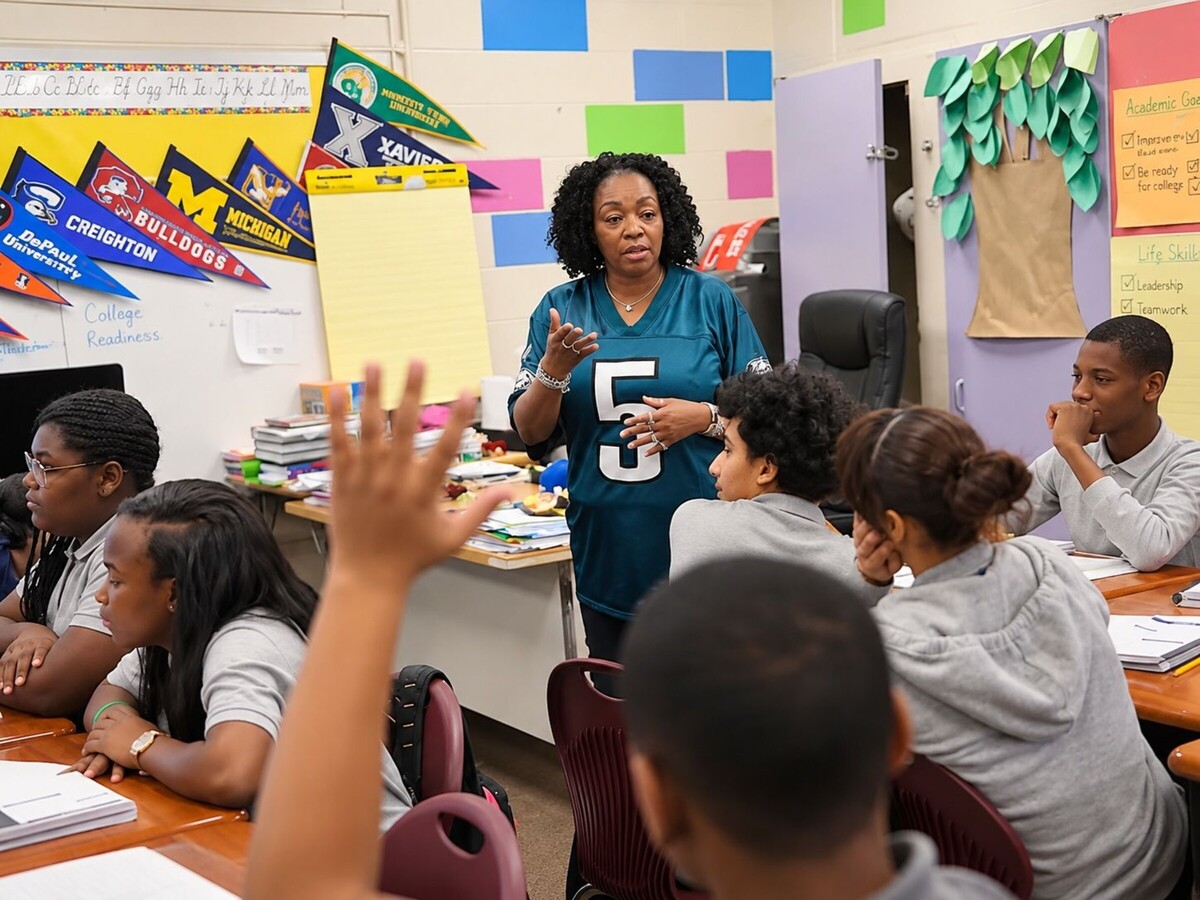
At Eastern Heights Elementary School in St. Paul, school counselor Julia Mullan has been teaching students how to distinguish everyday emotions from feelings that may require additional support. In a classroom exercise observed by MPR News, fourth- and fifth-grade students moved between areas representing ordinary feelings and overwhelming emotions, learning to recognize when their experiences might warrant a conversation with a trusted adult.
The approach reflects a central objective of the new requirement: helping children develop the language and confidence to discuss emotional experiences before those difficulties interfere with their education or relationships. Mullan, who has worked as an elementary school counselor for more than a decade, told MPR News that mental health is foundational to students' academic, social and emotional development. She also emphasized that the statewide requirement could extend access to schools that do not have the same level of mental health staffing or established programming.
The policy arrives against a troubling backdrop. Minnesota Department of Education surveys have documented declines in student mental health between 2016 and 2022, with only modest improvements reported afterward. Educators and mental health professionals have identified several contributing factors, including the disruptions associated with the COVID-19 pandemic, remote learning, social isolation and other sources of stress affecting young people and their families.
Those concerns have also been shaped by more recent experiences in Minnesota communities. Heightened immigration enforcement and the anxiety surrounding Operation Metro Surge have affected some students and families, according to professionals cited in MPR News' reporting. For children whose households are experiencing uncertainty or fear, access to trusted adults and age-appropriate emotional support can become especially important.
The Minnesota Department of Education worked with the National Alliance on Mental Illness Minnesota to develop guidance and instructional resources. NAMI Minnesota provides educational programming for middle and high school students, including lessons about recognizing mental health concerns, supporting friends and identifying appropriate sources of assistance. The materials also introduce students to crisis resources, including the national 988 Suicide & Crisis Lifeline.
Other organizations have developed resources for younger students. Erika's Lighthouse, a nonprofit focused on youth mental health education, provides elementary-level materials that help children identify emotions, understand their experiences and recognize adults they can approach when they need support. These programs illustrate how the statewide requirement can be adapted to different developmental stages rather than treating elementary and high school students as though they have identical needs.
At Discovery Charter School in Inver Grove Heights, students have participated in mental health education presented by NAMI Minnesota. Teacher Amy Sullivan told MPR News that some students hesitate to disclose emotional struggles, while others encounter mental health terminology without fully understanding the conditions being discussed. Structured instruction can help replace uncertainty and misunderstanding with accurate information, while encouraging students to recognize that seeking assistance is appropriate.
The experiences reported at these schools suggest that students are capable of engaging thoughtfully with mental health education when the material is presented in accessible language. At Eastern Heights, students discussed the relationship between emotional and physical health and described strategies for maintaining wellbeing. Their responses also demonstrated that mental health education need not begin with clinical terminology or complex diagnoses. It can begin with helping children understand feelings, recognize changes in behavior and know where to turn.
The broader question is how consistently the requirement will be implemented across Minnesota's diverse school districts. Schools with established counseling programs may be able to incorporate lessons more easily, while districts with limited staffing or financial resources could face additional challenges. Free instructional materials can reduce some barriers, but the effectiveness of the policy will also depend on educator preparation, scheduling and the ability to connect students with appropriate services when lessons reveal a need for additional support.
The distinction between mental health education and mental health treatment is particularly important. Classroom instruction can help students identify concerns and encourage them to seek assistance, but it cannot replace access to counselors, psychologists, medical professionals or other services. Schools implementing the requirement must therefore consider how students will receive support when they disclose distress or when educators identify circumstances requiring intervention.
For families, the new policy creates an opportunity to participate more actively in conversations about emotional wellbeing. Parents and caregivers can reinforce classroom lessons by encouraging children to discuss feelings, explaining that asking for help is a sign of awareness rather than weakness and maintaining communication with teachers and school counselors.
Minnesota's decision to require mental health education acknowledges that academic achievement and emotional wellbeing are closely connected. The measure establishes a common expectation that students should receive at least some instruction on the subject, regardless of where they attend school. Its long-term value, however, will depend on whether that expectation becomes meaningful learning and whether students who need assistance can obtain it.

Local stories matter. Subscribe free to MinneapoliMedia and receive independent news, community reporting and important updates from Minneapolis, the North Metro and communities across Minnesota.
SUBSCRIBE FREE: https://minneapolimedia.town.news/subscribe
MinneapoliMedia | Community. Culture. Civic Life

Sunny, with a high of 31 and low of 25 degrees. Sunny during the morning, clear for the afternoon and evening, partly cloudy overnight.