58° and Overcast
Image




For the first time since the 2026 FIFA World Cup launched nearly one month ago, an absolute silence replaced the relentless physical rhythm of competitive match play. Following twenty-seven consecutive matchdays stretching from the opening group-stage kickoff through the dramatic conclusion of the Round of 16, Wednesday provided the tournament's first officially scheduled rest day. No goals were scored, no nations suffered elimination, and no stadium gates opened for competition. Instead, the eight surviving national teams focused their attention on physiological recovery, tactical preparation, travel logistics, and readying themselves for a quarterfinal stage that leaves every remaining contender exactly three victories away from lifting football's ultimate prize.
Yet while the pitches remained quiet, the tournament itself scarcely paused. Across North America, the remaining quarterfinalists conducted closed regeneration sessions designed to repair accumulated fatigue after four demanding weeks of elite competition. Medical departments prioritized recovery protocols, coaching staff finalized tactical scouting reports, and host cities welcomed another wave of international supporters arriving for the weekend's marquee fixtures.
Away from the training grounds, the administrative landscape became dominated by an escalating officiating controversy stemming from Argentina's dramatic 3-2 comeback victory over Egypt. The Egyptian Football Association formally challenged several refereeing decisions by submitting an official protest to FIFA, initiating one of the tournament's most closely watched administrative disputes and reigniting international debate surrounding the application of Video Assistant Referee procedures during knockout competition. The mandatory rest day ultimately became a convergence of physical recovery, institutional scrutiny, and growing anticipation as the expanded 48-team World Cup entered its decisive championship phase.
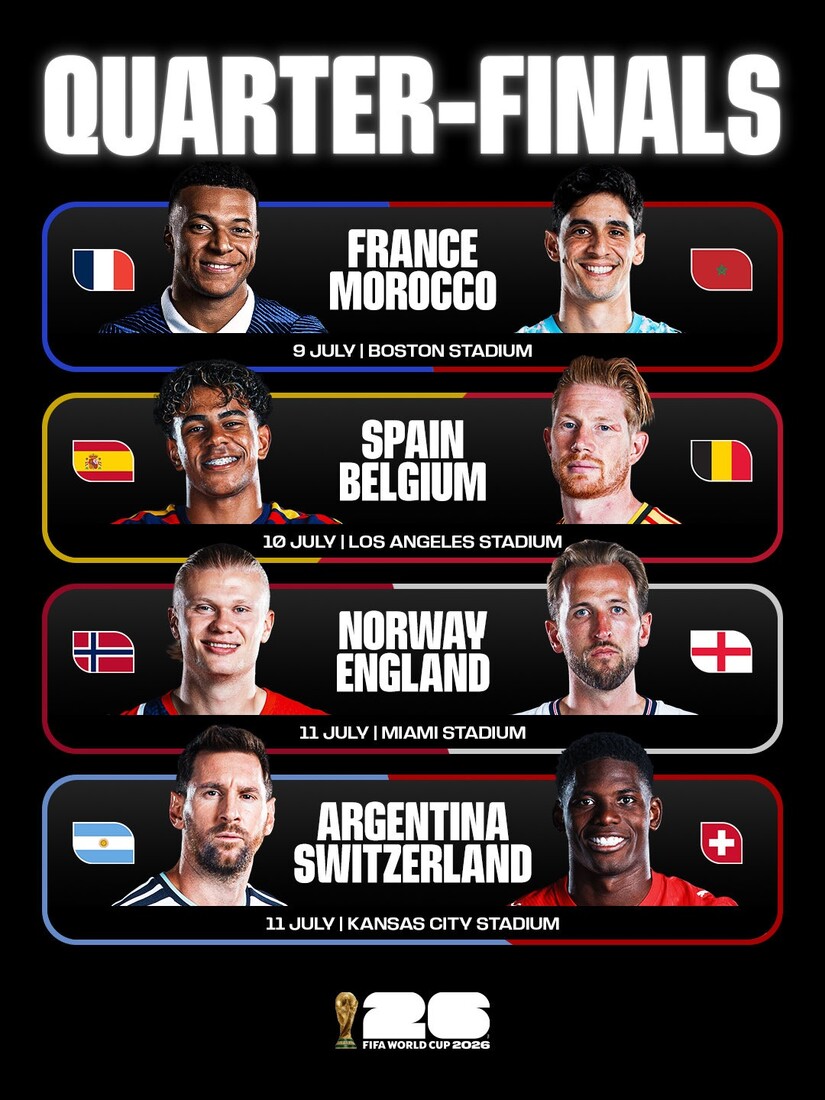
|
Bracket Pathway |
Nation |
Quarterfinal Opponent |
Historic World Cup Peak |
|
Upper Left Quadrant |
Morocco |
France |
Semifinalists (2022) |
|
Lower Left Quadrant |
France |
Morocco |
Champions (1998, 2018) |
|
Upper Right Quadrant |
Spain |
Belgium |
Champions (2010) |
|
Lower Right Quadrant |
Belgium |
Spain |
Third Place (2018) |
|
Upper Central Quadrant |
Norway |
England |
Round of 16 (1998) |
|
Lower Central Quadrant |
England |
Norway |
Champions (1966) |
|
Upper Lateral Quadrant |
Argentina |
Switzerland |
Champions (1978, 1986, 2022) |
|
Lower Lateral Quadrant |
Switzerland |
Argentina |
Quarterfinalists (1954) |
For players, technical directors, and performance staff, Day 28 represented perhaps the most valuable twenty-four hours of the tournament. The expanded World Cup format has placed unprecedented physical demands upon every surviving roster. Several quarterfinalists have already endured 120-minute extra-time battles, emotionally draining penalty shootouts, dramatic comeback victories, and extensive travel across multiple countries, climates, and time zones.
Wednesday's training schedules were intentionally structured around restoration rather than competitive intensity. Morning sessions centered on active recovery. Regular starters completed soft-tissue treatment, stretching routines, stationary cycling, hydrotherapy, and targeted cryotherapy designed to accelerate muscular repair following the physical demands of the Round of 16. Reserve players simultaneously participated in carefully managed higher-intensity sessions to maintain match fitness should tactical rotation become necessary during the quarterfinals.
Medical staff used the break to monitor fatigue indicators, hydration levels, muscular recovery, and overall player readiness, while analysts continued reviewing extensive video from the knockout stage to refine tactical plans. Across every remaining camp, one principle guided preparation: overtraining at this stage of the tournament represents as great a risk as inadequate preparation.
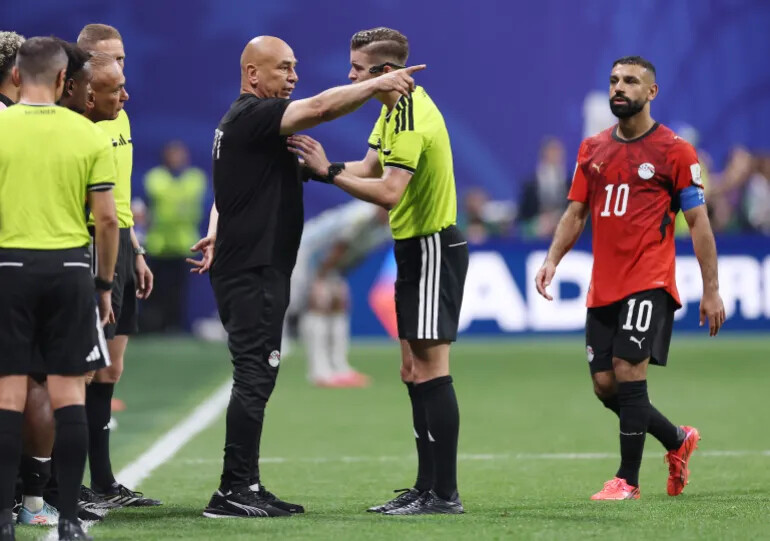
While the remaining squads focused on physical recovery, the defining off-field story developed inside football's administrative offices.
The Egyptian Football Association issued a strongly worded public statement confirming that it had filed a formal protest with FIFA regarding the officiating during Egypt's Round of 16 defeat against Argentina in Atlanta. The federation stated that it "cannot remain silent" regarding the application of VAR procedures, arguing that several refereeing decisions directly influenced the outcome of the match.
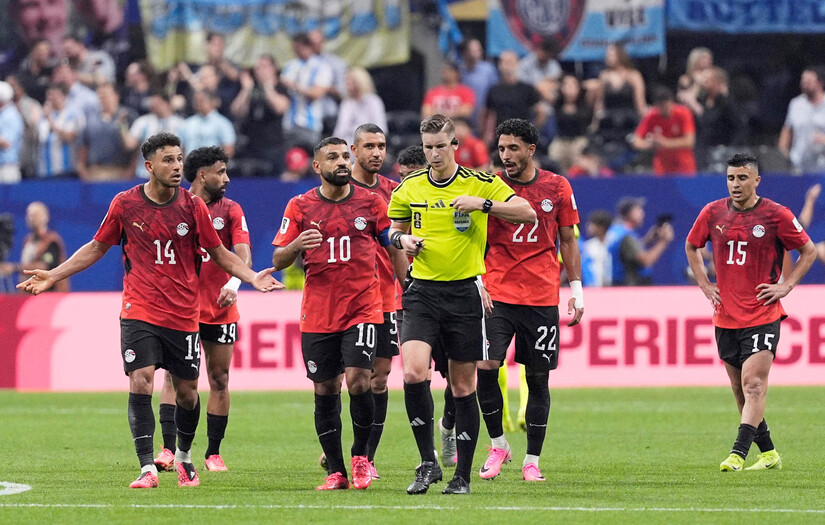
The primary focus of Egypt's protest centers on a controversial second-half VAR review that erased what the Pharaohs believed was a legitimate goal. Officials brought play back to identify a foul by midfielder Marawan Attia during the buildup, a decision the EFA argues exceeded the intended threshold for VAR intervention. The federation also questioned the absence of a VAR review for an alleged foul during the attacking sequence immediately preceding Enzo Fernández's stoppage-time winner, arguing that comparable incidents were judged differently.
Tensions escalated immediately after the final whistle. Egyptian goalkeeping coach Saafan Elsaghir received a red card during heated confrontations with match officials and had to be physically restrained by members of the Egyptian delegation.
FIFA confirmed receipt of the Egyptian Football Association's documentation. As of Wednesday, however, there was no indication that the governing body intended to alter the 3-2 result. Under the Laws of the Game, refereeing decisions generally remain final unless officials determine that the laws themselves were misapplied rather than simply interpreted.
The controversy nevertheless sparked widespread international discussion regarding the proper scope of VAR intervention and how far back officials should review an attacking sequence before overturning a goal.
|
Match |
Fixture |
Venue |
|
Quarterfinal 1 |
France vs. Morocco |
Gillette Stadium, Foxborough, MA |
|
Quarterfinal 2 |
Spain vs. Belgium |
AT&T Stadium, Arlington, TX |
|
Quarterfinal 3 |
Norway vs. England |
MetLife Stadium, East Rutherford, NJ |
|
Quarterfinal 4 |
Argentina vs. Switzerland |
Arrowhead Stadium, Kansas City, MO |
The scheduled pause reinforced several themes that increasingly define the championship stage of the tournament.
Physiological Freshness as a Tactical Asset: With cumulative fatigue approaching seasonal limits, the sophistication of each program's sports science department has become a genuine competitive advantage. Recovery may prove just as decisive as tactical preparation.
The Intensification of Administrative Scrutiny: Egypt's formal protest illustrates how every officiating decision receives extraordinary examination once the tournament reaches its single-elimination climax. Every marginal judgment now carries enormous competitive and emotional consequences.
The Separation of Survivors from Contenders: The group stage narrowed the field. The Round of 32 and Round of 16 separated hopeful participants from genuine championship contenders. The tournament now enters its most demanding competitive tier, where technical quality must be matched by emotional discipline, tactical adaptability, and clinical execution.
The operational pause concludes quickly as the tournament's eight remaining teams return to the pitch. By the end of the coming weekend, the field will shrink from eight survivors to four semifinalists, leaving the remaining nations within touching distance of football's greatest prize.
MinneapoliMedia | Community. Culture. Civic Life.


Sunny, with a high of 66 and low of 47 degrees. Sunny for the morning, overcast in the afternoon and evening, clear overnight.