Image



The boundaries of athletic achievement are expected to be defined by tactical discipline, physical preparation, and the objective implementation of international rules. However, the Round of 16 fixture between Egypt and Argentina at Atlanta Stadium during the 2026 FIFA World Cup serves as an uncomfortably precise case study of a structural pathology that has long compromised international football. When the Egyptian national team, having built a commanding two-goal advantage through rigorous tactical execution, saw its ambitions dismantled by a sequence of highly subjective administrative interventions, the conversation shifted from the pitch to the institutional architecture of FIFA itself. The 3-2 victory for the defending champions did not merely represent an athletic comeback. Rather, it highlighted the deep-seated structural imbalances where sporting authorities frequently protect historical and economic interests at the direct expense of emerging and underrepresented footballing nations.
There are football matches that are remembered because of brilliance. There are others remembered because of courage, resilience, or extraordinary individual performances. Then there are matches that become remembered for something far less inspiring: the lingering belief that the result was shaped as much by officiating controversy as by the players themselves. Egypt's heartbreaking defeat belongs in that final category. For nearly ninety minutes, Egypt stood on the threshold of producing one of the greatest victories in African football history. Facing the defending world champions, a team led by some of the finest players on the planet, the Pharaohs displayed tactical discipline, relentless work ethic, clinical finishing, and remarkable composure. They earned a two-goal lead, silenced one of the tournament favorites, and forced millions watching around the world to reconsider what they believed was possible. Then came the decisions that changed everything.
Under the guidance of head coach Hossam Hassan, Egypt established a disciplined 4-2-3-1 defensive structure that systematically neutralized Argentina’s standard possession play. Yasser Ibrahim opened the scoring in the 14th minute, capitalizing on a set-piece routine that exposed positional vulnerabilities in the Argentine backline. The structural integrity of Egypt's system was further validated when goalkeeper Mostafa Shobeir denied a first-half penalty from Lionel Messi. When Mostafa Ziko extended the lead to 2-0 in the 66th minute, the match presented a clear sporting outcome: a highly favored, commercially lucrative incumbent was being systematically outplayed by an organized, less-resourced opponent. Egypt did not survive by accident. They earned their position. For extended stretches, they controlled one of football's most accomplished national teams through intelligent pressing, disciplined defending, and efficient transitions. Nothing about their performance suggested inferiority. Instead, they demonstrated precisely why African football deserves to be discussed not as an occasional surprise but as a permanent force capable of competing for football's highest honors.
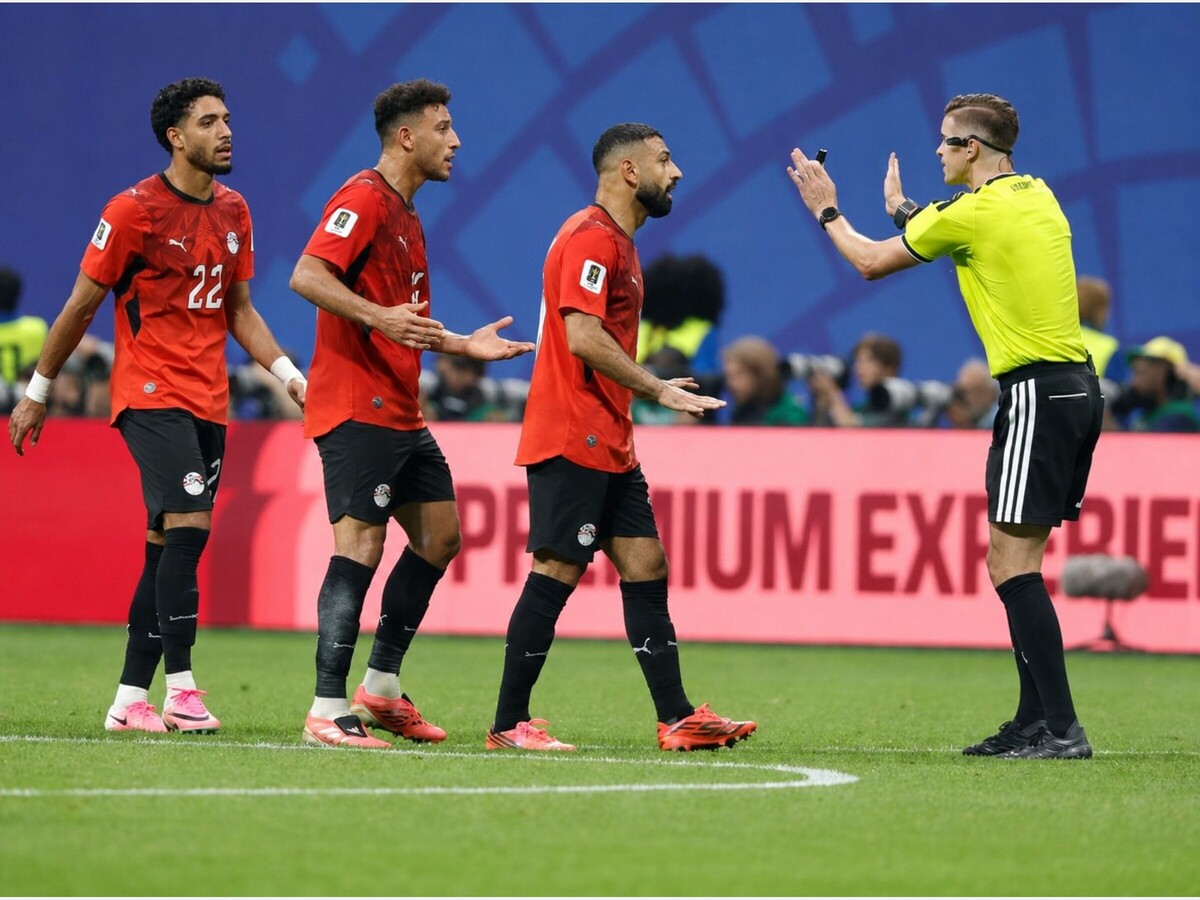
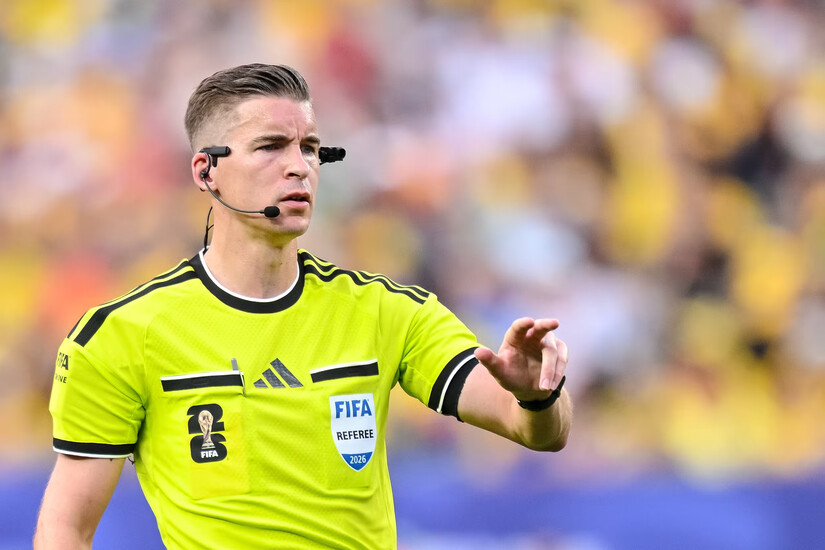
The turning point of the match did not stem from an organic tactical adjustment, but from the deployment of the Video Assistant Referee (VAR) system. Egypt appeared to secure a decisive 3-0 advantage, a margin that historically guarantees progression in knockout tournament football. However, French referee François Letexier, acting on instructions from the VAR booth, reviewed a challenge by Marwan Attia that had occurred significantly earlier in the buildup phase, far removed from the scoring sequence. The subsequent disallowance of the goal fundamentally altered the psychological and physical momentum of the match. While the technical rules permit the review of attacking phases, the selective implementation of these parameters frequently penalizes nations lacking the institutional leverage to challenge refereeing oversight. Whether every individual decision was technically correct under the Laws of the Game will remain the subject of debate among referees, analysts, players, and supporters for years to come. That, however, is only part of the story.
The disparity in the application of marginal calls became undeniable during the match's final minutes. In the 91st minute, with the score tied at 2-2 following rapid goals from Cristian Romero and Lionel Messi, Egyptian forward Mohamed Salah drove into the Argentine penalty area. Salah was dispossessed from behind by an unpunished challenge that disrupted his stride and prevented a clear scoring opportunity. Despite intense appeals from the Egyptian squad, Letexier declined to halt play or initiate a secondary VAR review. The immediate counter-attack allowed Enzo Fernández to score the match-winning goal in the third minute of stoppage time. This sequence represents a stark regulatory double standard: a minor infraction was retroactively evaluated to deny Egypt a three-goal lead, while a critical penalty-box challenge involving an African forward was dismissed, directly resulting in the decisive goal for the tournament favorite. The emotional impact of that sequence proved devastating. Within seconds, one nation's hopes disappeared while another celebrated survival.
The larger question is why millions of supporters immediately concluded that Egypt had been treated unfairly. Why did so many observers instinctively believe that football's biggest institutions had once again failed one of its emerging powers? Why has that perception become so deeply rooted whenever controversial officiating intersects with one of the sport's traditional giants? Those questions should concern FIFA far more than whether a single referee ultimately received a favorable assessment. Following the final whistle, the technical staff and players from Egypt expressed a long-standing grievance shared by many football associations outside of Europe and South America. In an official post-match press conference, Hossam Hassan rejected standard diplomatic phrasing, explicitly stating that economic considerations dictate the administrative management of world tournaments. Hassan noted that the global football economy relies heavily on the prolonged participation of high-profile athletes and traditional powerhouses to maximize broadcast ratings, corporate sponsorships, and ticket sales.
This assessment is supported by historical precedents across multiple World Cup iterations, where African, Asian, and North American nations have routinely encountered highly unfavorable officiating sequences when competing against established commercial draws. The credibility of any sporting competition depends not only upon fairness but upon public confidence that fairness exists. The World Cup is watched by billions of people across every continent. It asks supporters to invest emotionally, financially, and culturally in ninety minutes that often define generations of football history. That investment carries an obligation. Supporters must believe that every nation, regardless of history, geography, political influence, commercial value, or television audience, competes under identical standards. When that belief begins to weaken, the competition itself suffers. Egypt's defeat illustrates why.
The structural inequality is further exacerbated by the composition of refereeing assignments. Prior to the match, the Egyptian Football Association had formally objected to the selection of Letexier, pointing to regional biases and the historical tendency of elite European officials to favor traditional footballing powers. FIFA’s selection committees, however, continuously rely on a small pool of officials from dominant domestic leagues, creating an environment where peripheral nations are subjected to unfamiliar regulatory standards. When Hassan raised his wrists and crossed his arms to form an "X" toward the refereeing staff, deploying FIFA’s official anti-discrimination gesture, he highlighted how regulatory frameworks intended to combat structural bias can be used by participants to protest an overall lack of sporting fairness. Coach Hassan did not conceal his frustration after the match. He publicly criticized the officiating and argued that his players had suffered an injustice. Similar disappointment echoed throughout Egyptian media, across social media platforms, and among former players who believed pivotal moments had altered the course of the match.
Argentina, understandably, viewed the evening through an entirely different lens. Championship teams often survive moments of adversity. Comebacks define great champions. From Argentina's perspective, resilience, persistence, and clinical finishing deserved celebration. Those achievements should not be diminished. The players executed under immense pressure. Their comeback required exceptional quality regardless of officiating controversy. Both realities can coexist. Argentina demonstrated championship character. Egypt also has legitimate reasons to question decisions that shaped critical moments of the contest. Recognizing one truth does not require rejecting the other. That balance is precisely what responsible football discourse demands. Unfortunately, modern debate rarely rewards nuance. Supporters increasingly divide every controversial decision into absolute camps. One side insists officials were unquestionably correct. The other treats it as an absolute failure of equity. Reality often occupies a far more complicated middle ground. Officials can make difficult judgments honestly, technology can still produce inconsistent outcomes, and players can simultaneously deserve admiration while believing critical decisions went against them.
The existence of disagreement does not automatically establish conspiracy. Neither does disagreement eliminate the need for accountability. That accountability remains football's greatest challenge. VAR was introduced with a promise. Football's governing authorities argued that technology would reduce clear and obvious errors, create greater consistency, and improve confidence in officiating. Supporters accepted interruptions because they believed accuracy would improve. Players accepted delays because they believed justice would improve. National associations accepted the new system because they believed transparency would improve. Years later, those promises remain only partially fulfilled. Instead of eliminating controversy, VAR has often relocated it. Supporters no longer ask only whether the referee made the correct decision. They ask why one incident receives exhaustive review while another does not. They ask why similar challenges appear to produce different outcomes from one match to another. They ask why explanations are rarely provided after the final whistle. Most importantly, they ask why football's most consequential decisions frequently remain open to radically different interpretations even after multiple technological reviews.
Technology cannot solve inconsistency if those operating it apply inconsistent standards. The controversy surrounding Egypt's overturned third goal perfectly illustrates that dilemma. Under current protocols, VAR possesses the authority to review attacking phases leading directly to goals, including potential fouls committed earlier during possession. That authority exists for legitimate reasons. Yet supporters naturally ask whether comparable incidents elsewhere receive equivalent scrutiny. Consistency, not merely technical correctness, is what builds confidence. Likewise, Egypt's penalty appeal involving Mohamed Salah became controversial not simply because officials declined to award a penalty. Penalty decisions remain among football's most difficult judgments. Rather, the controversy grew because many viewers expected at least a formal VAR review before play continued. Instead, Argentina immediately launched the counterattack that ultimately decided the match.
In international sport, credibility is measured not only by the technical accuracy of decisions but also by whether participants believe every team received equal consideration. That distinction is fundamental. FIFA understandably emphasizes referee independence. Officials cannot conduct matches while worrying about public opinion. Their responsibility is to apply the Laws of the Game impartially. No serious observer should expect perfection from referees operating under extraordinary pressure before global audiences. Human judgment will always remain part of football. The challenge is different. When controversial decisions repeatedly emerge in the tournament's biggest matches, affecting some of its biggest stories, and when explanations remain limited or entirely absent, skepticism inevitably grows. Silence creates space for suspicion. Transparency builds trust. Football deserves more of the latter.
The governing body has repeatedly defended VAR as an instrument of fairness. If that is indeed its purpose, then greater openness should strengthen rather than weaken confidence in officiating. Other major sports increasingly publish explanations of controversial rulings, permit limited review of officiating decisions, or provide postgame clarification regarding interpretation. Football remains comparatively opaque. That lack of transparency serves neither referees nor supporters. Instead, it leaves every controversial decision vulnerable to endless speculation. For nations whose football histories already include painful memories of disputed officiating, each new controversy becomes part of a much larger narrative. That narrative extends well beyond Egypt. It reaches across decades of African football history. Whether every individual controversy was correctly officiated is almost beside the point. The cumulative effect has been unmistakable. Across Africa, and increasingly across other emerging football nations, supporters have come to believe that the burden of overcoming football's traditional powers extends beyond tactics, preparation, and execution. Many now believe they must also overcome officiating decisions that seem, fairly or unfairly, to favor the sport's established giants.
Perception is not proof. Neither should perception be dismissed. In sport, public trust is one of the game's most valuable assets. Once supporters begin questioning whether every team truly competes on equal footing, restoring that confidence becomes extraordinarily difficult. African football has experienced remarkable growth over the last half-century. No longer are African teams viewed merely as colorful participants capable of producing an occasional upset. They consistently produce some of the world's finest footballers. Their players captain Europe's biggest clubs, win continental championships, compete in the UEFA Champions League, and command record transfer fees. National teams now enter every World Cup expecting to compete for quarterfinals, semifinals, and eventually the championship itself. That progress has changed expectations. Supporters no longer celebrate simply qualifying. They expect respect. They expect consistency. Most importantly, they expect equal treatment. When those expectations collide with controversial officiating decisions, frustration grows exponentially.
The history helps explain why. African football supporters still remember matches that became defined as much by refereeing debate as by football itself. Some incidents involved disputed penalties. Others centered upon questionable dismissals, inconsistent disciplinary standards, controversial offside rulings, or highly debated interpretations of the Laws of the Game. Not every complaint proved justified. Not every referee performed poorly. Yet together these moments created an enduring sense that African teams often leave football's biggest tournaments believing they were never afforded the same margin for error as more established football powers. The perception extends beyond Africa. Asian nations have voiced similar frustrations. CONCACAF countries have occasionally done the same. Smaller European federations have likewise questioned consistency in major competitions. What unites these concerns is not geography but competitive hierarchy. When football's traditional powers survive controversial matches while emerging nations suffer elimination, supporters naturally ask difficult questions. Would identical decisions have unfolded had the national jerseys been reversed? No referee should ever answer that question. FIFA, however, should understand why millions continue asking it.
Modern football is no longer simply a sporting competition. The World Cup has become one of the largest commercial events on Earth. Television rights generate billions of dollars. Global sponsorships involve multinational corporations investing enormous resources into the tournament's success. Broadcasters carefully build narratives around football's biggest stars. Entire marketing campaigns become intertwined with household names capable of attracting worldwide audiences. None of that proves officials favor larger nations. Nor should anyone casually allege such favoritism without evidence. What it patches together, however, is an environment in which perception matters more than ever. When a global superstar remains in the tournament after controversial officiating, millions of viewers inevitably notice. When a football giant advances through disputed moments while an emerging nation departs heartbroken, many supporters conclude that football's commercial realities and its competitive realities appear uncomfortably aligned. Even if those conclusions are mistaken, FIFA cannot afford to ignore them. Credibility depends upon more than integrity. It depends upon demonstrating integrity. That distinction is critical. Institutions rarely lose public confidence because one controversial decision occurs. They lose confidence when similar controversies recur without sufficient transparency to reassure those affected.
Unlike many professional sports leagues, FIFA rarely provides detailed public explanations after controversial officiating performances. Supporters receive little insight into how specific incidents were evaluated. Referee assessments largely remain confidential. VAR communications remain unavailable to the public in most circumstances. As a result, debate flourishes where explanation should exist. Silence becomes interpreted as secrecy. Secrecy becomes interpreted as institutional protection. Institutional protection becomes interpreted as favoritism. Whether fair or unfair, that progression is predictable. It is also avoidable. Greater transparency would not eliminate disagreement. Football supporters will always argue. Managers will always defend their players. Former professionals will always interpret incidents differently. What transparency can accomplish is narrowing the distance between officiating decisions and public understanding. The objective should never be universal agreement. That is impossible. The objective should be informed disagreement grounded in evidence rather than speculation. FIFA possesses the resources, technological capability, and global influence necessary to become the world leader in officiating transparency. Instead, too often, it asks supporters simply to trust conclusions they are never permitted to fully examine. That approach may have sufficed decades ago. It no longer satisfies a global audience capable of reviewing every angle within seconds. Football has evolved. Supporter expectations have evolved alongside it. Its governance must evolve as well.
Football's governing institutions should not interpret criticism as hostility. Criticism, when grounded in evidence and offered in good faith, is often an expression of belief that the sport can become stronger than it is today. That distinction matters. The World Cup occupies a unique place in international life. Few events unite humanity across language, religion, politics, race, and geography with the same intensity. Every four years, children wake before sunrise to watch matches on small televisions. Families gather across continents. Entire cities pause as national teams chase history. The tournament belongs to the world. It does not belong exclusively to FIFA. Nor does it belong to football's traditional powers. It belongs equally to Argentina and Egypt. To Brazil and Japan. To Germany and Morocco. To France and Senegal. To England and South Korea. To every nation that earns its place through qualification and arrives believing that ninety minutes will be decided by preparation, talent, discipline, courage, and execution. That belief is the foundation upon which international football rests. When supporters begin to doubt that foundation, the consequences extend far beyond a single match.
The danger is not simply that one country feels aggrieved. The danger is that millions of supporters begin approaching future tournaments already convinced that controversial decisions will favor the biggest football brands, the largest television audiences, or the most commercially valuable storylines. Whether that perception reflects reality is, in many respects, beside the point. Confidence in competition depends upon perception as much as process. Courts understand this principle. Elections depend upon it. Professional sports cannot afford to ignore it. Justice must not only be done. It must be seen to be done. Football should embrace the same standard. That requires more than improved technology. VAR has unquestionably corrected important mistakes since its introduction. Goals scored from obvious offsides have been overturned. Mistaken identities have been corrected. Clear fouls have been recognized that otherwise would have gone unseen. Technology has made meaningful contributions. Yet technology cannot substitute for transparency. A decision reviewed by multiple cameras but never adequately explained may still leave participants unconvinced. Indeed, the existence of technology often raises expectations. Supporters assume that additional tools should produce greater consistency. When similar incidents appear to receive different treatment, disappointment becomes even sharper because the public believes the system possessed every opportunity to reach the correct outcome.
Consistency remains football's greatest challenge. Not perfection. No referee will ever achieve perfection. Football moves too quickly. The Laws of the Game require interpretation. Contact exists on nearly every set piece. Handball decisions continue evolving. Penalty-area challenges frequently involve fractions of a second. Errors will always occur. Supporters understand that. What they struggle to accept is inconsistency. If one level of contact produces a penalty in one match but not another, questions naturally follow. If one attacking sequence is reviewed extensively while another proceeds without similar scrutiny, supporters ask why. If disciplinary thresholds appear different depending upon the participants, confidence begins to erode. Those questions deserve answers, not dismissal. The responsibility for preserving football's credibility rests first with FIFA. The organization has invested enormous resources into expanding the World Cup, improving infrastructure, advancing women's football, strengthening youth development, and increasing the sport's global reach. Those achievements deserve recognition. But institutional success in one area cannot excuse shortcomings in another. Refereeing accountability should stand alongside player welfare, anti-discrimination efforts, and competitive integrity as one of the federation's highest priorities.
That means embracing openness rather than fearing it. Publishing post-match explanations for major VAR interventions. Expanding access to referee communications where appropriate. Providing detailed technical reports after especially controversial fixtures. Encouraging informed public understanding instead of allowing speculation to dominate the conversation. None of those reforms would undermine referees. On the contrary, they could strengthen confidence in the profession by demonstrating how difficult decisions are reached and by acknowledging when mistakes occur. Every major institution earns trust by showing its work. Football should be no different. Egypt's World Cup ended in disappointment. Nothing will change that. Argentina advanced and continued its pursuit of another world championship. History will record the final score. History, however, should also remember the questions that followed the final whistle. Those questions extend beyond Cairo. They resonate throughout Accra, Dakar, Lagos, Rabat, Tunis, Johannesburg, Nairobi, and countless other communities where supporters have long believed African football deserves not sympathy, but equality. Not lowered expectations. Not moral victories. Equal standards. Equal opportunity. Equal confidence that the rules governing football's biggest matches will be applied consistently regardless of the crest displayed on a player's shirt.
Ultimately, the resolution of the match in Atlanta cannot be viewed as an isolated refereeing error. It represents a systematic vulnerability within international sports governance. When the regulatory apparatus of the game consistently favors elite incumbents through unequal VAR intervention and asymmetrical penalty assessments, the core principle of competitive integrity is broken. That aspiration is neither radical nor unreasonable. It is the minimum expectation of any competition that calls itself the world's game. At its best, football has always rewarded excellence wherever it emerges. It has elevated nations once dismissed as outsiders. It has transformed underdogs into champions. It has reminded generations that reputation alone cannot win matches. Those qualities explain why billions continue watching. They also explain why every controversy matters. Because each unresolved question chips away at something more valuable than a single result. It chips away at trust. For FIFA, that should be the central lesson from Egypt's heartbreaking exit. The debate surrounding this match is not merely about one overturned goal or one denied penalty appeal. It is about whether the world's governing body recognizes that transparency has become essential to protecting the legitimacy of its competitions. Supporters are no longer asking FIFA to be infallible. They are asking it to be accountable. That is not an unreasonable demand. It is the standard expected of every institution entrusted with something as globally significant as the FIFA World Cup. If football truly belongs to the world, then every nation that qualifies deserves more than the opportunity to compete. It deserves the confidence that victory and defeat alike will be determined by the players on the pitch under rules applied with consistency, openness, and fairness. Until FIFA can persuade the world that this standard is being met, controversies like Egypt's Round of 16 defeat will continue to echo long after the final whistle, and every disputed decision involving an emerging football nation will become part of a larger conversation about trust, credibility, and the future of the world's most beloved sport.



Sunny, with a high of 85 and low of 49 degrees. Sunny for the morning, overcast for the afternoon and evening, clear overnight.