67° and Cloudy
Image
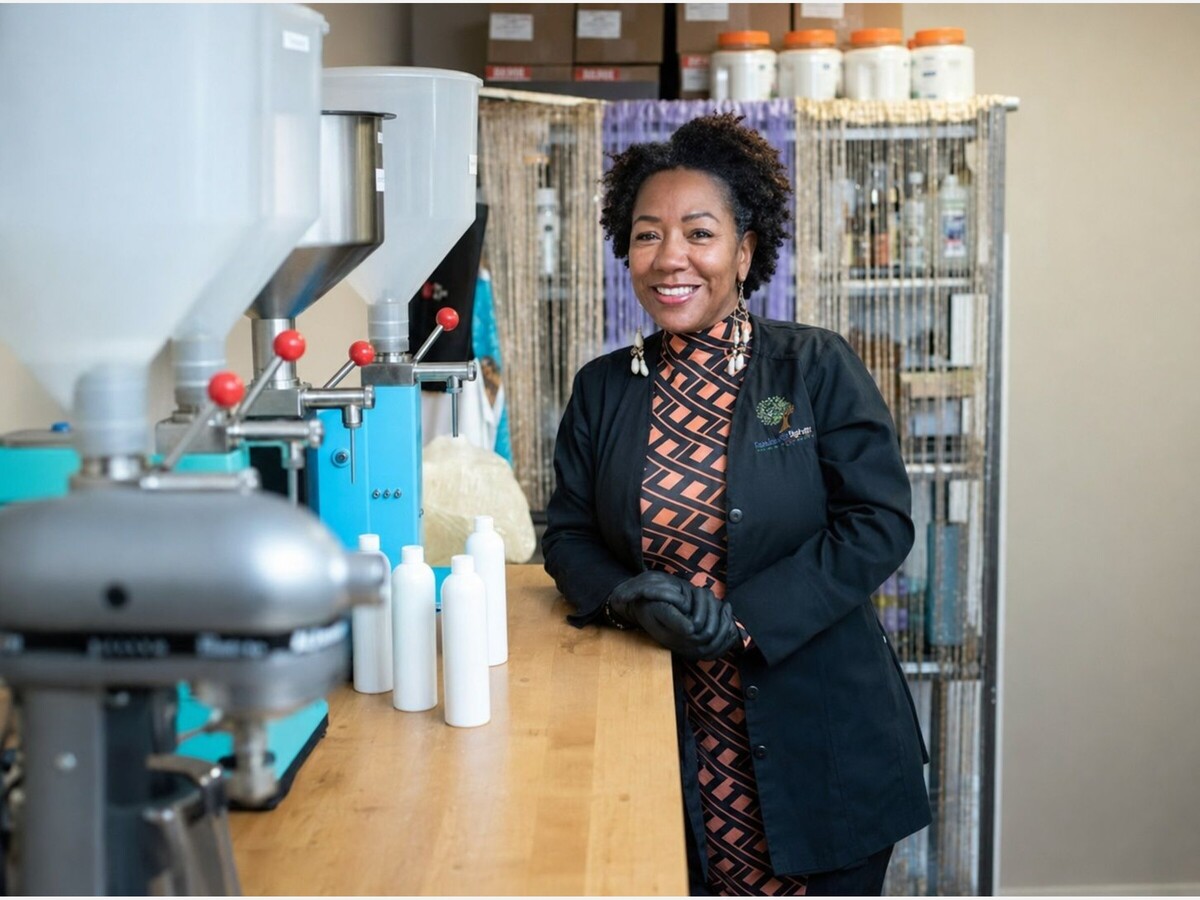



There are people who inherit businesses. There are people who discover opportunities in growing markets. Then there are people who build companies because life presents them with a question they can no longer ignore.
For De'Vonna Pittman, that question came home one afternoon in the voice of her young daughter.
It was not a conversation about entrepreneurship. It was not about product development or market opportunity. It was about identity.
Her daughter had returned from school upset after classmates mocked her natural hair. She wanted it straightened. She wanted to look like everyone else. As a mother, Pittman could have viewed the moment as another difficult conversation children sometimes bring home. Instead, she recognized something much larger. She saw how early ideas about beauty, belonging, and self-worth could become deeply rooted.
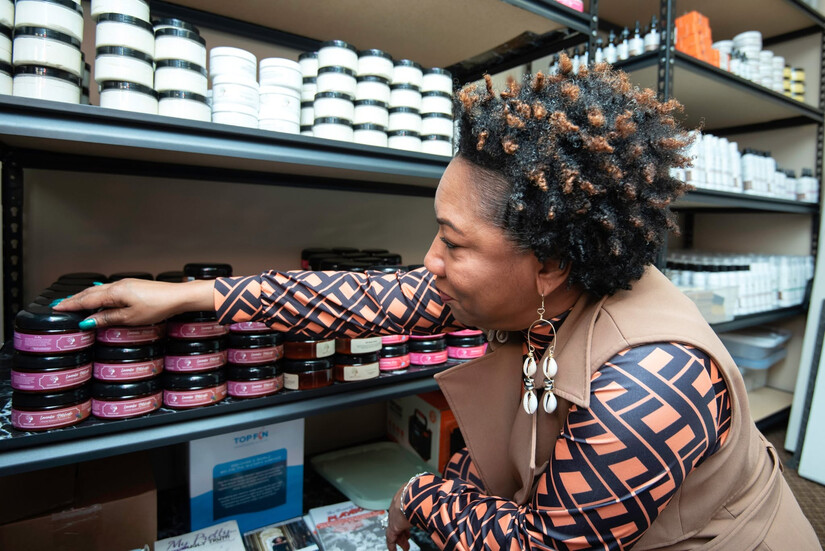
That moment would eventually lead to Nature's Syrup Beauty, a Minnesota company whose plant-based hair and skin care products are now distributed through major retail channels, anchored by its flagship store in downtown Minneapolis. Yet reducing Pittman's story to the origin of a successful beauty business would miss the larger point. The company is only one chapter in a much longer journey that began decades earlier in public housing outside Chicago, continued through nearly two decades in county government, survived political disappointment, and ultimately became an exercise in rebuilding confidence, first in herself and then in countless others.
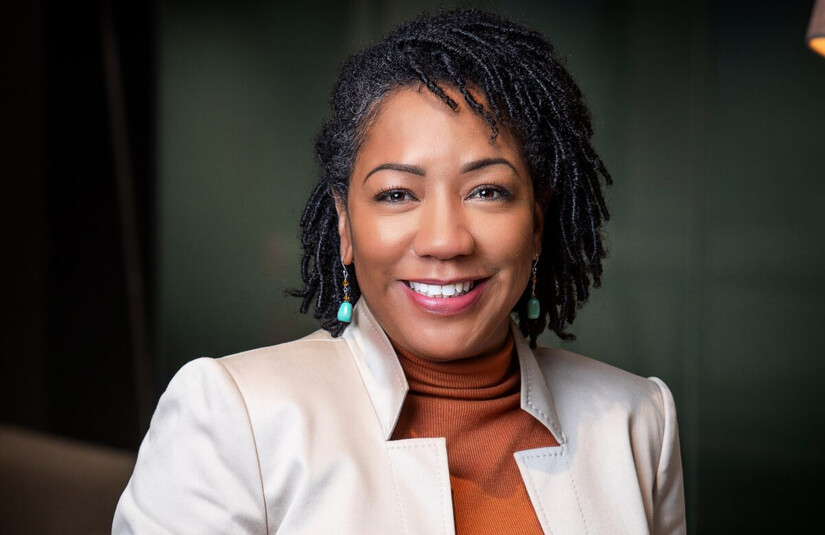
That journey is why Pittman belongs in Builders of Minnesota.
This series recognizes people who are building something meaningful for our state, whether through business, public service, community leadership, creativity, or the quiet work of helping others. Its purpose is not simply to list accomplishments or promote organizations. It seeks to understand the person behind the work. Where did they come from? Who shaped them? What hardships tested them? What convictions sustained them? Why did they choose to build instead of stepping aside?
Those questions matter because every meaningful institution begins with a person whose life cannot be summarized by awards, ribbon cuttings, or financial success.
For Pittman, the answers begin more than 400 miles south of Minnesota.
"I grew up in the poorest suburb in America," she recalled. "I was born and raised in the projects about twenty miles south of Chicago."
Poverty was not an occasional hardship. It was the environment surrounding daily life. Most of her extended family lived within walking distance of one another. Grandparents, aunts, uncles, cousins, and neighbors formed a close-knit community where resources were limited but relationships were abundant.
Among the people who left the deepest impression was her grandmother. She operated a small neighborhood candy store, something Pittman appreciated as a child long before she understood what entrepreneurship meant.
"I didn't look at her and think she owned a business," Pittman said. "It was just my grandmother's candy store."
Children from the neighborhood stopped there every day. When her grandmother needed to attend church or step away, the grandchildren helped keep the store running. Pittman stocked shelves, served customers, and watched commerce unfold from behind the counter without realizing she was receiving her earliest business education.
Looking back today, she recognizes those experiences differently. Before she ever studied business, before she managed projects worth millions of dollars, before she pitched investors or negotiated with national retailers, she learned that businesses exist because someone decides to serve a community.
That lesson stayed with her.
Pittman's mother raised seven children, much of that time as a single parent. She worked wherever work could be found, including domestic jobs, bartending, and other positions that kept food on the table. The family relied on public assistance, but Pittman never describes her childhood as one defined only by scarcity. Instead, she remembers watching determination.
"I get my hustle from my mother," she said simply.
She also remembers discipline. Her mother insisted on maintaining a beautiful home regardless of financial circumstances. Pittman laughs today recalling white furniture inside a house occupied by seven children, but beneath the humor is admiration for a woman who refused to let difficult circumstances dictate family standards.

The expectations extended beyond the home. Growing up in the Chicago area, Pittman attended schools staffed almost entirely by Black educators. Their presence mattered. Seeing teachers who shared her cultural background quietly expanded her understanding of leadership and possibility. At the same time, she remembers receiving practical advice that reflected limited expectations.
Students were encouraged to graduate from high school because that alone could open doors to stable employment. For many young women, careers as secretaries or certified nursing assistants represented success. Pittman respected those professions, but she sensed something unsettled within herself.
"I always knew I wanted to do something different," she said. "I just didn't know what that was."
Her first attempt at defining that future did not last long. She enrolled in secretarial school, believing it offered a practical path toward employment. Within two weeks, she knew she had made the wrong decision.
"It just wasn't for me."
Instead, life redirected her. In 1991, Pittman moved to Minnesota. She was raising a sixteen-month-old daughter and was six months pregnant. Like many newcomers arriving in the state during that period, she had heard Minnesota described as a place where hard work could still create opportunity. She hoped distance might also provide a fresh beginning.
"I just wanted to change my life," she said.
Starting over forced Pittman to ask questions she had never fully answered before. Who was she? What kind of work mattered to her? What could she build if she stopped defining herself by the expectations others had placed upon her?
Public assistance programs available at the time helped participants pursue higher education. Pittman initially wanted to become a licensed cosmetologist, but she was informed that beauty school was not among the educational programs being funded.
Rather than abandon education altogether, she pursued a business degree. That choice altered nearly everything that followed. Over time she completed her undergraduate education, later earning a master's degree in criminal justice with a concentration in law enforcement leadership. Education became evidence that she refused to accept limits established by someone else.

Her professional career led her to Hennepin County, where she remained for eighteen years. Those years became an education of an entirely different kind.
Working across departments including housing, community development, transit, corrections, county administration, and disparity reduction, Pittman gained an unusually broad understanding of how local government functions. She observed how public policy moved from discussion to implementation, how priorities were established, and how decisions affecting thousands of residents were made.
Her earliest assignment as a committee clerk allowed her to sit through meetings that many citizens never see.
"I looked at it as school," she said.
She listened carefully. She watched elected officials debate policy. She learned where government succeeded and where it fell short. Perhaps most importantly, she began asking difficult questions about who benefited from those decisions and who remained unheard.
That perspective gradually changed her understanding of leadership. Public service, she concluded, was not simply about administering programs. It required confronting disparities that too often remained embedded within institutional systems.
The longer she worked inside government, the more convinced she became that meaningful change required more than identifying problems. Eventually, it required the willingness to challenge them.


The questions Pittman wrestled with inside the county government eventually became personal. After nearly two decades of public service, she had earned a reputation for understanding the machinery of local government. Yet experience also gave her an uncomfortable realization: expertise alone did not guarantee influence.
Rather than complain from the sidelines, Pittman entered the political arena, running for the Hennepin County Board of Commissioners. Her campaign was rooted in the belief that government should better reflect the experiences of the people it serves.
Running for office demanded a different kind of courage. Inside county government, success often depended on collaboration and careful administration. Campaigning required asking strangers to trust her judgment, defend her vision, and imagine her representing them in public office. It also required accepting the possibility of defeat.
That defeat came. She lost the election, a result that would have convinced many people to retreat from public life altogether.
Pittman remembers the disappointment honestly. She had invested her energy, her reputation, and countless hours into the campaign. Losing hurt.
Because she had entered politics, she had also stepped away from her eighteen-year county career. For the first time in many years, certainty disappeared. Life had stripped away the title she held for nearly two decades, but it had not taken away her ability to build.
Looking back, Pittman does not describe that period as failure. She describes it as preparation.
The business lessons learned in her grandmother's neighborhood candy store. The resilience she watched in her mother. The administrative discipline acquired through county government. None of those experiences had been wasted. They were waiting for the right opportunity to converge.

That opportunity arrived at home. Her daughter's painful experience with criticism over her natural hair continued to stay with her.
Pittman began researching. What started as curiosity quickly became determination. She studied ingredients, experimented with formulations, read extensively, and sought to understand the science behind healthy hair and skin. There was no laboratory, no research department, and no investors. Her kitchen became her first workshop.
Every formulation required refinement. Every improvement demanded patience. She listened carefully to feedback, adjusted recipes, and kept learning.
As confidence in the products grew, Pittman invested her own retirement savings into a future she believed she could build. Building Nature's Syrup Beauty meant navigating manufacturing, branding, compliance, packaging, distribution, financing, and marketing.
"I've always been willing to learn," she reflected during our conversation.
That willingness produced remarkable results. Nature's Syrup Beauty expanded beyond local markets into regional and national distribution channels. Industry organizations honored her leadership, while national retailers recognized the potential of a company that had begun with one mother's determination.
The opening of Nature's Syrup Beauty's flagship location in downtown Minneapolis represents more than another business milestone. It is a visible reminder that Minnesota's entrepreneurial story continues to evolve.
Pittman did not build her company because market research suggested an attractive business opportunity. She built it because someone she loved needed to know that she did not have to change who she was in order to be beautiful. Everything that followed grew from that conviction.

Builders often receive attention for what they create. Less frequently do we ask what first built them.
In De'Vonna Pittman's case, the answer reaches back to a grandmother quietly running a neighborhood candy store, a hardworking mother who refused to surrender her standards, years of public service that revealed both the strengths and limitations of government, and the courage to begin again after professional disappointment.
Minnesota has benefited from each of those chapters. Nature's Syrup Beauty may be the company the public recognizes today, but it is only the latest expression of a lifetime spent believing that obstacles are not permanent destinations. They are invitations to build something better.
That belief has shaped a business, strengthened a community, and added another remarkable builder to Minnesota's story.
MinneapoliMedia | Community. Culture. Civic Life.


Overcast, with a high of 86 and low of 67 degrees. Moderate rain for the morning, overcast in the afternoon,