53° and Overcast
Image
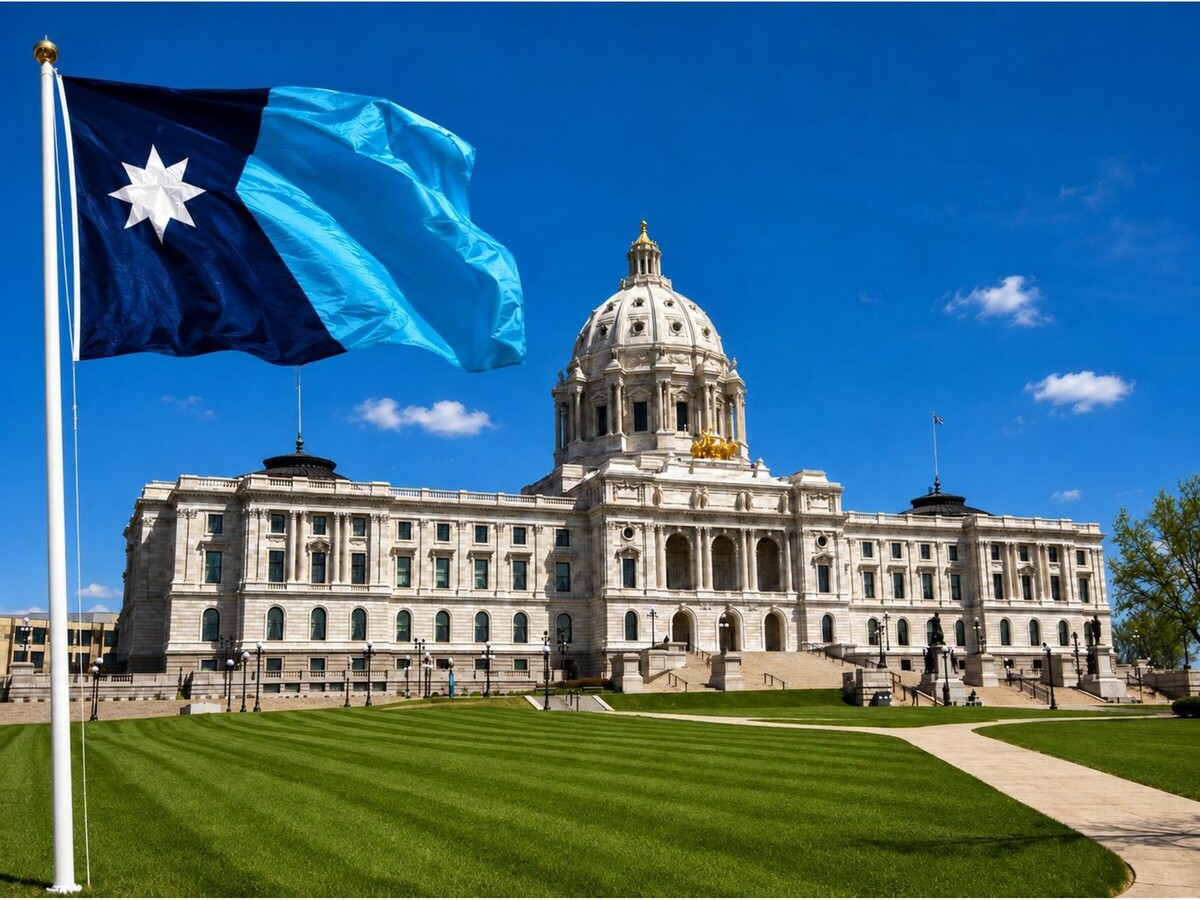



MINNEAPOLIS, MN (November 4, 2026).
Before the polls opened Tuesday, MinneapoliMedia urged Minnesotans to vote with an informed understanding of the state’s recent history and the constitutional responsibilities attached to public office. Voters responded by participating in an election that produced historic victories, returned several incumbents to office and left one congressional race separated by only a few hundred votes.
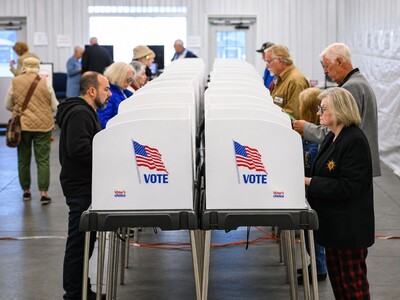
Minnesotans voted in Minneapolis and St. Paul, across suburban communities, throughout the north metro and in rural townships from the southern border to northern Minnesota. They voted early, mailed absentee ballots and appeared at neighborhood polling places. Election judges opened precincts, registered eligible voters, assisted residents, protected ballots and remained at work until the counting was finished.
The outcome will disappoint many Minnesotans. Elections necessarily produce winners and losers. Republican voters, independent voters and others who opposed the prevailing statewide candidates retain the same constitutional rights they possessed before Election Day.
The democratic process did not succeed because one party won most of Minnesota’s prominent statewide races. It succeeded because voters had meaningful choices, ballots were counted under established law, candidates conceded where the results became clear and election officials did not make premature declarations in a congressional contest that remained unresolved.
Minnesota should recognize that achievement while remembering that unofficial election-night returns remain subject to county canvassing, post-election review and state certification.
An Election That Made Minnesota History
Unofficial returns showed Amy Klobuchar and running mate Ben Schierer defeating Republican Lisa Demuth and Ryan Wilson in the governor’s race. Klobuchar received approximately 55.5 percent of the reported vote, positioning her to become the first woman elected governor of Minnesota.
Minnesota has elected women to Congress, the United States Senate, the Legislature, the judiciary and local offices. Until Tuesday, the state had never elected a woman as governor.
Klobuchar’s election corrects that absence in Minnesota’s political history, but the significance of the achievement should not shield the incoming administration from scrutiny. The responsibilities of the office remain unchanged. The next governor must lead people who supported her, opposed her or declined to participate in the election.
Minnesota will expect Klobuchar to address affordability, housing, education, health care, public safety, state fraud and the state’s relationship with the federal government. Her administration will be judged by its decisions, appointments and measurable results rather than the historical importance of her election.
Minnesota voters also elected Lt. Gov. Peggy Flanagan to the United States Senate over Republican Michele Tafoya. Unofficial returns showed Flanagan with approximately 54 percent of the vote to Tafoya’s 43 percent.
Flanagan, a citizen of the White Earth Nation, is positioned to become the first Native American woman to serve in the United States Senate. Her election carries national significance and creates an opportunity to bring additional attention to Tribal sovereignty, treaty obligations and the concerns of Native communities.
Historical representation, however, is only the beginning of the responsibility. Flanagan will enter a Senate facing consequential decisions involving the cost of living, health care, housing, immigration, federal spending and the limits of federal power. Minnesota will need a senator who can convert symbolic representation into effective public service.
The elections of Klobuchar and Flanagan expand Minnesota’s understanding of who can hold the state’s highest offices. Their victories deserve recognition, but neither office belongs to the person who occupies it. Public authority remains a temporary trust granted by voters.
Cedrick Frazier Wins a Closely Contested County Attorney Race
Cedrick Frazier defeated Anders Folk in the election for Hennepin County attorney. Folk conceded and congratulated Frazier after a campaign in which the candidates presented different approaches to prosecution, criminal-justice reform and public safety.
Reported returns showed Frazier receiving approximately 50.5 percent of the vote, compared with about 49 percent for Folk. Frazier will succeed Mary Moriarty, who chose not to seek another term. He will become the first Black man elected to lead Minnesota’s largest public law office.
The narrow result should influence how Frazier approaches the position. A victory by a small margin is valid, but it does not permit the winner to disregard the concerns of nearly half the county’s voters.
Folk’s supporters raised questions about violent crime, prosecution policies, public confidence and the direction of the county attorney’s office. Those concerns remain relevant even though Folk lost the election. Frazier should consider them as he selects senior staff, establishes charging policies and defines his relationship with local law-enforcement agencies.
The county attorney prosecutes crimes, advises county government, works with law-enforcement agencies and makes decisions that can permanently affect defendants, victims and families. Those duties require consistency and sound legal judgment.
Frazier campaigned on holding federal officers accountable when evidence supports prosecution under Minnesota law. That commitment must be administered carefully. Accountability cannot mean deciding the result of an investigation before examining the evidence. It requires obtaining the complete record, applying the law consistently and refusing to exempt any institution from legitimate scrutiny.
The deaths of Renee Macklin Good and Alex Pretti, along with the shooting of Julio Sosa-Celis, remain matters of public concern. Frazier will inherit an office involved in disputes concerning investigative evidence connected to those incidents.
If the evidence supports charges, the county attorney must be prepared to act. If it does not support charges, the public deserves a clear explanation based on law and evidence. The office must not be used to pursue political retaliation or protect favored institutions.
Statewide Officials Return to Unfinished Work
Minnesota voters reelected Attorney General Keith Ellison to a third term and Secretary of State Steve Simon to a fourth. Zack Filipovich defeated Scott Jensen in the state auditor’s race.
Ellison’s reelection followed a campaign in which the attorney general’s lawsuits against the federal government became a central issue. His office challenged federal actions connected to Operation Metro Surge, sought access to evidence involving shootings by federal personnel and represented Minnesota in disputes with Washington.
Voters returned Ellison to office, but reelection does not validate every decision his office has made or may make. The attorney general must distinguish legitimate constitutional litigation from partisan conflict. Minnesota should challenge federal action when the law and evidence justify intervention. It should cooperate with federal agencies when cooperation serves residents and respects constitutional limits.
The Attorney General’s Office also has extensive responsibilities unrelated to federal disputes. Minnesotans expect it to address consumer fraud, predatory housing practices, corporate misconduct, health-care abuses and the misuse of public money. Continuing fraud investigations involving state-funded programs require attention, effective prosecution and stronger administrative controls.
Steve Simon’s reelection gives him continuing responsibility for Minnesota’s election system. His immediate work includes completing the canvassing process, overseeing post-election reviews and maintaining public confidence while the First Congressional District remains unsettled.
Election integrity cannot depend on demands for unquestioning trust. It must be demonstrated through paper ballots, public testing, transparent counting, post-election review, lawful recount procedures and accessible records. Simon should continue explaining those systems to residents, including people who remain skeptical about election administration.
Filipovich will assume leadership of the state auditor’s office during a period of intense public concern about fraud and government management. The office reviews local-government finances, examines public spending and helps identify weaknesses in financial controls.
Concern about fraud should not become an excuse to eliminate necessary public programs. It should lead to better oversight, accurate documentation and consequences for public officials or private contractors who misuse government funds.
The statewide winners now carry renewed assignments. Their victories should be followed by serious work rather than an extended campaign celebration.
Voters Approve Increased School Funding
Minnesota voters approved a constitutional amendment changing how the state distributes earnings from the Permanent School Fund.
Unofficial results reported by the Secretary of State showed nearly 1.9 million yes votes and approximately 594,000 no votes, producing an estimated approval rate of more than 73 percent.
The amendment allows Minnesota to move from its existing distribution structure to a statutory framework under which school districts may receive 4.5 percent of the fund’s three-year average value. The previous distribution level was approximately 2.5 percent. The change is scheduled to take effect July 1, 2027.
The Permanent School Fund receives revenue from state trust lands and investment earnings. Its purpose is to support public education. The amendment was presented to voters as a way to increase distributions to schools without raising individual income or property taxes.
The decisive result does not relieve lawmakers and financial managers of their responsibility to preserve the fund’s long-term value. Higher distributions should not weaken the fund’s ability to support future generations of students.
Minnesota school districts continue to face special-education expenses, transportation costs, staffing shortages, building maintenance and differences in local tax capacity. Permanent School Fund payments will provide additional help, but they will not resolve every financial problem confronting public education.
The vote gives lawmakers a clear instruction to use the fund responsibly for students attending school today while protecting its value for students who will depend on it later. State officials should report how much additional money districts receive and how the new distribution affects the fund over time.
The First Congressional District Requires Patience
Minnesota’s First Congressional District remained too close to call Wednesday morning.
With all precincts reporting in the Secretary of State’s unofficial results, Democrat Jake Johnson led Republican incumbent Brad Finstad by 324 votes. The reported totals showed Johnson with 163,057 votes and Finstad with 162,733.
Johnson held 49.99 percent of the reported vote, while Finstad held 49.89 percent. A margin that narrow requires careful review and public patience.
Supporters of either candidate may feel pressure to declare victory or treat routine counting procedures as evidence of misconduct. Candidates, political organizations and news outlets should avoid premature conclusions.
Close elections occur in competitive democracies. A narrow margin does not establish that fraud or administrative failure occurred.
Minnesota law provides procedures for canvassing vote totals, reviewing precinct results and conducting recounts when margins fall within statutory limits. Those procedures should determine the First District outcome.
Every lawful ballot must be counted, and both candidates must receive the same procedural protections. Election officials should correct any documented errors and communicate clearly with the public.
Neither campaign should pressure election workers or encourage supporters to distrust the process merely because the result remains uncertain. Democracy is not weakened when a close election requires additional time. It is weakened when political pressure attempts to replace the lawful count.
Minnesota’s Congressional Delegation Changes
Matt Little won Minnesota’s Second Congressional District, preserving DFL control of the seat after Rep. Angie Craig decided not to seek reelection. Kelly Morrison won another term in the Third District. Betty McCollum and Ilhan Omar retained their seats in the Fourth and Fifth districts.
Unofficial results showed Little with approximately 57 percent of the vote, Morrison with 64 percent, McCollum with 73 percent and Omar with more than 76 percent.
Republicans Michelle Fischbach, Tom Emmer and Pete Stauber also retained their seats, preserving Minnesota’s politically divided congressional delegation.
That division reflects the state more accurately than any claim that Minnesota speaks with one political voice. The Twin Cities remain heavily Democratic, while several rural and exurban districts continue supporting Republicans. Suburban communities remain competitive.
Members of Congress will confront federal spending, immigration, health care, agriculture, national security, Tribal affairs and oversight of federal enforcement. They will also provide constituent services to residents who did not vote for them.
Winning a congressional election does not authorize a representative to serve only the party base. Every district contains political minorities whose legal rights and public needs remain unchanged after the ballots are counted.
Minnesota’s congressional delegation will disagree on major issues. Those disagreements should not prevent its members from cooperating when the state’s interests require a united response.
Election Workers Carried Out the Process
Candidates receive most of the attention on election night, but Minnesota’s election depended on thousands of people whose names did not appear on the ballot.
Election judges opened polling places, processed registrations, assisted voters and maintained ballot security. City and county employees handled absentee ballots and reported precinct totals. Poll workers helped residents with disabilities and answered questions from people voting for the first time.
Votes were counted through paper ballots, tabulation equipment, recorded precinct totals and county reporting procedures established before anyone knew which candidates would prevail.
The election is not yet complete. County canvassing boards must review the results. Selected precincts will undergo public post-election hand counts for governor, United States senator and congressional races to confirm the accuracy of voting equipment.
The State Canvassing Board is scheduled to meet November 19 to certify results for state and federal offices. If a recount becomes necessary, it will occur under procedures established by law after the relevant results become official.
These steps are part of the election, not technical delays that can be ignored. News organizations should continue describing the current numbers as unofficial. A projected winner does not become the officially certified winner until the canvassing process is completed.
Election Victories Do Not Grant Unlimited Power
The winners will soon receive the public recognition and institutional authority attached to their offices. That authority remains limited by law and accountable to the public.
Klobuchar’s historic election does not place her administration beyond criticism. Flanagan’s historic representation does not remove her duty to answer difficult questions. Frazier’s victory does not permit selective justice. Ellison’s reelection does not make every lawsuit correct. Simon’s experience does not eliminate the need for transparency.
Every officeholder will make mistakes. The public should expect those mistakes to be acknowledged and corrected.
The officials elected Tuesday must protect the rights of people who voted against them. Republican voters should not be treated as enemies because DFL candidates won statewide races. DFL voters living in Republican congressional districts should not be dismissed because their preferred candidates lost. Independent and minor-party voters remain constituents of the people elected to serve them.
Election victory should be followed by serious governing, not an effort to humiliate the losing side. Winners should thank their supporters and begin listening to the voters they did not persuade.
Defeated Candidates and Opposition Parties Retain Responsibilities
Democratic government also requires responsible conduct from candidates and parties that lose elections.
A concession does not mean that policy disagreements have ended. It recognizes that the lawful process produced a result and that political opposition must continue through constitutional means.
Tafoya, Demuth, Folk and other defeated candidates represented substantial groups of Minnesota voters. The issues their campaigns raised should not be disregarded because the candidates lost.
Concerns about affordability, fraud, crime, taxation and the administration of state government remain legitimate. The winners would be mistaken to interpret victory as proof that those concerns no longer matter.
Opposition parties should review budgets, question appointments, challenge weak policies and present workable alternatives. Opposition becomes destructive when it abandons evidence, attacks election workers without proof or treats every attempt at compromise as betrayal.
Minnesota needs elected majorities capable of governing and opposition parties capable of holding them accountable.
The Pre-Election Call to Conscience Becomes a Governing Test
Before the polls opened, MinneapoliMedia asked voters to consider which candidates would defend constitutional rights, protect essential services and preserve independent investigations when federal power affects Minnesota communities.
Voters have selected the officeholders who will carry those responsibilities.
The winners must now demonstrate that their campaign commitments were supported by workable plans. Minnesota needs preparation for future disputes involving federal authority while recognizing the legitimate responsibilities of federal agencies.
State and local officials must protect residents without encouraging confrontation or interference with lawful enforcement. They must preserve evidence, use judicial remedies and maintain access to schools, hospitals and local services when large enforcement operations disrupt communities.
They must also address the ordinary concerns that remained while campaigns dominated public attention. Minnesotans continue to face high housing costs, expensive groceries, utility bills, classroom funding problems, health-care barriers, crime, transportation needs and fraud in public programs.
Democratic institutions must do more than produce orderly elections. They must govern effectively after the ballots are counted.
The Public Retains Its Authority
Minnesotans have assigned public authority to the people they elected. They have not surrendered the right to examine how those officials use it.
Residents may continue requesting public records, attending government meetings, criticizing officeholders, supporting or opposing legislation and organizing around public policy. They will have another opportunity to vote when the next election arrives.
The democratic process succeeded Tuesday because Minnesotans participated, election workers administered the process and candidates conceded where the outcomes became clear. Officials overseeing the First District acted responsibly by allowing an exceptionally close contest to remain unresolved.
Democracy does not guarantee that every voter will approve of the result, and it does not produce perfect leaders. It gives the public a peaceful way to choose who governs, remove officials who fail and change the direction of government without violence.
Minnesota should recognize that achievement without assuming the work is finished. Most projected winners are known, but certification and any necessary recounts must still proceed.
After that process is complete, the elected officials must govern, the opposition must provide serious scrutiny, journalists must continue examining public power and residents must remain engaged.
Public office is a temporary trust rather than the personal property of the winner. Minnesota voters have assigned that trust to a new group of leaders.
Those leaders must now demonstrate that they deserve it.

Local stories matter. Subscribe free to MinneapoliMedia and receive independent news, community reporting and important updates from Minneapolis, the North Metro and communities across Minnesota.
SUBSCRIBE FREE: https://minneapolimedia.town.news/subscribe
MinneapoliMedia | Community. Culture. Civic Life


Light drizzle, with a high of 54 and low of 50 degrees. Mist during the morning, light drizzle for the afternoon,