58° and Overcast
Image
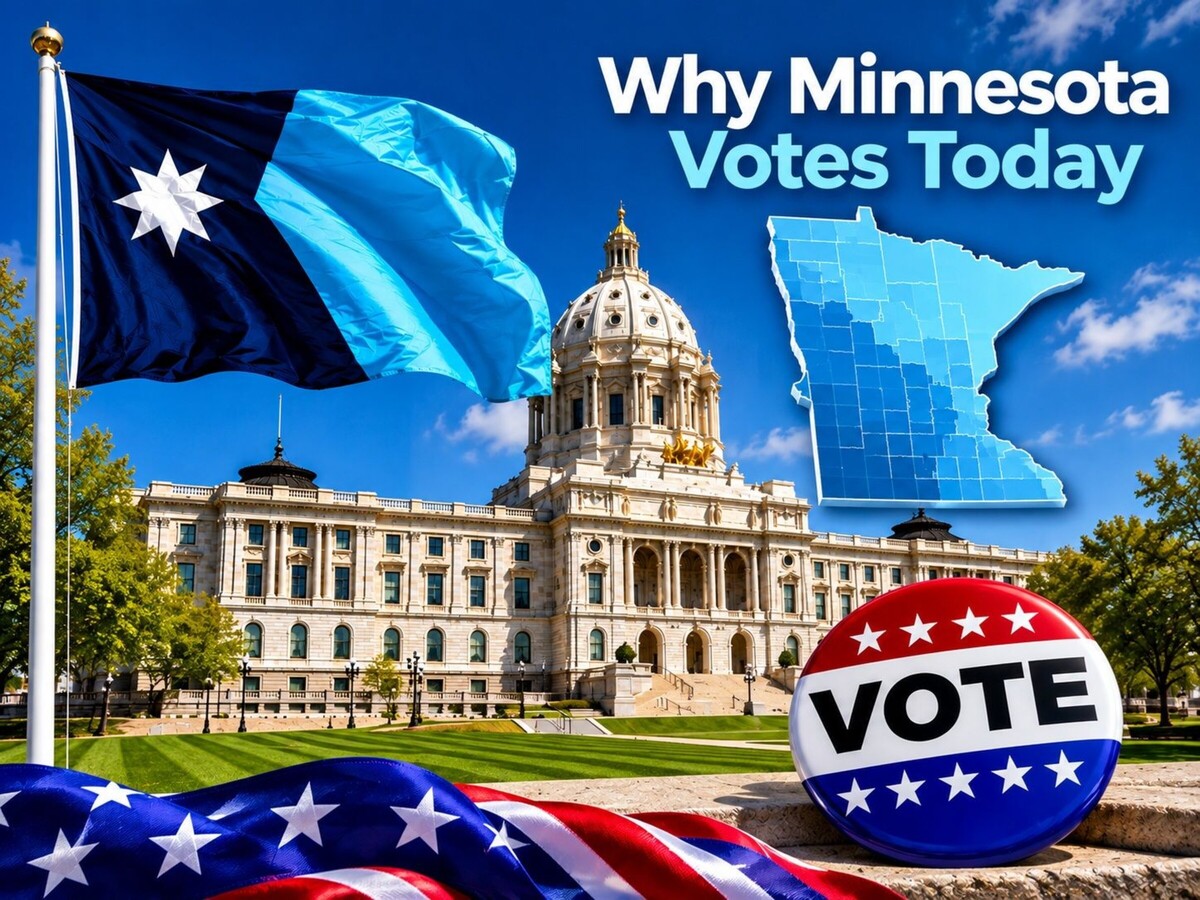



Voters will consider taxation, education funding, public safety, housing, health care and infrastructure. This election also requires Minnesotans to apply a vital lesson from the past year: state and local leaders must know how to protect constitutional rights, maintain public trust and exercise lawful oversight when federal operations directly affect Minnesota communities.
Civic memory is a practical safeguard against unchecked government power. The large federal enforcement operations conducted in Minnesota over the past year tested regional systems, strained public institutions and raised serious legal questions about investigative authority, access to evidence and independent oversight.
Federal authorities possess legitimate powers that must be respected when exercised within constitutional limits. State and local officials also have an obligation to protect the rights, safety and wellbeing of people living within Minnesota’s borders.
Defending Transparency and State Investigative Authority
Constitutional government depends on divided authority and independent review. It does not require state institutions to accept every federal account without examination.
When a federal enforcement operation produces a fatal encounter or other serious incident in Minnesota, state investigative bodies such as the Minnesota Bureau of Criminal Apprehension have a responsibility to pursue thorough and independent investigations within their lawful jurisdiction.
Independent state review does not presume that an officer committed a crime. It does not deprive a federal agent of due process or any applicable legal defense or immunity. It allows investigators to preserve evidence, establish facts and determine whether Minnesota law was violated.
The deaths of Minnesota residents Renee Macklin Good and Alex Pretti during federal enforcement activities in January generated significant public concern and continuing legal disputes over investigative access.
Federal authorities maintained that officers acted within their lawful authority. State officials reported substantial obstacles while seeking access to physical evidence, body-camera recordings and the scenes of the shootings. Court filings by the Minnesota Attorney General, Hennepin County Attorney’s Office and BCA described physical and administrative barriers that led state authorities to seek judicial relief.
No criminal charges had been filed in connection with either death as of late October. The complete legal evaluation therefore remains subject to investigative and judicial proceedings.
Recognizing that those proceedings remain unresolved does not require silence about the importance of independent oversight. Public confidence deteriorates when access to evidence depends entirely on the institution whose personnel are being investigated.
Minnesota officials must use courts and established legal procedures to resolve jurisdictional disputes. State investigators must follow the evidence without political direction or pressure to reach a predetermined conclusion.
If the evidence establishes that officers acted lawfully, an independent investigation will strengthen that conclusion. If investigators uncover misconduct, accountability will protect the legitimacy of every officer who performs difficult work within the law.
Protecting Municipal Stability and Public Trust
The consequences of major enforcement operations extend beyond the people directly targeted.
Municipal assessments and regional surveys reported significant disruptions during peak enforcement periods. Businesses experienced declines in customer traffic and workforce participation. Schools distributed fewer meals as attendance fell. Some residents postponed medical care or avoided public institutions because they feared encounters with federal officers.
Federal authorities maintained that the operations served immigration enforcement and public-safety objectives. Local governments still had to manage the immediate consequences for schools, hospitals, businesses and neighborhoods.
Public safety cannot exist without a working level of trust between residents and civic institutions. Communities are not safer when people become afraid to report crimes, seek emergency treatment or send their children to school.
Minnesota’s elected leaders must be ready to preserve essential services, provide accurate public information and ensure that schools, hospitals and other civic institutions remain accessible during large federal operations.
This does not require state officials to obstruct federal law. It requires them to perform the duties entrusted to state and local government.
Distinguishing Civic Care From Obstruction
During periods of fear and disruption, Minnesota residents, faith communities, nonprofit organizations and neighborhood networks frequently assist families with food, transportation and other essential needs.
These efforts represent ordinary civic responsibility.
Providing groceries to a family afraid to enter public spaces is not the same as interfering with an arrest. Driving a neighbor to a medical appointment is not obstructing an officer. Checking on children who have missed school does not prevent the federal government from enforcing the law.
The First Amendment also generally protects the right of journalists and members of the public to observe, photograph and record government officials performing their duties in public. That right remains subject to lawful restrictions involving safety, distance and noninterference.
It does not authorize trespassing, physical obstruction or refusal to follow valid safety orders.
Maintaining these distinctions protects civil liberties while preserving public order. It also prevents peaceful public observation and basic community assistance from being mischaracterized as unlawful activity.
What Minnesota’s Elected Leaders Must Do
The governor must ensure that state agencies, cities, schools and hospitals know how to communicate and respond when a major federal operation disrupts ordinary life. Minnesota should not be forced to invent its emergency coordination system after a crisis has already begun.
The attorney general and county prosecutors must use established legal procedures to preserve state investigative authority, secure access to evidence and seek judicial review when jurisdictional disputes arise. Their work must remain based on law and evidence rather than partisan loyalty.
State legislators must provide stable funding for the BCA, public defenders, civil legal aid, public-safety agencies and emergency municipal assistance. Oversight cannot function when the institutions responsible for carrying it out lack personnel, training or resources.
Minnesota’s congressional delegation must pursue clear federal standards for evidence sharing, body-camera use, public reporting and independent review following serious uses of force by federal officers.
Local officials must maintain public services and communicate honestly with residents. They should neither minimize legitimate community concerns nor promise powers that municipal governments do not possess.
Each office carries different legal authority. Voters should be skeptical of candidates who claim they can prevent every federal action or who insist that state officials have no responsibility when federal conduct causes serious local harm.
Competent leadership begins with understanding what an office can lawfully do and having the courage to use that authority when necessary.
Constitutional principles that change according to political convenience are not principles. They are political instruments.
Government exists to protect rights as well as enforce statutes. No badge, agency or political mandate places public power beyond constitutional examination.
The Responsibility of the Ballot
Minnesotans do not need to answer complicated disputes between governments with panic or physical confrontation. Democracy provides a lawful and powerful instrument through which the people can determine who exercises public authority.
That instrument is the ballot.
Voting cannot rewrite history or reverse a past tragedy. It cannot return Renee Good or Alex Pretti to their families. It cannot immediately recover lost wages, restore missed school days or remove the fear experienced by families during the federal surge.
Voting can determine who will hold public trust when the next serious decision arrives.
It can determine whether Minnesota’s governor prepares public institutions before a crisis or reacts after the damage has occurred. It can decide whether legislators fund independent oversight, whether prosecutors pursue evidence regardless of the agency involved and whether members of Congress demand transparency from federal institutions.
Minnesotans should judge candidates by more than their campaign language. They should examine whether those candidates respect constitutional limits, understand the authority of the offices they seek and are prepared to defend lawful state responsibilities when political pressure makes doing so difficult.
The standard must remain the same regardless of which party controls Washington. Federal power does not become harmless when exercised by a preferred administration, and state oversight does not become illegitimate when directed toward a politically favored agency.
As Minnesotans cast their votes today, their choices should be guided by memory, evidence and constitutional principle.
Minnesota needs leaders with the legal competence to cooperate with federal authorities when cooperation serves public safety. It also needs leaders with the institutional courage to seek judicial review when federal actions raise serious constitutional questions.
Public officials swear obligations to constitutions and laws, not political parties or administrative factions.
Minnesota cannot know when another dispute between federal authority and state responsibility will arise, which administration will be involved or what form the conflict may take.
The state can decide whether the leaders entrusted with public authority will be prepared to preserve evidence, protect essential services, defend lawful expression and demand accountability through constitutional means.
Today, Minnesota’s voters make that decision at the ballot box.
Local stories matter. Subscribe free to MinneapoliMedia and receive independent news, community reporting and important updates from Minneapolis, the North Metro and communities across Minnesota.
SUBSCRIBE FREE: https://minneapolimedia.town.news/subscribe
MinneapoliMedia | Community. Culture. Civic Life


Overcast, with a high of 63 and low of 54 degrees. Overcast for the morning, light drizzle in the afternoon, mist during the evening, light drizzle overnight.