66° and Partly cloudy
Image



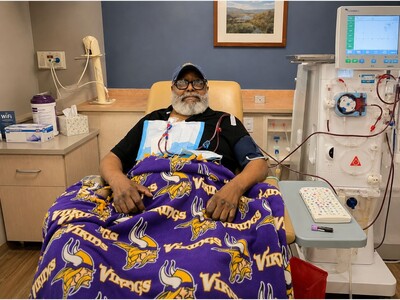
Children with profound medical needs remained at home instead of in hospital beds. Parents managed ventilators, feeding tubes, seizure medications, oxygen monitors, and overnight nursing schedules inside living rooms and bedrooms converted into miniature intensive care units. Private insurers covered a substantial portion of the care under a Minnesota law enacted in 2010. Medicaid supplemented the rest. The arrangement was expensive, but it allowed some of the state’s most medically fragile children to live with their families instead of institutions.
Then, in late 2025 and early 2026, several Minnesota families received notices that changed everything.
Major insurers, including HealthPartners and Medica, began enforcing strict contractual limits on home nursing coverage for children enrolled both in private insurance plans and Minnesota’s Medical Assistance program. Families and healthcare advocates said the reinterpretation effectively threatened the foundation of in-home pediatric nursing care for roughly 250 Minnesota children with severe disabilities and complex medical conditions.
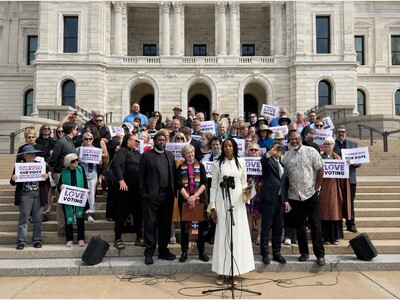
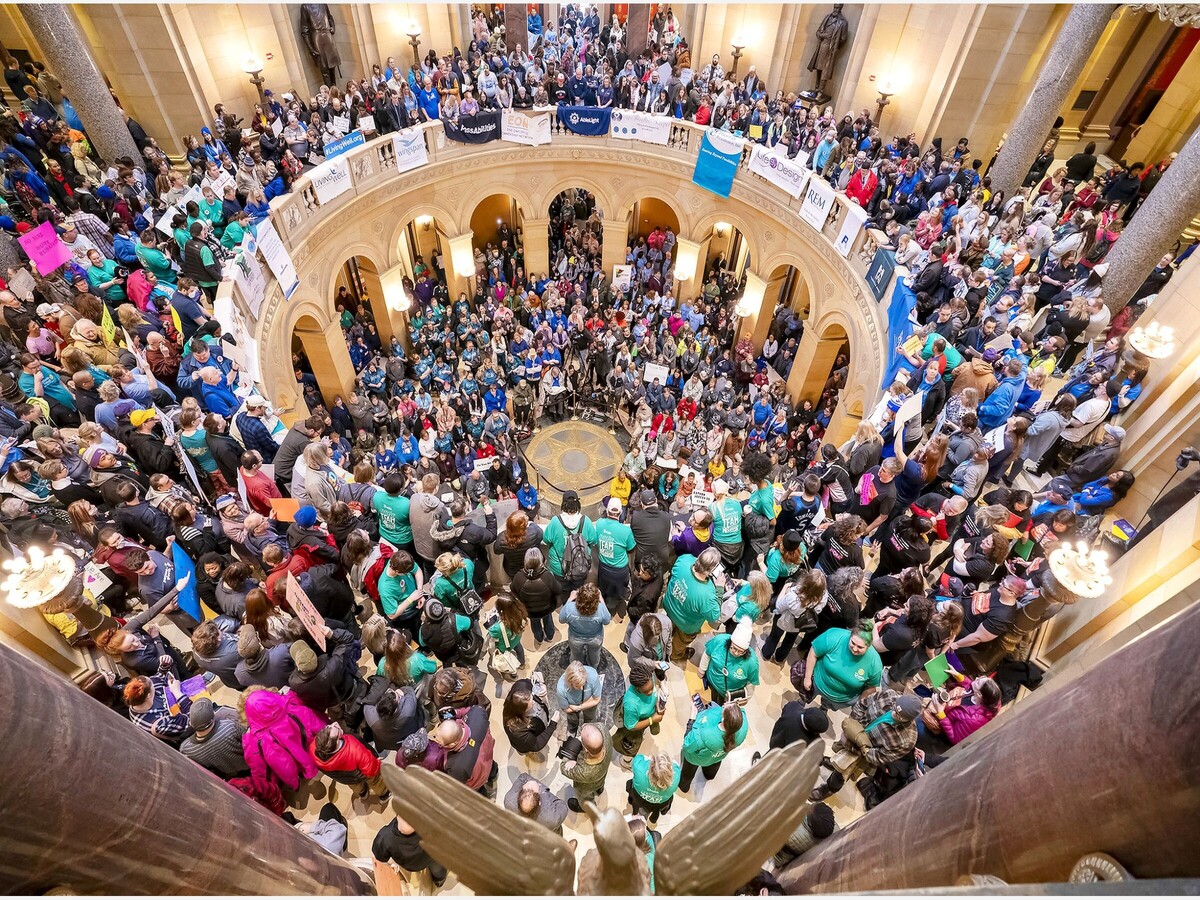
What followed became one of the most emotionally charged healthcare disputes of Minnesota’s 2026 legislative session: a battle over insurance obligations, Medicaid costs, legislative procedure, and the question of who ultimately bears responsibility for medically fragile children whose survival depends on round-the-clock care.
By the final night of the legislative session, supporters believed they still had a path forward.
Then the clock ran out.
The bill died without a final House vote.
At the center of the fight was Senator Liz Boldon, a Rochester Democrat and longtime healthcare advocate who argued that insurers were exploiting a loophole never intended by lawmakers when the original statute was passed fifteen years earlier.
“Minnesota families are being abandoned,” Boldon said following adjournment, accusing House Republican leadership of blocking legislation that she argued merely clarified existing law rather than creating a new mandate.
The underlying statute dates back to 2010, when Minnesota lawmakers sought to prevent private insurers from shifting expensive home nursing costs onto taxpayers through Medicaid. The law required commercial insurance plans to cover medically necessary home care nursing services for patients dually enrolled in private insurance and Medical Assistance. For more than a decade, insurers generally complied with that interpretation.
But insurers argued that the law never prohibited benefit caps contained within individual insurance contracts.
The distinction became financially and medically enormous.
Families testified before lawmakers that some insurers were now limiting coverage to 120 visits annually or roughly 240 hours per year. For children prescribed 84 hours of nursing care each week, advocates noted, that amount could be exhausted in less than three weeks.
Insurance companies defended their interpretation publicly.
Representatives for HealthPartners and Medica stated that children enrolled in both commercial insurance and Medical Assistance ultimately retain Medicaid coverage after private plan benefits are exhausted. Company representatives also argued that broader unlimited obligations could significantly increase insurance costs in Minnesota’s individual and family healthcare markets. CBS Minnesota Coverage
Yet healthcare providers and nursing agencies warned lawmakers that Medicaid reimbursement rates alone often do not sustain complex pediatric nursing operations.
According to testimony presented during the legislative session, private insurance reimbursement for high-acuity pediatric home nursing can approach approximately $100 per hour, while Medicaid reimbursement rates hover closer to roughly $63 per hour. Providers argued that the difference affects staffing availability across Minnesota’s already strained pediatric nursing workforce. CBS Minnesota Coverage
The practical consequence, advocates said, is that even when Medicaid technically authorizes nursing hours, agencies frequently cannot recruit or retain nurses willing to work cases reimbursed solely at Medicaid rates.
Families described terrifying scenarios.
Some parents testified that without adequate home nursing support, they could be forced to leave employment entirely to provide care themselves. Others warned their children could ultimately require long-term hospitalization not because hospital-level care was medically preferable, but because no sustainable home-care infrastructure would remain available.
Healthcare advocates told lawmakers that long-term hospitalization for medically fragile children can cost roughly $10,000 per night, dramatically exceeding the cost of maintaining home nursing services. CBS Minnesota Coverage
In response, Boldon introduced Senate File 4502 during the 2026 session. The proposal sought to explicitly prohibit insurance companies from imposing quantity or dollar caps on medically necessary home nursing care for dually enrolled children. Representative Robert Bierman of Apple Valley sponsored the companion legislation in the House. Minnesota Legislature Bill Information SF4502
Supporters repeatedly emphasized that the legislation was intended as a clarification of legislative intent rather than an expansion of benefits.
The measure attracted bipartisan co-authors and initially appeared to have momentum.
But the bill quickly became entangled in the increasingly combative dynamics of a divided Minnesota Legislature.
On March 25, the House Commerce Finance and Policy Committee voted against advancing the House version of the legislation after Republican committee members opposed the proposal.
Supporters then shifted strategy.
The Senate successfully incorporated Boldon’s language into its version of the omnibus commerce policy legislation during conference committee negotiations. Yet during final closed-door negotiations between House and Senate conferees, House Republicans refused to accept the provision into the final agreement.
Still, supporters did not give up.
As lawmakers raced toward the constitutional midnight adjournment deadline on Sunday, May 17, Senate Democrats mounted a final procedural attempt to save the proposal. They amended the language onto Senate File 3967, a separate standalone measure, and passed it through the Senate on a 40-27 vote. Minnesota Senate Journal and Floor Proceedings
But the House never took the bill up for final passage before adjournment.
With that, the legislation collapsed.
The failure underscored how even narrowly tailored healthcare legislation with bipartisan sponsorship can become trapped inside broader institutional deadlock during the final hours of session negotiations.
It also left Minnesota families confronting immediate uncertainty.
Parents who spent months lobbying lawmakers now face the possibility that insurers may continue enforcing limits they believe violate both the spirit and intent of Minnesota law. Some advocates have begun urging Governor Tim Walz and the Minnesota Department of Commerce to intervene administratively rather than legislatively by enforcing the original statute more aggressively through regulatory authority.
Whether the executive branch will take such action remains unclear.
Meanwhile, families caring for medically fragile children remain caught between competing interpretations of insurance law and a healthcare financing system increasingly strained by rising costs and workforce shortages.
For many of those parents, the debate unfolding at the Capitol was never abstract.
It was about whether their child could continue sleeping at home safely.
It was about whether exhausted parents could survive another overnight medical emergency without nursing assistance.
It was about whether Minnesota’s healthcare system would continue supporting medically complex children in family homes or gradually push them back toward institutional care because of reimbursement structures and unresolved legal ambiguity.
And in the final hours of the legislative session, despite months of testimony, committee hearings, negotiations, and emotional public appeals, the answer remained unresolved.
MinneapoliMedia | Community. Culture. Civic Life.



Sunny, with a high of 87 and low of 64 degrees. Sunny during the morning, patchy rain nearby overnight.