60° and Clear
Image
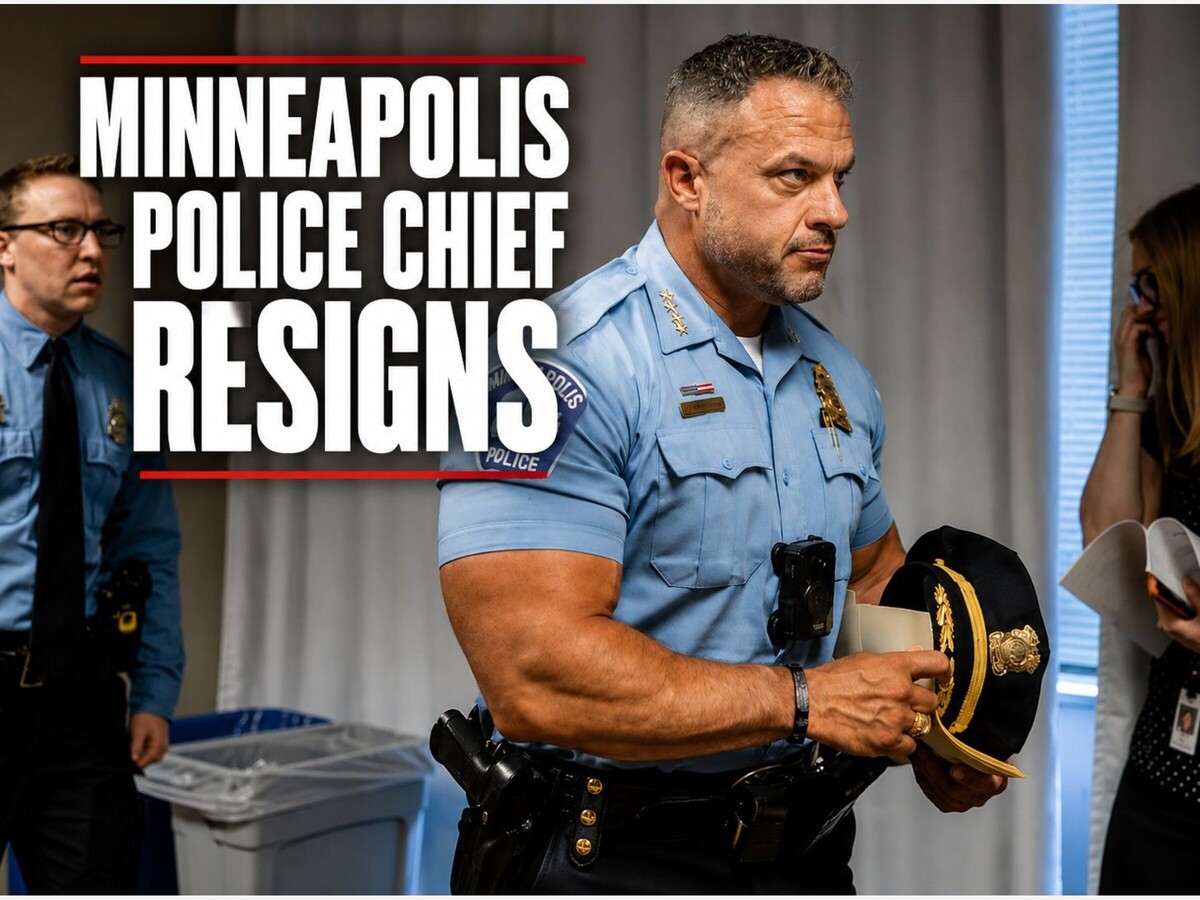



O’Hara’s departure comes after a city-commissioned personnel investigation concluded that he likely interfered with an earlier internal inquiry by deleting a contact from his cellphone during the investigative process, conduct Mayor Jacob Frey described as “serious misconduct” incompatible with the responsibilities of the city’s top law enforcement official.
The findings triggered an abrupt reversal for a mayor who, only weeks earlier, had publicly stood beside O’Hara to announce his renomination for a second term as police chief.
Now, less than four years after arriving in Minneapolis as an outsider brought in to help repair one of America’s most publicly damaged police departments, O’Hara exits under the weight of the same institutional questions that have haunted Minneapolis policing for years: accountability, transparency, public trust, internal culture, and whether meaningful reform can survive the pressures of politics, public safety crises, and human failure.
According to records first reported by The New York Times, investigators found no evidence substantiating allegations that O’Hara engaged in sexual relationships with city employees, rumors that had circulated internally for months. But the investigation shifted toward whether the chief improperly interfered with the inquiry itself.
The resulting report concluded that O’Hara likely deleted a phone contact during the early stages of the investigation. Frey, in a formal written reprimand issued Tuesday, described the action as demonstrating “poor judgment” and said the conduct fundamentally undermined the integrity expected of the position.
“Your behavior, as substantiated by the investigation, demonstrates poor judgment, is inconsistent with the level of integrity this role requires, and has made it extraordinarily difficult for you to continue effectively in your role,” Frey wrote in the reprimand letter obtained by multiple media outlets.
City spokeswoman Jennifer Lor also confirmed that O’Hara remains the subject of 17 additional personnel complaints that are still under review, though city officials have not publicly detailed the nature of those complaints.
Assistant Chief Katie Blackwell, one of the department’s longest-serving senior leaders, has been named interim chief while the city determines its next steps.
For Minneapolis, the resignation lands with unusual political and symbolic weight.
When O’Hara was appointed in November 2022, the city was still struggling through the institutional aftershocks of Floyd’s murder by former Minneapolis police officer Derek Chauvin in May 2020. Entire sections of the city had erupted in protest and unrest. Public confidence in the department had collapsed. Officers were retiring, resigning, or taking disability leave at historic levels. City leaders faced simultaneous pressure to both radically reform the department and maintain public safety during rising violent crime rates.
At the time of O’Hara’s hiring, Minneapolis had not appointed an outside chief in roughly 16 years. The decision to recruit O’Hara from Newark, New Jersey, where he had experience operating within a federally monitored reform environment, was viewed as an attempt to bring in leadership unconnected to Minneapolis’ entrenched internal culture.
But the scale of the challenge confronting him was extraordinary.
The Minnesota Department of Human Rights had already concluded that the Minneapolis Police Department engaged in a pattern of racially discriminatory policing practices, excessive force, and systemic accountability failures. The U.S. Department of Justice later reached similar conclusions following its own sweeping federal civil rights investigation into the department.
Those findings led Minneapolis into overlapping state and federal reform structures that continue reshaping nearly every aspect of departmental operations, including use-of-force policies, supervision, training, data collection, officer wellness, discipline systems, and community oversight.
Meanwhile, the department’s staffing crisis deepened.
Although city budgets continued authorizing more than 700 sworn officer positions, the number of deployable officers available for regular street patrol duties frequently hovered between roughly 560 and 600 during O’Hara’s tenure, according to city staffing data and public reports. The shortage strained investigative units, response times, community policing efforts, and officer morale.
O’Hara attempted to stabilize the department through aggressive recruitment, visibility-focused policing strategies, and efforts to restore confidence among rank-and-file officers while simultaneously convincing skeptical residents that reform efforts were genuine.
His tenure produced moments of both praise and controversy.
One of the department’s most publicly recognized operational successes came through “Operation Safe Summer,” a targeted violence reduction initiative that concentrated high-visibility patrols and enforcement efforts in some of the city’s highest-crime corridors. City leaders credited the initiative with helping reduce homicides and gun violence in targeted areas during portions of his administration.
O’Hara and the department also received praise following a rapid police response to a deadly August church shooting that left two children dead and multiple people injured. Community leaders and public safety officials said the response likely prevented additional casualties during an unfolding scene of chaos and panic.
But some of the most politically explosive moments of O’Hara’s tenure emerged not from Minneapolis itself, but from federal enforcement operations occurring around it.
In late 2025 and early 2026, Minneapolis became a focal point of aggressive immigration enforcement operations carried out under the Trump administration. Those operations triggered demonstrations, intense community backlash, and several enforcement-related shootings involving federal agents.
O’Hara drew national attention after publicly criticizing the tactics used during the operations, accusing federal agents of racial profiling, poor communication with local law enforcement command structures, and actions that he argued endangered both civilians and local officers.
His comments placed him in rare public opposition to federal enforcement agencies and elevated his national profile far beyond Minneapolis.
At the same time, O’Hara faced mounting internal scrutiny over personnel decisions, including backlash tied to the hiring of Officer Tyler Timberlake, a former Virginia officer previously prosecuted and later acquitted in a controversial use-of-force case. Critics accused the department of insufficient vetting after records showed O’Hara had signed off on hiring documents despite initially suggesting limited awareness of the officer’s full background.
Timberlake was later terminated, but the controversy intensified broader debates surrounding transparency and judgment within department leadership.
Now, with O’Hara’s resignation, Minneapolis enters yet another uncertain transition point in the long and unfinished aftermath of Floyd’s murder.
The city remains under legally enforceable reform obligations. Questions surrounding police staffing, officer retention, public trust, violent crime, alternative emergency response systems, and the future structure of the city’s broader Office of Community Safety all remain unresolved.
For many Minneapolis residents, the resignation may feel less like an isolated scandal than another chapter in an ongoing civic struggle over what policing in Minneapolis is supposed to become.
And for a city that has spent the last six years at the center of America’s debate over policing, accountability, race, and public power, the departure of Brian O’Hara underscores a difficult reality: leadership changes alone have never been enough to resolve the deeper fractures underneath the institution itself.
MinneapoliMedia | Community. Culture. Civic Life



Sunny, with a high of 77 and low of 59 degrees. Overcast in the morning, sunny for the afternoon, clear during the evening,