66° and Partly cloudy
Image



There are interviews that function as public conversations, and there are conversations that feel closer to oral history, memory preservation, and cultural testimony.
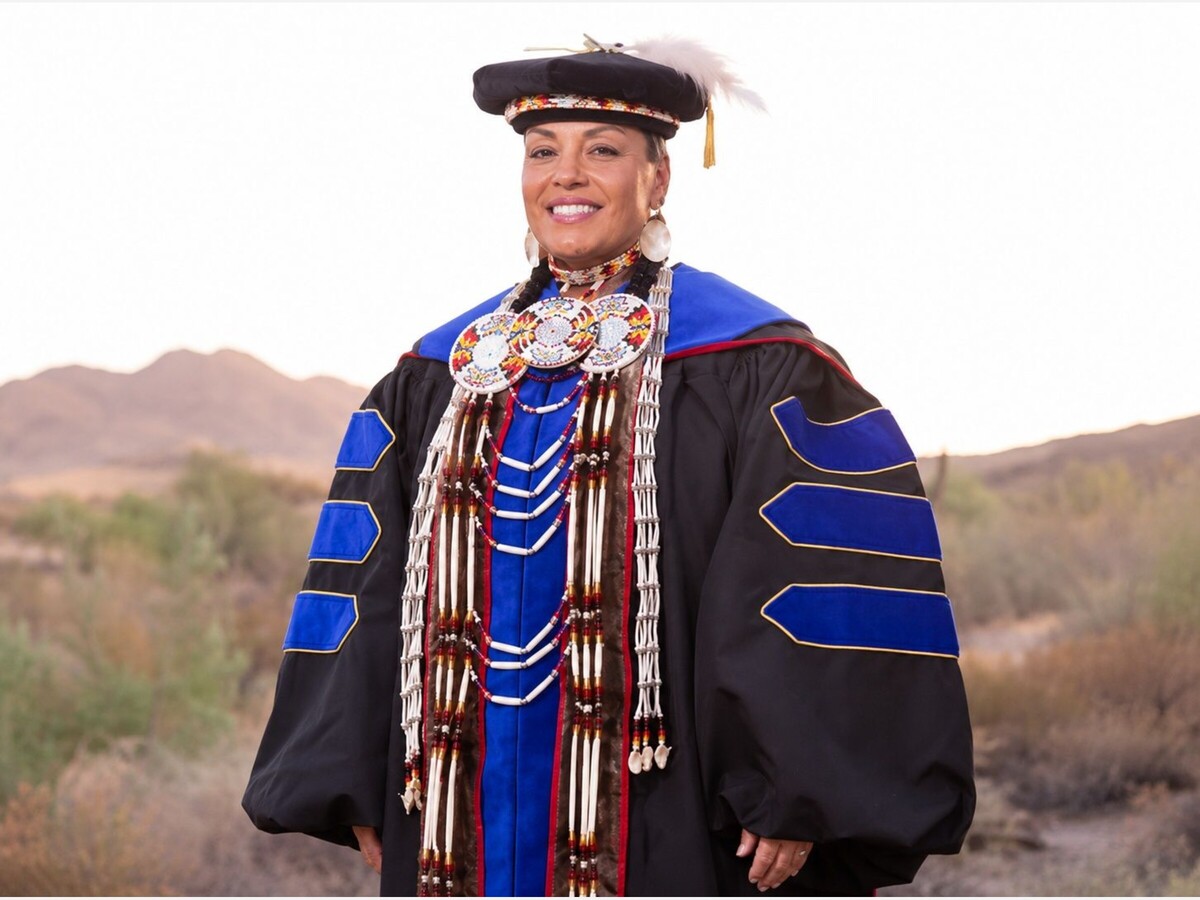
The inaugural long-form installment of MinneapoliMedia’s Voices From Around America series with Dr. Stephanie Little Hawk-Big Crow belongs firmly in the second category.
What began as an interview evolved into something far more layered and intimate: a sustained reflection on Lakota identity, grandmothers, language preservation, Indigenous sovereignty, intergenerational trauma, spiritual resilience, and the responsibilities Indigenous women continue carrying across generations.
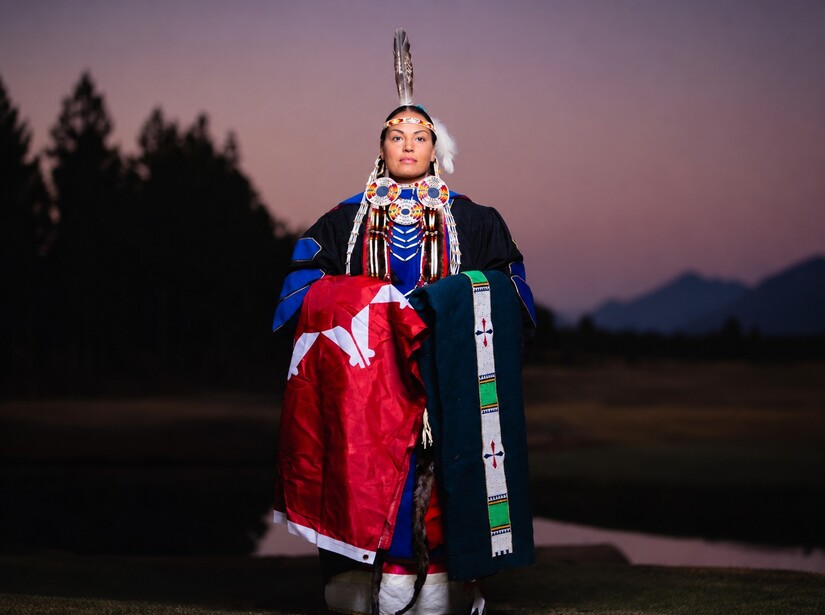
Dr. Stephanie Little Hawk-Big Crow, an Oglala Lakota scholar, language revitalization advocate, grandmother, researcher, and protector of Indigenous knowledge systems, joined MinneapoliMedia from her home after several elders who had originally intended to participate were called away to an emergency tribal council meeting.
Even in their absence, however, the elders remained central to the conversation.
Throughout the interview, Dr. Little Hawk-Big Crow consistently returned to the women who raised her, the grandmothers who shaped her worldview, and the cultural responsibilities she believes must continue long after the current generation is gone.
The conversation unfolded slowly, deliberately, and with unusual emotional openness.
It moved between childhood memories on the Pine Ridge Indian Reservation, astrophysics, Lakota cosmology, language preservation, environmental stewardship, identity, trauma, and the survival of Indigenous nations in a rapidly changing technological world.
At multiple points, Dr. Little Hawk-Big Crow returned to one central idea.
Human beings, she said, must learn to “call their spirit back.”
What follows is the preserved and carefully edited archival conversation from Voices From Around America Season 1, Episode 1.
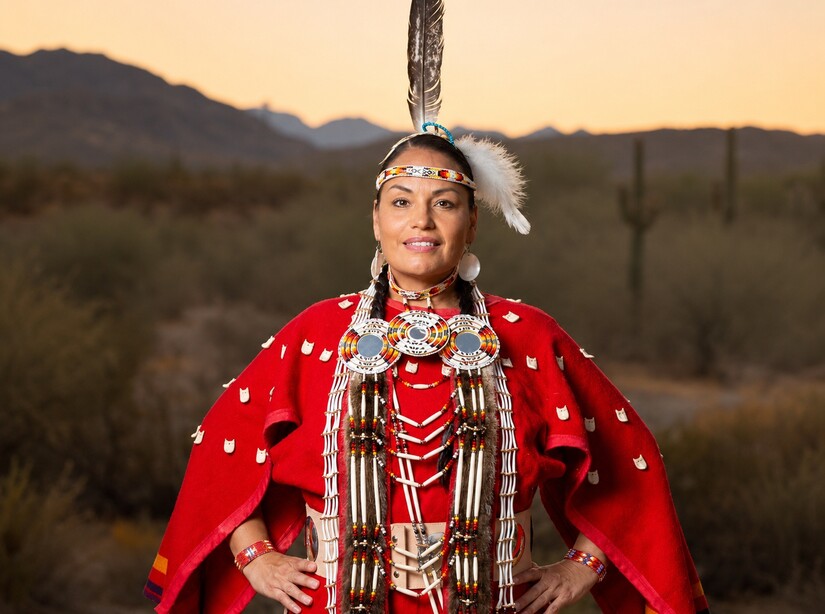
Tom Akaolisa:
First of all, thank you very much for making the time to join me for this event.
What we are doing is this is the first in a number of series that we are going to be running. We call it Voices From Around America.
What we want to do is preserve thoughtful, human-centered conversations that help us better understand the people, histories, communities, and lived experiences shaping this country.
The work that you do, and the way you speak about Indigenous life, not simply as history but as continuity involving ancestors, language, healing, responsibility, memory, and future generations, deeply moved me.
What especially touched me about this conversation is the emphasis you have placed on elders, grandmothers, and the wisdom carried across generations.
So today, I’m hoping to listen, learn, and help preserve this conversation with care.
Thank you very much for joining us on Voices From Around America.
Dr. Stephanie Little Hawk-Big Crow:
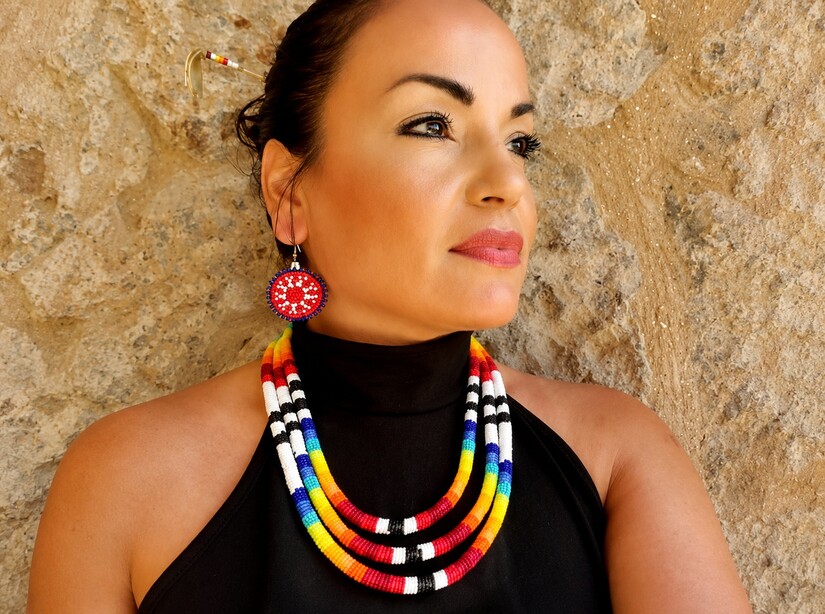
Yes, definitely. Thank you for the invite.
I think it’s a great way to bring multiculturalism into a space that has never really been able to hear it from the front lines, from individuals directly from the land.
So thank you. I appreciate it.
Tom Akaolisa:
I would love to begin with this:
When you think about the women, elders, and grandmothers who helped shape your life growing up, what are some of the teachings, values, or ways of living that you still carry with you today?
Dr. Stephanie Little Hawk-Big Crow:
That’s a great question.
I really have to say that I was raised very privileged on the Indian reservation.
At the time, of course, we didn’t know that we were poor. That was never demonstrated to us, and I believe it was because of the grounding that came from my grandmother.
A little bit about my background is that I was raised on the Pine Ridge Indian Reservation in South Dakota.
Predominantly, people know us as the great Sioux Nation, but of course that is a derogatory term used to identify our people. We self-identify as Oceti Sakowin Lakota, and the band I was born into is Oglala.
I was raised by a single father in the country in a rural village called Wakpamni District.
My father took me to my maternal grandmother, who was a fluent, full-blood Lakota woman raised in a sod-roof cabin alongside a teepee in the early 1930s.
When I look back now as an adult and reflect on how much she showed me through her actions, I realize those demonstrations of our values were some of the most powerful teachings I could have ever received.
My grandmother was very humble.
She spoke a blend between Lakota and English. Some of the simplest things she said were so profound and carried such depth of knowledge and virtue.
I always tell my younger cousins that if you were listening and paying attention, she taught you more than you realized.
One of the examples that always comes to mind happened when I was probably six or seven years old.
One day my grandmother and I were walking out to pick chokecherries.
As we were walking, we came across what appeared to be a star embedded in the ground. It looked like several bricks carefully arranged in the shape of a star.
Even to this day, nobody in our tribe fully knows how it got there.
I remember asking my grandmother what it was.
She stopped and looked at it for a while.
Then she looked upward and said, “From up there.”
At six or seven years old, I took that literally. I thought maybe a star had actually fallen from the sky.
Later in life, I came to understand what she was really teaching me.
What she was referring to was our understanding of the Star Nation.
We believe we are connected to the stars. That we are the Star People.
Essentially, she was teaching me that we are stardust made flesh.
That we are atoms and molecules wrapped in this beautiful human form.
That we travel from the spirit world through the Milky Way into the wombs of our mothers.
Our role here as Indigenous people is to be children of Mother Earth.
Those little teachings expanded my mind.
As I grew older, I began trying to understand the parallels between Indigenous teachings and Western science.
I started looking deeper into astrophysics, star knowledge, molecular science, and biophysics.
Because so much of what our ancestors taught us is indeed scientific.
So much of our traditional stories are contingent on natural law and natural elements.
Tom Akaolisa:
How do you see those teachings from your grandmother continuing through your own life, work, and understanding of responsibility to future generations?
Dr. Stephanie Little Hawk-Big Crow:
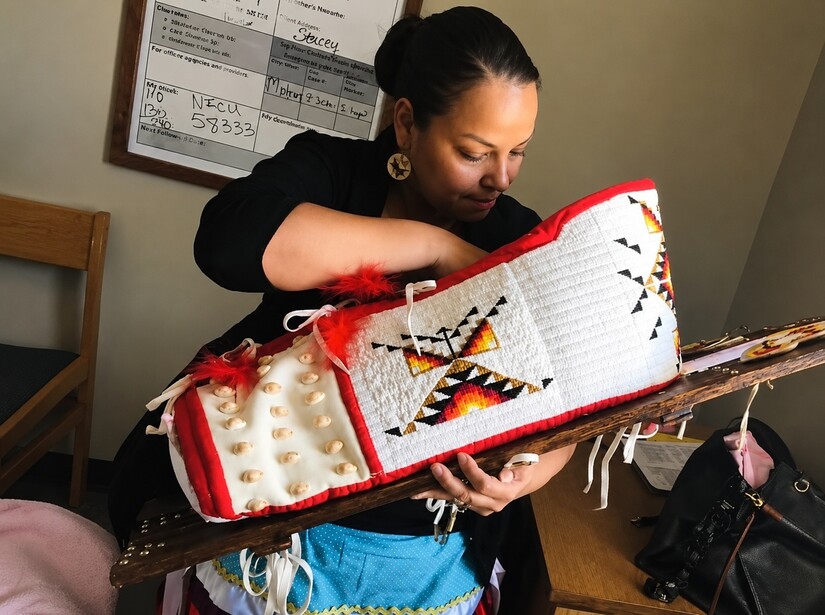
I see them as extremely vital.
In fact, most of my work today is in language revitalization and intellectual property law for my tribe.
But before anything else, I am a grandmother.
That is my first responsibility.
I’m a mother of two. My husband and I share six children together, and we have eleven grandchildren.
I always tell people that regardless of what I’ve achieved in this Western world, my innate role and responsibility as a Lakota woman is to ensure these teachings continue.
It’s about ensuring our grandchildren never become lost in this world.
It’s about ensuring they receive the traditional teachings, the cultural knowledge, the language, and the spiritual grounding that I received when I was young.
Especially now, in a time when so many people are spiritually lost.
For us, we look seven generations ahead.
What many people don’t realize is that our definition of a generation differs from Western definitions.
In Western ideology, a generation may be considered twenty or twenty-five years.
For us, a generation is seventy-two years.
So when I say I am responsible for the next seven generations, I am speaking about 504 years into the future.
I am tasked with taking what I received and ensuring these teachings are sustained for generations beyond my lifetime.
Tom Akaolisa:
We know Indigenous people have historically been unfairly treated, and those effects continue across generations.
How have you seen grief, silence, survival, and resilience move across Indigenous families and communities?
Dr. Stephanie Little Hawk-Big Crow:
I see it in every aspect of our lives.
As I sit back and study the social, emotional, and economic realities of our people, I recognize how deeply intergenerational trauma has impacted our communities.
Many of our people don’t even realize they are carrying generations of grief.
From both a molecular and spiritual perspective, I believe we carry spiritual resilience within us, but many people have become disconnected from it.
I often say we need to activate that dormant DNA.
You can see the trauma in emotional maturity, in defensive behavior, in lack of accountability, and in the mental and physical health struggles many of our people continue facing.
We see addiction.
We see alcoholism.
We see emotional disconnect.
We see spiritual heaviness.
That elongated grief weighs down the spirit.
I became the first generation in my family to leave the reservation.
I became the first generation to obtain a doctorate.
And hopefully soon, I’ll complete my law degree.
But I don’t pursue these things because I want to conquer the world.
I do it because our people need it.
There are not many of us who can move into these spaces while remaining deeply rooted in who we are.
So for me, it’s about helping change narratives.
Helping people understand we are simply human beings trying to protect what remains of our culture, language, and way of life.
We want the time and space to help each other grieve.
To process generations of unresolved pain.
Unfortunately, much of that grief has broken the spirits of many of our people.
That is why I now understand it is my responsibility to help create legal protections for future generations.
Tom Akaolisa:
One of the most powerful things you recently wrote was that Indigenous women have carried entire nations through generations of grief, sacrifice, survival, and love.
What do you believe people still fail to understand about the role Indigenous women have played in holding families, cultures, and nations together?
Dr. Stephanie Little Hawk-Big Crow:
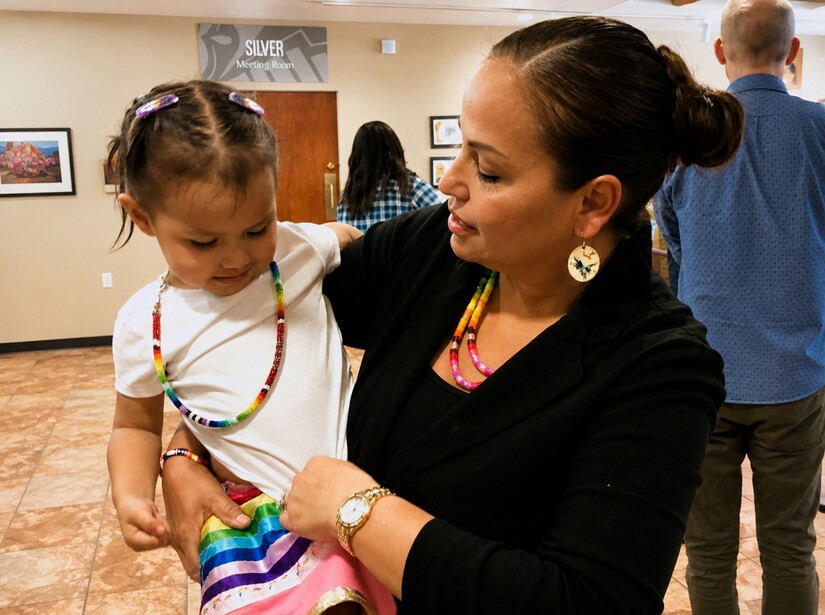
I think people fail to understand the magnitude of what Indigenous women carry.
I use myself as an example.
I’m forty-seven years old.
I married at eighteen.
I had my first son at nineteen and my daughter at twenty-one.
I became a single mother at twenty-one and remained one for twelve years before meeting my current husband.
During that time, I worked full-time, pursued higher education full-time, and parented full-time.
At the same time, I was trying to ensure my children received both the best of our Indigenous world and the best of the Western world.
I was a clinical research coordinator on a national diabetes study involving Indigenous communities while simultaneously completing my undergraduate education.
We wear multiple hats constantly.
We almost never get time to grieve.
We live in survival mode.
Now that I’m older and have time to reflect as a grandmother, I understand more clearly what Indigenous women have historically carried.
We uphold our generation while simultaneously preparing future generations.
We are constantly trying to protect children from becoming spiritually disconnected in a world increasingly driven by superficiality.
I’m very blessed because I come from a nation where our women are incredibly resilient.
Today, we have Indigenous women attorneys, doctors, environmental advocates, and protectors of sacred sites.
Many people don’t realize our ancestors understood the energetic and spiritual importance of certain lands long before Western science developed language for those understandings.
They understood the metaphysical energies held in certain sacred places.
They understood prayer, intention, and relationship with the universe.
It is difficult to lead our people in this age where technology and systems continue eroding the fabric of who we are.
Yet our women continue carrying us.
Tom Akaolisa:
What strength do you believe Indigenous women have carried across generations that helped communities survive during the hardest periods?
Dr. Stephanie Little Hawk-Big Crow:
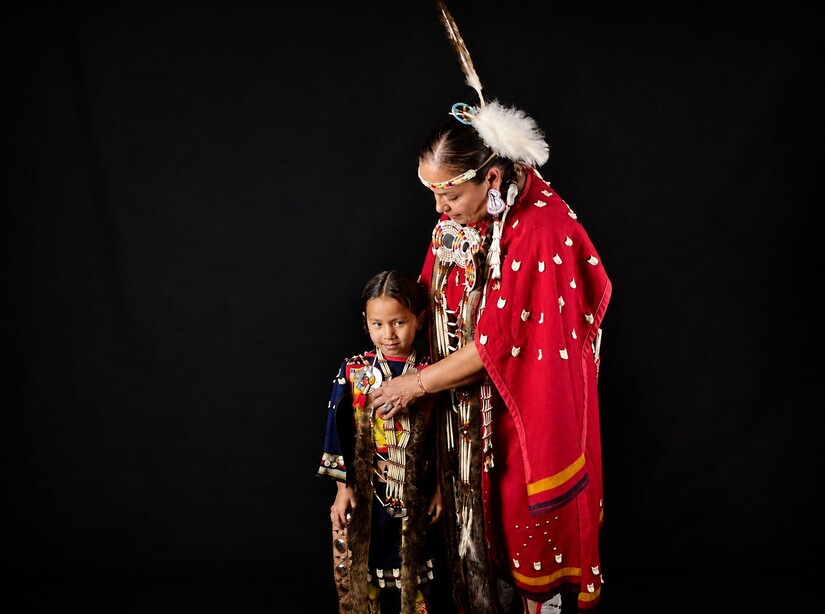
Compassion.
Without question.
The love our women carry is impenetrable.
It is the backbone of our nation.
When I think about everything I have experienced in my own life, and then think about my grandmother raising seventy-two grandchildren and relatives, I realize how extraordinary that love was.
She was fearless.
She understood her role was to protect and guide us.
And she did.
I look at our women today, especially our elders, and I often feel I don’t even have the right to speak as much because I want to honor them first.
Their spiritual resilience, their humility, and their unwavering love for our people helped sustain our nation.
I feel deeply honored to learn from them while they are still here.
Tom Akaolisa:
You’ve spoken extensively about language preservation and cultural continuity.
What does language mean emotionally and spiritually to a people?
What happens when language begins disappearing from homes and communities?
Dr. Stephanie Little Hawk-Big Crow:
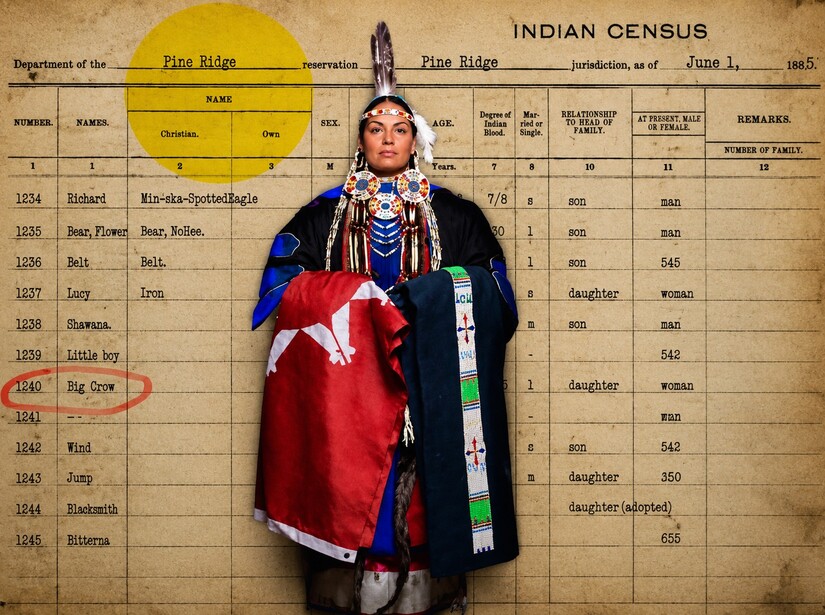
Language is everything.
I work with an organization called Uŋčí Wičhóiye Ahókiphapi Omáškekičhiyapi.
It is a gathering of grandmothers and wisdom keepers.
We teach our language because we understand that without language, we lose our written and spiritual law.
Originally, Lakota was not written.
It was living.
Our language reminds us of our responsibilities to ourselves, our families, our extended kinship systems, and our nation.
When we lose our language, we lose connection to who we are.
We lose our understanding of relationship.
We lose the natural laws that govern how we coexist.
Our language is a living energy.
English is largely property-based.
Indigenous languages are relational.
They teach relationships between all living beings, human and non-human.
As a grandmother, one of my greatest fears is seeing our people lose themselves because they no longer understand their language.
If you do not understand your language, then how do you truly know who you are?
I remember asking my husband on our first date whether he spoke his Indigenous languages.
He is Yavapai Apache and Pascua Yaqui.
When he told me no, I immediately thought, “Then how do you know who you are?”
That was difficult for me to understand because I was raised among fluent speakers.
Language gives us our lens for viewing the world.
Without it, people often search for identity elsewhere.
I see many younger Indigenous youth searching for belonging in gangs or harmful environments because their spirit was never nurtured through language and culture.
Language gives us purpose.
It gives us belonging.
It defines who we are.
Tom Akaolisa:
Why is language so deeply connected to identity, healing, and sovereignty?
Dr. Stephanie Little Hawk-Big Crow:
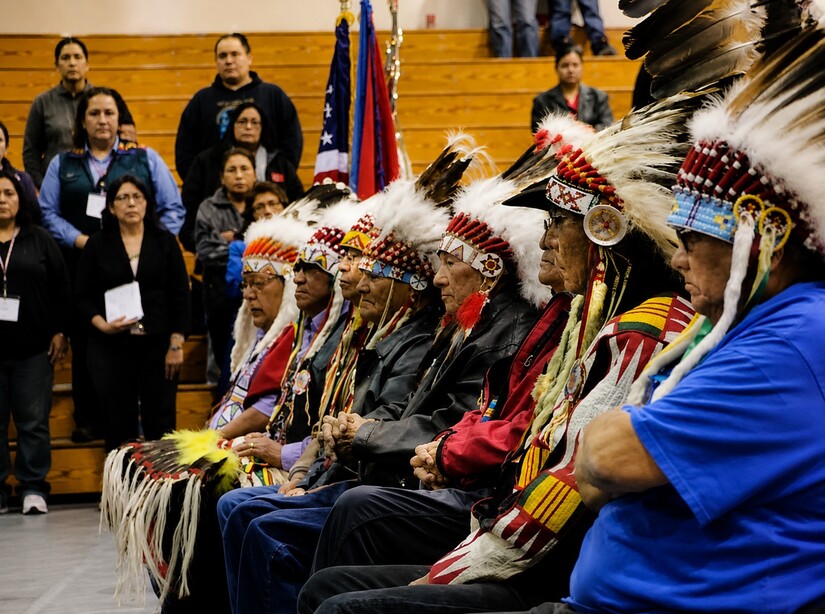
Because language defines identity.
It defines relationships.
It teaches you your role and responsibilities.
When I left Pine Ridge and moved to Phoenix for graduate school, I experienced how disconnected many urban Indigenous people felt from their identities.
I came from a worldview where we were all relatives.
But many people had lost that connection.
That loss impacts spirituality.
Our language nurtures spirit.
Without language and culture, many people lose their sense of purpose.
Legally, language also matters.
I once spoke with a Navajo educator who explained something very important.
He said that if we stop speaking our language, then we stop being a distinct people.
If we are no longer distinct, then governments begin arguing we no longer require distinct protections or sovereignty.
That stayed with me.
Language preserves our unique way of viewing the world.
It preserves our existence as a distinct people.
Tom Akaolisa:
What does healing truly look like for Indigenous communities after generations of boarding schools, displacement, violence, addiction, silence, and cultural disruption?
Dr. Stephanie Little Hawk-Big Crow:
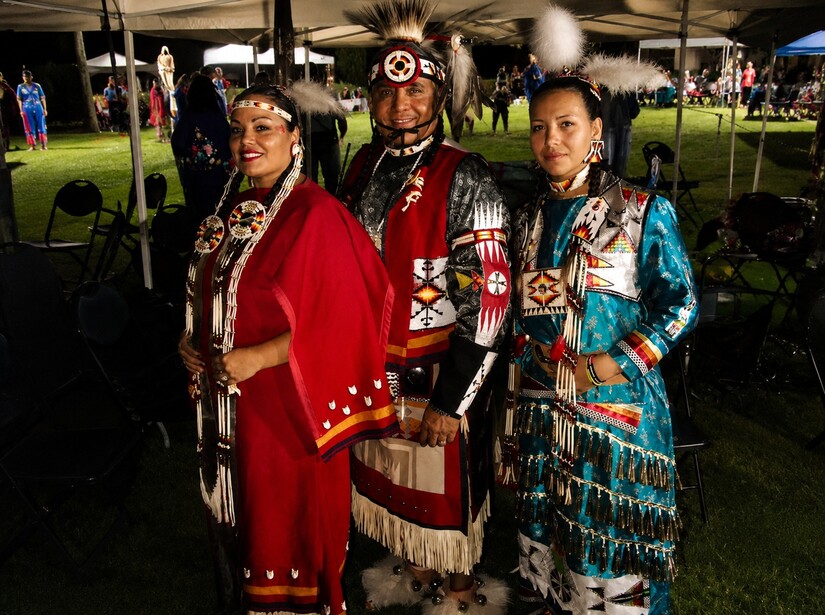
Healing means calling our spirits back.
That is the simplest way I can explain it.
Many of our language revitalization and cultural programs are about rekindling broken spirits.
We are creating spaces where families can gather, reconnect, and remember who they are.
This summer we will hold cultural camps.
We ask parents, grandparents, and children to leave the outside world outside and enter these spaces wholeheartedly.
As grandmothers, we understand our role is to provide emotional, physical, and spiritual support.
Many people are suffering deeply in this world.
That suffering eventually becomes addiction, mental health struggles, and suicide.
So our work is about helping people nurture their identity and remember their belonging.
We are also beginning a trauma healing initiative where several of us have trained as trauma practitioners.
We are trying to provide spaces where our people can finally process unresolved grief.
Many older generations never had that opportunity.
We can no longer wait for outside systems to save us.
We must help guide our own people.
Tom Akaolisa:
You grew up during a very different period from the one younger generations experience today.
What are some of the biggest changes you have witnessed within Indigenous communities over the years, both painful changes and hopeful ones?
Dr. Stephanie Little Hawk-Big Crow:
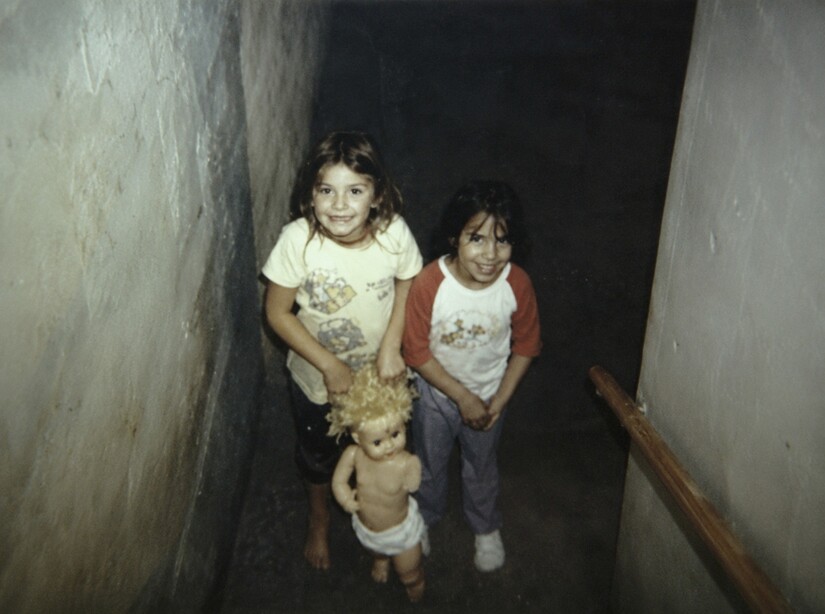
Growing up in the 1980s on the reservation was a very different experience.
Everything felt still.
I could hear the sun echoing across the plains.
Technology had not yet deeply impacted our lands.
Fast forward to today, and we see how modern technology has dramatically affected mental health, physical health, and spiritual connection.
But what gives me hope is seeing our spiritual resilience rise again.
A few years ago, I worried our people were forgetting who they were.
Now I see something different.
I see our people leading global movements.
I see our younger generations refusing to let our way of life disappear.
I see elders stepping into difficult spaces despite age, health struggles, and hardship.
I see their fists clench with determination.
That strength is beyond my comprehension.
It is spiritual vitality.
We understand we have nothing left to lose.
Our people remember who they are.
And that remembrance is growing stronger.
Tom Akaolisa:
When you look at younger generations today, where do you see signs of reconnection, healing, or renewal?
Dr. Stephanie Little Hawk-Big Crow:
I see it in ways I never expected.
Young people today are deeply aware.
They understand historical atrocities.
They understand what is happening politically and globally.
And many of them are ready.
Especially those who have been taught language and identity.
Walking in both worlds is not easy.
When I left the reservation, I was severely traumatized.
To see these younger generations enter these spaces with confidence, strength, and spiritual grounding is incredible.
I feel grateful that I get to be their auntie and grandmother.
I get to encourage them.
I get to help remove barriers for them.
That is healing.
Tom Akaolisa:
A major part of your work involves protecting Indigenous knowledge systems, cultural resources, and Indigenous data sovereignty.
For people unfamiliar with those conversations, what does Indigenous sovereignty mean today beyond land alone?
Dr. Stephanie Little Hawk-Big Crow:
Indigenous sovereignty means respecting a people’s right to sustain their way of life.
We are our own peoples.
We have our own systems of knowledge, spirituality, governance, and identity.
We are very open people.
We share our teachings, our ceremonies, our songs, and our culture because we recognize many people are searching for meaning and identity.
When I share teachings publicly, I hope to awaken something dormant in people.
Many people across the world descend from ancient peoples who also once lived relationally with the Earth.
We simply ask for the right to protect and preserve our way of life for future generations.
We are willing to share what we have.
We simply ask to be respected.
Tom Akaolisa:
Why is protecting Indigenous knowledge becoming so important right now?
Dr. Stephanie Little Hawk-Big Crow:
Because we are watching natural resources, sacred lands, and ecosystems being destroyed at alarming rates.
Many people fail to understand that Indigenous knowledge systems are rooted in understanding life itself.
When we protect Mother Earth, we protect life.
Everything around us is alive.
Plants are alive.
Rocks hold energy.
The Earth itself is alive.
Indigenous knowledge teaches relationality.
It teaches that human beings are not separate from the natural world.
We are part of it.
If humanity could remember that, perhaps we would treat this planet differently.
That is why preserving Indigenous knowledge matters.
Not only for Indigenous people, but for humanity itself.
Tom Akaolisa:
When you think about younger generations today, what do you most hope they never forget?
What do you hope future generations inherit emotionally, spiritually, culturally, and historically that earlier generations were often denied?
Dr. Stephanie Little Hawk-Big Crow:
I hope they remember that our ancestors gave us more than trauma.
Yes, trauma impacted us mentally, emotionally, physically, and spiritually.
But our ancestors also handed down resilience.
They handed down love.
They handed down spiritual strength.
That spiritual resilience is embedded in our DNA.
We simply have to ignite it.
Tom Akaolisa:
Despite generations of hardship, you continue speaking with compassion, softness, hope, and love for community.
Where does that strength come from?
Dr. Stephanie Little Hawk-Big Crow:
It comes from love.
That is the simplest answer.
The love I hold for future generations, even grandchildren I may never meet, is profound.
I want them to experience the same spiritual resilience and connection that previous generations fought to preserve for us.
I have witnessed how the loss of spirituality can destroy nations.
So for me, protecting our way of life is about love.
It is a beautiful way of life.
A simple way of life.
I want our future generations to retain that connection.
Tom Akaolisa:
What continues to give you hope right now?
Dr. Stephanie Little Hawk-Big Crow:
The love our people still have for each other.
Trauma has impacted us deeply.
Sometimes people become disconnected, defensive, or emotionally wounded.
But when our people are threatened, our nation rises together.
One of our elders once said, “You attack one, you attack all of us.”
That is true.
When the survival of our people is at stake, our people stand together.
That unity comes from love.
It rises above insecurities, disagreements, and hardship.
That gives me hope.
Tom Akaolisa:
As we begin closing, what teachings, wisdom, or reminders would you most want future generations to carry forward from today’s conversation?
Dr. Stephanie Little Hawk-Big Crow:
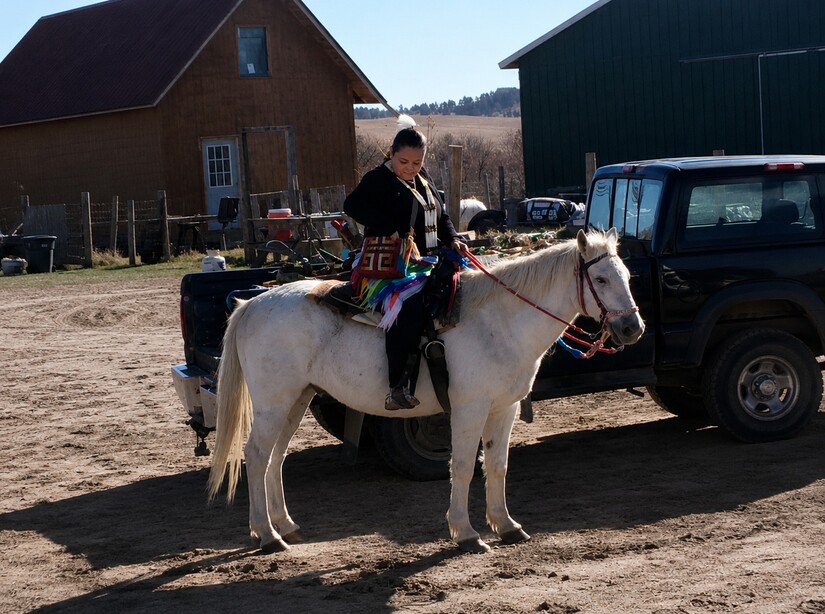
I want future generations to know that despite everything we have gone through, our spirits remain untouched.
Regardless of where you are in life or what challenges you face, you were born to a people and a way of life for a reason.
You belong.
Whether we are here walking beside you physically or whether we are among the stars with our ancestors, you belong.
Only you can call your spirit back.
That begins with acknowledging who you are.
Being proud of who you are.
Protecting your spirit.
Your spiritual resilience is embedded in your DNA.
You simply have to ignite it.
Tom Akaolisa:
Dr. Stephanie, I want to sincerely thank you for your honesty, wisdom, generosity, and willingness to share this space with us.
This conversation was deeply meaningful, and I truly believe people listening to it will walk away thinking more carefully about healing, memory, language, identity, ancestors, and what it means for a people to remember who they are.
Dr. Stephanie Little Hawk-Big Crow:
Thank you very much.
Thank you for this space.
You had amazing and insightful questions.
I greatly appreciate this time.
I hope this message reaches those who are still lost in this world and perhaps helps guide them toward a more meaningful and purposeful life.
Thank you very much.
Keep up the good work.
This interview has been edited carefully for readability, structure, punctuation, and transcription clarity while preserving the full substance, worldview, cadence, and continuity of the original conversation.
Voices From Around America is an ongoing MinneapoliMedia archival interview series dedicated to preserving thoughtful, human-centered conversations with voices shaping communities, histories, and lived experiences across the United States.



Sunny, with a high of 87 and low of 64 degrees. Sunny during the morning, patchy rain nearby overnight.