49° and Sunny
Image




ST. PAUL, Minnesota
With eviction filings rising and housing instability deepening across Minnesota, Democratic lawmakers in the state Senate have introduced legislation to create a $40 million emergency rental assistance fund intended to help thousands of renters remain in their homes.
Supporters of the proposal say the measure is a targeted intervention designed to prevent a wave of evictions that could ripple across communities statewide in 2026.
At the center of the effort is Senate File 3902, authored by Zaynab Mohamed and Lindsey Port. The legislation would inject $40 million into Minnesota’s Family Homeless Prevention and Assistance Program, commonly known as FHPAP, a long standing state initiative that provides short term financial assistance to households facing the loss of housing.
Advocates say the program has historically proven one of Minnesota’s most effective tools for stabilizing families during temporary financial crises.
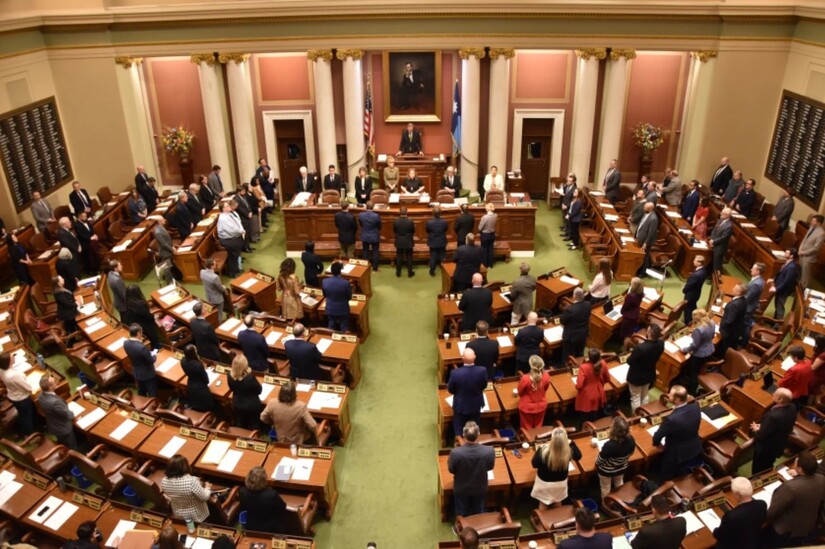
The legislative push comes as eviction filings across Minnesota show troubling signs of acceleration.
According to court system data referenced by lawmakers and housing advocates, approximately 4,000 eviction filings had already been recorded statewide by February 2026, putting the state on pace for one of the highest totals in recent years.
Housing organizations note that Minnesota experienced more than 25,000 eviction filings in 2025, the highest annual level recorded since statewide pandemic protections expired.
For supporters of the new legislation, those numbers represent an early warning.
“We are on the edge of an eviction crisis in Minnesota,” Senator Port said while discussing the bill. “This legislation is intended to address that across the state and keep people stably housed.”
Rather than creating an entirely new system, the proposal directs funding into the existing Family Homeless Prevention and Assistance Program, which is administered by the Minnesota Housing Finance Agency.
FHPAP distributes funding through a network of nonprofit organizations and local agencies that help renters facing temporary financial emergencies. Assistance can include:
• Short term rent payments to prevent eviction
• Help with security deposits when families must relocate
• Support for households leaving shelters and transitioning into housing
• Limited mortgage assistance for homeowners at risk of foreclosure
The program prioritizes families with children, seniors, and individuals experiencing sudden income loss, with grants typically paid directly to landlords or housing providers.
Housing policy experts have long argued that preventing an eviction is far less costly than responding to homelessness after it occurs.
Lawmakers say several factors are converging to push more renters toward financial distress.
Housing costs in the Twin Cities and across Minnesota remain elevated after years of tight supply. At the same time, many households have not fully recovered financially from the economic disruptions of the COVID-19 era and the expiration of federal rental assistance programs.
Some lawmakers and community advocates also point to labor disruptions in immigrant communities following increased federal immigration enforcement activity in the region.
Community service organizations reported significant spikes in requests for rent assistance in early 2026, an indicator that many households are operating with little financial cushion.
Advocates warn that for many families, a single missed paycheck can quickly translate into missed rent and an eviction filing.
Perhaps the most unusual element of the proposal lies in how it would be financed.
Instead of drawing money from Minnesota’s general fund during a non budget year, the legislation proposes tapping into a reserve fund created following the U.S. Supreme Court decision in Tyler v. Hennepin County.
In that landmark ruling, the Court held that governments violate the Constitution when they keep the surplus equity from homes seized and sold for unpaid property taxes, a practice critics had labeled “home equity theft.”
Following the ruling, Minnesota established a compensation fund to reimburse homeowners whose properties had been sold for more than the taxes owed.
Because claims against that fund have been slower than anticipated, Democratic lawmakers are proposing to redirect $40 million from the reserve toward emergency rental assistance, arguing that the money can provide immediate housing stability while remaining funds continue to address homeowner claims.
The proposal has generated sharp debate along partisan lines.
Republican lawmakers have questioned both the funding source and the eligibility rules governing the rental assistance program.
Steve Drazkowski, a Republican from Mazeppa, raised concerns during legislative discussions that the program might distribute funds without sufficient verification of recipients’ immigration status.
“This bill will provide, in Hennepin County, over $7,000 to households, some of which are very likely illegal aliens,” Drazkowski said while criticizing the proposal.
Other GOP lawmakers have expressed concern that repurposing money from a dedicated reserve fund could establish a troubling fiscal precedent.
Supporters of the bill counter that the economic cost of eviction is far greater than the proposed investment.
Legal expenses, emergency shelter costs, lost employment, and long term housing instability can place heavy burdens on local governments and social service systems.
For proponents, preventing eviction is both a humanitarian and economic strategy.
“Housing stability is the foundation of every other part of our economy,” Port said.
Before reaching the Senate floor, SF 3902 must first pass through the Senate Housing and Homelessness Prevention Committee, where lawmakers will debate amendments and eligibility criteria.
With the Senate closely divided, the proposal will likely require nearly unanimous support within the Democratic caucus to advance.
Even if the Senate approves the measure, negotiations with the Minnesota House could determine whether the funding ultimately becomes law.
For now, the debate unfolding at the Capitol reflects a broader question confronting policymakers across the country.
At a time when housing costs remain high and financial margins for many families are thin, legislators must decide how aggressively the government should intervene to prevent housing instability before it turns into a full scale eviction crisis.
For thousands of Minnesota renters watching the debate closely, the outcome may determine whether the coming year brings stability or displacement.
MinneapoliMedia
Community. Culture. Civic Life.



Patchy rain nearby, with a high of 64 and low of 46 degrees. Sunny for the morning, clear overnight.