87° and Sunny
Image
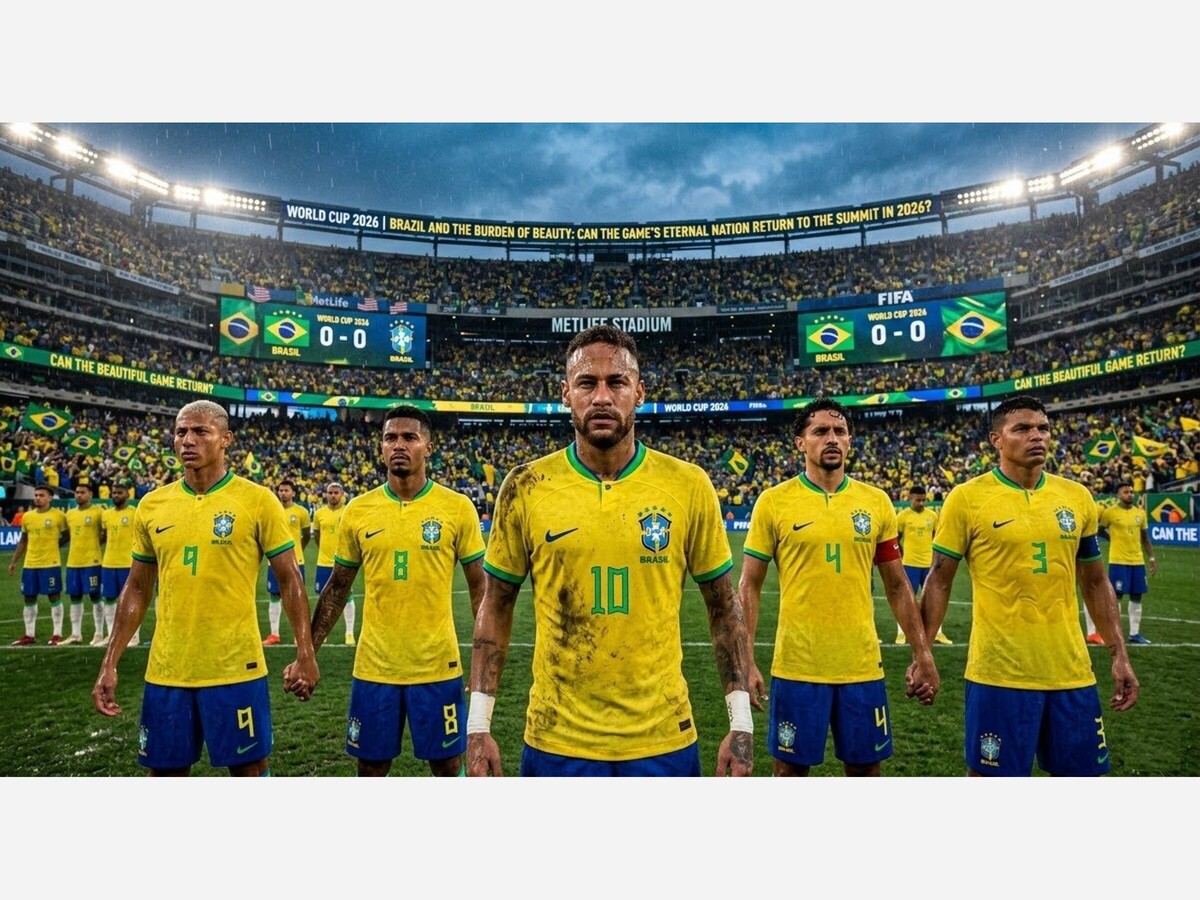



And yet, for all the mythology surrounding Brazil, the modern World Cup has been an exercise in frustration.
Brazil remains the only nation to have won the tournament five times. It remains the only country to have appeared in every edition since the first tournament in 1930. It remains the sport’s most influential cultural author.
But Brazil has not lifted the trophy since 2002.
For a nation that measures football success not only by victory but by expression, that gap has become more than statistical. It has become philosophical. Each tournament since then has reopened the same question.
Can Brazil still be Brazil in a game that has changed around it?
The arrival of Carlo Ancelotti suggests the country is ready to answer that question differently.
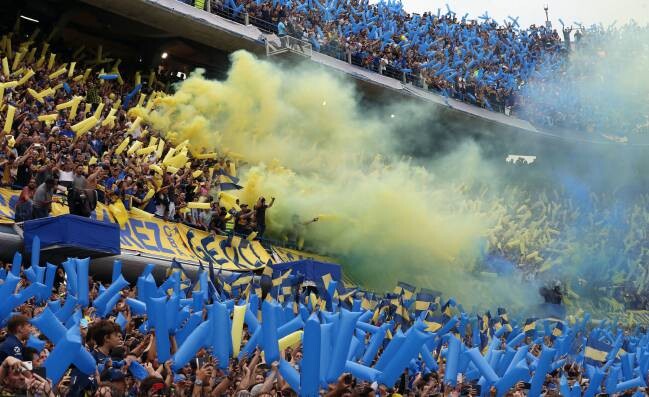
Brazil’s World Cup mythology is built on moments that feel closer to folklore than sport.
Pelé’s emergence as a teenage prodigy in 1958.
The breathtaking collective rhythm of 1970.
Romário’s cold-blooded brilliance in 1994.
Ronaldo’s redemption in 2002.
Each era produced not only champions but archetypes of how football could be played.
Brazil’s victories have never felt mechanical. They have felt inevitable, as if the country was simply fulfilling the destiny the sport assigned to it.
But inevitability can become illusion.
Since the triumph in Japan and South Korea in 2002, Brazil has reached the latter stages of tournaments without reclaiming the throne. The teams have been talented. The stars have been global icons. Yet something has always been missing in the decisive moments.
Sometimes it was tactical rigidity. Sometimes emotional overreach. Sometimes the brutal randomness that defines knockout football.
And sometimes, it was the simple fact that modern football has learned how to neutralize beauty.
If one moment crystallized Brazil’s modern struggle, it was the semifinal of the 2014 World Cup.
Brazil, hosting the tournament and carrying the emotional weight of a nation that sees football as civic identity, collapsed in a way the sport had never witnessed. Germany scored seven times in a match that felt less like defeat and more like disorientation.
That match did not destroy Brazilian football. Brazil is too vast, too culturally embedded in the game, for that.
But it changed something fundamental.
For the first time in generations, Brazil began asking whether its relationship with football’s aesthetic ideals had become a vulnerability.
The question lingered in every subsequent tournament. Was Brazil trying to recreate past poetry in a sport that had become ruthlessly efficient?
Brazil’s response to that trauma has been gradual, sometimes hesitant, but unmistakable.
The modern Brazilian team is more tactically disciplined than the romantic sides of earlier decades. The midfield presses with greater structure. The defensive line holds shape rather than relying purely on athletic improvisation.
Yet Brazil has resisted becoming something colder.
The country’s football culture does not allow total abandonment of joy. Dribbling, improvisation, and flair are not optional flourishes in Brazil. They are moral obligations.
This tension between structure and spontaneity now defines the national team.
It is a delicate balance. Too much discipline and Brazil becomes ordinary. Too much freedom and Brazil becomes vulnerable.
Finding the equilibrium between those poles is the central challenge facing Brazil in 2026.
The appointment of Carlo Ancelotti represents a historic departure.
Brazil rarely entrusts its national team to foreign managers. The decision reflects both humility and ambition. It acknowledges that the game has globalized while insisting that Brazil still intends to lead it.
Ancelotti is not merely a successful coach. He is perhaps the modern game’s most accomplished tournament strategist. His record across Europe’s elite competitions is built on one central trait: calm.
Ancelotti does not impose systems as ideology. He adapts them to the players available. He manages stars without diminishing them. He prepares teams to survive moments of chaos rather than attempting to eliminate chaos entirely.
That temperament may be exactly what Brazil needs.
Brazil does not require a manager who teaches it how to attack. It requires a manager who can help it remain composed when the game turns hostile.
Ancelotti’s challenge will be to protect Brazil’s creativity while ensuring that creativity does not become vulnerability.
Despite the drought of recent trophies, Brazil’s player production has not slowed.
Across Europe’s major leagues, Brazilian footballers continue to shape the sport’s most influential clubs. Their skill sets reflect both tradition and adaptation.
They bring the technical control associated with Brazil’s past, but they now combine it with the physical intensity and tactical intelligence demanded by modern systems.
Brazil no longer produces only artists. It produces competitors.
This evolution means that Brazil enters the 2026 World Cup with one of the deepest talent pools in international football.
The question is not whether Brazil has the players. It is whether those players can form a collective identity strong enough to survive the tournament’s most unforgiving moments.
The symbolism of the 2026 tournament’s location adds another layer to Brazil’s story.
The last time the World Cup was played in the United States, in 1994, Brazil emerged as champion. That victory was different from the dazzling triumphs of earlier generations. It was pragmatic, disciplined, and defined by narrow margins.
Brazil defeated Italy in the final after a tense match that ended in a penalty shootout.
It was not the most beautiful Brazilian victory. It may have been the most instructive.
That tournament proved that Brazil could win without abandoning its identity entirely, but also without clinging to it blindly.
For a generation of Brazilian supporters, the return of the World Cup to North America carries an emotional symmetry. It raises a question that feels both nostalgic and forward-looking.
Can history repeat itself, or must Brazil invent something new?
The 2026 World Cup will be unlike any before it.
With 48 teams and matches spread across vast distances in the United States, Canada, and Mexico, the tournament will demand unprecedented squad depth and logistical discipline.
Brazil’s traditional strengths will be tested in new ways.
Travel fatigue. Climate variation. Tactical diversity from opponents representing every footballing culture on earth.
To win in this environment, Brazil must combine artistry with resilience.
The romantic notion that Brazil can simply outplay opponents is no longer realistic. The modern champion must survive matches that refuse to open themselves.
Brazil’s path to the trophy will require not just brilliance but patience.
Perhaps the most difficult burden Brazil carries is not tactical or physical. It is emotional.
Brazil is the only football nation that is expected to win beautifully.
Other teams can lift trophies through defensive mastery or opportunistic goals. When Brazil does the same, critics question whether it has betrayed its heritage.
This expectation is both blessing and trap.
It pushes Brazil toward creativity. It also makes pragmatism feel like compromise.
Ancelotti’s task will be to convince Brazil that beauty and efficiency do not have to be enemies.
If Brazil lifts the World Cup in 2026, it will not simply be a sixth title.
It will be proof that the nation most closely associated with football’s romantic imagination can still adapt to a modern game defined by precision and discipline.
It will show that the country which once taught the world how to play can also learn from the world it helped create.
And if Brazil falls short again, the conversation will continue.
Not about talent. Not about history.
But about whether football’s most storied nation can reconcile the demands of modern victory with the ideals that made it beloved.
When Brazil walks onto the pitch in 2026, it will carry more than players and tactics.
It will carry decades of expectation, the ghosts of victories past, and the unresolved tension between art and outcome.
The rest of the world will watch with fascination, some with hope, others with fear.
Because when Brazil is truly Brazil again, the World Cup does not merely crown a champion.
It becomes a celebration of the game itself.
And that is why every four years the same question returns.
Not whether Brazil will compete.
But whether the beautiful game’s eternal nation will once again remind the world why it is called beautiful at all.
MinneapoliMedia
Community. Culture. Civic Life.



Patchy rain nearby, with a high of 92 and low of 64 degrees. Sunny for the morning, clear for the afternoon and evening,