Image
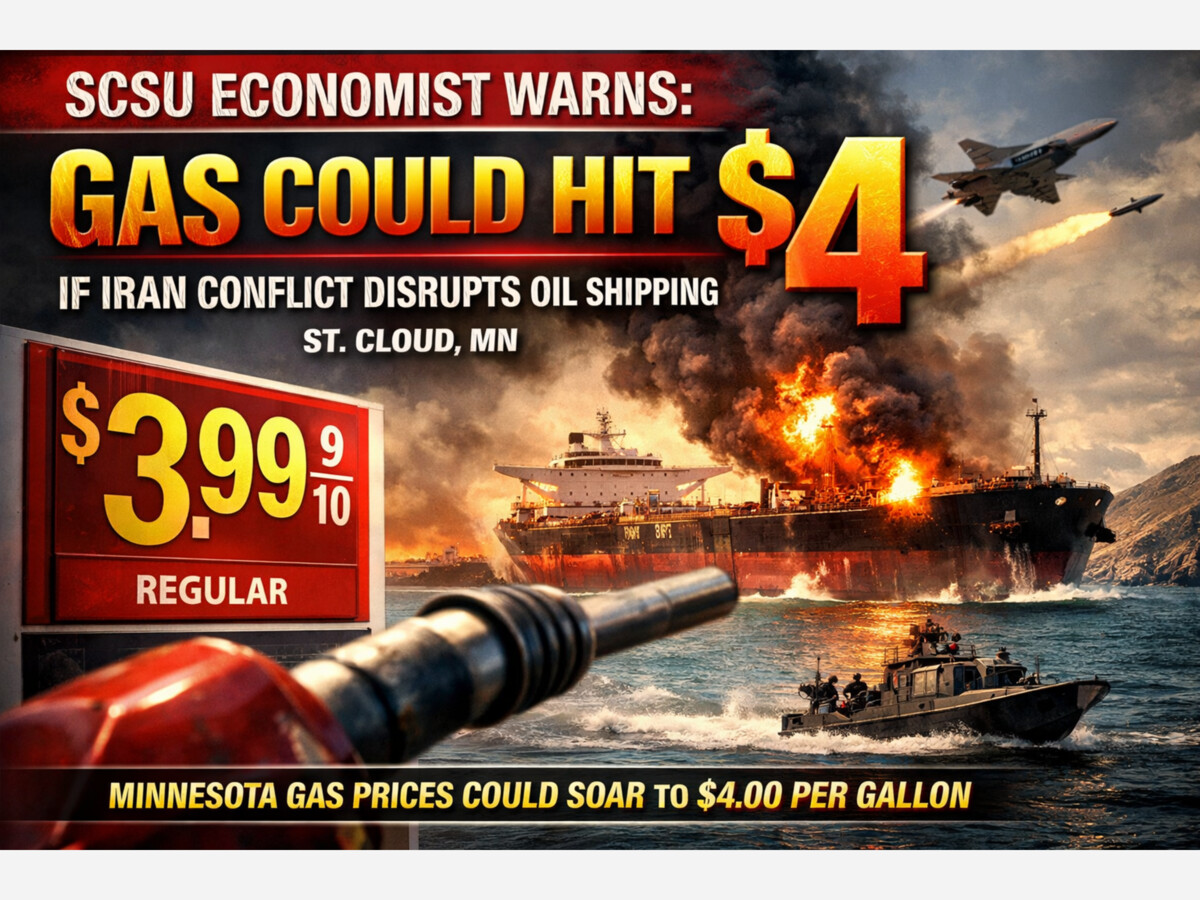



King Banaian, economist and dean of the School of Public Affairs at St. Cloud State University, says the key concern is the Strait of Hormuz, a narrow waterway between Iran and the Arabian Peninsula that carries roughly one-fifth of the world’s oil supply.
Oil tanker traffic in the region has slowed dramatically amid escalating tensions, raising concerns that prolonged disruption could drive crude oil prices higher and push gasoline prices up across the United States.
“If it stays closed for another two to three weeks, $4 gas is not out of the question in a matter of weeks,” Banaian said.
The Strait of Hormuz is a critical link between the Persian Gulf and global markets, serving as the primary export route for major oil-producing countries including Saudi Arabia, Iraq, Kuwait, Iran, and the United Arab Emirates. Because oil prices are set on a global market, disruptions there can quickly affect fuel prices in places far removed from the Middle East, including Minnesota.
Even though the United States produces large amounts of oil domestically, Banaian said gasoline prices are still largely tied to global crude oil markets.
“Prices are the result of world activities, particularly for a commodity as strategically important as oil,” Banaian said.
The President has acknowledged the potential for higher energy prices during the conflict, describing rising costs as a “small price to pay” for achieving what he called greater security and stability in the region.
Banaian said prices could stabilize if shipping through the Strait of Hormuz resumes soon. One possible step, he noted, would be for the United States or allied navies to escort commercial tankers or provide insurance guarantees that allow shipping companies to resume moving oil through the passage safely.
“If the United States was able to provide insurance or escort ships through the straits and establish that they have control of the straits, that price would back down over the next month or so,” Banaian said.
For now, fuel prices remain below that threshold. According to AAA, the statewide average price for a gallon of regular unleaded gasoline in Minnesota is $3.25, compared with a national average of $3.47.
Energy analysts say the next few weeks could determine whether prices stabilize or surge, depending largely on whether one narrow shipping lane halfway around the world reopens to global oil traffic.
MinneapoliMedia
Community. Culture. Civic Life.



Sunny, with a high of 78 and low of 42 degrees. Sunny for the morning, clear overnight.