76° and Sunny
Image
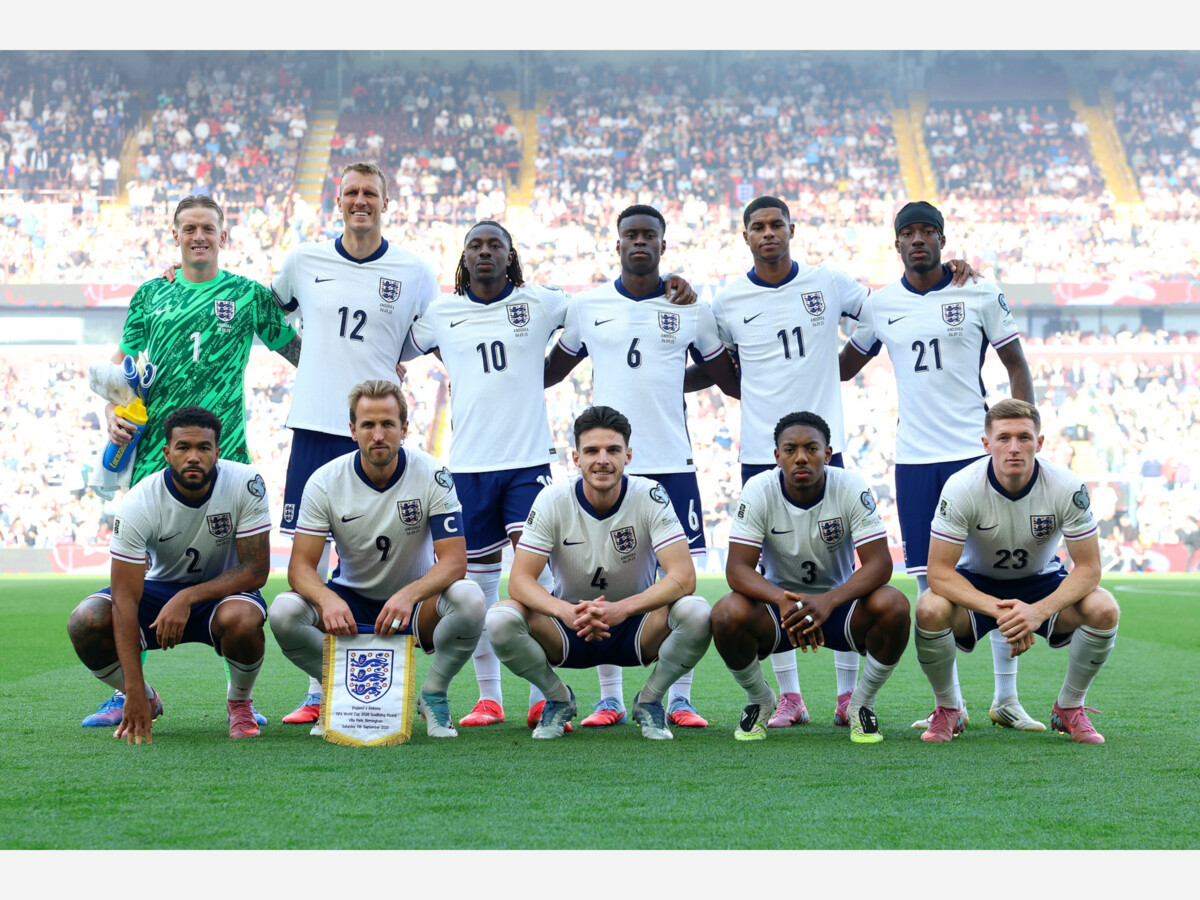



As the countdown to the 2026 FIFA World Cup continues, England arrives in North America carrying a burden that is at once familiar and unusually heavy. It is the burden of a country that helped codify the modern game, that won the World Cup on home soil in 1966, and that has spent the decades since trying to persuade itself that football history does not have to remain unfinished. England’s last and only men’s World Cup title came under Alf Ramsey in 1966, when Geoff Hurst’s hat-trick secured a 4 to 2 win after extra time over West Germany at Wembley. Since then, England has reached only one other World Cup semi-final, in 2018, while the years in between have become a long archive of promise, paralysis, and almost.
That history is not background noise in England. It is the atmosphere.
To write seriously about England before a World Cup is to write not only about players, tactics, and coaching, but about inheritance. Some football nations enter tournaments seeking respect. England enters seeking release. Its supporters do not merely ask whether the team is good enough. They ask whether this country, with all its football wealth and cultural self-regard, can ever again deliver the one thing that would quiet the oldest conversation in English sport.
That conversation has acquired new urgency because England does not arrive at 2026 as a romantic outsider or a nostalgic candidate. It arrives as one of the strongest and most stable contenders in the field. England qualified comfortably for the tournament under Thomas Tuchel, who took charge on a deal through the 2026 World Cup and oversaw a dominant preliminary campaign. FIFA described that qualifying run as flawless, with eight wins from eight, and England booked its place in October 2025. England is set for its 17th World Cup appearance and eighth in succession.
That fact changes the emotional equation. England is not approaching 2026 as a team that has to convince the world it belongs among the favorites. It already does. The question is more difficult than that, and far more revealing.
Can England handle being the sort of team that does not merely dream of the World Cup, but is expected, soberly and rationally, to challenge for it to the very end?
That is a harder role than people imagine. It requires more than talent. It requires an ability to carry history without being crushed by it, to survive momentum swings without becoming sentimental, and to finish the kinds of matches England has spent decades turning into national trauma.
To understand why 2026 may be the year England finally closes the gap between promise and completion, it is necessary to move carefully through the layers of this story. The first is historical. The second is psychological. The third is tactical. The fourth is institutional. And the fifth, perhaps the most important, is moral in the footballing sense of the word. Does this England side possess the temperament to do what other gifted England generations could not: remain itself when the World Cup turns cruel?
The temptation with England is always to collapse the whole subject into cliché. The songs, the headlines, the old final, the penalties, the tabloid overstatement, the inevitable disappointment. That shorthand is not false, exactly. It is merely insufficient. England’s modern football identity is more complicated and more interesting than that. It is not a country trapped only by arrogance. It is a country trapped by repetition. Every tournament begins with evidence that England is competitive enough to go deep. Every tournament ends by reopening the same wound in a slightly different part of the body.
That pattern has become so persistent that it now shapes how England is discussed before a ball is kicked. Not, can they play. Not, do they have stars. Not, is the squad deep enough. Instead: can they bear the moment? Can they survive the noise? Can they avoid becoming England, in the darkest and most self-defeating sense of that phrase?
Those are fair questions. They are also the questions of a different era.
The reason 2026 matters so much is that this England team arrives under conditions that are unusually favorable to a genuine title run. It has tournament experience. It has elite club experience. It has players in or near their prime. It has recent proof that it can reach the last stages of major competitions. England were runners-up at UEFA Euro 2024, losing 2 to 1 to Spain in the final after defeating Slovakia in the round of 16 and the Netherlands in the semi-final. Before that, England were runners-up at UEFA Euro 2020, losing on penalties to Italy after a 1 to 1 draw at Wembley. These are painful results, but they also matter as evidence. England is no longer discussing whether it can handle the late rounds of a major tournament. It has been there repeatedly.
That is where this piece must begin in earnest: not with slogans or sentiment, but with the plainest truth of England’s current condition. This is no longer a national side that can be dismissed as overhyped and structurally unserious. It is a mature contender with unresolved nerve. That distinction is everything.
England likes to think of itself as football’s ancestral home, and in one important sense that claim is institutionally grounded. FIFA notes that the first rules of the game were established in England in 1863, and that fact still shapes the country’s self-understanding. Football in England is not simply a major sport. It is a civic language, a class archive, a local loyalty system, and a weekly argument about identity, place, and aspiration. The game belongs to English life at a depth that makes mere fandom too weak a word.
That is why the World Cup feels so charged there. It combines national projection with football inheritance. It allows England to imagine itself not only as a participant but as a rightful center. When England won in 1966, that sense of rightful place hardened into expectation. The problem was that the title did not become a foundation for repeat authority. It became an isolated monument. What followed was not a steady line of contention but a jagged sequence of quarter-final exits, semi-final heartbreaks, tactical misfires, and penalty-shootout trauma. The deeper the country’s domestic football wealth became, the stranger the contrast looked between club success and national incompletion.
That contrast matters because England is not judged like most countries. Nations with one title and long intervals between contention are often treated with warmth, as former powers or romantic throwbacks. England is treated with irritation, sometimes even by its own people. The nation’s footballing self-image has often swung between entitlement and self-mockery, between inflated conviction before tournaments and savage internal derision after them. That emotional volatility is not incidental. It has shaped the environment in which generations of England players have had to function.
There is a tendency outside England to exaggerate the arrogance of English football culture and miss its insecurity. The reality is more mixed. English football culture is loud, yes, and often self-dramatizing. But it is also deeply haunted. A country that truly believed it was destined to win again would not be as sensitive as England is to each setback, each questionable substitution, each missed penalty, each half of sterile possession. The intensity of the reaction reveals not confidence, but vulnerability. England does not merely want another World Cup. It wants the restoration of a story.
That makes 1966 unusually alive in the English football imagination. In many countries, old triumphs become heritage. In England, 1966 remains a benchmark and a burden. Geoff Hurst’s hat-trick, Bobby Moore’s calm, Alf Ramsey’s authority, the old Wembley, the sense of national climax, all of it remains close enough to touch and far enough to torment. FIFA’s histories of the final and of England’s World Cup record continue to present it as the nation’s defining men’s football achievement. That is true, but it is also part of the problem. When one moment towers over sixty years of subsequent effort, everything after it is inevitably judged as deficiency.
The modern England team has had to carry that inheritance while also dealing with a transformed game. International football in 2026 is not the football of 1966, nor even the football of the so-called golden generation of the 2000s. The player pathways are different. The tactical demands are higher. The global distribution of talent is wider. The World Cup itself is changing, expanded to 48 teams and 104 matches, with greater travel demands and a longer route to the trophy. England’s challenge is therefore not to recover a lost past, but to become a champion under conditions that its own mythology often obscures.
That is why the phrase “bring football home” has always been both useful and misleading. It captures national longing, but it also implies a sort of natural return, as though the World Cup belongs in England by historical right and has simply been delayed. Football does not work that way. The World Cup does not return to its supposed home out of respect for origin stories. It is taken through preparation, nerve, adaptability, and a kind of emotional coldness that England has not always been able to summon at the decisive moment.
To say that 2026 may finally be the year is not to indulge fantasy. It is to recognize that England’s long drought is no longer a simple story of underachievement. It is now a story of repeated proximity. England have moved from hopeful to credible. What remains is the last, hardest transformation. Credible contenders have to learn how to stop seeing the final hurdle as symbolic. They have to see it as technical. A match. Ninety minutes, or more. Problems to solve, not history to cleanse.
England has often been unable to do that. But this particular cycle gives the country a better chance than many before it.

Every serious England team of the modern era has been announced as different. This time the phrase carries more substance.
The difference is not just talent, though the talent is obvious. Nor is it simply depth, though England has genuine depth across most lines of the squad. The difference is that this group has accumulated evidence. It has lived through major-tournament pressure repeatedly. It has survived ugly matches. It has reached finals. It has carried momentum through weeks of scrutiny. It has failed publicly and returned as a stronger competitive unit. That is not a guarantee of victory, but it is a meaningful form of education.
England’s Euro 2024 run is a useful example. The final defeat to Spain was painful, and in the immediate aftermath it reinforced the usual national pattern of turning achievement into grievance. But the route to that final told a more useful story. England topped its group, survived the brink against Slovakia through Jude Bellingham’s overhead equalizer and Harry Kane’s extra-time header, then beat the Netherlands in the semi-final before falling 2 to 1 in Berlin. That run was imperfect. It was also resilient. England were no longer a side that required perfect conditions to advance. They were a side capable of living inside tournament discomfort.
This is where English football commentary often deceives itself. It still treats elegance as the primary proof of readiness, when in fact most World Cup winners are remembered not for sustained beauty but for their ability to keep winning when beauty disappears. The 2022 Argentina side had moments of brilliance, but it was their emotional hardness that won the title. France’s modern success is founded less on romance than on tournament method. Spain’s recent European title came not through nostalgic imitation of the old tiki-taka era, but through a sharper and more flexible game. England’s maturation has to be measured in those terms.
And by those terms, the case for 2026 becomes stronger.
The squad profile also matters. England’s core no longer feels naive. These are players who have experienced the late stages of the Champions League, the Premier League title race, continental finals, and the unique psychological compression of representing England in a major tournament. Harry Kane remains the senior competitive reference point and one of the most prolific goalscorers in world football; FIFA’s recent profile of him frames him explicitly as England’s superstar heading toward another World Cup. Around him is a cohort of players for whom elite competition is not aspirational but routine.
That club-level exposure matters more than ever because the World Cup is increasingly decided by teams whose players live constantly in high-tactical, high-pressure environments. England now fields a group that matches other leading nations on that front. The old image of England as physically capable but technically or tactically inferior no longer fits. The problem is no longer whether England can play modern football. It can. The problem is whether England can play its own best football when the match starts to feel like a referendum on the nation’s emotional health.
That is why this generation is better understood not as glamorous but as battle-tested. It has known the peculiar cruelty of losing a final at home on penalties. It has known the bitterness of falling one match short of a continental title again in 2024. It has known that English praise is temporary and English frustration almost operatic. Yet it has remained among the final contenders. That persistence is not trivial. It suggests that England has crossed an important psychological line. It no longer experiences the deep rounds of major tournaments as alien territory.
There is another reason this generation feels different. Earlier England teams often looked like collections of excellent players without an organizing identity. The famous golden generation of the 2000s contained household names across the pitch but rarely found a shared footballing logic proportionate to the individual quality. The modern England side, by contrast, has for several years shown a clearer understanding of what it is trying to be: disciplined, physically capable, increasingly comfortable in possession, dangerous between the lines, and reliant on multiple types of chance creation rather than one narrow route to goal. The exact details have evolved, but the broader point remains. This team looks more like a team than many of its celebrated predecessors.
That matters because World Cups punish fragmentation. Great names do not solve group-stage anxiety, knockout caution, or extra-time fatigue by themselves. What solves those things is role clarity and a shared emotional vocabulary. England now has more of that than at any point in the modern era.
Which does not mean the hazards have disappeared.
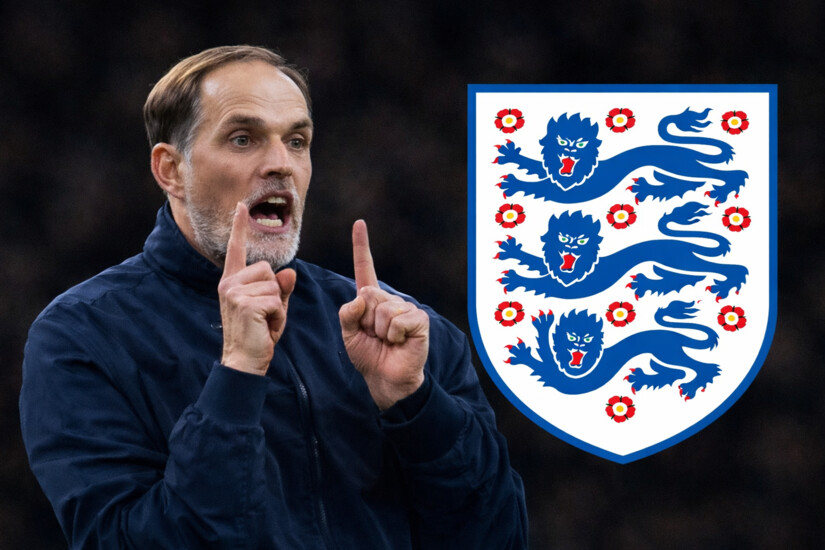
One of the central developments of the 2026 cycle is England’s managerial shift. Thomas Tuchel was appointed on a deal through World Cup 2026, and by the time England sealed qualification he had already given the campaign a distinctly harder edge. FIFA’s coverage of his first year and of England’s qualification emphasizes both the dominance of the campaign and Tuchel’s direct influence on its tone. The most revealing quote, carried by FIFA from Tuchel after England’s unbeaten qualification run, was not flowery. “We are dominant, we are hungry, we invest against the ball.” That is not a slogan. It is a diagnostic statement about how Tuchel wants teams to exist.
The significance of Tuchel is not simply that he is an accomplished club coach, though he is that. It is that his profile addresses a specific English vulnerability. England have rarely lacked for national sentiment around the team. They have often lacked hard managerial distance. Tuchel is not part of England’s internal nostalgia economy. He is not there to flatter old myths or to reenact 1966 through tone of voice. He is there to increase the probability of winning football matches at the highest level.
That foreignness matters. England’s discomfort with appointing non-English managers has always been tied to a deeper insecurity about authenticity. But authenticity is one of the least useful currencies in modern tournament football. Method matters more. Clarity matters more. The ability to read an opponent, change the structure of a match, and make emotionally unsentimental decisions matters more. Tuchel’s career suggests he is comfortable living in those spaces.
He also arrives with a particular kind of credibility. His teams have usually been tactically literate, structurally demanding, and psychologically sharp in the final phases of elite competition. He is not a guarantee of serenity, but he is a coach for whom big-match planning is native territory. For England, that is significant. The national team does not need a motivator in the old theatrical mold. It needs someone who can strip matches of myth and reduce them to manageable footballing problems.
This is especially important because England’s difficulty has often not been in reaching the later stages, but in taking the final step against elite opposition. Tuchel’s presence cannot erase that history, but it can reshape how England prepares for those moments. A Tuchel side is generally built to think about transitions, spacing, pressure traps, and opponent disruption in a highly granular way. That granularity matters when the margins are tiny.
FIFA’s own analysis of what England fans could expect from Tuchel after his appointment pointed toward this, emphasizing his tactical adaptability and the expectation that he would bring detail, control, and strategic elasticity to the job. Those qualities are particularly relevant in a World Cup that will be longer and more varied than previous editions. The 48-team format means more possible styles, more unfamiliar opponents, and a greater need to toggle between different kinds of matches without losing identity.
Tuchel’s challenge, however, is not only tactical. It is cultural. He has to coach a national side that exists in a uniquely English weather system of memory, media, and mood. He has to preserve confidence without feeding hysteria. He has to manage selection in a football nation that treats omission like treason. He has to prepare players to live inside noise without becoming reactive to it. That kind of management is every bit as important as whether he chooses a back four or back three in a given knockout tie.
There is a reason his appointment changed the argument around England. It made the team feel less like an emotional project and more like a cold-eyed bid for a tournament. That does not diminish English identity. It strengthens England’s chance of acting like a champion.
To write about England honestly is to write about the media ecosystem that surrounds it, because the team does not exist in anything resembling normal conditions. The scrutiny is relentless, but more importantly, it is unstable. Triumph and panic live closer together in English football discourse than in most leading nations. One good performance produces talk of destiny. One flat half produces theories of terminal fragility. This volatility is part of the national football culture now.
It is easy to mock that, and there are reasons to. But it also creates a genuinely difficult performance environment. Players are not merely processing opponents and tactical instructions. They are processing the collective emotional temperature of a football nation that experiences the national team as a mirror. When England looks bold, the country feels briefly vindicated. When England looks hesitant, the country reads into it a national weakness.
This is why England’s World Cup story can never be reduced to formations and names on a teamsheet. It is also about emotional transmission. What pressure does to decision-making. What repetition does to expectation. What memory does to a player in the 89th minute of a quarter-final when the entire national archive of missed opportunities seems to rise in the air around him.
The penalty-shootout history is part of this, though it can be overstated. England’s loss to Italy in the Euro 2020 final on penalties remains a key modern reference point. UEFA’s records are stark enough. After a 1 to 1 draw, Italy won the shootout 3 to 2 at Wembley. What mattered beyond the mechanics was the way the event landed inside English consciousness. It felt not like a single defeat, but like a reopening of the oldest national fear: that when football becomes most psychological, England flinches.
The trouble with that interpretation is that it can become self-fulfilling if not handled correctly. Teams that are told endlessly that they fear pressure begin to perform under two layers of stress: the immediate competitive one and the inherited one. The strongest recent evidence in England’s favor is that the team has shown, on multiple occasions, that it can operate through that second layer without complete breakdown. The Slovakia comeback at Euro 2024 mattered for more than simple progression. It demonstrated that England could survive a moment of near-national panic and still produce the footballing act required to continue.
This is where the phrase “fear of fulfillment” becomes useful. England no longer looks frightened of participation in big matches. It looks frightened, at times, of what it would mean to complete the long arc. That fear is more subtle. It does not appear as collapse. It appears as caution, as a slight withdrawing from the most aggressive interpretation of a winnable moment, as a hesitation to turn superiority into finality.
Champions have to overcome that. Not through rhetoric, but through repeated proof that the final step is not metaphysical. It is football. It is one more action executed cleanly, one more set-piece defended with concentration, one more sequence of possession played without emotional leakage.
The reason England may be better placed now is that its players are less likely than previous generations to experience the national conversation as destiny. They are formed in a more globalized football culture. They know what tactical seriousness looks like. Man
MinneapoliMedia | Community. Culture. Civic Life.



Sunny, with a high of 81 and low of 51 degrees. Sunny in the morning, clear overnight.