66° and Partly cloudy
Image
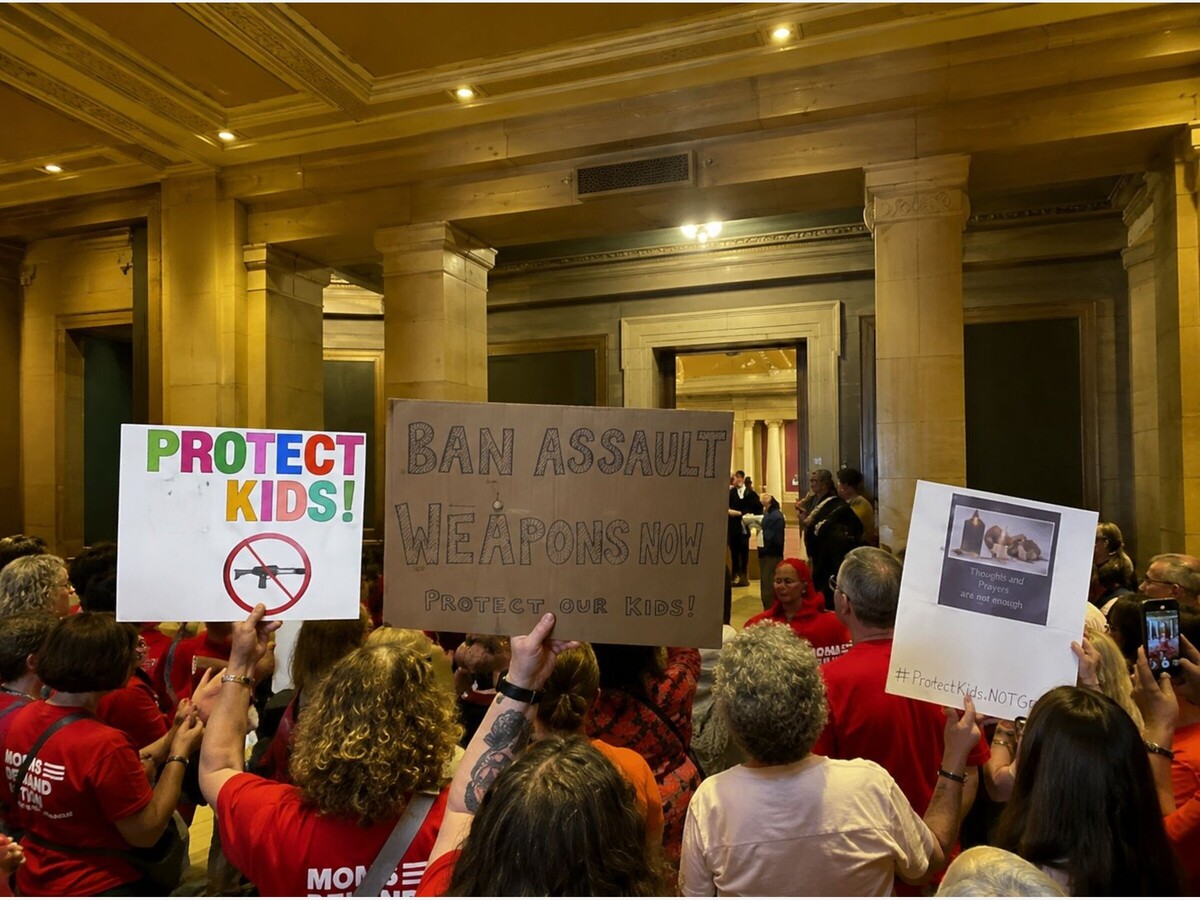



The notices were taped to office doors throughout the Capitol complex, transforming a legislative disagreement into a public accountability campaign and signaling that gun violence prevention advocates intend to keep pressure on elected officials long after lawmakers have adjourned for the year.
At the same time, organizers delivered handwritten thank-you notes to legislators who supported the proposals, underscoring the sharply divided political landscape that ultimately doomed the legislation despite months of advocacy, emotional testimony, and one of the most dramatic protests ever witnessed inside the Minnesota House chamber.
The demonstration represented the latest chapter in a debate that increasingly defined the final weeks of the 2026 legislative session and exposed deep divisions over public safety, constitutional rights, and the limits of government regulation.
For advocates, Friday's action was about unfinished business.
For opponents, it represented continued pressure to enact restrictions they argue would unfairly burden law-abiding firearm owners while doing little to stop violent criminals.
And for Minnesota lawmakers, it served as a reminder that one of the Legislature's most contentious policy battles has now shifted from committee rooms and floor debates to a broader public campaign that could influence future elections and legislative sessions.
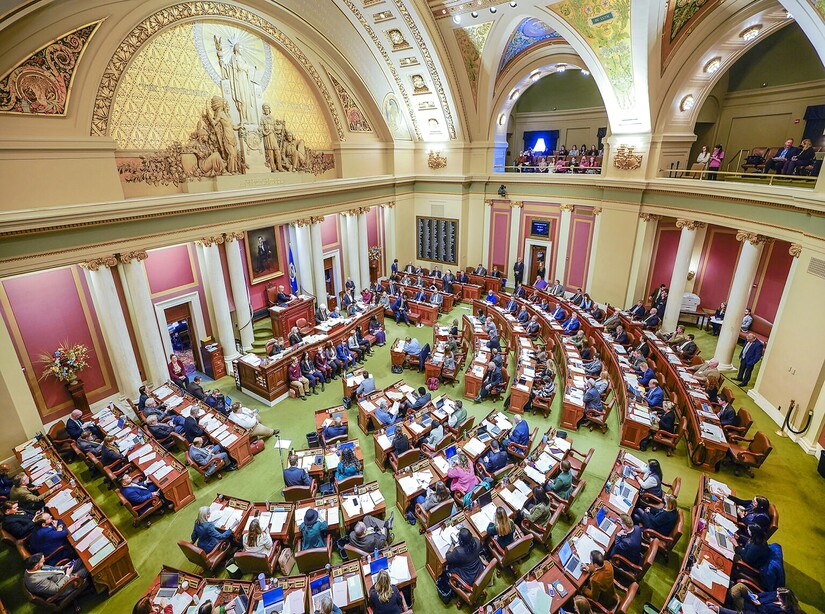
The conflict traces back to a gun violence prevention package that narrowly cleared the Minnesota Senate earlier this month.
Approved by a 34-33 vote, the legislation would have established new restrictions on military-style assault weapons and high-capacity magazines, imposed additional regulations on ghost guns and some firearm components manufactured through 3D-printing technology, expanded firearm storage requirements, increased funding for school safety measures, and supported public awareness efforts surrounding Minnesota's Extreme Risk Protection Order law, commonly known as the state's red flag law.
Supporters described the legislation as a comprehensive response to growing concerns about gun violence, school shootings, suicides, and domestic violence incidents involving firearms.
Advocates argued that Minnesota had reached a point where incremental reforms were no longer sufficient.
The proposals emerged after months of organizing by survivors of gun violence, healthcare professionals, educators, faith leaders, students, and families who said the state could no longer afford to wait for another tragedy before acting.
Many supporters pointed to the August 2025 mass shooting at Annunciation Catholic School and Church, one of the deadliest acts of gun violence in recent Minnesota history, as evidence that stronger safeguards were needed.
The Senate's approval was celebrated by advocates as a historic breakthrough.
But the victory proved short-lived.
The legislation arrived in a Minnesota House unlike any in modern state history.
Following the 2024 elections, the chamber entered the 2026 session evenly divided, with Democrats and Republicans each holding 67 seats.
The unprecedented power-sharing arrangement gave both parties significant leverage while making controversial legislation extraordinarily difficult to advance.
House Republicans, led by Speaker Lisa Demuth, declined to bring the Senate package to the House floor.
Republican lawmakers argued that portions of the legislation were overly broad, legally problematic, and potentially unconstitutional.
Among the primary concerns raised by opponents were the definitions contained within the proposed assault-weapon restrictions and magazine limitations.
Gun rights advocates argued that the legislation could affect commonly owned firearms and accessories used by hunters, sport shooters, competitive marksmen, and citizens exercising lawful self-defense rights.
Organizations including the Minnesota Gun Owners Caucus warned that some provisions could create legal uncertainty for firearm owners who had purchased equipment legally under existing law.
Opponents also raised concerns regarding property rights and compensation questions associated with restrictions on high-capacity magazines already in circulation.
Supporters rejected those arguments, maintaining that the legislation was carefully crafted to target weapons and accessories associated with mass casualty events while preserving constitutional protections for lawful firearm ownership.
The disagreement ultimately proved impossible to overcome.
As adjournment approached and prospects for a vote faded, tensions erupted into one of the most extraordinary demonstrations seen in the Minnesota House in decades.
House Democrats launched an extended sit-in on the House floor, remaining in the chamber for approximately 39 hours while demanding that the legislation receive a public vote.
Legislators slept on couches, streamed portions of the protest online, and took turns speaking about the impact of gun violence on Minnesota families and communities.
The demonstration drew statewide attention and transformed what had largely been a procedural dispute into a highly visible political confrontation.
During the protest, Representative Emma Greenman of Minneapolis framed the issue as one of public accountability.
"We are going to be here for as long as it takes to tell the stories of urgency that people have been sharing with us month after month," Greenman said during the sit-in. "What people cannot do is hide from this vote."
House leadership maintained that bypassing established legislative procedures would undermine the chamber's governing agreements and insisted that the legislation lacked the bipartisan support necessary to move forward.
When adjournment arrived without action, the bill effectively died for the session.
Friday's eviction-notice campaign reflected a strategic shift by gun violence prevention groups from legislative advocacy to public pressure.
Instead of lobbying lawmakers inside committee hearings, organizers are now focusing on public visibility, constituent engagement, and electoral accountability.
Advocates say lawmakers should be required to publicly defend their positions on firearm policy, particularly in communities affected by gun violence.
The notices themselves carried no legal significance.
Their purpose was symbolic.
Organizers described them as a message that legislators who blocked consideration of the package had failed to meet what advocates view as a fundamental responsibility to address gun violence through legislative action.
The tactic also highlighted the increasingly grassroots nature of the movement.
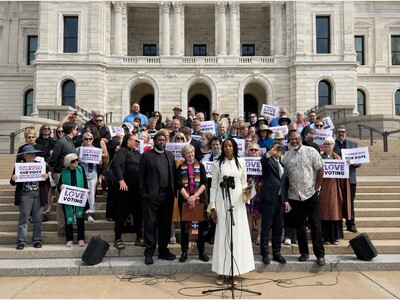
Many of the volunteers participating in Friday's action were not professional lobbyists or political operatives. They included parents, students, educators, healthcare workers, faith leaders, and community members who have spent years advocating for firearm policy changes.
Their message was straightforward: the legislative session may be over, but the campaign is not.
The confrontation unfolding at the Capitol reflects a national debate that has become increasingly visible in Minnesota.
Supporters of stronger firearm regulations point to research linking safe storage practices, restrictions on high-capacity magazines, and risk-protection orders to reductions in certain forms of gun violence.
They argue that preventing access to firearms during moments of crisis can save lives and that reducing the availability of weapons capable of firing large numbers of rounds without reloading can lessen the severity of mass shootings.
Opponents counter that many proposed restrictions focus on firearms owned legally by responsible citizens rather than individuals who commit violent crimes.
They argue that stronger enforcement of existing laws, prosecution of repeat offenders, and investments in mental health and community-based violence prevention programs would be more effective approaches.
Those competing visions have produced one of the sharpest policy divides in Minnesota politics.
Neither side appears prepared to retreat.
With the Legislature adjourned, the immediate policy fight is over.
The political fight is not.
Advocates have pledged to continue organizing throughout the summer and into the next election cycle. Gun rights organizations have similarly signaled that they will remain engaged and oppose future efforts they view as infringing on constitutional protections.
The outcome of future elections, the composition of the Minnesota House and Senate, and public reaction to future acts of gun violence will likely determine whether the proposals return in a future session.
For now, the orange eviction notices posted across the Capitol stand as a reminder of a legislative battle left unresolved.
The votes were never taken.
The arguments were never settled.
And as lawmakers left the Capitol for the year, one of Minnesota's most consequential public policy debates left with them, only to reemerge in a new arena beyond the chamber doors.
MinneapoliMedia | Community. Culture. Civic Life.



Sunny, with a high of 87 and low of 64 degrees. Sunny in the morning, patchy rain nearby overnight.