Image



The alert follows a nationwide advisory from the Federal Bureau of Investigation’s Internet Crime Complaint Center, which has identified a pattern of fraud targeting individuals with active or recently filed permit applications.
Authorities say the scheme represents a shift in cybercrime tactics, moving away from broad, untargeted email campaigns toward highly specific, data-driven social engineering.
According to the FBI, attackers are using publicly accessible government records to identify potential victims. These records often include property addresses, permit numbers, and applicant names.
By compiling this information, scammers are able to construct emails that closely resemble legitimate communication from municipal offices.
The messages typically appear to come from roles such as permit technicians or zoning coordinators and include accurate project details. Because the information matches real applications, recipients may not question the authenticity of the request.
Investigators describe the scheme as a staged process.
First, attackers collect data from public permitting systems.
Next, they send emails that mirror official government correspondence.
Finally, they introduce a financial request.
The email usually states that there is an outstanding balance, processing fee, or compliance-related charge associated with the permit. Recipients are instructed to make immediate payment to avoid delays, penalties, or cancellation of the permit.
Law enforcement officials say the timing of these messages often coincides with active project timelines, increasing the likelihood that recipients will comply.
The FBI emphasizes that the clearest indicator of fraud is the requested payment method.
Victims are directed to send funds through:
In some cases, scammers request payment through gift cards.
Government agencies, including municipal permitting departments, do not use these methods for official transactions. Instead, payments are processed through secure, traceable systems.
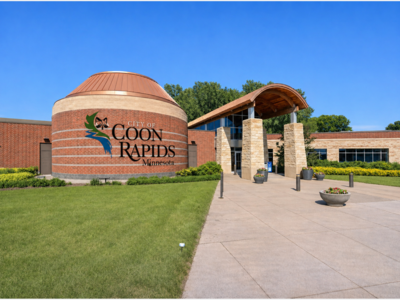
City officials in Coon Rapids have issued specific guidance to help residents distinguish legitimate communications from fraudulent ones.
Residents are advised to verify any payment request by contacting the Building Inspections Division directly at 763-767-6476 or by email at buildinginsp@coonrapidsmn.gov.
Federal authorities say similar scams have been reported across multiple states, indicating a coordinated national trend.
Local officials in jurisdictions such as Virginia Beach have issued comparable warnings, noting that legitimate government emails must originate from verified domains such as @vbgov.com.
The FBI also reports that scammers may use email “spoofing” techniques, allowing messages to appear as though they were sent from official government addresses even when they are not.
Authorities recommend several steps to reduce the risk of fraud during construction or permitting processes:
Independent Verification
Access permit information only through official government websites entered manually into a browser.
Direct Contact
Confirm any payment request by calling a verified government phone number obtained from official sources.
Email Inspection
Check both the sender’s address and the reply-to field, as display names may not reflect the actual origin.
Caution With Urgency
Treat immediate payment demands as a potential warning sign.
Individuals who receive suspicious communications are advised not to send payment or engage with the sender.
Incidents should be reported to local law enforcement and to the FBI’s Internet Crime Complaint Center at www.ic3.gov.
Federal authorities note that reporting details such as bank account numbers or cryptocurrency wallet addresses can assist investigators in tracking and potentially disrupting fraudulent networks.
Officials emphasize that the effectiveness of the scheme depends on its ability to replicate legitimate processes.
Because the messages are based on real data and arrive during active permitting timelines, they can appear credible even to experienced contractors and property owners.
Verification through official channels remains the primary safeguard.
More Information:
City of Coon Rapids Official Alert
Coon Rapids city
MinneapoliMedia
Community. Culture. Civic Life.


Patchy rain nearby, with a high of 85 and low of 48 degrees. Sunny in the morning, patchy light rain in area with thunder for the afternoon and evening, clear overnight.