63° and Sunny
Image



That detail, stark and clarifying in its timing, contains the story in miniature.
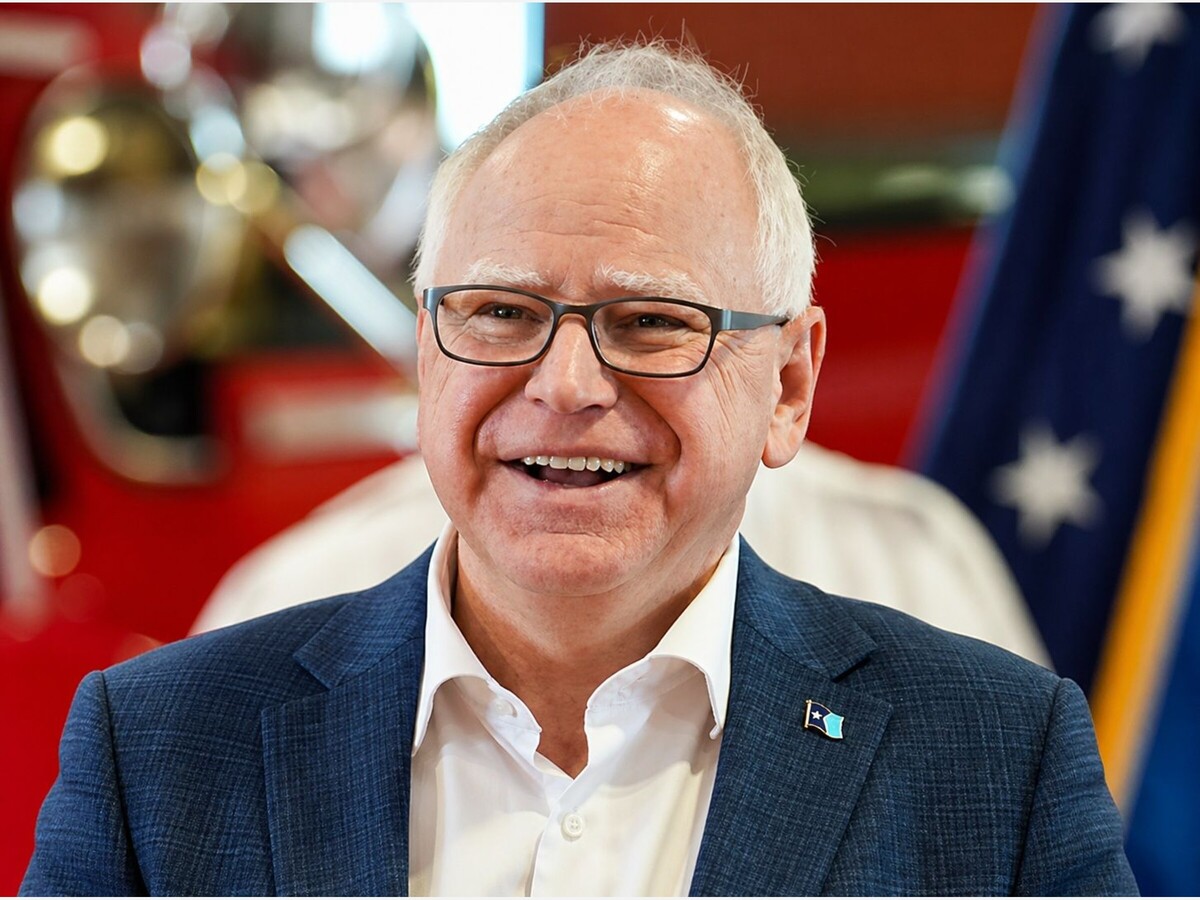
At approximately 7 p.m. on April 28, 2026, Walz entered the Minnesota House chamber to deliver the eighth and final State of the State address of his governorship. Hours earlier, authorities had carried out enforcement actions tied to what federal prosecutors have described as the largest pandemic-related fraud scheme in the country’s history.
The governor had already addressed the developments publicly that morning.
He arrived at the Capitol having already governed.
The speech had not yet begun. The day had not waited for it.
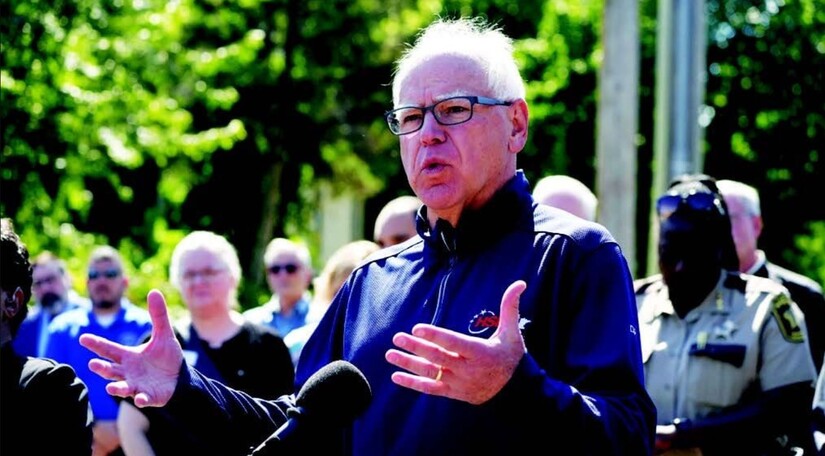
Walz described his tenure as “complicated.” The word is accurate in the way a photograph can capture a storm while failing to convey its force.
Few governors in Minnesota history have presided over a period as dense with consequence. His administration operated at the center of structural policy change, advancing decisions that reshaped how the state defines access, rights, and the role of government.
The codification of abortion rights. The legalization of recreational marijuana. Universal free school meals.
These were not incremental changes. They were declarations of governing philosophy, placing Minnesota firmly within a national debate over public investment and individual rights.
But policy alone does not define a governorship.
Pressure does.
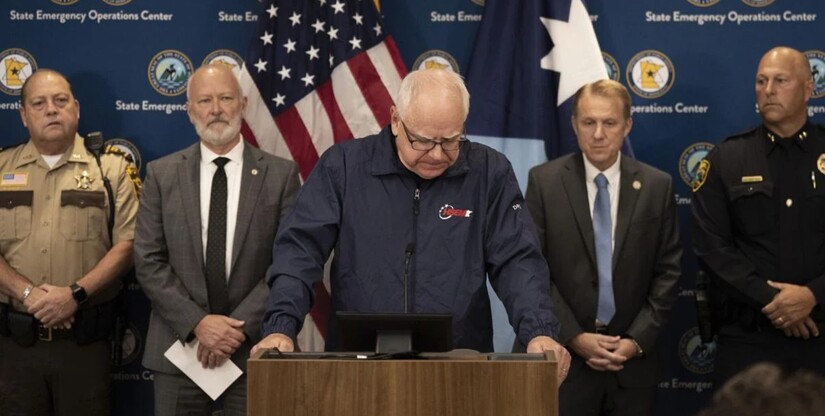
Before Walz could speak about the future, he was compelled to account for loss.
He opened by acknowledging a series of tragedies that reshaped Minnesota’s civic landscape, including political violence, a mass shooting at Annunciation Catholic Church, and the impact of a large-scale federal immigration enforcement operation that reverberated across communities.
The absence of House Speaker Emerita Melissa Hortman, killed in 2025, was not abstract. It was present in the room.
So was the reality that governance, in this moment, has extended beyond policy into questions of safety, stability, and public trust.
Walz responded as governors often do, pivoting toward resilience.
He pointed to communities rebuilding, neighbors supporting one another, and the enduring belief that the strength of the state rests not only in institutions, but in people.
It was a message that landed differently depending on where one sat in the chamber.
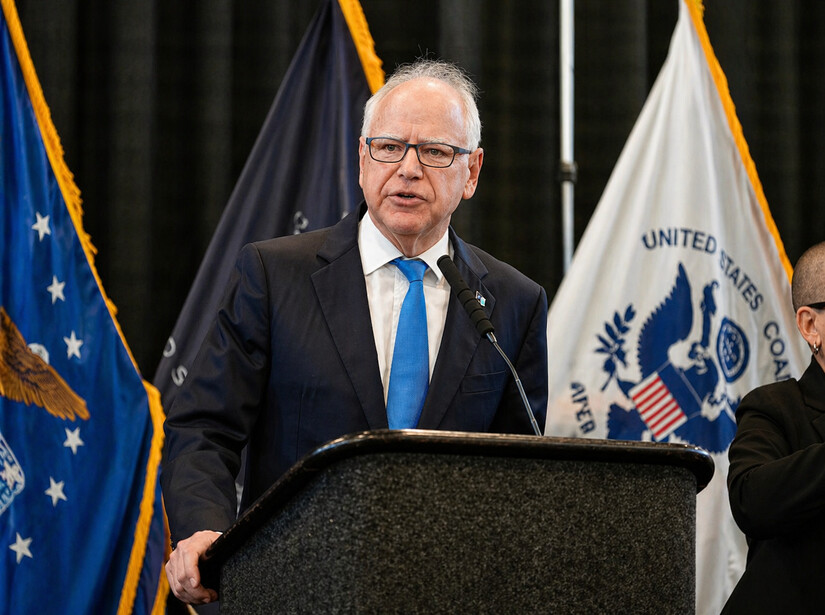
The defining issue of Walz’s final year followed him directly into the chamber.
It took most of the address before he turned explicitly to fraud, an issue that has driven both public concern and political criticism. Republican leaders later pointed to that delay as emblematic of broader concerns about accountability.
The context, however, is layered.
Walz has acknowledged vulnerabilities in state programs while maintaining that the schemes represent fraud against the state, not corruption within it. He has drawn a distinction between external exploitation and internal complicity, a distinction that remains politically contested.
What is not contested is the impact.
The scale of the fraud investigations has reshaped the political landscape of his final year, contributing to his decision not to seek a third term and reframing public debate around oversight and institutional control.
The enforcement actions carried out the morning of his speech underscored both realities at once.
They demonstrated a system responding.
They also reinforced the scale of the failure that made that response necessary.
Every administration is defined by a central tension. For Walz, it is the distance between the breadth of his policy vision and the limits of administrative control.
Supporters point to a governor who expanded access, acted decisively in crisis, and governed with a clear understanding of the role of state power in shaping outcomes.
Critics point to oversight failures, arguing that the scale of government expansion outpaced the systems designed to manage it.
Both perspectives are grounded in reality.
Ambition expanded the reach of government. Oversight struggled to keep pace. That gap is where this era will ultimately be judged.
Even in his final address, Walz called for stronger anti-fraud measures and systemic reform, signaling that the defining issue of his administration remains unresolved at the moment of transition.
Minnesota is about to lose a governor who governed with directional clarity.
Across eight years, Walz maintained a consistent view of what state government should do and why. That consistency shaped legislative priorities, agency action, and the broader tone of governance.
His departure creates more than a political vacancy.
It creates a philosophical one.
Questions that remained relatively stable during his tenure are now open again. What is the role of government in everyday life? How aggressively should policy shape economic and social outcomes? What balance should exist between public investment and restraint?
The answers are no longer settled.
There will be an effort to compress the Walz era into a single narrative.
It will be described as proof that expansive government works. Or proof that it does not.
It will be framed as a period of leadership. Or a period of overreach.
Those interpretations will circulate because they are useful.
They will also be incomplete.
The Walz era is both.
A record of expanded rights and expanded scrutiny.
A period of decisive action and contested oversight.
A time of structural change alongside institutional vulnerability.
The complexity is not incidental.
It is the record.
Walz will remain in office until January 2027.
But the transition is already underway.
The 2026 election will not simply determine who replaces him. It will determine how his tenure is understood.
Candidates will not run only against each other. They will run against the past eight years, offering competing interpretations of what those years represent and what should follow them.
Walz has pointed to Amy Klobuchar as someone he would like to see carry forward elements of his governing approach, but no succession is guaranteed.
The field remains unsettled.
The direction remains open.
Walz’s final State of the State address was not a conclusion.
It was a transition delivered in real time.
He made the case for continued investment, stronger oversight, and a vision of government rooted in collective responsibility. He also left behind unresolved questions about execution, accountability, and trust.
That dual reality defines the moment Minnesota now faces.
The meaning of his governorship will not be determined solely by what he accomplished.
It will be determined by what endures.
Minnesota is not simply approaching an election.
It is entering a recalibration of leadership, policy, and public expectation.
The next governor will inherit a state shaped by expansion and tested by strain. They will inherit both belief in what government can do and skepticism about how well it can do it.
That is not a neutral starting point.
It is a demanding one.
And it is the final condition of the Walz era.


Patchy rain nearby, with a high of 73 and low of 56 degrees. Sunny for the morning, cloudy in the afternoon, clear overnight.