66° and Partly cloudy
Image
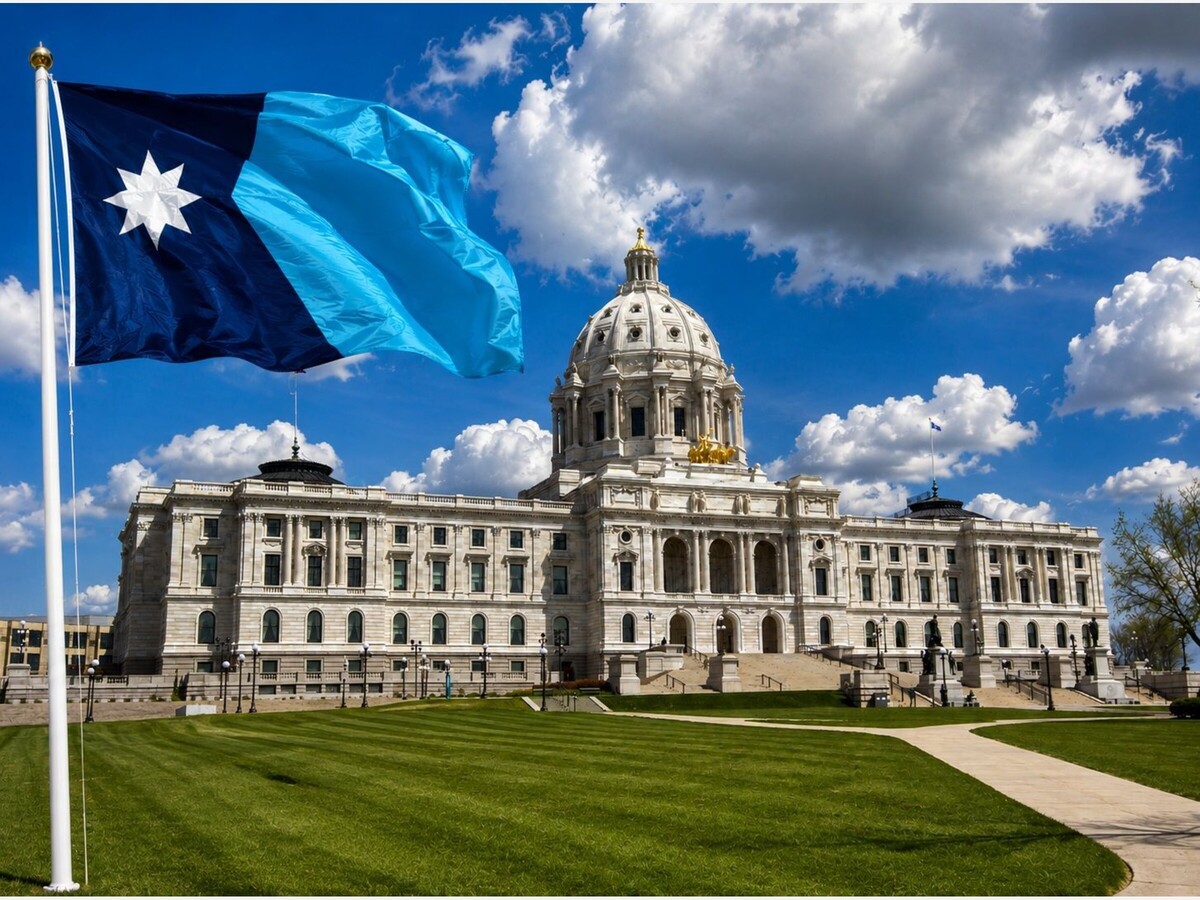



ST. PAUL, MN | When the Minnesota Legislature adjourned sine die at the close of the 2026 legislative session, lawmakers from both parties immediately began framing the outcome in politically familiar terms. Republicans pointed toward affordability relief, anti-fraud reforms, and what they described as fiscal restraint under divided government. Democrats focused on infrastructure investment, protection of critical healthcare systems, and resistance to what they viewed as increasingly harmful federal immigration enforcement policies.
Both sides declared partial victories. Both sides accused the other of obstruction.
And both sides now turn toward the November elections believing Minnesota voters will validate their version of what happened inside the Capitol during one of the state’s most politically constrained legislative sessions in recent memory.
Yet the deeper story of the 2026 session may not ultimately be about which party won the messaging war. It may instead be about whether the public fully understood what lawmakers were negotiating, what issues were actually at stake, which proposals quietly disappeared behind closed doors, and how much of Minnesota’s legislative process now unfolds beyond meaningful public visibility.
The session concluded under extraordinary political conditions. The Minnesota House operated under a rare 67-67 partisan tie between Republicans and Democrats, effectively forcing power-sharing arrangements and limiting either side’s ability to advance a fully ideological agenda. Democrats retained only a narrow majority in the Senate. Every vote, negotiation, committee hearing, and leadership decision unfolded under the pressure of an approaching election cycle in which all 201 legislative seats will appear on the ballot.
The result was a legislative year defined less by transformation than by containment.
Lawmakers succeeded primarily where compromise became politically unavoidable. They failed where ideology hardened beyond negotiation. They protected institutions viewed as essential to state stability while shelving many of the state’s most emotionally charged and politically divisive debates.
The final product reflected a Legislature attempting to govern cautiously inside an increasingly polarized political environment while simultaneously calculating how every major vote might affect November’s election results.
Minnesota emerged from the session with a significant infrastructure package, temporary affordability relief measures, expanded anti-fraud oversight, and a major financial stabilization effort for Hennepin County Medical Center. At the same time, lawmakers failed to pass major gun legislation, failed to deliver direct relief tied to Operation Metro Surge, and once again relied heavily on opaque late-session negotiations that limited public scrutiny over some of the most consequential bills passed this year.
Whether voters view the session as responsible governance or political underperformance remains uncertain.
The answer may determine not only who controls the Legislature in 2027, but also what kind of governing model Minnesotans ultimately reward in an era where compromise itself has become politically risky.
The clearest institutional winner of the session was Hennepin County Medical Center.
By the final weeks of session, bipartisan concern surrounding HCMC’s financial condition had become one of the few issues capable of cutting through partisan division. Lawmakers across ideological lines recognized that the hospital occupies a uniquely critical position within Minnesota’s healthcare infrastructure.
HCMC is not simply another large urban hospital system. It houses one of the state’s largest emergency departments, one of Minnesota’s most important Level I trauma centers, and a critical burn unit relied upon across the region. It serves large numbers of uninsured and underinsured patients while functioning as one of the central emergency care institutions within the state.
Allowing the hospital to deteriorate financially carried political, healthcare, and operational risks that lawmakers from both parties considered unacceptable.
The resulting stabilization package became one of the defining bipartisan achievements of the session.
Republicans defended the funding as essential institutional preservation tied to emergency medicine and public safety infrastructure. Democrats framed the package as protection of healthcare access and preservation of a critical safety-net system serving vulnerable populations.
In practical terms, lawmakers treated HCMC as too essential to fail.
The broader significance of the agreement extended beyond healthcare policy itself. The package demonstrated that even amid rising polarization, Minnesota lawmakers still maintain a category of public institutions viewed as fundamentally indispensable to statewide stability.
Infrastructure funding became another area where compromise remained politically achievable.
The Legislature approved roughly $1.2 billion in bonding investments directed toward roads, bridges, water systems, municipal infrastructure, public facilities, and local projects across Minnesota. Approximately $420 million of that funding targeted water treatment and water infrastructure projects, reflecting mounting concerns surrounding aging systems, environmental compliance pressures, and long-delayed maintenance obligations facing communities across the state.
Infrastructure legislation often survives political polarization because it produces visible and geographically distributed benefits. Roads can be photographed. Bridges can be reopened. Water treatment upgrades can be announced at ribbon-cuttings. Local officials can point to construction projects as evidence that government remains functional.
The political value of such projects becomes even more important during election years.
Virtually every legislator who supported the bonding package now possesses concrete projects to reference while campaigning back home. Municipal governments, construction industries, organized labor, engineers, contractors, and local economies all stand to benefit from the spending package.
The infrastructure agreement also highlighted one of the central governing realities exposed during the 2026 session: bipartisan cooperation became most possible when lawmakers focused on physical systems rather than ideological identity.
Water systems do not align neatly with partisan talking points. Aging roads affect conservative and progressive communities alike. Infrastructure problems create practical demands that often force cooperation regardless of broader political tensions.
Affordability concerns similarly shaped much of the session.
Republicans entered the legislative year determined to center economic frustration, government spending concerns, and rising living costs within their political messaging. Democrats, while defending many previous spending priorities, also recognized that inflationary pressures and affordability concerns remained politically dangerous heading into the election cycle.
The resulting compromises included temporary reductions in vehicle registration fees along with expanded homestead property tax refunds.
The vehicle tab fee rollback represented an especially symbolic Republican victory. GOP lawmakers had spent months criticizing earlier increases and arguing that Minnesota residents were carrying excessive tax burdens during a period of broader economic stress.
The compromise temporarily reduced the rate from 1.57% back to 1.28%, creating what lawmakers effectively described as a one-year tax holiday.
Democrats ultimately accepted the agreement because opposing direct affordability relief carried substantial political risk in an election year where economic anxiety continues affecting households across Minnesota.
Similarly, lawmakers expanded the state’s homestead property tax refund system, increasing available refunds for many homeowners while costing the state an estimated $125 million from the general fund.
Neither measure fundamentally alters Minnesota’s broader affordability landscape. Rising housing costs, insurance rates, healthcare expenses, and inflationary pressures continue affecting communities statewide. Yet lawmakers understood that tangible relief measures, even modest ones, carry significant political value because voters can directly experience them.
A homeowner may never fully understand omnibus budget negotiations or legislative procedural battles. That same homeowner will notice a larger property tax refund or lower vehicle registration fee.
In divided government, smaller measurable benefits often become more politically achievable than ambitious structural reforms.
Anti-fraud legislation emerged as another major focus of the session and reflected one of the most significant long-term political shifts currently reshaping Minnesota government.
The Feeding Our Future scandal and other fraud investigations continue exerting enormous influence over public trust in state-administered programs. Republicans repeatedly emphasized oversight failures, weak accountability systems, and what they described as inadequate safeguards surrounding public funds.
Democrats, though sometimes frustrated by the broader political framing surrounding public assistance programs, increasingly acknowledged that voter confidence in government oversight had weakened substantially.
The resulting legislation included the creation of an independent Office of Inspector General alongside additional anti-fraud enforcement measures intended to strengthen state oversight capabilities.
The political significance of the fraud debate extends beyond the legislation itself.
Minnesota politics is entering an era where accountability, auditing, compliance, and oversight language will likely become permanent bipartisan expectations. Public skepticism surrounding government administration has deepened considerably in recent years, and lawmakers from both parties increasingly recognize that institutional trust must now be actively rebuilt rather than assumed.
Several lower-profile measures also reflected evolving public concerns.
Lawmakers approved legislation regulating social media use among children under 16 amid growing national anxiety surrounding digital addiction, youth mental health, algorithmic manipulation, and technology companies’ influence over minors.
The Legislature also approved measures limiting certain homeowners’ association practices while advancing legislation banning prediction markets, though final executive action on that measure remained pending at the close of session.
Yet despite areas of compromise, many of the issues dominating public debate across Minnesota remained unresolved.
Gun legislation became perhaps the clearest example of the limits imposed by divided government.
Democrats entered the session facing intense pressure from gun violence prevention advocates following multiple traumatic incidents that deeply affected Minnesota communities. Those incidents included the assassination of former House Speaker Melissa Hortman and her husband Mark, the attempted assassination of Sen. John Hoffman and his wife Yvette, and the mass shooting at Annunciation Catholic Church that killed two children and injured numerous others.
DFL lawmakers argued that the scale of recent violence required legislative intervention, including bans on assault-style weapons and high-capacity magazines.
The Minnesota Senate ultimately approved an assault weapons ban for the first time in state history under the leadership of Sen. Zaynab Mohamed.
The legislation never advanced through the tied House.
Republicans consistently opposed the proposals, arguing that such restrictions violated constitutional protections while questioning whether the measures would meaningfully prevent future violence.
The result was one of the most consequential policy failures of the session for Democrats.
The political consequences remain uncertain.
Gun violence prevention advocates are expected to target suburban districts aggressively during the upcoming elections, particularly in communities where concerns surrounding school safety and public shootings remain politically salient. Republicans, meanwhile, believe resistance to gun restrictions remains strongly supported among much of rural Minnesota and conservative voters statewide.
The issue now moves directly from the legislative arena into electoral politics.
Immigration-related legislation exposed another major partisan divide.
Operation Metro Surge, the large-scale federal immigration enforcement operation conducted across Minnesota during the winter, became one of the session’s most contentious political flashpoints. Federal authorities deployed thousands of agents into Minnesota during what the Department of Homeland Security described as its largest immigration enforcement action to date.
The operation disrupted businesses, labor systems, immigrant communities, and local economies in multiple parts of the state.
DFL lawmakers sought financial assistance measures for affected businesses and residents while also proposing legislation designed to limit certain federal enforcement practices, including proposals tied to identification standards and masking restrictions for federal agents.
Republicans rejected most of those efforts.
Some Republican lawmakers openly praised the operation or disputed claims involving civil liberties violations and economic harm. The disagreement revealed one of the sharpest ideological divisions within Minnesota politics regarding immigration enforcement, federal authority, and the role of state government during federal operations.
A narrower dispute later emerged regarding housing assistance funding included within broader housing legislation negotiated by bipartisan committee leaders. Democrats argued the funding would help residents impacted by Operation Metro Surge. Republicans strongly disputed that characterization.
The disagreement became emblematic of a broader reality throughout the session: bipartisan legislation often survived only so long as each side could maintain politically different interpretations of what the legislation actually represented.
Healthcare policy produced another major unresolved issue involving the federal 340B drug pricing program.
Hospitals serving low-income populations sought stronger protections tied to the program, which allows qualifying healthcare institutions to purchase drugs at discounted rates while using savings to support patient care and operational stability.
Healthcare leaders across Minnesota argued that the savings remain increasingly essential as hospitals confront staffing shortages, rising operating costs, declining reimbursements, and broader financial strain.
The legislation ultimately failed following significant opposition from pharmaceutical interests.
The issue received less public attention than gun legislation or immigration debates, yet healthcare officials warn the long-term implications could become substantial, particularly for rural and community hospitals already operating under difficult financial conditions.
The session also reignited longstanding concerns surrounding legislative transparency and public visibility.
As deadlines approached during the final weekend, major negotiations increasingly shifted behind closed doors. Massive omnibus bills containing hundreds of pages appeared shortly before floor votes, leaving limited opportunity for lawmakers, journalists, watchdog organizations, or ordinary citizens to fully analyze the contents before passage.
The process frustrated transparency advocates while reinforcing concerns that some of Minnesota’s most consequential policymaking increasingly occurs outside meaningful public observation.
The criticism is not new.
Similar concerns surfaced during previous legislative sessions, including in 2024 when lawmakers assembled a massive omnibus package during the final hours before adjournment.
What makes the issue increasingly significant is the growing disconnect between legislative complexity and public awareness.
Most Minnesotans do not follow conference committee negotiations in real time. Many cannot identify which lawmakers supported or opposed specific amendments. Most citizens never read omnibus legislation directly. Increasingly limited local newsroom staffing has also weakened sustained Capitol coverage across large portions of the state.
As a result, enormous legislative decisions often unfold within procedural environments that remain largely inaccessible to ordinary voters.
The consequences are significant.
Citizens ultimately experience the impact of laws, taxes, regulations, healthcare changes, infrastructure spending, and public safety policies without necessarily witnessing how those outcomes were negotiated, diluted, amended, or blocked.
That creates a democratic imbalance increasingly visible not only in Minnesota, but nationally.
Lawmakers themselves acknowledged aspects of the problem after adjournment.
Senate Majority Leader Erin Murphy openly criticized the quiet Capitol hallways and lack of public visibility during final negotiations, arguing that democracy functions poorly when citizens have little opportunity to observe government deliberation directly.
Yet despite recurring acknowledgment from legislators across multiple years, the structural incentives driving opaque late-session negotiations remain deeply embedded within Minnesota’s legislative system.
Time pressures, omnibus budgeting structures, partisan maneuvering, and leadership-driven negotiations continue rewarding closed-door bargaining even while public trust in institutions declines.
The broader question now facing Minnesota voters is whether they believe the Legislature governed effectively under difficult conditions or merely managed dysfunction well enough to avoid collapse.
Republicans believe voters will reward divided government and view the session as evidence that GOP influence restrained Democratic overreach while forcing affordability measures and accountability reforms.
Democrats believe voters will focus more heavily on unresolved gun violence concerns, healthcare preservation, and opposition to aggressive immigration enforcement operations.
Both sides also recognize that national political conditions may ultimately shape voter behavior more strongly than state legislative details.
Modern elections increasingly operate through nationalized political emotions. Many voters evaluate state lawmakers through broader ideological frameworks tied to national politics rather than detailed legislative analysis.
That dynamic raises another important question emerging from the 2026 session: how many Minnesotans fully understand what their legislators actually did this year?
Do most voters know which lawmakers supported the HCMC stabilization package? Do they know who opposed or supported assault weapons legislation? Do they understand the details of the anti-fraud measures passed this year? Do they know which legislators negotiated housing assistance funding? Do they understand how omnibus bills are assembled? Do they know which provisions disappeared behind closed-door negotiations?
In many cases, the answer is likely no.
That does not reflect voter indifference or lack of intelligence. It reflects the increasing complexity of modern governance combined with fragmented media ecosystems, shortened public attention spans, procedural opacity, and the declining accessibility of legislative processes.
Democracy becomes more fragile when public understanding weakens.
A healthy civic culture depends not only on elections, but on citizens maintaining reasonable visibility into how public decisions are made before ballots are cast.
The 2026 session exposed how difficult that visibility has become.
Legislators voted on massive bills many citizens never saw. Complex negotiations unfolded privately. Public understanding often arrived only after legislation had already passed. Political messaging frequently simplified or distorted legislative realities after the fact.
And now the entire process moves toward November.
Minnesota voters will ultimately decide whether the session represented effective bipartisan governance under difficult conditions or a Legislature that settled for incrementalism while avoiding larger structural problems.
They will decide whether affordability measures felt meaningful enough. They will decide whether anti-fraud reforms restored confidence. They will decide whether unresolved gun legislation matters politically. They will decide whether immigration-related conflicts influence turnout. They will decide whether compromise itself remains politically valuable.
The election will therefore become the final phase of the 2026 legislative session. Not because every voter closely followed the details inside the Capitol, but because the cumulative effects of those decisions now enter public life.
Road projects will begin. Tax refunds will arrive. Healthcare systems will stabilize or continue struggling. Communities affected by violence will continue debating public safety. Immigrant communities will continue processing the consequences of federal enforcement actions. Hospitals will continue confronting financial pressures.
And lawmakers from both parties will spend the next several months attempting to convince Minnesotans that they governed responsibly during one of the state’s most politically constrained legislative years in recent memory.
MinneapoliMedia | Community. Culture. Civic Life.



Sunny, with a high of 87 and low of 64 degrees. Sunny during the morning, patchy rain nearby overnight.